Key business driver diagram ppt background
Try Before you Buy Download Free Sample Product
Audience
Editable
of Time
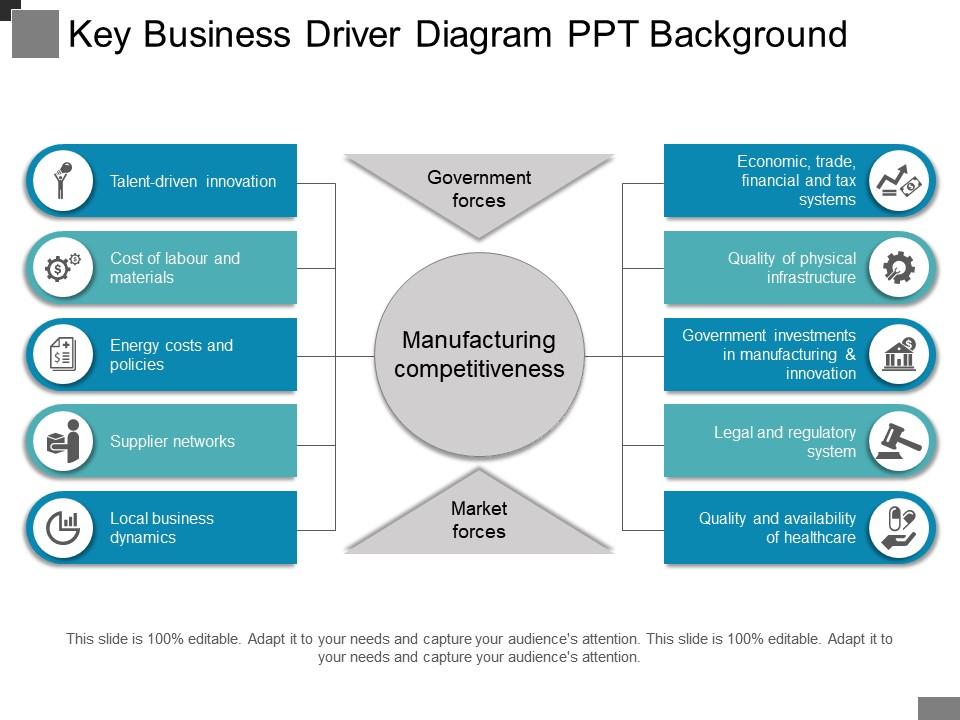
Key business driver diagram PPT background is a specially designed professional business presentation with the visual of a computer. This key business driver diagram PPT slide talks about one of the most widely known topics to run any business smoothly i.e. the common business drivers. Though the key drivers varies significantly by industry to industry, yet with the help of this analyzing driver of business model PowerPoint template, you will be successful in making a presentation on common and prevalent business drivers for direct marketing. The analyzing driver of business model PowerPoint template assists you to create plans for business projects and explain the significance of business dynamics to the team members. Use this common market forces layout slideshow to throw light on common and prevalent key business drivers. In just a few minutes, you can give a refined touch to this template or use it the way it is. With these high-definition illustrations and well curated information, you are bound to present a remarkable presentation. Excitement grows with our Key Business Driver Diagram Ppt Background. They generate an air of anticipation.
People who downloaded this PowerPoint presentation also viewed the following :
Key business driver diagram ppt background with all 5 slides:
Get it done absolutely correct with our Key Business Driver Diagram Ppt Background. Have it exactly as you desire.
FAQs for Key business driver
Start with your main business goal at the top, then map out the 3-5 key drivers that actually impact it underneath. Seriously, don't get fancy here - most people dive way too deep right away and end up with this complicated mess nobody uses. Focus on what really moves the needle for your specific situation. You can add sub-drivers below if you need to, but keep it to 2-3 levels max or you'll hate yourself later. I learned this the hard way on my last project. Build your biggest drivers first, then add the smaller stuff once you've got a solid foundation. Trust me, simple beats comprehensive every time.
Think of business drivers as your North Star - they show you exactly where to put your time and money. Like, if customer retention is what actually grows your company, then you know to focus there instead of getting distracted by every new trend. I usually tell people to write down their top 3-5 drivers first. Then whenever someone pitches a new strategy, just ask yourself: does this strengthen what already works for us? It's honestly the fastest way to avoid wasting resources on stuff that looks exciting but won't move your numbers. Way better than just winging it.
You definitely need data to back up your key business driver diagram - otherwise you're just guessing. Honestly, I've seen too many teams build these things based on gut feelings from meetings. Numbers tell you which drivers actually move the needle and help you spot patterns you'd totally miss. They also show you where to focus your energy instead of spreading yourself thin. Oh, and don't even think about sketching anything until you've pulled historical performance data for each potential driver. Without that foundation, your diagram's basically useless decoration. Trust me on this one.
Look, you'll want to figure out what actually drives revenue and sets you apart from competitors first. Map those key drivers out, then rank them by customer value and profit potential. Here's the thing though - there's always tension between quick wins and long-term strategy. Everyone's impatient for results but real growth is slow. Most companies I know use impact vs effort grids or scoring systems to cut through the guesswork (makes it way less political too). Honestly? Just pick your top 3-5 drivers that truly influence customer decisions and dump your resources there. Don't overthink it.
Honestly, the worst thing you can do is overcomplicate it. I've seen so many diagrams that look like someone threw spaghetti at a wall - total mess. Stick to maybe 5-7 drivers that actually matter. Also make sure there's real cause-and-effect between your metrics, not just random stuff thrown together. That drives me crazy when people do that. Each driver needs to be something you can actually measure, and someone has to own it. Oh, and start simple! You can always make it fancier once you've got the basics down. Way easier than trying to untangle a complicated mess later.
Colors are your best friend here - use them to show how different drivers connect. Shapes help too (circles for causes, squares for effects, whatever works). Arrows make the flow obvious so people don't have to guess relationships. Honestly, most business diagrams are boring as hell, so icons and good formatting actually keep people awake. Nobody wants to decode a messy flowchart in a meeting. Keep your color scheme simple - maybe 3-4 colors max. The goal is making it scannable so stakeholders can spot the important stuff without squinting at tiny text for 10 minutes.
Honestly, you'll miss so much if you don't get other people's input on this. Finance sees cost stuff that ops completely overlooks. Sales knows what's actually driving customer behavior while finance is clueless about that side. It's kinda like - you need multiple angles to see the whole picture, you know? Plus frontline folks often have way better insights than the executives (don't tell my boss I said that). They'll catch external factors too, like market changes or new regulations that you'd never think of sitting at your desk. Get their input early.
Honestly? At least once a year, but don't just stick to that schedule. Big changes like new products or market shifts mean you need to update them right away. I've watched teams get totally lost because their company was still using diagrams from like 2019 - it's painful to see. Your diagrams should match what's actually happening now, not some old strategy gathering dust. Maybe set quarterly reminders to check if anything major shifted. Trust me, your team will thank you when they can actually connect the dots between their work and where you're headed.
Honestly, just go with **Lucidchart** or **Visio** if you can - they've got solid templates for business driver stuff and connecting all the cause-and-effect pieces is pretty straightforward. **Miro's** actually really fun if your team likes the whole collaborative thing (I got weirdly addicted to it last month). PowerPoint SmartArt works too, though it's kinda basic. Here's the thing though - just use whatever your company already pays for. The actual content you map out matters way more than having the fanciest tool. Start somewhere and figure it out as you go. You can always switch later if needed.
So basically it shows how everyone's work actually connects to the big goals - makes accountability way clearer. No more finger-pointing between marketing and sales about who's screwing up the numbers! Each team can see how their metrics feed into the main outcomes. When something goes sideways, you just trace it back through the diagram to find the issue. Honestly, it's pretty smart for setting KPIs that actually make sense. I'd map your current stuff against it - you'll probably spot some gaps you didn't know existed.
Check out Toyota first - their production system case study is everywhere and actually shows the numbers. They mapped how tiny process tweaks led to massive quality improvements. Amazon's got a good one too where they tracked delivery speed, pricing, and selection to boost customer satisfaction. Southwest Airlines did something similar with their low-cost model. Airlines are obsessed with these diagrams honestly, since everything connects to everything else in their operations. Toyota's your best bet though - tons of documentation and you can see the clear before/after results.
Your driver diagram definitely gets messier as you grow - there's honestly no avoiding it. Startups might track 3-5 main drivers, but enterprises? Try 15+ with crazy sub-levels everywhere. More departments means more stakeholders, and suddenly everything's connected to everything else. It's wild how fast a simple chart turns into some kind of medieval family tree nightmare. But here's the thing - resist mapping every single connection just because you can. Focus on what actually moves the needle for your main business goals. Keep it clean or you'll drown in your own complexity.
Look, customer feedback is basically your reality check for figuring out which business drivers actually matter. When people tell you what's working (or what sucks), you can focus on the right stuff instead of guessing. Sometimes you'll even discover drivers you never thought of - which is pretty cool since it's free research. Getting honest feedback can be a pain though. I'd map what customers say back to your current drivers regularly. See what's still relevant or if you need to change direction. Their input helps you nail down what really drives your business forward.
Honestly, getting your key drivers to match your actual goals is a game changer. Everyone stops working on random projects that go nowhere. Your teams finally understand how their daily grind connects to what actually matters - which is huge for morale. Resources stop getting wasted on stuff that doesn't support your main objectives. I'd start by comparing what you're currently measuring against where you want to go. You'll probably find some obvious disconnects that are pretty easy to fix. It's wild how many companies skip this step and wonder why nothing clicks.
Track both types of metrics for each driver - leading ones predict what's coming (like customer acquisition rates, employee engagement), while lagging ones show what already happened (revenue, retention rates). Most teams get obsessed with the lagging stuff since it's way easier to measure. Big mistake though. You need both to actually see if your drivers are working. Oh and set up dashboards that refresh regularly - trust me on this one. Spotting trends early beats scrambling to fix problems later. Short sentences work. Longer ones give you room to explain the why behind your strategy shifts.
-
Graphics are very appealing to eyes.
-
Great quality product.