

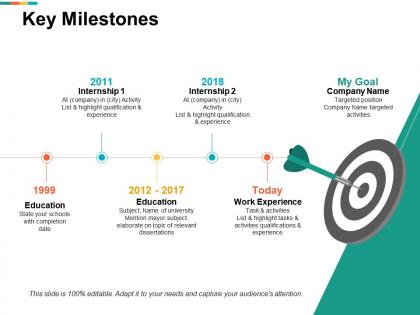
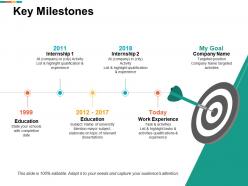
Key milestones work experience ppt powerpoint presentation file deck




Try Before you Buy Download Free Sample Product
 Impress Your
 Audience
 100%
100% Editable
 Save Hours
 of Time


Our Key Milestones Work Experience Ppt Powerpoint Presentation File Deck instantly generate a feeling of cheer. It can be highly amusing.
People who downloaded this PowerPoint presentation also viewed the following :
Key milestones work experience ppt powerpoint presentation file deck with all 5 slides:
Create amusing experiments with our Key Milestones Work Experience Ppt Powerpoint Presentation File Deck. Give folks a bit of intellectual entertainment.
FAQs for Key milestones work experience ppt powerpoint
Landing your first role is obviously step one. After that, nail those 90-day goals they set for you - seriously, this sets the tone for everything. Your first promotion or decent raise comes next, which honestly feels amazing when it finally happens. Then you want to become the person everyone goes to for something specific. Build real relationships too, not just fake networking stuff. I always tell people to write this stuff down somewhere - your phone, whatever - because when review time hits you'll totally blank on what you actually accomplished. Trust me on that one.
Dude, start tracking your wins RIGHT NOW in a simple doc. I use Google docs but whatever works. Jot down the date, what you did, and the impact - numbers are gold (like "boosted sales 15%" or whatever). Also save those nice emails from your boss in a folder somewhere. Update it monthly or you'll definitely forget. Trust me, your brain is useless at remembering this stuff when review time rolls around. I learned this the hard way lol. When you need to update your resume later, you'll actually have real examples instead of sitting there going "umm, I did... things?"
Honestly, networking is everything for your career - way more than people realize. Most of my best opportunities came from random conversations, not job boards. Companies love hiring people their employees already know and trust. Plus you get the real scoop on what it's actually like working somewhere. I probably sound like a broken record saying this, but start meeting people now even if you don't need a job. The hidden job market is real - so many roles never get posted publicly. Find mentors who've been where you want to go. It's basically career insurance.
So here's the thing - every work milestone you hit builds skills that actually transfer to other jobs. Leading a project? Managing people? That stuff matters everywhere. But you gotta figure out which skills are universal vs just specific to that one role. Like yeah, knowing how to deal with difficult stakeholders will help you anywhere, but being an Excel wizard... eh, maybe not so much lol. When you're tracking your wins, think about what core abilities you actually developed. Makes it way easier to pivot later when something better comes up. Trust me on this one.
Honestly, the biggest thing is just how your regular work takes over everything - you get swamped and milestone planning falls off your radar. Bad timing screws you over too. Like when there's budget cuts or your manager bails right when you need them most (happened to my coworker last year, terrible timing). Plus if your company doesn't really offer ways to move up or learn new stuff, you're kinda stuck. And when nobody tells you exactly what you need to accomplish? You end up just spinning your wheels for months. Start documenting what you're doing now though, and bug your manager for regular check-ins to make sure you're both on the same page.
Honestly, you've got to map out what advancement actually looks like first - otherwise people are just wandering around hoping for the best. Have real conversations about where they want to go during regular check-ins. Give them projects that actually build the skills they need, not some random training module that'll put them to sleep. Mentorship helps too. Let them work with other departments - that exposure is gold. When someone hits a milestone, make noise about it! Celebrate publicly and connect it to real opportunities. People need to see the path isn't just theoretical.
Look, hitting those experience milestones basically unlocks job postings you couldn't touch before - you know, the "5+ years required" stuff. Companies can be weirdly rigid about this, which is annoying but whatever. When you're negotiating salary, you'll have actual wins and years under your belt to back up your ask. Plus there's something about reaching certain benchmarks that makes you feel ready for bigger roles or switching industries entirely. Oh, and definitely keep track of your major accomplishments. You never know when you'll need to pull them out during interviews or performance reviews.
Honestly, internships and volunteer work are total game-changers. You can try out different fields without being stuck anywhere long-term. The hands-on experience is huge - you'll actually learn how offices work and meet people in your field. Plus employers love seeing you took initiative. My cousin learned more in her three-month internship than a whole semester of classes, no joke. Just don't treat them like throwaway resume lines. Document what you actually did and get your supervisor's contact info. When you're in interviews later, you'll have real stories to tell instead of just talking about coursework.
Honestly, good mentor feedback is a total game-changer. They'll catch stuff you're completely blind to and know exactly which skills actually matter for moving up. Most mentors have been where you are, so they get the shortcuts and know what mistakes to avoid. Here's the thing though - you gotta be specific when asking for feedback. Skip the vague "how am I doing?" questions. Ask stuff like "what's the one skill that'd get me promoted fastest?" or "what experiences do successful people here usually have?" That's when you get advice that actually helps you grow faster. Way better than generic feedback that doesn't really help.
Go for milestones that teach transferable skills - leadership stuff, big project wins, working across different teams. Those always matter no matter where you end up. I made the mistake early on of chasing really niche achievements that didn't mean much elsewhere. Also prioritize anything that gets you noticed or expands your network at work. Honestly, the whole "traditional path" thing is overrated anyway. Pick 2-3 key skills you want to build and chase milestones that strengthen those, even if they come from weird places. Your random experience becomes your edge when you can connect the dots for people.
Honestly, just start simple with quarterly check-ins where you jot down what worked and what bombed. I've got this random "wins and lessons" doc that I throw stuff into after big projects - sounds nerdy but it actually helps. Try setting up regular coffee chats with mentors or people you trust to get their take on how you're doing. The whole point is being real about your screw-ups AND your victories without spiraling into overthinking mode. Don't just wing the timing though - block out actual time for this stuff. Pick something recent and spend 15 minutes writing about it.
Honestly, culture plays a massive role in how people think about career timelines. Some backgrounds push you to job-hop and climb fast, while others are all about staying loyal to one company for years. Like, Silicon Valley worships the 25-year-old VP, but try that in a traditional manufacturing company and people might think you're being disrespectful to the whole seniority thing. Work-life balance matters way more in certain cultures too - not everyone's chasing the same definition of "making it." You can't assume your team sees success the same way you do. Different perspectives = different timelines.
Honestly, LinkedIn's timeline feature is super convenient for this - just dump your projects and certs right on your profile. If you want something more detailed though, I'd go with Notion or Airtable to build a custom database. Spreadsheets work great too (I'm kind of a Excel nerd lol). Mind mapping might be more your speed if you're visual - MindMeister's pretty solid, or even Canva for basic timelines. Pick whatever you'll actually stick with. Start basic and add more as you go.
Honestly, SMART goals changed everything for me career-wise. I used to set these super vague targets like "get promoted eventually" and wonder why nothing happened. With SMART goals, you get specific measurable steps instead of just hoping things work out. Like instead of "become a better leader," try "finish that leadership course and mentor two people by September." Way more concrete, right? The whole framework breaks those huge career jumps into bite-sized pieces you can actually track. I know it sounds kinda basic, but seriously—pick one of your current goals and rewrite it using SMART. You'll see what I mean immediately.
Your work milestones are basically your career highlight reel. Instead of boring job duties, you get to show actual impact - like "boosted sales 30%" vs "handled sales stuff." Way more impressive, right? These wins become perfect stories for interviews and LinkedIn updates. Plus they help you spot patterns in what you're actually good at. Honestly, even tiny victories matter more than you think. Start tracking them now because future-you will be scrambling to remember everything when it's resume time. Trust me on this one.
No Reviews