Manufacturing Sustainability Powerpoint Ppt Template Bundles

Rating:
90%
Manufacturing Sustainability Powerpoint Ppt Template Bundles
Slide 1 of 17
Favourites Favourites

Try Before you Buy Download Free Sample Product

Audience Impress Your
Audience
Editable 100%
Editable
Time Save Hours
of Time
The Biggest Sale is ending soon in
0
0
:
0
0
:
0
0
Rating:
90%
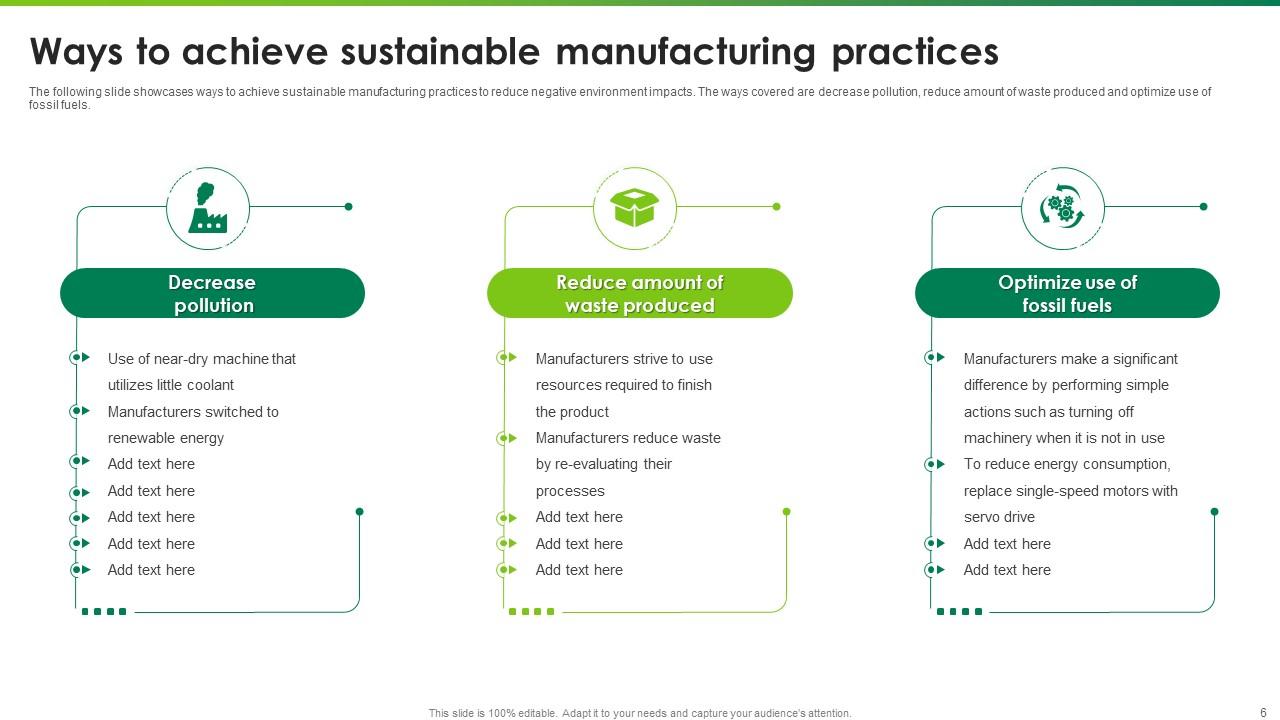
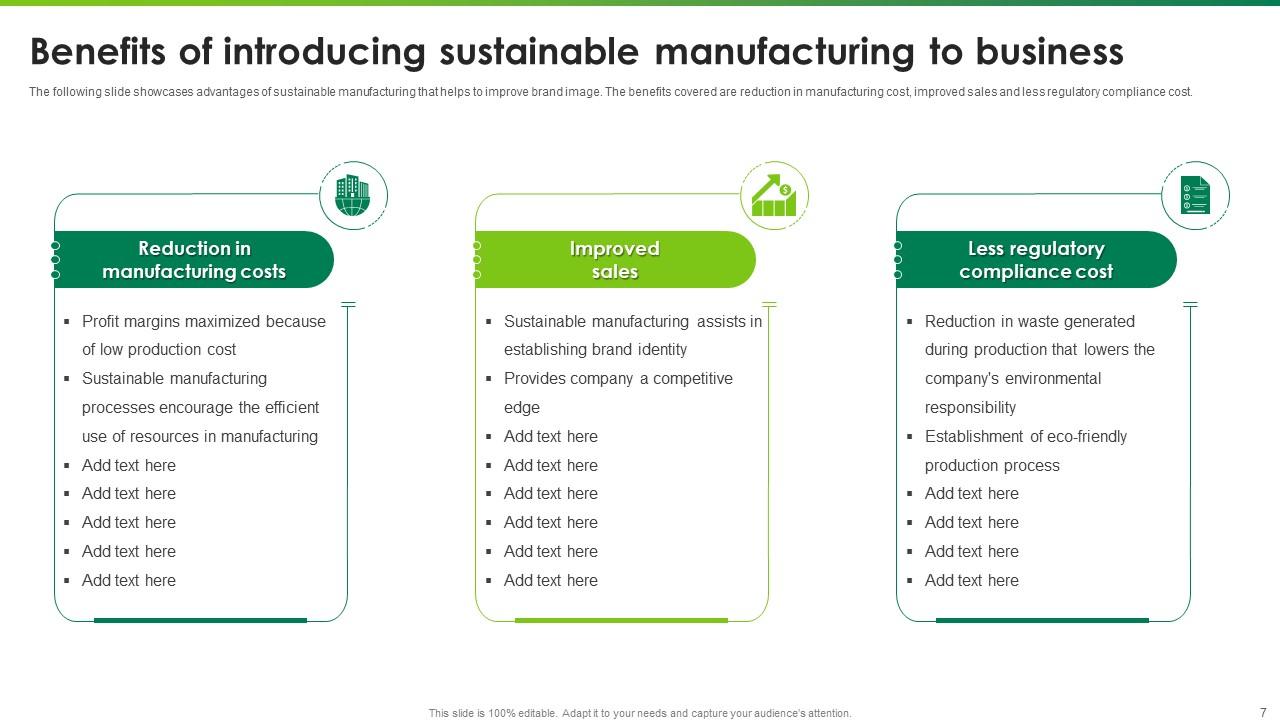
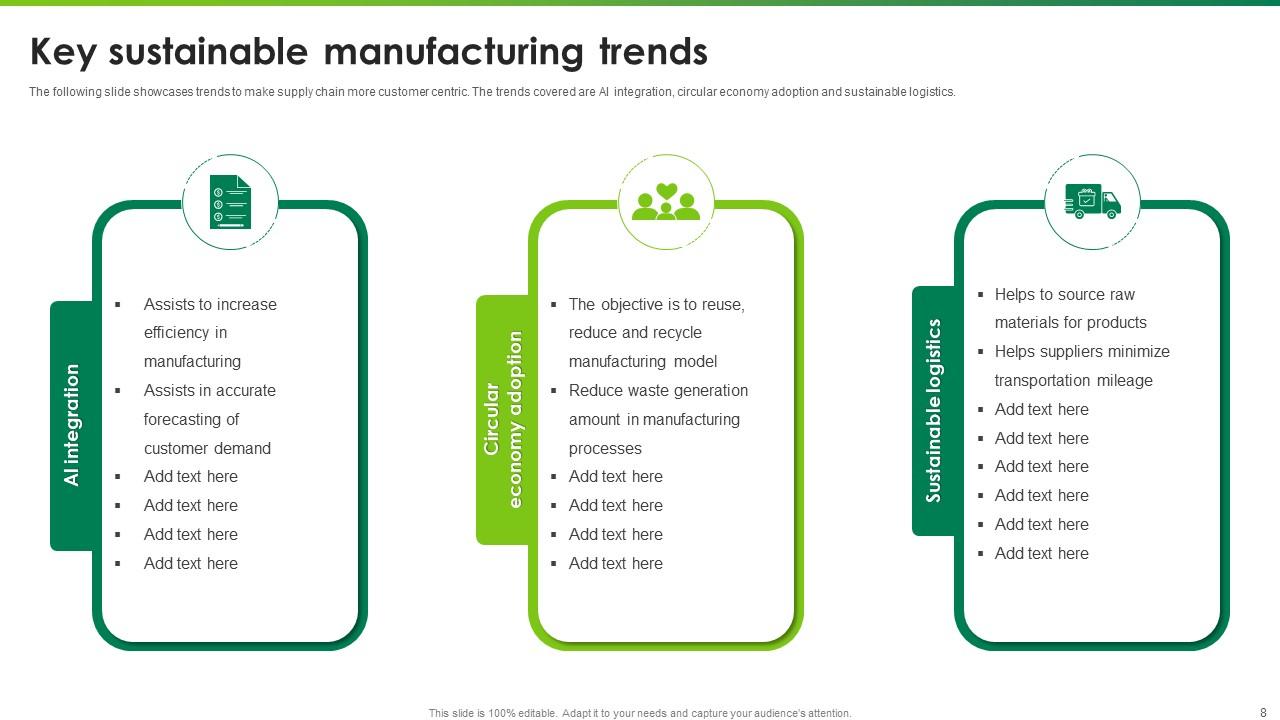
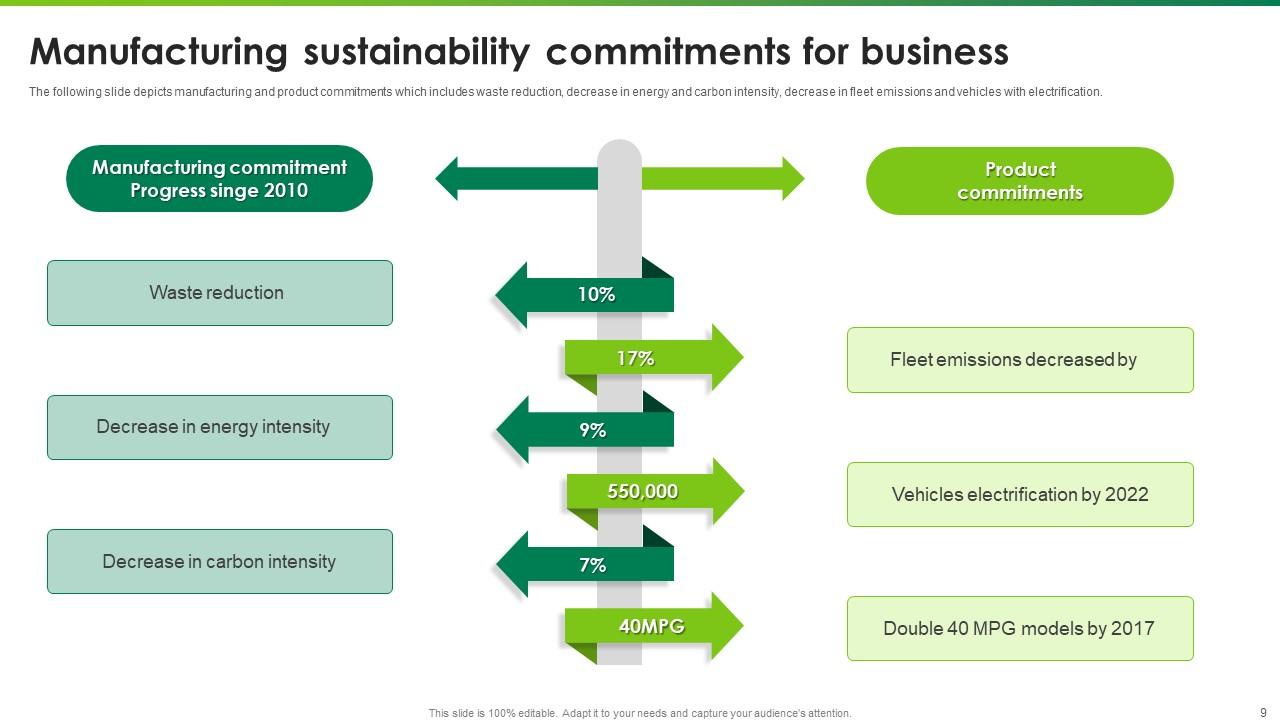
Introduce your topic and host expert discussion sessions with this Manufacturing Sustainability Powerpoint Ppt Template Bundles. This template is designed using high-quality visuals, images, graphics, etc, that can be used to showcase your expertise. Different topics can be tackled using the twelve slides included in this template. You can present each topic on a different slide to help your audience interpret the information more effectively. Apart from this, this PPT slideshow is available in two screen sizes, standard and widescreen making its delivery more impactful. This will not only help in presenting a birds-eye view of the topic but also keep your audience engaged. Since this PPT slideshow utilizes well-researched content, it induces strategic thinking and helps you convey your message in the best possible manner. The biggest feature of this design is that it comes with a host of editable features like color, font, background, etc. So, grab it now to deliver a unique presentation every time.

FAQs for Manufacturing Sustainability Powerpoint

So you're looking at the classic reduce, reuse, recycle thing but kicked up a notch. Build stuff that actually lasts instead of breaking after two years - crazy concept, right? Audit what you're doing now first though, that's where you'll find the easy wins. Swap to renewable energy when you can. Cut down on nasty chemicals in your processes. Oh and don't forget your supply chain impacts the environment too. Reusing materials beats recycling them every time. The whole point is thinking about your environmental footprint from start to finish, not just the obvious stuff.

Start with the basics - track your Scope 1, 2, and 3 emissions. Scope 1 is direct stuff from your operations. Scope 2 covers electricity usage. Scope 3 gets messy since it's your whole supply chain, from raw materials to shipping. Honestly, Scope 3 is where most companies struggle. Try carbon accounting tools like Watershed or Persefoni - they'll automate most of the data collection for you. Your utility companies usually have emissions data too, which helps. Oh, and consistency matters way more than perfection when you're starting out. Begin with whatever's easy to measure, then add more complex stuff later once you've got the hang of it.

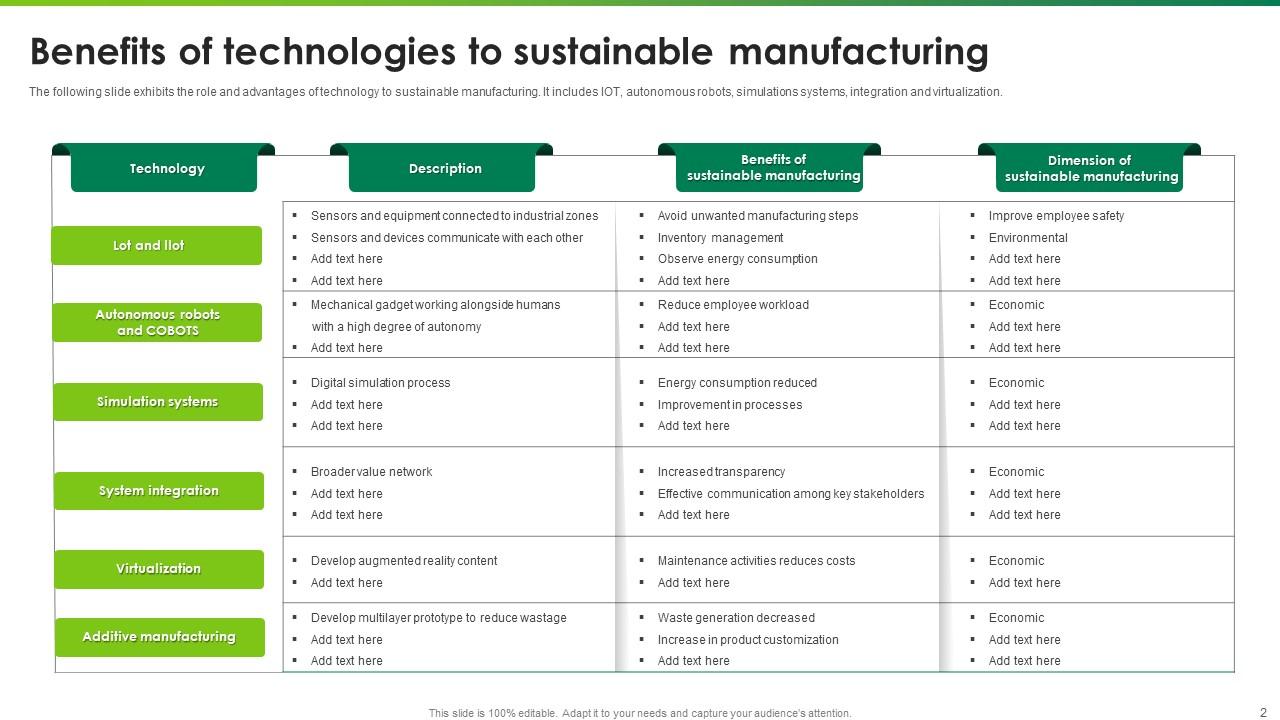
So technology is honestly a huge game-changer for sustainable manufacturing. IoT sensors can track your energy usage in real-time, while AI predicts machine maintenance before breakdowns happen (saves so much waste). Automation cuts down material waste too. These smart systems catch inefficiencies we'd totally miss as humans. 3D printing and digital twins are cool because you can prototype and test stuff virtually without burning through materials. Oh, and start with energy monitoring first - easiest quick win and you'll see ROI pretty fast on sustainability stuff.

Oh man, supply chain stuff is where you can really move the needle on sustainability. Local sourcing cuts down transport emissions big time. Work with suppliers who actually care about the environment - honestly, so many companies just greenwash their way through partnerships. Optimize your delivery routes and ditch excess packaging wherever you can. The circular approach works great too - reuse and recycle materials instead of tossing them. Track your carbon footprint across everything though. You can't fix what you don't measure, right?

Look, switching to circular economy stuff will save you money and make customers actually like you more. Raw material costs drop when you're reusing things instead of buying new every time. Plus disposal fees basically disappear. Your customers are getting pickier about sustainability anyway - might as well give them what they want, right? Regulations are only getting stricter, so you'll be ahead of the curve instead of stressed about compliance later. Oh and it opens doors to those eco-focused markets that pay premium. Just pick one product line first though - don't go crazy trying to overhaul everything at once.

Dude, sustainable manufacturing completely changes your design game from the start. Materials become all about recycling and biodegrading. Plus you're designing stuff to come apart easily so parts get reused later. Energy-efficient production matters way more than I expected when I first got into this stuff. The whole focus shifts to circular economy - longer lifecycles, modular designs, cutting waste everywhere. Honestly? The constraints actually make you more creative since you're tackling multiple challenges at once. I'd start by just looking at your current process and figuring out where to sneak sustainability thinking in early.

So there's a bunch of frameworks you'll need to deal with. EPA's Clean Air Act and Clean Water Act are the big baseline ones - gotta meet those no matter what. ISO 14001 is optional but most companies do it anyway since customers expect it. OSHA handles safety stuff, obviously. Depending on your industry, RCRA might hit you for waste management, and TSCA for chemicals. Oh, and if you're selling to Europe at all, REACH is a whole other headache. Honestly the chemical regs are probably the trickiest part. I'd figure out which ones actually apply to you first - don't try to tackle everything at once or you'll go crazy.

First thing I'd do is get an energy audit - you need to see where you're actually hemorrhaging money before fixing anything. LED lights and variable frequency drives are solid upgrades that'll pay for themselves pretty quick. Smart sensors are honestly where it's at though. They'll adjust your heating, cooling, and equipment automatically instead of everything running full throttle constantly. Heat recovery systems are worth checking out too - basically using waste heat from one area to power something else. I'd start with whatever three things use the most energy and work from there. Makes way more sense than trying to fix everything at once.

Start with education - show them why it matters and how their jobs connect to the bigger picture. Green teams work great, let people volunteer to lead stuff. Gamification is honestly genius - departments competing over energy savings or waste reduction gets people weirdly invested. But here's the thing, you need real incentives. Recognition is nice but bonuses or even pizza parties for hitting targets? That's when people actually care. Oh and definitely share progress updates regularly. Nobody stays motivated if they can't see their efforts making a difference. People love feeling like they're part of something that's working.

Honestly, customers are calling the shots here and pushing companies toward sustainability whether they like it or not. People will actually pay more for eco-friendly stuff now. They're also getting scary good at catching fake green marketing - I've seen brands get absolutely roasted online for it. Your customers want transparent supply chains and cleaner products. Miss that memo and you'll lose market share fast. This pressure works though. Companies start using renewable energy, cutting waste, sourcing better materials. The real advice? Listen to what your customers are saying about going green because they're usually way ahead of whatever the government's planning to regulate next.

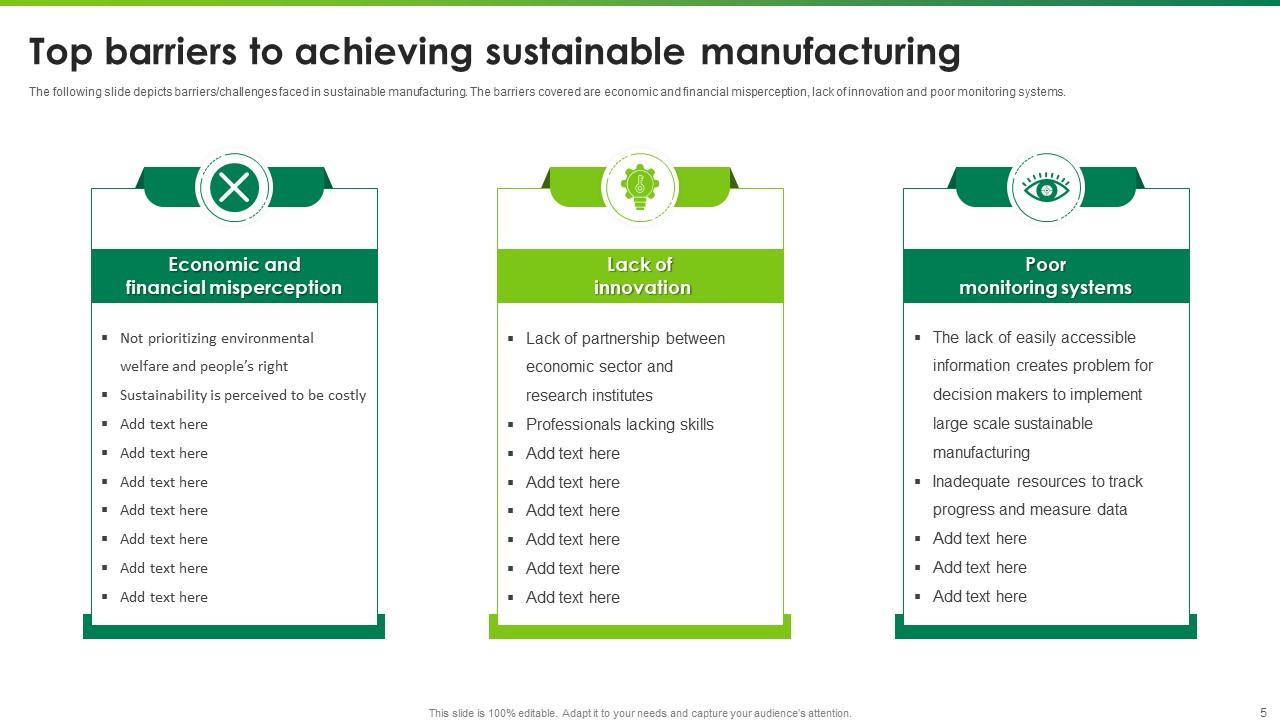
Ugh, money's the big one tbh. New equipment and training costs are brutal when you're already stretched thin. Regulations are a total maze too - I swear they make it confusing on purpose sometimes. Most smaller companies don't have sustainability teams like the big guys, so your regular staff gets stuck doing double duty. Supply chain stuff gets messy fast if your suppliers aren't playing ball yet. Honestly though? Just pick one thing first. Energy efficiency's usually a decent starting point. Don't try to overhaul everything at once or you'll go crazy.

Look, don't get caught up in upfront costs - think bigger picture ROI instead. Start small with energy efficiency stuff and cutting waste. Most of that pays for itself in like 2-3 years through lower bills and savings on materials. Once you've got those wins, then move to the pricier investments like solar or redesigning processes. Honestly, your leadership needs to see this isn't just spending money - it's protecting the business long-term. Customers expect this stuff now anyway, so you're really just staying competitive. First step? Audit what you're doing now and find the easiest cost-saving opportunities.

So ISO 14001 is actually pretty smart - it gives you a real framework instead of just winging it with sustainability stuff. You'll have to set actual measurable goals and track them, which keeps everyone honest when deadlines start piling up. Customers and partners love seeing that certification too, proves you're not just greenwashing. The whole process usually helps you catch waste and inefficiencies you didn't even notice before. Honestly, if you're going to take sustainability seriously anyway, might as well start with ISO 14001's requirements - gives you a decent roadmap to follow.

Dude, you should totally look into advanced materials - they're honestly pretty amazing for cutting waste. Carbon fiber is stronger than steel but weighs nothing, and there's bio-based plastics now that actually break down properly. Some materials even self-repair which is wild if you think about it. The recycling part is way better too compared to old-school stuff. I'd start by figuring out where you're wasting the most material, then see what alternatives are out there. Even switching one thing can make a huge difference for your environmental impact.

Honestly, global trade is kinda messy for sustainable manufacturing. Sure, you can find eco-friendly materials anywhere and spread good practices worldwide. But then you're dealing with crazy long supply chains and way more shipping emissions. Plus, good luck actually knowing what your suppliers are doing halfway across the world. The worst part? You end up competing against companies that don't give a damn about the environment and just undercut everyone. My take is you gotta build solid relationships with suppliers and pay extra for the verified sustainable ones. Yeah, it'll hurt your profits initially, but what choice do you have?

Ratings and Reviews

90% of 100
Review Form
Write a review
Most Relevant Reviews
  1. 80%

    by Smith Flores

    It's always a delight to see new templates from you! I am extremely pleased with the fact that they are easy to modify and fit any presentation layout in seconds!
  2. 100%

    by Miller Rogers

    Fantastic collection of visually appealing PowerPoint templates. They certainly uplift the look of the presentation.

2 Item(s)

per page: