Market expansion and growth editable world map ppt model

Rating:
80%
Slide 1 of 5
Favourites Favourites

Try Before you Buy Download Free Sample Product

Audience Impress Your
Audience
Editable 100%
Editable
Time Save Hours
of Time
The Biggest Sale is ending soon in
0
0
:
0
0
:
0
0
Rating:
80%
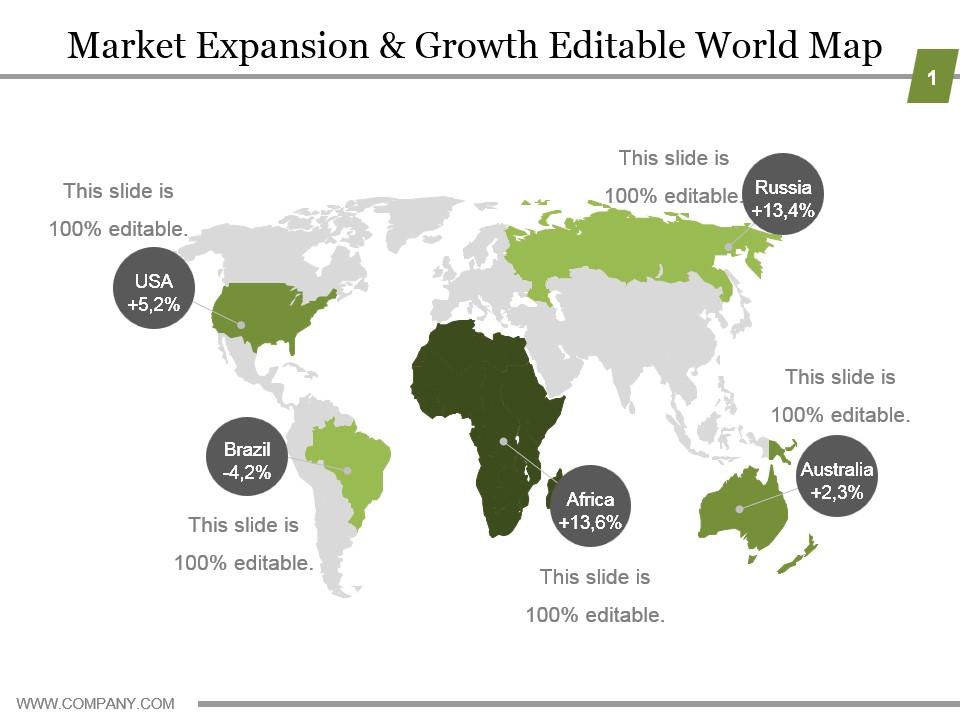
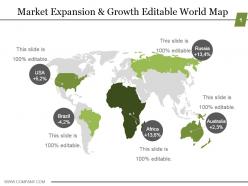
Presenting market expansion and growth editable world map ppt model. This is a market expansion and growth editable world map ppt model. This is a five stage process. The stages in this process are usa, russia, brazil, africa, australia.

People who downloaded this PowerPoint presentation also viewed the following :

FAQs for Market expansion and growth editable world

Key factors include market size and growth potential, competitive landscape analysis, regulatory requirements, cultural considerations, and entry barriers. These strategic elements enable organizations to assess viability through demographic research, local partnerships, and risk evaluation, with many companies finding that thorough market analysis ultimately delivers sustainable growth and competitive advantage in new territories.

Businesses can effectively assess market entry risks through comprehensive market research, competitive analysis, regulatory evaluation, financial modeling, and cultural assessment. These strategic approaches enable organizations to identify potential challenges like regulatory compliance, local competition, and consumer preferences, while many companies find that partnering with local experts and conducting pilot programs ultimately delivers valuable insights and minimizes costly missteps.

Market research serves as the foundation for successful market expansion by identifying target demographics, analyzing competitor landscapes, assessing market demand, evaluating regulatory requirements, and understanding cultural nuances. Through comprehensive research, companies can minimize risks, optimize resource allocation, and tailor their products or services effectively, with many organizations finding that data-driven expansion strategies deliver significantly higher success rates and sustainable competitive advantage.

Cultural differences significantly impact market expansion through varying consumer behaviors, communication styles, business practices, and regulatory expectations across regions. Companies that adapt their products, marketing messages, and operational approaches to local cultural nuances often achieve higher customer acceptance and competitive advantage, while those ignoring cultural factors frequently encounter resistance, miscommunication, and reduced market penetration in new territories.

Common mistakes include inadequate market research, ignoring cultural differences, underestimating regulatory complexities, poor local partnership choices, and insufficient capital allocation for sustained operations. These missteps often result from rushing expansion timelines without proper due diligence, with many companies finding that successful international growth requires strategic patience, local expertise, and adaptive business models.

Companies can measure market expansion success through revenue growth in new markets, customer acquisition rates, market share percentage, brand awareness metrics, and return on investment calculations. These indicators enable organizations to track performance across different regions and demographics, with many businesses finding that combining quantitative data with customer feedback delivers comprehensive insights for optimizing future expansion strategies.

Businesses can tailor offerings through comprehensive market research, localized product modifications, cultural adaptation of messaging, strategic pricing adjustments, and targeted distribution channels. Through these approaches, companies in sectors like retail, technology, and financial services enhance customer resonance, minimize cultural barriers, and accelerate market penetration, ultimately delivering competitive advantage and sustainable growth.

Local partnerships are crucial for successful market entry because they provide essential market knowledge, established distribution networks, and cultural insights that significantly reduce entry risks. These strategic alliances enable companies to navigate regulatory complexities, accelerate customer acquisition, and minimize operational costs, with many organizations finding that local partners deliver faster market penetration and sustainable competitive advantages.

Digital marketing strategies for global market expansion include social media localization, search engine optimization across international markets, content marketing tailored to cultural preferences, influencer partnerships in target regions, and data-driven advertising campaigns. These approaches enable companies to reach diverse audiences cost-effectively, build brand awareness across borders, and adapt messaging to local markets, with many organizations finding that strategic digital campaigns significantly accelerate international growth while minimizing traditional expansion costs.

Technology facilitates market expansion by enabling digital marketing reach, e-commerce platforms, data analytics for market insights, and cloud-based scalability solutions. Through automated customer acquisition tools and AI-driven market analysis, businesses streamline international operations, reduce entry costs, and accelerate growth timelines, with many small enterprises finding competitive advantages previously available only to larger corporations.

Companies should track revenue growth in new markets, customer acquisition costs, market penetration rates, brand awareness levels, and competitive positioning metrics. These indicators enable organizations to measure expansion effectiveness by monitoring sales performance, marketing efficiency, and market share gains, with many businesses finding that tracking local customer satisfaction and operational costs ultimately delivers strategic insights for sustainable growth.

Legal and regulatory environments significantly impact market expansion through compliance requirements, operational restrictions, licensing procedures, taxation frameworks, and industry-specific regulations. These factors influence market entry strategies, resource allocation, and timeline planning, with many organizations finding that early regulatory assessment and local legal partnerships streamline expansion processes while minimizing compliance risks and operational delays.

Businesses can leverage social media for market expansion through targeted advertising, influencer partnerships, community building, localized content strategies, and data-driven audience insights. These platforms enable companies to reach new demographics cost-effectively, test market receptivity in different regions, and build brand awareness globally, with many organizations finding that strategic social media campaigns deliver measurable customer acquisition and geographic growth.

Best practices for building brand awareness in new markets include comprehensive market research, localized messaging strategies, strategic partnership development, multi-channel marketing campaigns, and community engagement initiatives. These approaches enable organizations to establish credibility and recognition by understanding cultural nuances, adapting content for local preferences, and leveraging established networks, with many companies finding that combining digital outreach with grassroots community involvement accelerates market penetration and delivers sustainable competitive advantage.

Companies can balance standardization and localization by adopting a "glocal" approach, maintaining core brand elements while adapting products, messaging, and operations to local preferences, regulations, and cultural nuances. This strategic combination enables organizations to achieve operational efficiency through standardized processes while delivering culturally relevant customer experiences, with many multinational corporations finding that selective localization in key areas ultimately drives stronger market penetration and competitive advantage.

Ratings and Reviews

80% of 100
Review Form
Write a review
Most Relevant Reviews
  1. 80%

    by O'Sullivan Evans

    Unique research projects to present in meeting.
  2. 80%

    by Damon Castro

    Great product with highly impressive and engaging designs.

2 Item(s)

per page: