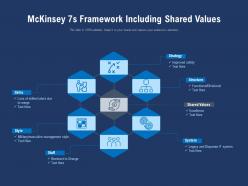
Mckinsey 7s framework including shared values
Try Before you Buy Download Free Sample Product
Audience
Editable
of Time
Acquire credits galore with our Mckinsey 7s Framework Including Shared Values. Get a huge amount of appreciation.
People who downloaded this PowerPoint presentation also viewed the following :
Mckinsey 7s framework including shared values with all 2 slides:
Get a huge amount of appreciation with our Mckinsey 7s Framework Including Shared Values. You will acquire credits galore.
FAQs for Mckinsey 7s framework
So McKinsey's 7S thing breaks down like this - you've got Strategy, Structure, Systems, then Shared Values, Skills, Style, and Staff. The first three are the "hard" stuff that's pretty straightforward to tweak. Org charts, processes, whatever. But those last four? Way messier to deal with since they're all about culture and how people actually work together. Everything connects though - mess with your structure and suddenly your team dynamics shift too. Honestly, Shared Values kind of runs the whole show from the middle. When you're trying to figure out what's broken, just check if all seven pieces actually fit together.
First thing - map where you actually stand with all seven elements: strategy, structure, systems, shared values, style, staff, and skills. Most companies honestly just skip this part then act shocked when everything falls apart later. The "soft" stuff like values and skills? That's what you need to tackle hard since they're the real pain to change but drive everything else. Set up cross-functional teams to work on each S at the same time - not one after another. Here's the thing though: you can't just fix one piece without thinking about how it'll mess with the others. Keep tracking those connections between elements or you'll get some nasty surprises halfway through.
Shared Values sits right in the middle of the 7S model for good reason - it's what holds everything together. Think of it as your company's actual DNA, not whatever corporate fluff is hanging in the break room. These core beliefs shape how people really act day-to-day. Here's the thing: if your values are weak or fake, good luck getting anyone on board when you try changing strategy or structure. I've seen too many change initiatives fail because leadership ignored this part. Start by figuring out what truly drives your organization. Then make sure whatever changes you're planning don't clash with those values, or you'll be fighting an uphill battle.
Honestly, the 7S thing is pretty clever - it stops you from just shuffling people around on paper and actually thinking about the bigger picture. Map out how your current setup either helps or totally works against what you're trying to do strategically. Look for those awkward mismatches, like when you want collaboration but everyone reports up separate silos. That's where it gets interesting. Once you spot the friction points, you can redesign everything together - structure, systems, people skills - so they actually reinforce each other instead of fighting. Way more effective than changing one thing at a time.
So map out where you currently stand with all seven elements - strategy, structure, systems, shared values, style, staff, and skills. Honestly, this part's brutal because you'll see how disconnected everything actually is. Look for gaps where things don't support each other. Like when your structure totally contradicts your strategy, or your team's skills don't match what you're trying to achieve. The real insight comes from spotting these disconnects, not just going through the motions. Run workshops with different teams - they'll give you perspectives you'd never think of on your own.
So the 7S model is basically your sanity check for cross-functional projects. Map out how your project hits structure, systems, and skills across departments first. But honestly? The soft stuff—shared values, style, staff dynamics—that's where everything usually goes sideways because everyone's got different priorities. Strategy keeps people pointed in the same direction, which sounds obvious but you'd be surprised. Before your next cross-functional thing kicks off, do a quick 7S audit. You'll catch the friction points early instead of dealing with drama later. Trust me on this one.
Honestly, most companies just treat it like a checkbox exercise instead of actually using it as an ongoing tool. They get obsessed with the obvious stuff - strategy, structure, systems - but totally ignore the people side of things. That's where transformations actually die, in my experience. Plus everyone wants to fix everything at once, which is just... no. Start by figuring out where you actually stand across all seven areas first. Then pick maybe 2-3 things that need the most work based on what you're trying to solve. The elements all connect anyway, so changing one affects the others.
Yeah, the 7S Framework works great for culture stuff! Map out where you're struggling across all seven areas first. Your values need to match what people actually do day-to-day. Staff structure should encourage collaboration instead of those annoying silos. Recognition programs and feedback systems reinforce the culture you want. Skills development is massive - shows you actually care about growth. Leadership style cascades down super fast, so that matters. Strategy has to connect individual work to the bigger picture. Honestly? Most culture projects tank because companies focus on just one element when it's really about how everything connects together.
Honestly, the 7S Framework works great for digital stuff because it makes you think past just "let's buy new software." Map out your current situation first across all seven areas. Strategy needs to match your new digital goals, obviously. Teams should probably restructure around agile methods - way more flexible that way. Skills gap is usually massive, so plan for serious training. Your processes need a complete overhaul to be digital-first. But here's what trips up most companies: culture and shared values. Everyone has to actually want this change, not just tolerate it. I've watched too many transformations crash because leadership ignored the people side.
Look, each piece affects how fast you can actually pivot when things change. Strategy and structure give you the framework for quick decisions. Systems let information flow fast so you can execute. Skills matter because your people need to handle whatever gets thrown at them. Staff is about having the right talent already there. Style though - this is where I've seen things go wrong most often. Rigid leadership absolutely destroys agility faster than anything. Shared values keep everyone moving in the same direction during chaos, so you're not fighting your own team while trying to change. Bottom line: all seven need to support flexibility, not create roadblocks.
Totally! Just adapt it to your world. Strategy becomes about hitting your mission instead of making money. Structure gets interesting because you're dealing with board dynamics plus volunteers. Systems are honestly the trickiest part - donor databases, program tracking, compliance stuff, it all has to work together somehow. Your "staff" includes volunteers too, not just paid people. Skills matter but so does genuine passion for the cause. The shared values and leadership style parts stay pretty much the same. I'd map out where you are now across all seven areas, then spot the gaps that are actually holding back your impact.
So the 'Systems' part of McKinsey's 7S is basically all your processes - formal ones and the messy informal stuff too. New tech doesn't just add tools, it actually rewires how info moves around and how people make decisions. One small software update can mess with everything (learned this the hard way at my last job). Your technology needs to match your strategy and company culture though. Otherwise you end up with fancy systems that everyone ignores. It's wild how connected everything is once you start changing processes.
Before making any big strategic moves, try mapping out where you're at right now using the 7S Framework - strategy, structure, systems, shared values, style, staff, and skills. It's actually pretty revealing how everything connects. Run your strategic options through this lens to catch friction points early. I'd honestly start with a current-state assessment with your leadership team next quarter. The framework shows you what'll change easily and what's gonna push back hard. It sounds kind of corporate-y but it really works for spotting blind spots you'd miss otherwise.
SWOT analysis pairs really well with 7S - gives you that external context the framework totally misses. Stakeholder mapping's another good one since it shows who gets impacted when you mess with those seven elements. Change readiness assessments are clutch if you're doing big transformations. Some folks add Porter's Five Forces but honestly that feels like overkill most of the time. Just pick 2-3 tools that fill the gaps 7S leaves behind. You don't want to end up drowning in frameworks instead of actually getting useful insights.
Honestly, it's genius because it gives everyone the same vocabulary to work with. You've got seven buckets - strategy, structure, systems, shared values, style, staff, and skills. No more vague complaints about "alignment issues" when you can point to exactly what's broken. What's cool is how it forces people to see connections they missed before. Like, your HR stuff actually impacts how strategy gets executed, and your systems mess with team collaboration more than you'd think. I'd literally just walk through all seven in your next meeting - it's like having a roadmap when everyone's usually just wandering around lost.
No Reviews