Messaging Strategy Powerpoint Ppt Template Bundles
Try Before you Buy Download Free Sample Product
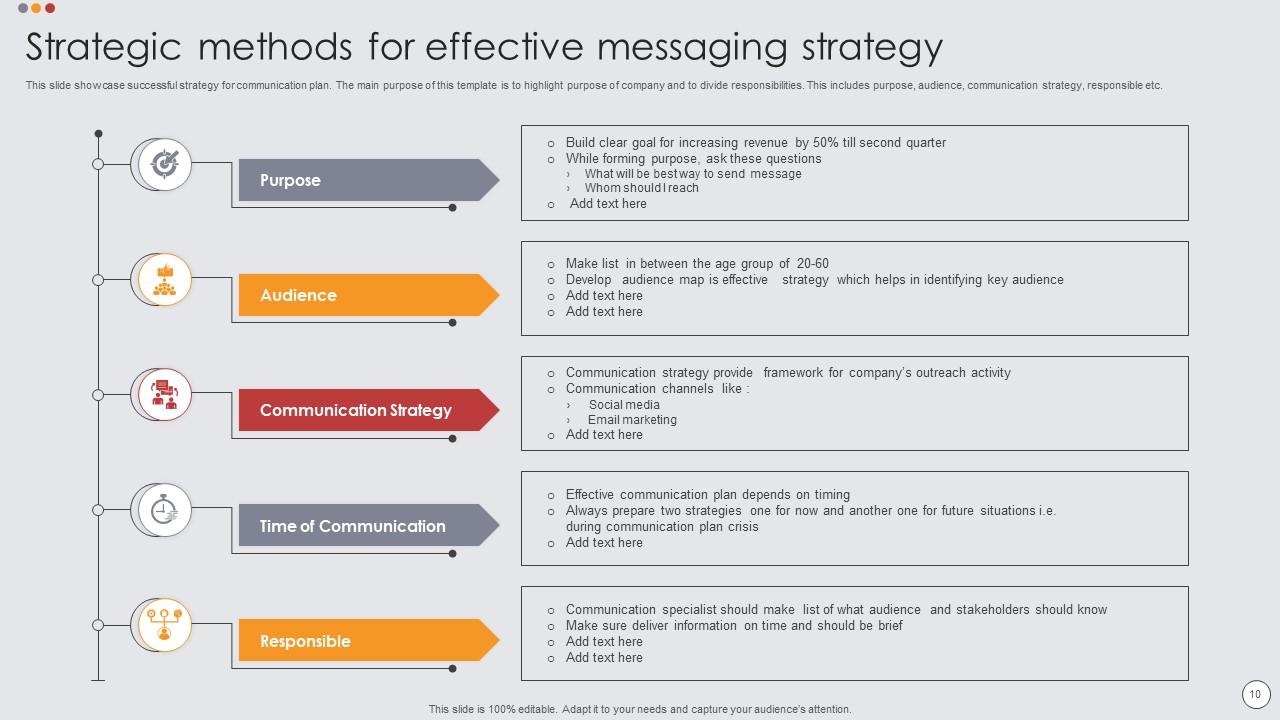
Audience
Editable
of Time
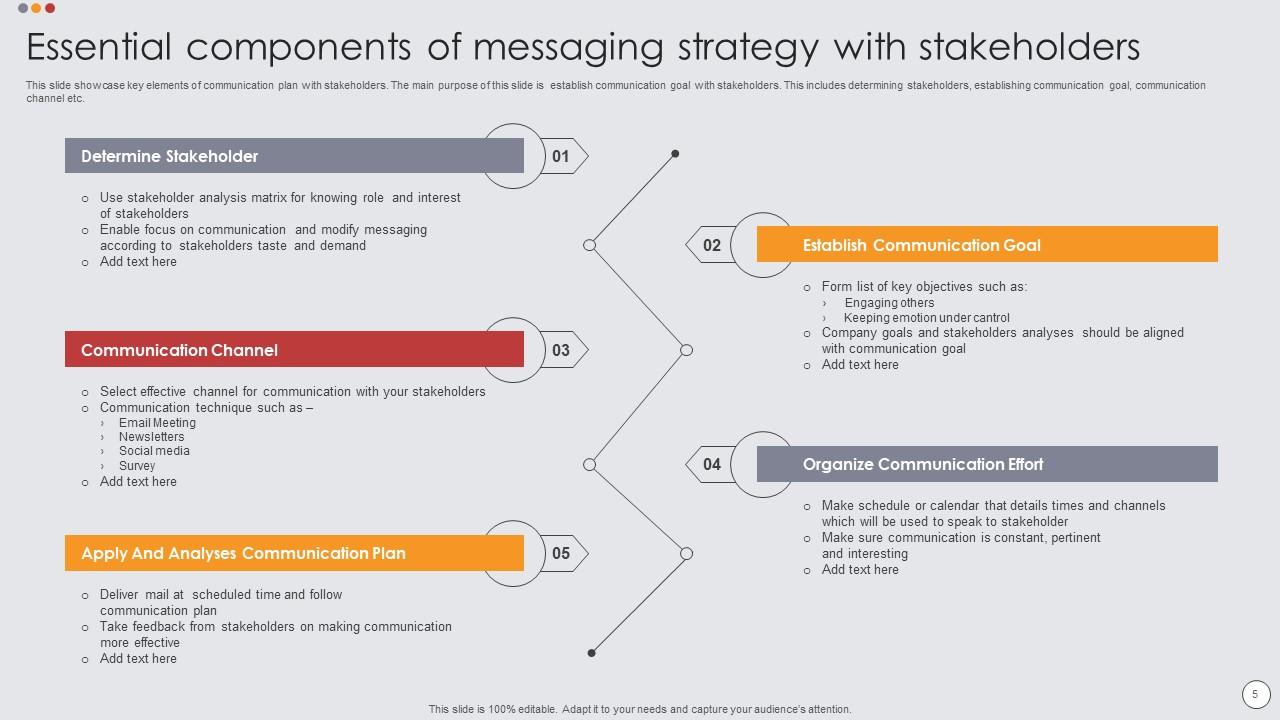
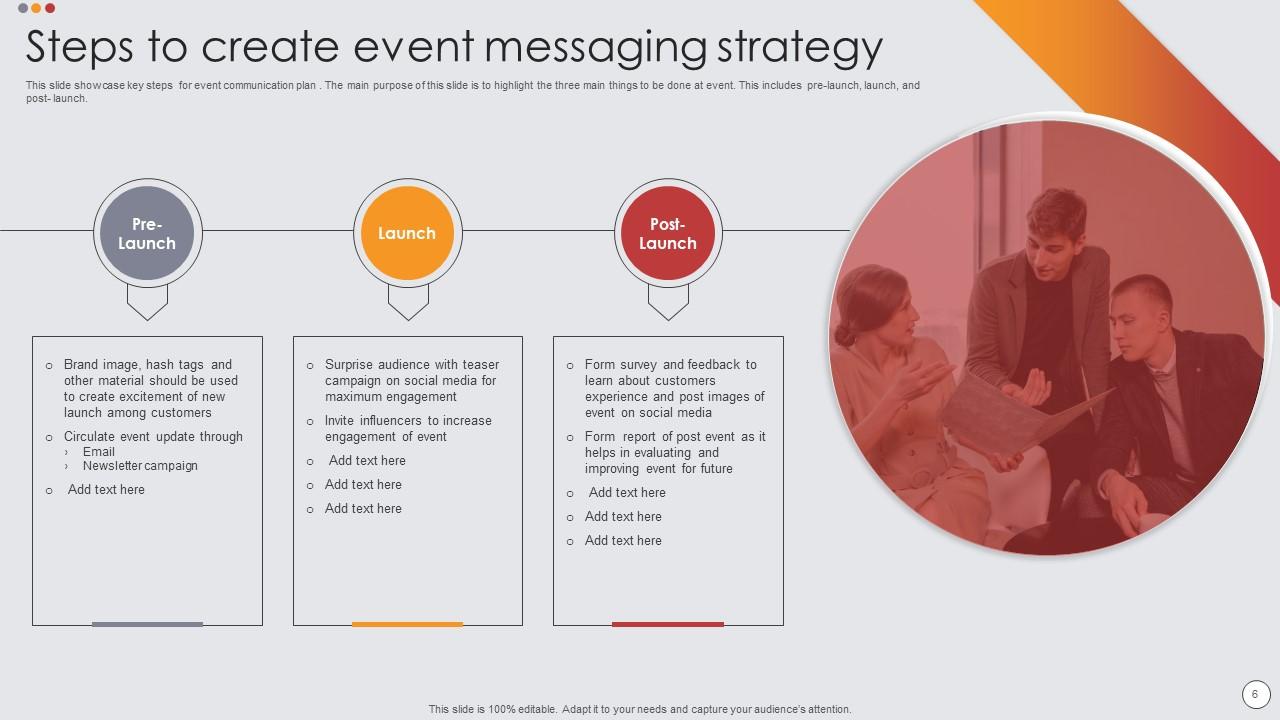
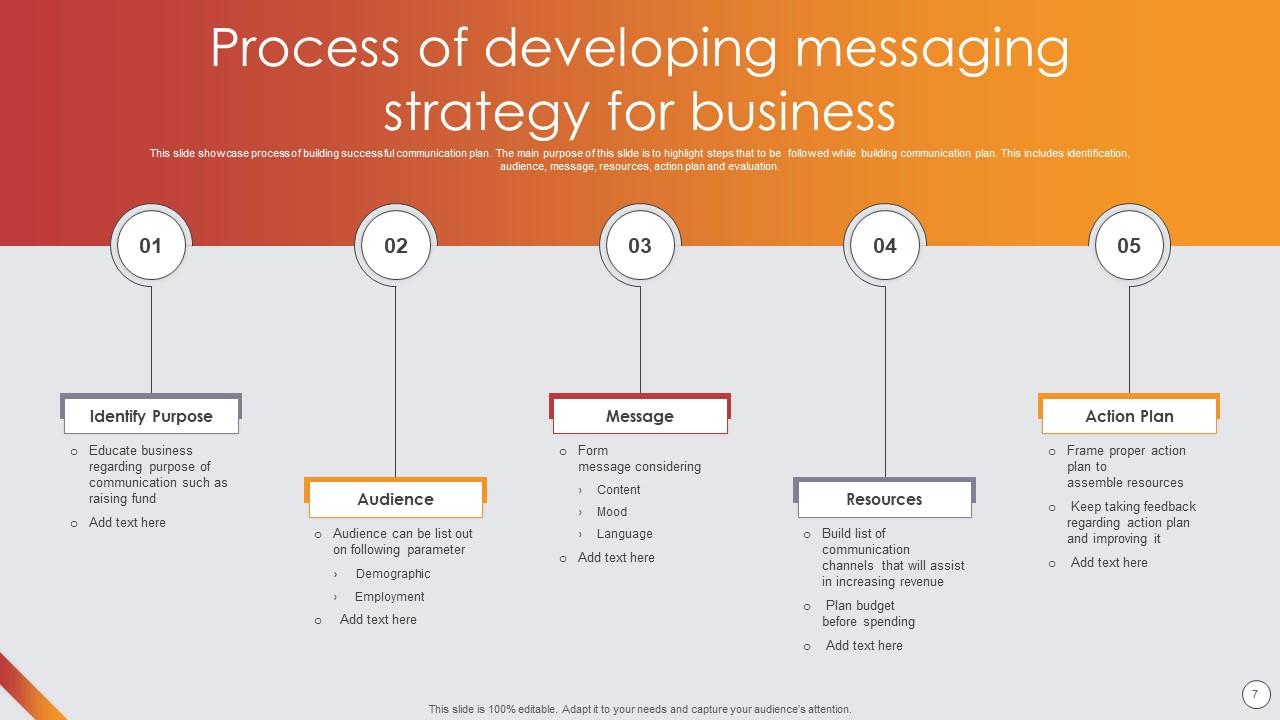
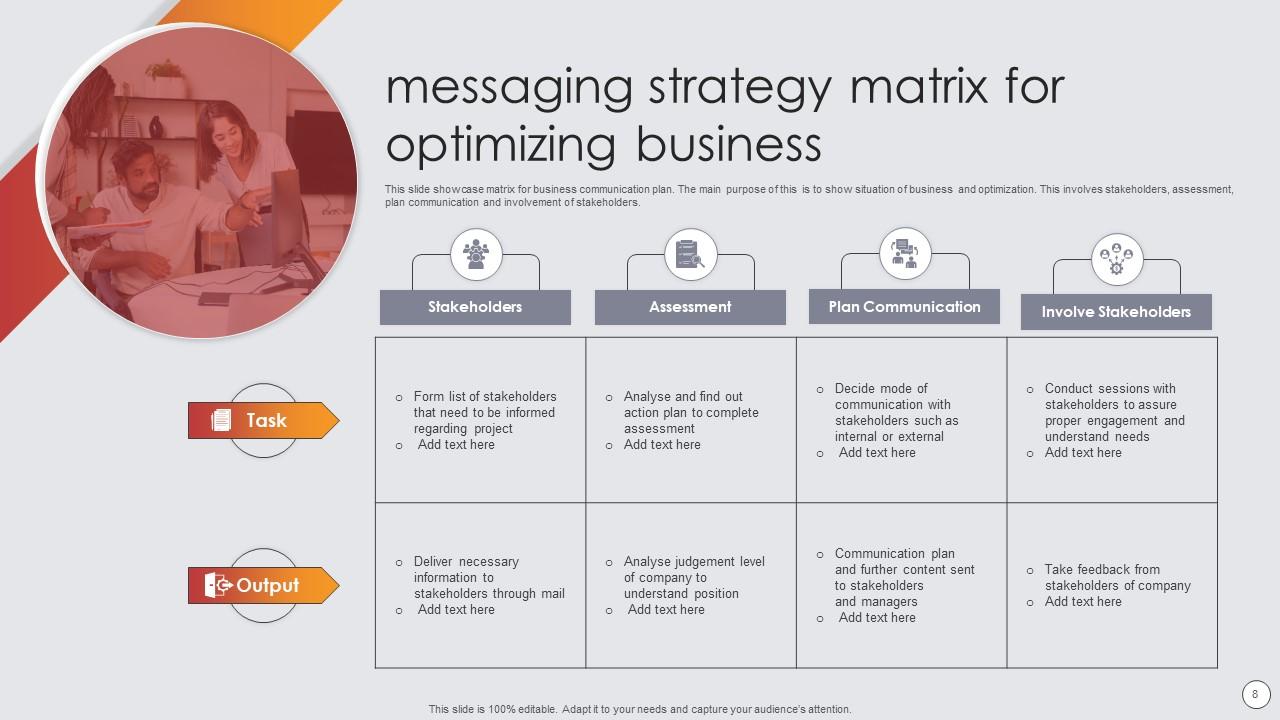
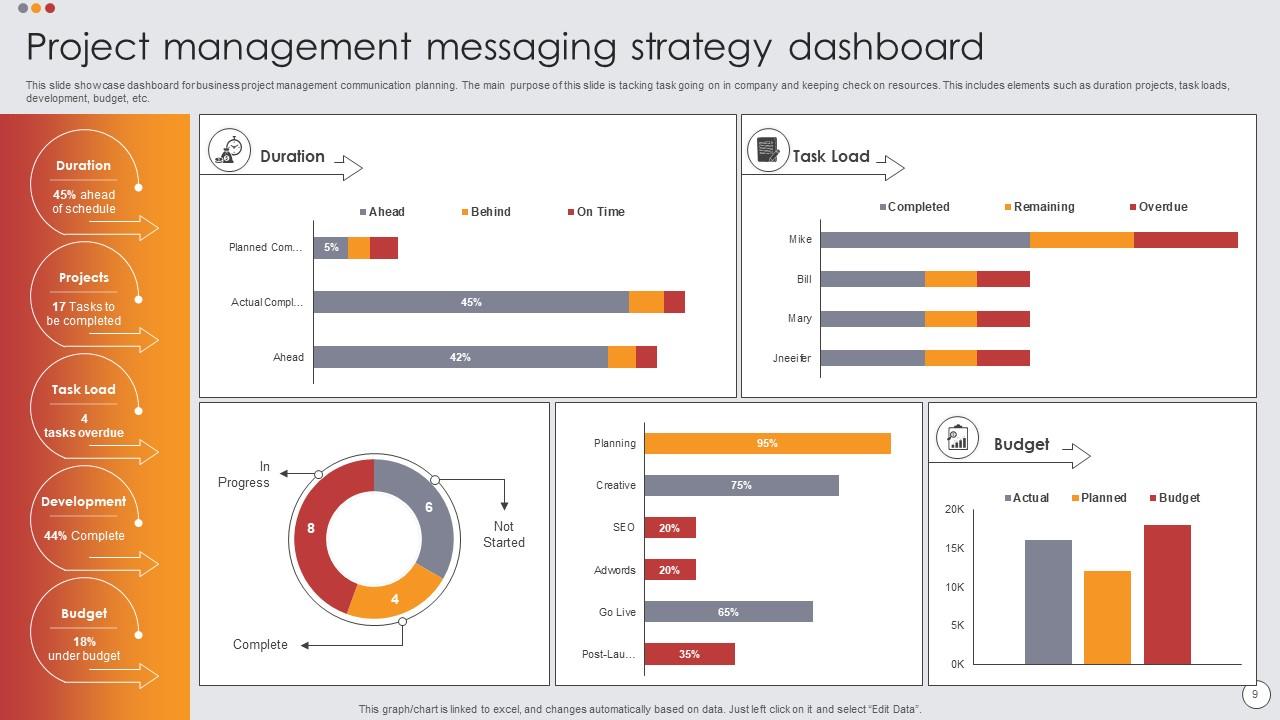
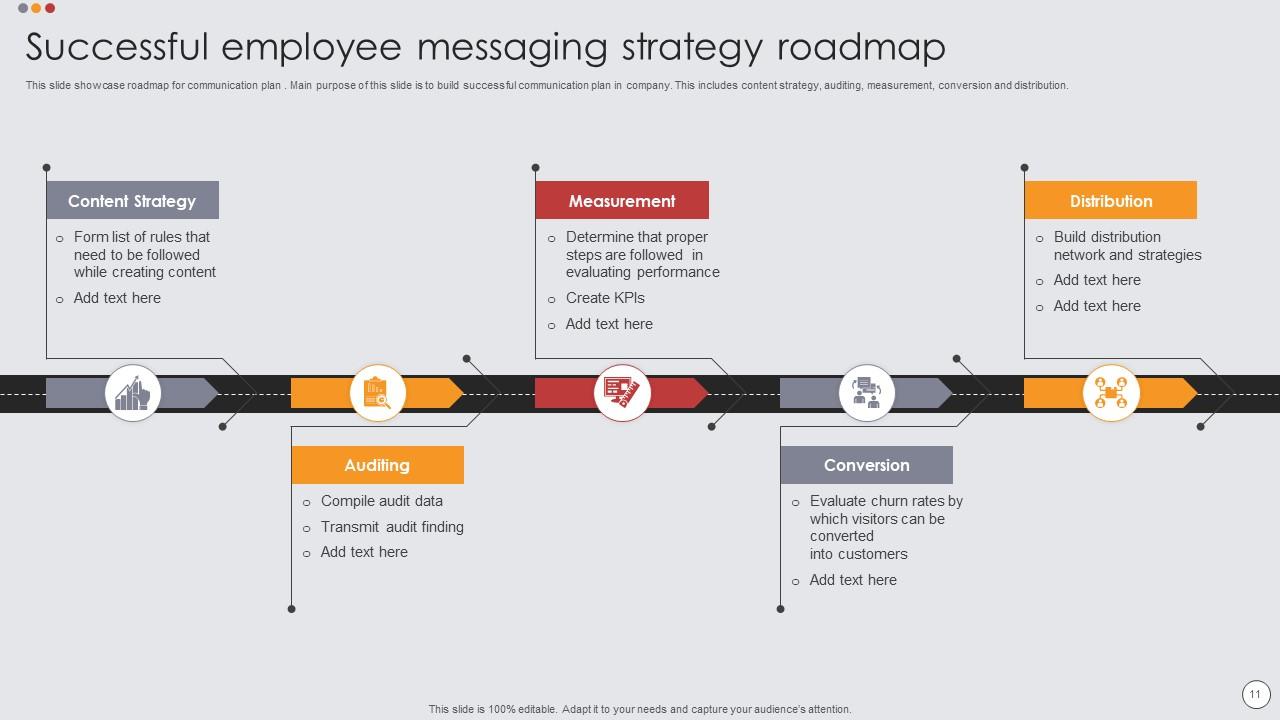
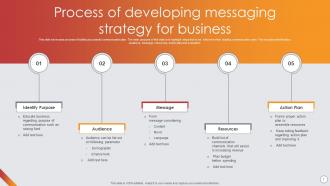
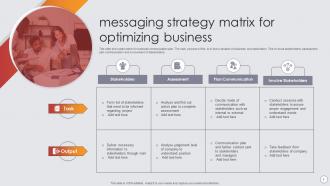
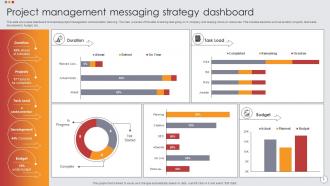
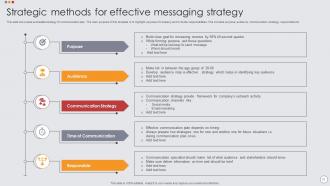
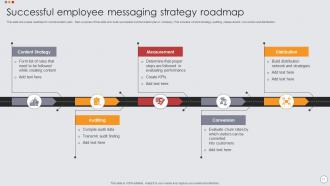
A communication plan is a structured and strategic document that outlines how information will be exchanged,disseminated,and managed within an organization,project,or initiative. It serves as a roadmap that defines who needs to receive what information,when,and through which communication channels.PowerPoint presentation on the Communication Plan a vital strategy for seamless project management. This dynamic PPT elucidates the essence of an effective plan that forms the bedrock of successful project execution.Uncover strategies that transcend barriers,fostering interdepartmental coherence and stakeholder engagement.Explore different communication channels,from formal reports to real time chats,dissecting their roles in disseminating critical information. Delve into the art of crafting targeted messages,ensuring clarity and resonance with intended recipients.

People who downloaded this PowerPoint presentation also viewed the following :
Messaging Strategy Powerpoint Ppt Template Bundles with all 22 slides:
Use our Messaging Strategy Powerpoint Ppt Template Bundles to effectively help you save your valuable time. They are readymade to fit into any presentation structure.
FAQs for Messaging Strategy Powerpoint
Effective messaging strategies include target audience identification, core value proposition development, brand voice definition, channel-specific adaptation, and consistent timing coordination. These components work together by aligning internal communications, differentiating market positioning, and delivering cohesive customer experiences across touchpoints, with many organizations finding that strategic messaging integration ultimately drives stronger brand recognition and competitive advantage.
A messaging strategy can be tailored by analyzing demographic data, behavioral patterns, communication preferences, pain points, and preferred channels for each segment. Through targeted research and persona development, organizations customize tone, language, content format, and delivery timing, with financial services finding that personalized messaging increases engagement rates significantly while building stronger customer relationships.
Storytelling transforms messaging strategy by creating emotional connections, simplifying complex concepts, making brands memorable, and building authentic relationships with audiences. Through narrative frameworks, organizations enhance customer engagement, differentiate from competitors, and communicate value propositions more effectively, with many companies finding that story-driven messaging significantly increases conversion rates and brand loyalty.
Businesses can measure messaging effectiveness through customer engagement metrics, conversion rates, brand awareness surveys, social media analytics, and sales performance data. These measurement approaches enable organizations to track message resonance across different channels, optimize communication strategies based on audience response, and ultimately enhance customer acquisition while improving brand positioning in increasingly competitive markets.
Brands should consider audience behavior differences, visual constraints, interactivity levels, content consumption speed, and measurement capabilities when creating messaging for digital versus print media. Digital platforms enable real-time engagement, targeted personalization, and immediate feedback loops, while print delivers longer attention spans and premium brand positioning, with many organizations finding that integrated approaches across both channels ultimately enhance message retention and drive stronger customer connections.
A messaging strategy evolves through continuous market research, customer feedback analysis, competitive monitoring, and performance metrics evaluation to adapt positioning, tone, and key messages. Organizations regularly refine their communication approaches based on emerging trends, shifting consumer preferences, and market dynamics, with many companies finding that quarterly strategy reviews and agile messaging frameworks enable them to maintain relevance and competitive advantage.
Techniques include brand guidelines implementation, centralized content calendars, cross-platform templates, unified tone documentation, and regular messaging audits across channels. These approaches streamline communication by standardizing visual elements, coordinating campaign timing, and maintaining consistent voice, with many organizations finding that integrated messaging platforms ultimately deliver stronger brand recognition and enhanced customer experiences.
Competitor analysis informs messaging strategy by identifying market gaps, revealing successful positioning approaches, and highlighting differentiation opportunities that resonate with target audiences. Through comprehensive competitive research, brands can craft unique value propositions, avoid oversaturated messaging territories, and develop strategic positioning that delivers competitive advantage, with many organizations finding stronger market presence.
Common messaging strategy pitfalls include lack of audience research, inconsistent messaging across channels, overly complex language, failure to differentiate from competitors, and neglecting message testing. These missteps often result in confused customers, weakened brand positioning, and reduced marketing effectiveness, with many organizations finding that strategic message alignment and regular refinement ultimately deliver stronger engagement and competitive advantage.
Customer feedback refines messaging strategy through surveys, social media monitoring, focus groups, customer interviews, and analytics tracking. These insights reveal messaging resonance, identify communication gaps, and highlight unaddressed customer needs, with many organizations finding that iterative refinement based on real customer voices ultimately delivers more targeted campaigns and stronger market positioning.
Cultural context significantly impacts messaging effectiveness by influencing language preferences, visual interpretations, communication styles, and value systems across different audiences. Messages that resonate in individualistic cultures may fail in collective societies, while color symbolism, humor, and storytelling approaches vary dramatically between regions, with many global brands finding that localized messaging strategies deliver higher engagement rates and stronger market penetration.
Aligning messaging strategy with business goals requires integrating key performance indicators, target audience insights, brand positioning, and competitive differentiation into cohesive communications frameworks. This strategic combination enables organizations to streamline customer acquisition, enhance brand recognition, and accelerate revenue growth, with many companies finding that consistent messaging across channels ultimately delivers measurable ROI and sustainable competitive advantage.
**INPUT**: What tools or frameworks are available to help create a messaging strategy? **OUTPUT**: Messaging strategy frameworks include brand positioning canvases, customer journey mapping, value proposition frameworks, competitive analysis matrices, and message testing platforms. These tools streamline strategic communication by aligning brand voice, identifying audience touchpoints, and measuring message effectiveness, with many organizations finding that systematic frameworks deliver consistent messaging across channels, ultimately enhancing brand recognition and customer engagement. [Word count: 60 words]
Emotional appeal enhances messaging strategy by creating deeper audience connections, increasing message retention, and driving stronger behavioral responses through storytelling, empathy, and shared values. When brands integrate emotional elements with rational messaging, they achieve higher engagement rates, improved brand loyalty, and more memorable communications, with many organizations finding that emotionally-driven campaigns deliver significantly better conversion rates and customer lifetime value.
A unique value proposition serves as the foundation of effective messaging strategy, clearly differentiating your brand from competitors while communicating specific benefits that resonate with target audiences. It streamlines marketing communications, enhances customer acquisition efforts, and strengthens brand positioning across all channels, with many organizations finding that well-defined value propositions significantly improve conversion rates and customer engagement.
-
“Superb. What a great finding. Thankful for SlideTeam. We were paying people to make slides which went all in vain. We are so happy to have found you.”
-
Attractive design and informative presentation.