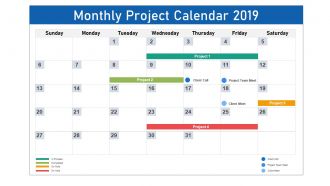
Monthly project calendar 2019
Try Before you Buy Download Free Sample Product
Audience
Editable
of Time
Dare to dream bigger with our Monthly Project Calendar 2019. They help you achieve great feats.
People who downloaded this PowerPoint presentation also viewed the following :
Monthly project calendar 2019 with all 5 slides:
Be a champion among champions with our Monthly Project Calendar 2019. Be declared the best by far.
FAQs for Monthly
So there's five main phases - initiation, planning, execution, monitoring, and closure. Most projects crash because people skip steps, honestly. You start by figuring out what you're actually trying to do and getting everyone on board. Then plan out your timeline and resources (boring but necessary). Execution is just doing the work. Monitoring means checking in regularly so things don't go off the rails. Closure wraps it up and - this part's underrated - captures what you learned. Don't treat them like separate checkboxes though. They build on each other, which is where the real magic happens.
Start with a solid risk assessment during planning - figure out what could go wrong, score everything by probability and impact, then build your mitigation plans. Most PMs totally blow off the regular check-ins though, which drives me nuts. You should be hitting that risk register weekly, updating scores when stuff shifts, adding new risks as they come up. The trick is making it routine instead of just some one-time planning thing. I'd set up reminders to review risks every sprint or milestone - otherwise it just becomes another forgotten doc collecting digital dust.
Dude, you really need to get your stakeholders sorted early or you'll be dealing with scope creep nightmares later. Map out who has influence and who actually cares about the project. Then just... talk to them regularly? I know it sounds obvious but most people skip this part. Set up check-ins and status updates before things go sideways - don't wait for them to hunt you down when they're already pissed. The whole thing is honestly the difference between a smooth project and total chaos. Oh, and pro tip: some stakeholders will pretend they don't care but they definitely do.
Honestly, get everything in writing first - like, stupidly detailed writing. What you're doing, what you're NOT doing, deliverables, all that boring stuff everyone needs to sign off on. Trust me, I've watched projects completely implode because someone thought "oh it's just one tiny thing" wouldn't matter. Set up a formal process where any changes need written approval and impact assessment. Don't let scope creep sneak in through casual conversations. Document everything before you agree to changes - how it affects timeline, budget, the works. Making changes visible stops the madness.
Regular check-ins are a game changer - do daily standups or weekly meetings. Document everything in one place so people can actually find it (trust me, you'll thank yourself later). Quick stuff? Text or Slack. Formal things need email. Complex conversations work better face-to-face or on video calls. Be upfront about what's working and what isn't. Oh, and ask your team how they like getting info - some people hate being pinged constantly while others want updates every hour. Consistency matters more than perfection. Start there and adjust as you go.
Don't try to flip everything overnight - that's a recipe for disaster. Pick a few things like daily standups and retrospectives to start with. Those actually make a difference pretty fast for team communication. Yeah, stakeholders will probably whine about meeting too much, but honestly they get over it. You could also try user stories while keeping whatever documentation process you already have. Run a pilot project first to show it works, then expand from there. The trick is figuring out which pieces actually fit your team's vibe instead of forcing the whole framework on everyone.
Honestly, I'd start with Trello or Asana - they're super easy to pick up and your team won't hate you for it. Monday.com is solid too if you want something a bit flashier. My last team was obsessed with spreadsheets, so we ended up using Smartsheet which worked surprisingly well. Jira and Microsoft Project are beasts for complex stuff but honestly? They're overkill unless you're managing massive projects. The real trick is picking something everyone will actually use - I've seen too many fancy tools just collect digital dust. Start simple, see what sticks.
Oh man, cultural stuff can totally derail your project if you're not careful. Communication styles are everywhere - some people are brutally direct, others dance around problems. Time zones are annoying but honestly that's the easy part. Different cultures have completely different ways of making decisions too. Some need everyone to agree on everything (takes forever), others just want the boss to decide quickly. Then there's holidays, how people handle work-life balance, giving feedback... it's a lot. Best thing? Just ask your team straight up how they prefer to work instead of guessing.
Okay so definitely start with the big three: schedule variance, budget variance, and scope creep. Those tell you if you're on time, on budget, and actually delivering what you promised. Quality stuff matters too - defect rates and how happy your stakeholders are (though honestly that last one's a pain to measure sometimes). I'd also watch resource utilization and team velocity so you know if people are burning out or slacking off. Those basics should cover you. You can always add project-specific ones later, but don't go crazy with metrics or you'll spend forever tracking instead of actually getting shit done.
Honestly, document everything right when you wrap up - don't wait or you'll forget half the good stuff like I always do. Make a basic template covering what worked, what bombed, and actual recommendations. The real trick though? Put it somewhere people can actually search and find later. I can't tell you how many times we've buried great insights in random folders nobody checks. Build this into your regular workflow instead of treating it as homework. Oh, and definitely dig through old project notes before starting something new - saves you from face-palming over the same mistakes twice.
Okay so resource allocation is literally make-or-break for projects. Start by mapping out what each task actually needs - not what people *think* they need, there's always a difference. I swear, the wrong person on a task kills your timeline faster than anything else, so do a skills matrix first. Gantt charts help you spot conflicts early. Oh and those resource histograms are pretty useful too if you're into that. Projects change constantly so you've got to review weekly. Sounds like a lot but it's way better than scrambling later when everything's on fire.
Honestly, dealing with conflict head-on instead of avoiding it makes such a huge difference for teams. Active listening and having actual structured ways to work through problems stops those tiny disagreements from becoming total disasters later. I've watched teams completely fall apart over stuff that could've been solved in one conversation. Ground rules help too - like agreeing upfront how you'll handle disagreements. The weird thing is, teams that argue well actually get closer and come up with way better solutions. People also share ideas more freely when they know conflict won't turn into personal attacks.
You literally cannot nail all three at once - trust me on this one. Figure out what matters most for your project first. Quality non-negotiable? You're gonna need more time or cash. Deadline set in stone? Cut scope or throw more people at it. I learned the hard way that hiding these trade-offs from stakeholders just bites you later. Be upfront about what you're sacrificing early on. Write down your choices and check back regularly - I've seen projects where the "perfect" balance at the start made zero sense by month two.
Honestly, you've gotta over-communicate like crazy. Daily standups help, but also do weekly one-on-ones where you actually check how people are feeling - not just project stuff. Slack threads and shared boards are lifesavers for keeping everyone updated across time zones. I totally screwed this up once when half my team went MIA for a week! Be super clear about deadlines and who's responsible for what. Oh, and this might sound cheesy but virtual coffee chats actually work. People need that casual connection when you can't just bump into each other at the office.
Honestly, good risk management just saves you from those "oh crap" moments that totally derail projects. You know the ones - suddenly you're over budget or missing deadlines because something predictable happened. I always tell people to think through what could go wrong during planning, not after. It's weird how much more stakeholders trust you when they see you're not just winging it. Make it a habit, not something you do once and forget about. Seriously, just start by writing down what might mess up your next project. Most teams skip this step entirely and then act surprised when things go sideways.
-
Awesome presentation, really professional and easy to edit.
-
The content is very helpful from business point of view.