

New product development financial analysis powerpoint presentation slides




Try Before you Buy Download Free Sample Product
 Impress Your
 Audience
 100%
100% Editable
 Save Hours
 of Time


Incorporate professionally designed content-ready New Product Development Financial Analysis to determine the costs involved in NPD. Know if the product is feasible and within the budget. Use new product development financial analysis PowerPoint templates to analyse market and financial aspects. Determine new product’s production and operation cost with the help of npd financial analysis PowerPoint slideshow. This deck comprises of various npd templates for you to develop a product within a budget. Some of them are production and operation cost analysis, cost analysis, cost benefit analysis chart, marketing and launch cost analysis, cost benefit analysis template, cost and benefits of new product, marketing and launch cost analysis, etc. These npd PowerPoint presentation slides are completely customizable. You can change the color, text, icon and font size as per your need. Add or remove the content, if needed. Grab this ready-made npd financial analysis PowerPoint presentation to develop new product without letting it get heavy on your pocket. Be frank and forthright with our New Product Development Financial Analysis Powerpoint Presentation Slides. They don't entertain any bias.
People who downloaded this PowerPoint presentation also viewed the following :
Content of this Powerpoint Presentation
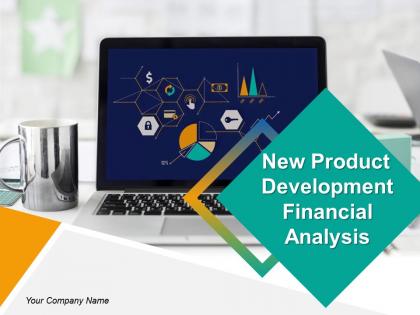
Slide 1: This slide introduces New Product Development Financial Analysis. State Your Company Name and get started.
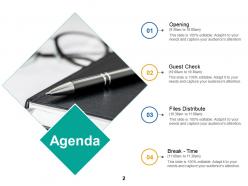
Slide 2: This is an Agenda slide. Use it to show your company agenda.
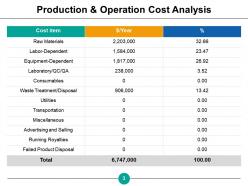
Slide 3: This is Production & Operation Cost Analysis slide in tabular form.
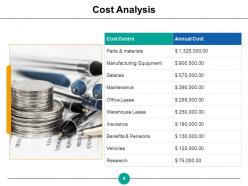
Slide 4: This slide presents Cost Analysis in table form.
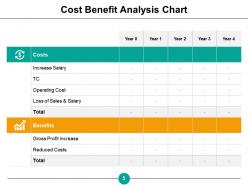
Slide 5: This is Cost Benefit Analysis Chart in tabular form.
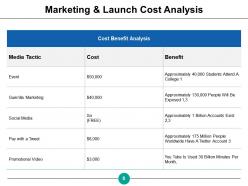
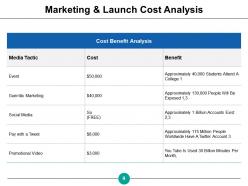
Slide 6: This slide presents Marketing & Launch Cost Analysis.
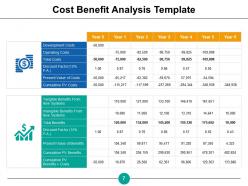
Slide 7: This slide showcases Cost Benefit Analysis Template.
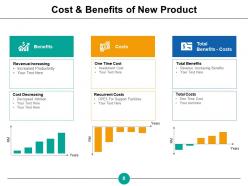
Slide 8: This slide presents Cost & Benefits of New Product displaying- Revenue Increasing, Increased Productivity, Cost Decreasing, Decreased Attrition, Benefits, One Time Cost, Investment Cost, Recurrent Costs, OPEX For Support Facilities, Costs, Total Benefits, Revenue Increasing Benefits, Total Costs, One Time Cost, Total Benefits - Costs.
Slide 9: This slide presents Marketing & Launch Cost Analysis in tabular form.
Slide 10: This slide is titiled Additional slides. You may change the content as per need.
Slide 11: This is Our team slide with names and designation to fill information for.
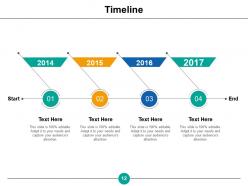
Slide 12: This is a Timeline slide to show milestones, evolution, growth highlights etc.
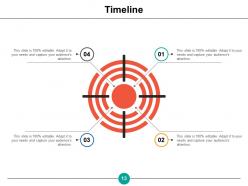
Slide 13: This is Target image slide. State your targets, aspirations etc. here.
Slide 14: This is a Quotes slide. Convey message, beliefs etc. here. You can change the content as per requirement/need.
Slide 15: This is a Bulb & Idea slide to display idea, innovative information or highlights etc.
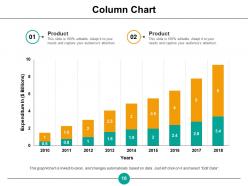
Slide 16: This is a Column chart slide to show product/entity comparison, specifications etc.
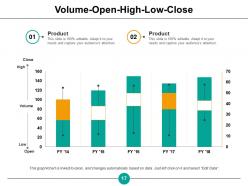
Slide 17: This is a Volume-Open-High-Low-Close chart slide to show product/entity comparison, specifications etc.
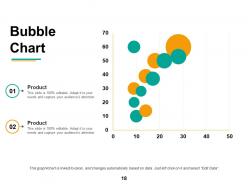
Slide 18: This is a Bubble chart slide to show product/entity comparison, specifications etc.
Slide 19: This is a Thank You slide with Email Address, Address# street number, city, state, Contact Numbers.
New product development financial analysis powerpoint presentation slides with all 19 slides:
Depend n our New Product Development Financial Analysis Powerpoint Presentation Slides to cue you in. It caters for interruptions.




FAQs for New product development financial analysis
NPV and IRR are your starting points - gotta know if this thing actually makes money. Then dive into customer acquisition cost versus lifetime value. That ratio will make or break you. Payback period matters too, plus gross margins per unit. Honestly, I've watched so many founders get burned because they never looked at unit economics until it was too late. Break-even analysis is obvious but still critical. Development costs are tricky since they eat into cash while you're waiting for revenue to start flowing. Build these models now though - way easier to pivot early when the math looks sketchy.
So break-even analysis tells you exactly how many units you gotta sell before you stop losing money. Really helps you figure out if your idea is actually viable or just wishful thinking. You can test different scenarios too - like what if costs jump 20% or you drop prices to undercut competitors? Honestly wish I'd used it more on my last project, would've saved me some pain. Run the numbers early so you know if your target market is even big enough to hit break-even. It's boring math but beats finding out later your product can't make money.
Look, market research is what stops your financial projections from being total fantasy. You need real data on market size, what customers actually want, and how much they'll pay - otherwise you're just making stuff up. I've watched so many founders build these gorgeous spreadsheets based on completely bogus assumptions lol. Primary research on your specific customers is where I'd start, then grab some industry reports to double-check everything. It helps you figure out your real market size and catch problems early. Way better than burning through cash on wrong bets.
Variable costs are your absolute floor - price below materials and labor costs and you're bleeding money on each sale. Fixed costs? That's where it gets messy because you have to guess how many units you'll actually move (and let's be real, we're all terrible at forecasting). High fixed costs mean you desperately need volume to make the math work. Variable costs just straight-up limit how flexible you can be with pricing. Here's what actually helps: calculate your breakeven at different price points. Sounds boring but it shows you exactly where you need to be.
So the introduction phase is brutal - you're bleeding money upfront with barely any sales coming in. Growth gets better since revenue starts climbing, but you're still dumping cash into scaling everything up. Maturity is where the magic happens though. Your development costs are finally paid off and sales level out, so profits actually peak here. Most companies just coast at this point instead of pushing forward (kinda makes sense honestly). Then decline sneaks up and your margins get squeezed as demand tanks. Track your cash flow patterns throughout so you'll know when to ditch products before they become money pits.
So basically you run different "what if" scenarios - like best case, worst case, and realistic outcomes. Plug in different assumptions about demand, costs, competition, whatever could impact your project. Then watch how your NPV and ROI numbers shift around. Honestly, this approach has saved my butt so many times when presenting to leadership. You're not just throwing out one optimistic forecast and hoping for the best. Instead you're showing you've actually thought about what could go wrong (and right). I usually stick with three scenarios and focus on the big variables that'll really make or break the financials. Way more credible that way.
Honestly, the scariest thing is building something nobody actually wants - I've watched friends pour months into products that just flopped. Budget blowouts are brutal too. Competitors might beat you to launch, or the tech simply won't work like you thought (theory vs reality hits different). Don't even get me started on regulatory stuff - that can kill timelines instantly. Oh, and there's always that nagging thought about what else you could've done with the money and time. My take? Pad your timeline and budget way more than feels necessary, talk to real customers early, and decide beforehand what failure looks like so you're not throwing good money after bad.
Start with your company's WACC as the baseline. Then tack on a risk premium - usually 3-8% for new products depending on how sketchy the market looks, competition, tech complexity, all that stuff. Honestly, every finance team does this differently though. Also factor in your strategic goals. Sometimes leadership's cool with lower returns if the product opens new doors or protects current business. Oh, and definitely check what hurdle rates you used for similar launches before - that'll keep you grounded in reality instead of just throwing numbers around.
So there's basically three main ways to estimate costs. Bottom-up means breaking everything into pieces and adding it all up - super detailed but takes forever. Top-down uses data from similar projects you've done before. Then there's parametric modeling where you use cost-per-unit numbers. Analogous estimation is pretty solid if you have comparable projects to reference. Most teams I know mix these approaches though, since each one misses something the others catch. My take? Start with analogous to get a rough number, then go bottom-up on the parts that could make or break your budget.
So sensitivity analysis is basically running "what if" scenarios on your product's financials. What happens if dev costs jump 20%? Market adoption tanks? That kind of thing. Honestly, it's a total lifesaver when your boss starts grilling you about your assumptions - and trust me, they will. The cool part is you'll quickly see which variables actually move the needle on profitability. Then you can focus your energy there instead of worrying about everything. Oh, and start with your three biggest assumptions first. Way more efficient than trying to test every little thing.
Honestly, it all comes down to control vs. pressure. Equity funding? You'll get patient money but kiss some ownership goodbye. Debt keeps you in the driver's seat, though those monthly payments can absolutely crush your cash flow when you're deep in development mode. Grants are like finding a $20 in your old jeans - amazing when it happens, just don't count on it. The real trick is timing everything right. I've seen too many startups go under because they ran out of cash halfway through building their product. Better to take a crappy deal than go broke mid-sprint, you know?
Honestly, you've gotta run the numbers on both options over like 3 years. Don't just look at sticker price - factor in your team's salaries, benefits, equipment costs, plus all that training time. Get solid vendor quotes but add buffer for scope creep (trust me on this one). I've watched "budget-friendly" outsourcing balloon to 40% over budget way too many times. Speed matters too - can your team actually deliver faster? Also think about who's managing the external vendor because that's overhead people always forget. Throw it all in a spreadsheet and test different scenarios. The upfront math lies sometimes.
Cash flow projections are like your financial GPS for product development. They map out when money goes out (R&D, manufacturing, marketing) and when it starts coming back in. Honestly? I've watched brilliant products crash and burn because teams didn't nail the timing. You might have the best idea ever, but if you run out of cash before launch, game over. These projections help you spot those scary cash gaps before they hit. Build yours early and - this is key - actually update them monthly as things change. Trust me, they always change.
So basically you'll want to split your fixed costs across features - figure out how much dev time and ongoing support each one needs. The annoying part is dividing up shared stuff like servers and marketing spend. Honestly it's kind of a pain but just make your best guess and be consistent about it. Once you map out what each feature actually costs vs what it brings in, you can spot your breakeven points. Some features will clearly be winners while others are just... there. I'd start by tracking where your money's actually going first - might surprise you which ones are secretly expensive.
Check your numbers monthly or quarterly - depends how fast you're moving. Honestly, scope creep kills more budgets than anything else, so watch that like a hawk. Set up some basic tracking for actual vs planned spending (dev, testing, materials, whatever). Feature completion rates are super useful too since they'll tell you if you're heading for trouble before it hits your wallet. Oh, and defect trends - boring but they predict where you'll be spending later. The whole point is spotting problems while you can still fix them without going broke.
No Reviews