


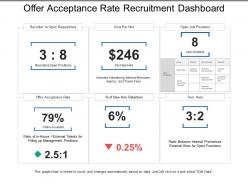
Offer acceptance rate recruitment dashboard





Try Before you Buy Download Free Sample Product
 Impress Your
 Audience
 100%
100% Editable
 Save Hours
 of Time


Link your chain of thoughts with our Offer Acceptance Rate Recruitment Dashboard. Increase their overall tensile ablity.
People who downloaded this PowerPoint presentation also viewed the following :
Offer acceptance rate recruitment dashboard with all 5 slides:
Get on the foghorn with our Offer Acceptance Rate Recruitment Dashboard. Announce your arrival loud and clear.


FAQs for Offer acceptance
Money's obviously huge, but company culture matters way more than people think. If your hiring process is a mess, good candidates will bounce - I've seen it happen so many times. Role clarity helps too since nobody wants to guess what they'll actually be doing. Growth opportunities, decent benefits, remote work options if possible. Honestly? How much they click with their interviewers makes or breaks it sometimes. Your employer brand plays a role, but don't drag out the decision process. Speed wins. You can't just sell at the offer stage - sell throughout the whole interview process.
Yeah, acceptance rates are all over the place depending on your industry. Tech and finance? You're looking at maybe 60-70% because people have tons of options there. Healthcare, education, government stuff usually hits 80-90% - those roles feel more stable, you know? Manufacturing and retail land somewhere in the middle. Honestly, if there's a talent shortage in your space, prepare for more rejections. I'd skip the generic market stats and compare yourself to similar companies instead. Way more useful than some random industry average that might not even apply to what you're doing.
Honestly, it comes down to three things. Pay them what they're worth - I've seen too many companies lose amazing people over like $3k, which is just stupid. Your interview process can't drag on forever either. Candidates will bounce if they're waiting around for weeks. Stay in touch regularly and be upfront about what's happening next. When you do make an offer, give them time to think but don't be weird and pushy about it. Oh, and actually get them excited about the job during interviews - talk up the team, the projects, whatever makes your company cool. Fast decisions and being genuine go a long way.
Look, your employer brand is basically what makes candidates actually *want* to work for you versus just needing a paycheck. When you've got authentic stories from real employees and you're upfront about what it's really like there, people get genuinely excited about the opportunity. But if your brand is all over the place or nonexistent? Candidates will hesitate big time. I mean, who wants to accept an offer when they can't even tell what the company stands for? Be transparent during interviews. Show the real culture, not some polished version that doesn't exist.
Dude, candidate experience is probably the biggest thing you can actually control for acceptance rates. Quick feedback and clear communication throughout - that's what gets people to say yes. I've watched companies totally blow it with amazing candidates just because their process was chaotic. People start wondering if they even want the job, you know? Even when the role's perfect for them. Keep expectations clear and don't make people feel like they're jumping through hoops for no reason. Honestly, treat every interaction like it counts and you'll see those acceptance rates go up fast.
Dude, location makes a huge difference - like 20-30% swings in acceptance rates. SF and NYC? Forget about it, everyone's got multiple offers so people turn you down left and right. Rural markets though, you're golden since there's barely any competition. Economy plays into this too. When things are rough, candidates jump on offers fast because they're scared. Hot job markets make people super picky - they'll negotiate forever or just ghost you. I always tell my team to bump up the comp packages when we're hiring in those crazy competitive areas. Track everything by region so you know what you're dealing with.
Track your overall acceptance rate first, then dig into the breakdown by role level, department, and where you're sourcing from. Time-to-offer is huge - delays absolutely kill momentum. Your offer-to-start ratio matters too since some people will accept then completely disappear (seriously the most frustrating thing ever). Check how your comp stacks up against market rates. Referrals typically accept way more than random applications, so segment by source. Oh, and when candidates actually give you rejection reasons? Write that stuff down. Start there and you'll see exactly where you're losing people.
Dude, communication is EVERYTHING for offer acceptance. I've watched amazing candidates bail just because hiring managers disappeared for weeks - like, seriously? Going dark makes people think you don't have your act together. Quick updates, even boring ones like "still reviewing resumes but wanted to check in," show you actually respect their time. Bad news delivered fast beats silence every day of the week. Set timeline expectations upfront and stick to regular check-ins. Honestly, it's crazy how much a simple text can save a hire.
Money's usually the biggest issue, or they got a better offer elsewhere. Work-life balance is huge too. Sometimes candidates pick up on weird vibes during interviews or can't see where they'd actually grow at your company. Bad timing happens more than you'd think - like they just accepted something else. Be upfront about salary from day one and ditch the whole "we're a family" spiel. Nobody cares about your office perks if the culture sucks. Move fast through interviews and ask what really matters to them early on. Oh, and definitely follow up when someone says no. That feedback will save you next time.
Honestly, salary makes or breaks most offers. I've watched hiring managers lose amazing candidates over tiny gaps - like seriously, $5k when you're gonna spend way more replacing them? Makes no sense. You really want to hit at least what they're making now, ideally a bit more based on what similar roles are paying. The trick is asking about their range super early so you don't waste weeks interviewing someone who wants $20k more than your budget. Below market rate = guaranteed rejections, even from people who genuinely loved the interview process.
Dude, benefits can totally make or break whether someone accepts your offer. People don't just look at salary anymore - they want the whole package. Good health insurance, flexible schedules, decent PTO, growth opportunities. I've literally watched candidates pick lower-paying jobs because the benefits were way better. Remote work is still a massive selling point too. Oh, and those newer perks like mental health support or learning budgets? They actually matter now. Don't just lead with salary numbers and call it a day - show them everything you're offering upfront.
Be flexible but draw your lines early - what can you actually negotiate on? Quick responses are everything when they counter, even if you're just buying time to think. I've watched good offers completely fall apart because HR disappeared for days. So awkward. Think beyond just salary too. Can't move on base pay? Try signing bonuses, extra vacation days, or bumping up their first review. Have those backup moves planned before you even send the initial offer. And honestly, just ask them straight up "what would make this work?" Way better than shutting them down immediately.
Oh yeah, there's totally a connection there. Quick hiring = way better acceptance rates. When you drag things out, candidates start thinking you're not that into them or you're just disorganized. I mean, who wants to wait around for weeks stressing about whether they got it? Most people have other irons in the fire too. The longer you take, the more likely they'll jump ship for something else. Honestly, I've seen companies lose great people just because they couldn't get their act together fast enough. Try to get offers out within a week or two max after final interviews. Makes a huge difference.
Honestly, rejected candidates are your best resource for figuring out what's broken in your hiring process. They'll give it to you straight since they've got nothing to lose anymore. Just ask them directly - was the comp too low? Timeline weird? Did we miss something important about the role during interviews? Most people are surprisingly candid about this stuff. You'll also pick up intel on what competitors are offering that you're missing. Then actually use that feedback to fix your offers or sales pitch upfront. Sometimes a quick phone call works better than surveys, but whatever gets them talking. It's basically free market research if you think about it.
Honestly, good D&I practices can really help with offer acceptance rates. Candidates from underrepresented groups want to see they'll actually belong somewhere - diverse leadership, employee resource groups, that kind of stuff matters. Mix up your interview panels too. People can tell when you're just checking boxes though, so don't fake it. Oh, and be upfront about growth opportunities since that's usually a big deciding factor anyway. I've seen companies totally bomb this by talking the talk but not walking the walk. Authenticity wins every time.
No Reviews