


Operations Playbook Powerpoint Presentation Slides




Try Before you Buy Download Free Sample Product
 Impress Your
 Audience
 100%
100% Editable
 Save Hours
 of Time


A playbook serves as a blueprint for your organization as it highlights critical steps which can help in achieving operational excellence. Here is a competently designed Operations Playbook to provide you with an overview of various tools and techniques that the organization can utilize to increase its overall efficiency. The following presentation is helpful for operational managers intending to increase the efficiency of different processes in the organization through multiple strategies. This playbook is strategically divided into four sections; each section is essential for developing an effective operational strategy. The first section provides an overview of operational excellence as it helps in understanding how to define business goals through operational excellence. The second section describes Lean manufacturing, Six Sigma, and KAIZEN practices. The 3rd part of the playbook displays critical approaches for obtaining operational excellence. And the last section of the playbook highlights how you can optimize and measure the progress. The following PPT displays critical KPIs that the organization can use to measure the progress of the operational activity. Our slides are 100 percent editable and are compatible with Google Slides.
People who downloaded this PowerPoint presentation also viewed the following :
Content of this Powerpoint Presentation
Slide 1: This slide introduces Operations Playbook. State Your Company Name and begin.
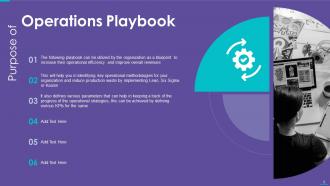
Slide 2: This slide shows Purpose of Operations Playbook.
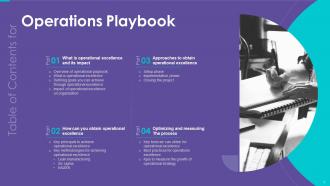
Slide 3: This slide presents Table of Content for the presentation.
Slide 4: This slide highlights title for topics that are to be covered next in the template.
Slide 5: This slide displays overview of the entire operations playbook.
Slide 6: The following slide provides an overview of operational excellence.
Slide 7: This slide represents Defining Goals You Want to Achieve Through Operational Excellence.
Slide 8: This slide showcases Impact of Operational Excellence on Organization.
Slide 9: This slide highlights title for topics that are to be covered next in the template.
Slide 10: This slide shows Key Principals to Achieve Operational Excellence.
Slide 11: This slide highlights title for topics that are to be covered next in the template.
Slide 12: This slide presents Key Methodologies for Achieving Operational Excellence.
Slide 13: This slide displays Lean Manufacturing as Operational Strategy.
Slide 14: This slide represents Six sigma as an operational strategy.
Slide 15: The following slide displays Kaizen as an operational strategy.
Slide 16: This slide highlights title for topics that are to be covered next in the template.
Slide 17: This slide showcases Approaches to Obtain Operational Excellence.
Slide 18: This slide shows Set-Up Phase for Achieving Operational Excellence.
Slide 19: This slide presents Implementation Phase for Operational Excellence.
Slide 20: This slide displays Closing the Project for Operational Excellence.
Slide 21: This slide highlights title for topics that are to be covered next in the template.
Slide 22: This slide represents Key Tools we can Utilize for Operational Excellence.
Slide 23: This slide showcases Best Practices for Operations Excellence.
Slide 24: This slide shows KPIs to Measure the Growth of Operational Strategy.
Slide 25: This slide displays Icons for Operations Playbook.
Slide 26: This slide is titled as Additional Slides for moving forward.
Slide 27: This slide represents Company Overview for Operations Playbook.
Slide 28: This slide showcases Product and Services Offered for Operation Playbook.
Slide 29: This slide shows Key Initiatives for Operational Excellence.
Slide 30: This slide provides Clustered Column chart with two products comparison.
Slide 31: This is About Us slide to show company specifications etc.
Slide 32: This is Our Team slide with names and designation.
Slide 33: This is a Financial slide. Show your finance related stuff here.
Slide 34: This slide shows Post It Notes. Post your important notes here.
Slide 35: This is a Comparison slide to state comparison between commodities, entities etc.
Slide 36: This slide depicts Venn diagram with text boxes.
Slide 37: This is a Timeline slide. Show data related to time intervals here.
Slide 38: This slide contains Puzzle with related icons and text.
Slide 39: This is a Thank You slide with address, contact numbers and email address.
Operations Playbook Powerpoint Presentation Slides with all 44 slides:
Use our Operations Playbook Powerpoint Presentation Slides to effectively help you save your valuable time. They are readymade to fit into any presentation structure.
-
Operations Playbook
-
Operations Playbook
-
Operations Playbook
-
Operations Playbook
-
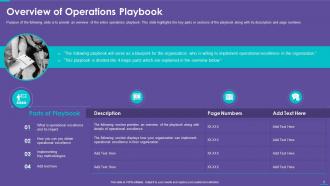
Overview of Operations Playbook
-
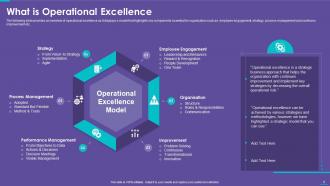
What is Operational Excellence
-
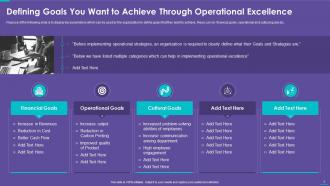
Defining Goals You Want to Achieve Through Operational Excellence
-
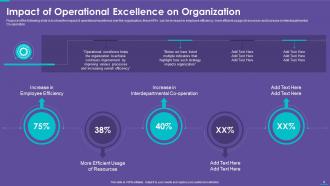
Impact of Operational Excellence on Organization
-
Operations Playbook
-
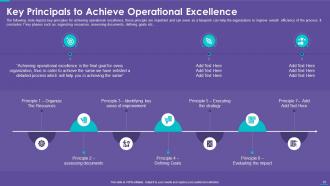
Key Principals to Achieve Operational Excellence
-
Operations Playbook
-
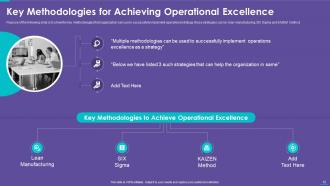
Key Methodologies for Achieving Operational Excellence
-
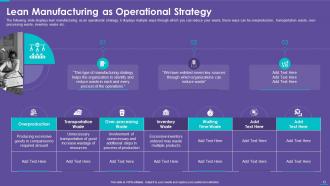
Lean Manufacturing as Operational Strategy
-
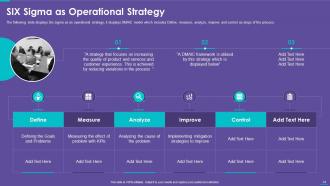
Six Sigma as Operational Strategy
-
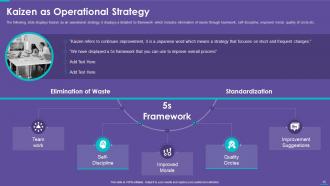
Kaizen as Operational Strategy
-
Operations Playbook
-
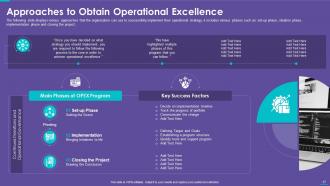
Approaches to Obtain Operational Excellence
-
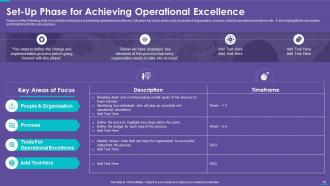
Set Up Phase for Achieving Operational Excellence
-
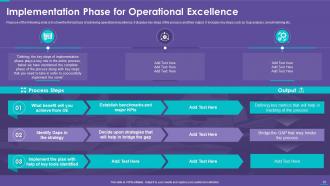
Implementation Phase for Operational Excellence
-
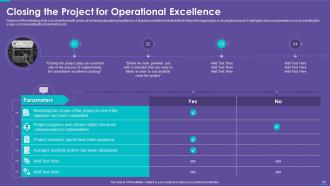
Closing the Project for Operational Excellence
-
Operations Playbook
-
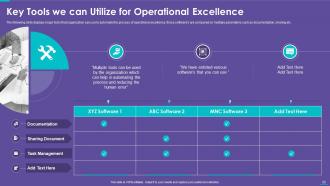
Key Tools we can Utilize for Operational Excellence
-
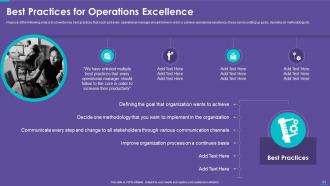
Best Practices for Operations Excellence
-
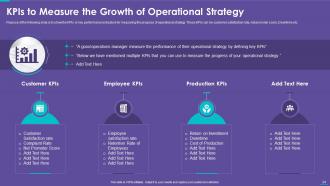
KPIs to Measure the Growth of Operational Strategy
-
Icons Slide for Operations Playbook
-

Additional Slides
-
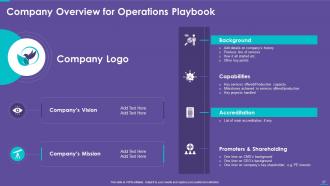
Company Overview for Operations Playbook
-
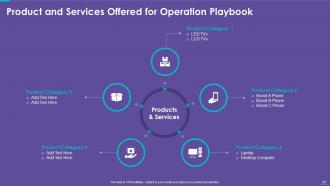
Product and Services Offered for Operation Playbook
-
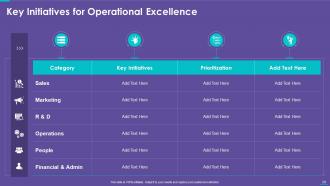
Key Initiatives for Operational Excellence
-
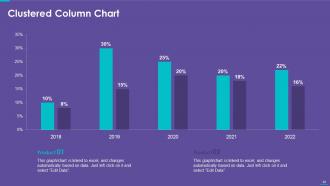
Clustered Column Chart
-

About Us
-

Meet Our Awesome Team
-
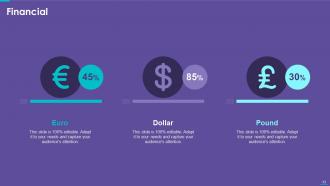
Financial
-
Post it Notes
-

Comparison
-
Venn Diagram
-
Timeline
-
Puzzle
-

Thanks for Watching
-

-

-

-

-

FAQs for Operations Playbook
So you'll want five main things in your ops playbook. First, step-by-step processes for the stuff you do all the time. Then escalation procedures for when everything hits the fan. Contact info for key people and systems is clutch too. Make sure roles are crystal clear - nobody likes finger-pointing drama. Decision trees for common scenarios will save you tons of time going back and forth with people. Honestly, the biggest mistake is making it too formal and unreadable. Keep it searchable and simple. Start with your three most common processes, then just add more as problems pop up. Way easier than trying to document everything upfront.
Honestly, quarterly reviews work great for most teams. Get someone who actually does the work daily to own it - not just managers sitting in meetings all day. Whenever people create workarounds or get stuck, that's when you know something needs fixing. I've watched so many playbooks become paperweights because nobody felt responsible! Try linking updates to your sprint reviews or retrospectives. Makes it feel normal instead of this huge thing you'll "get to eventually." The trick is making it routine rather than a special project.
Look, your ops playbook is only as good as the tech backing it up. Without proper tools, those documented processes just collect digital dust - I've watched teams ignore perfectly good playbooks because they were too clunky to follow. Good tech automates the boring stuff and gives you real-time insights into what's actually happening. Plus it helps your team work together on making things better. Don't go crazy with fancy solutions though. Pick tools that play nice together and match how people already work. Start with whatever's driving everyone nuts operationally, then find tech that fixes those specific headaches.
Honestly? The playbook only works if people actually use it - like, during real meetings and stuff. Get everyone to add one process this week, then do monthly check-ins or it'll just sit there getting stale. I've seen so many teams create these things and then never touch them again, which is kind of pointless. The trick is making it your go-to reference instead of just another doc collecting digital dust. Super helpful for onboarding too since new people can actually see how you do things. Don't overthink it though - just start small and build from there.
Measure task completion times and error rates first - those tell you if people are actually following your process. Then track how fast new hires get up to speed and whether customer satisfaction improves. Honestly, the "do people even use this thing" metric matters most because I've seen way too many beautiful playbooks gather digital dust. Focus on maybe 4-5 numbers that actually connect to what your business cares about. Don't go crazy tracking everything. And definitely get your baseline measurements before changing anything, otherwise you're just guessing if it worked.
Dude, get your new hires an operations playbook ASAP. It's like giving them a cheat sheet for everything - processes, who to contact, all that stuff they'd normally have to figure out by pestering everyone. Way better than the random mess of info we usually dump on people. They'll actually know what they're doing instead of wandering around confused for weeks. I swear, nothing's worse than starting somewhere and having zero clue how anything works. Just make sure they get access in their first week and you'll see how much smoother onboarding goes.
Don't go crazy detailed right away - you'll hate your life halfway through. Focus on the stuff that actually matters first. Here's the thing though: loop in whoever's doing the work day-to-day. I can't tell you how many times I've seen these fancy playbooks gathering dust because some exec wrote down what they *thought* was happening. Reality check needed! Start simple, then build it out. Oh and treat it like a living doc - if people aren't actually using it to get shit done, what's the point?
Honestly, throw in some visuals - your team will actually read the thing. Screenshots work great for software stuff, and flowcharts make processes way clearer than paragraphs of text. Most people just skim anyway (I know I do). Diagrams help break up those boring walls of text too. When you've got complicated procedures, a good visual can save you from having to explain it three different ways. I'd aim for at least one chart or image per section. Trust me, it's the difference between people bookmarking your playbook or just closing it.
Honestly? Get your team involved in writing parts of it - people actually follow stuff they helped create. Make it easy to find and search through, not buried in some random folder. The real trick is building it into your actual workflows so using it becomes automatic rather than optional. Training sessions are fine, but what really works is celebrating wins when people use it. Share those success stories around. I'd also tie playbook usage to how you measure performance - sounds harsh maybe, but it stops being this "optional nice-to-have" thing. Short sentences work better than long ones. Bottom line: following it should feel easier than ignoring it.
Just ask your team straight up: "what's the biggest pain point right now?" Then set up some kind of regular check-in - could be quarterly surveys, suggestion boxes, whatever works. Here's the thing though - you HAVE to actually do something with their feedback or people will stop caring. I'd probably review everything monthly, test changes with a small group first, then update your playbook. Don't forget to tell people when you used their ideas! Nothing's more annoying than giving feedback into a void. Start simple and build from there.
Your playbook has to match your industry's weird rules and requirements. Healthcare? HIPAA stuff needs to be everywhere. Manufacturing focuses more on safety protocols and keeping equipment running. Financial services are obsessed with audit trails and risk management - honestly it's a bit much but I get why. Think about what makes your sector different from regular businesses. What regulatory bodies are breathing down your neck? Which specialized tools do you actually use daily? Most importantly - what processes would completely screw you if they broke? I'd start by writing down your top 3 industry-specific risks, then build everything around those.
First thing - get everything online. Those dusty binders aren't helping anyone working from home! Add sections for remote stuff like virtual meeting rules and async workflows. Escalation gets weird when you can't walk over to someone's desk, so rework those processes completely. Don't forget time zones (learned that one the hard way) and set clear response expectations for Slack vs email vs whatever. Oh, and definitely test it with your team first - what sounds good on paper usually needs tweaking once people actually start using it.
Honestly, without leadership backing you're screwed from the start. Get at least one leader who actually gives a damn about the playbook - that's your golden ticket. They need to use it themselves instead of just preaching about it. The training thing is annoying but unavoidable, so make sure they'll actually free up time for it. During meetings and reviews, leaders should bring up the playbook naturally. Otherwise it just becomes another forgotten file on the server. Oh, and pick someone who genuinely believes in this stuff, not just someone going through the motions.
Think of an operations playbook as your "oh shit" manual - it's got all your standard procedures written down so you're not scrambling when everything breaks. Map out where things usually go wrong, document your compliance stuff, and set up clear escalation paths. During audits, you'll actually have something to show instead of just shrugging. Honestly, I'd start with whatever scares you most risk-wise and document that first. Future you will be so grateful when you need to prove you didn't just make it up as you went along.
Your operations playbook doesn't have to be boring as hell. Start sections with real stories about what went sideways - trust me, nobody forgets a good disaster tale. Weave in actual case studies showing why each step exists. Connect daily grunt work to customer wins so people see the point. Before/after stories work great too, especially ones from problems your own team dealt with. I know it sounds weird, but narratives make people actually want to follow procedures instead of just skimming past them. Way better than dry bullet points that everyone ignores anyway.
-
Very well designed and informative templates.
-
Much better than the original! Thanks for the quick turnaround.