Organizational Framework For Project Portfolio Governance

Rating:
90%
Organizational Framework For Project Portfolio Governance
Slide 1 of 6

or

Favourites Favourites

Try Before you Buy Download Free Sample Product

Audience Impress Your
Audience
Editable 100%
Editable
Time Save Hours
of Time
The Biggest Sale is ending soon in
0
0
:
0
0
:
0
0
Rating:
90%
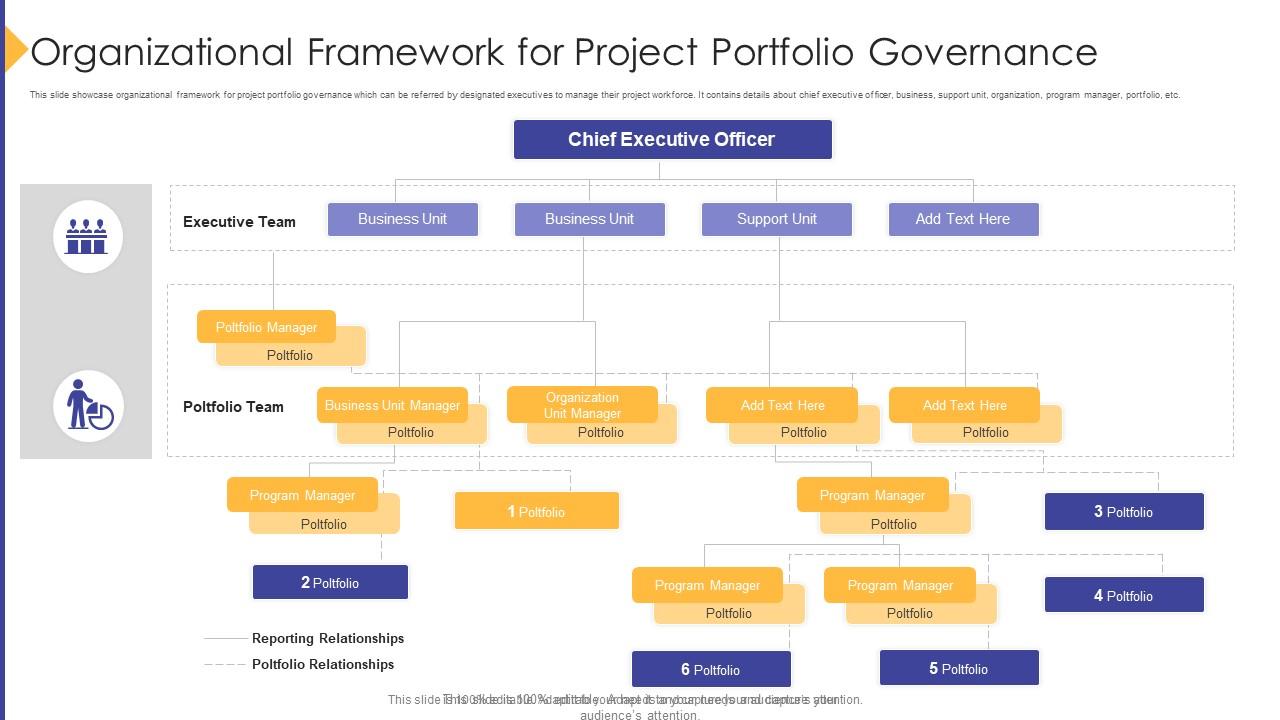
This slide showcase organizational framework for project portfolio governance which can be referred by designated executives to manage their project workforce. It contains details about chief executive officer, business, support unit, organization, program manager, portfolio, etc. Introducing our premium set of slides with Organizational Framework For Project Portfolio Governance. Ellicudate the two stages and present information using this PPT slide. This is a completely adaptable PowerPoint template design that can be used to interpret topics like Chief Executive Officer, Executive Team, Poltfolio Team. So download instantly and tailor it with your information.

FAQs for Organizational Framework For

Key components of an effective project portfolio governance framework include strategic alignment processes, standardized decision-making criteria, resource allocation mechanisms, performance monitoring systems, and risk management protocols. These elements work together by ensuring projects support organizational objectives, optimizing resource distribution across initiatives, and maintaining consistent oversight, with many organizations finding that this integrated approach ultimately delivers improved project success rates and enhanced strategic value realization.

Organizations balance risk and opportunity in project portfolio governance through strategic risk assessment, diversified project selection, continuous monitoring, and adaptive resource allocation across their portfolio. This approach enables companies to pursue high-reward initiatives while maintaining operational stability, with many financial services and technology firms finding that structured governance frameworks ultimately deliver sustainable growth and competitive advantage.

Stakeholder engagement ensures project portfolios align with organizational objectives through continuous communication, feedback collection, and expectation management across all levels. Through regular stakeholder reviews, organizations streamline decision-making processes, enhance resource allocation transparency, and ultimately deliver better project outcomes, with many finding that engaged stakeholders significantly reduce project risks and accelerate portfolio success.

Key metrics for evaluating project portfolio governance success include strategic alignment percentage, resource utilization rates, portfolio ROI, time-to-market improvements, and risk mitigation effectiveness. These measurements enable organizations to assess decision-making quality, resource optimization, and strategic value delivery, with many companies finding that balanced scorecards combining financial and operational metrics ultimately deliver comprehensive governance insights.

Technology enhances project portfolio governance through automated reporting systems, real-time dashboards, AI-driven analytics, resource optimization tools, and integrated risk management platforms. These solutions streamline decision-making by providing comprehensive visibility into portfolio performance, enabling faster strategic adjustments, and delivering improved resource allocation, with many organizations finding that automated governance frameworks significantly reduce oversight complexity while enhancing strategic alignment.

Common challenges include inadequate resource allocation, lack of executive support, insufficient stakeholder alignment, poor communication frameworks, and resistance to standardized processes. Organizations often struggle with balancing competing priorities across multiple projects, with many finding that establishing clear governance structures and consistent reporting mechanisms ultimately streamlines decision-making and enhances portfolio performance.

Organizational culture significantly impacts project portfolio governance by influencing decision-making processes, risk tolerance levels, communication patterns, and resource allocation priorities. Companies with collaborative cultures tend to foster transparent portfolio reviews and cross-functional alignment, while hierarchical organizations may experience slower approval cycles, ultimately affecting project success rates and strategic execution effectiveness.

**INPUT**: What best practices are recommended for aligning project portfolio governance with strategic goals? **OUTPUT**: Best practices include establishing clear strategic criteria for project selection, implementing regular portfolio reviews, creating standardized scoring frameworks, ensuring executive sponsorship, and maintaining transparent communication channels. These governance approaches streamline decision-making by connecting project outcomes to business objectives, enabling resource optimization, and facilitating strategic pivots, with many organizations finding that structured alignment processes ultimately deliver enhanced competitive advantage and measurable strategic progress. **Word count: 60 words**

Project portfolio governance facilitates better resource allocation by establishing clear prioritization frameworks, standardized evaluation criteria, and centralized oversight mechanisms that align investments with strategic objectives. Through systematic portfolio reviews and performance metrics, organizations streamline decision-making processes, minimize resource conflicts between competing projects, and optimize allocation efficiency, ultimately delivering enhanced ROI and strategic competitive advantage.

Project portfolio governance tools include portfolio management platforms like Microsoft Project Portfolio Management, Clarity PPM, Smartsheet, Monday.com, and enterprise solutions such as ServiceNow PPM. These technologies streamline portfolio oversight by centralizing project data, automating reporting workflows, and enabling real-time performance tracking, with many organizations finding that integrated dashboards significantly enhance strategic decision-making and resource allocation efficiency.

A dedicated governance team is crucial for effective project portfolio management, providing strategic oversight, resource allocation decisions, risk management, and performance monitoring across all initiatives. This specialized team enables organizations to maintain portfolio alignment with business objectives, streamline decision-making processes, and optimize resource utilization, with many enterprises finding that dedicated governance ultimately delivers improved project success rates and enhanced competitive advantage.

Poor project portfolio governance creates resource conflicts, strategic misalignment, inadequate risk oversight, duplicated efforts, and inconsistent decision-making across initiatives. These governance gaps ultimately lead to project delays, budget overruns, and failed deliverables, with many organizations finding that weak portfolio oversight significantly reduces their project success rates and competitive positioning.

External factors influence project portfolio governance decisions by introducing market volatility, regulatory changes, competitive pressures, and economic shifts that require strategic portfolio realignment. Organizations adapt through dynamic risk assessment, resource reallocation, and stakeholder communication protocols, with many financial services and manufacturing companies finding that flexible governance frameworks enable faster decision-making and sustained competitive advantage.

Continuous improvement can be integrated through regular portfolio performance reviews, lessons learned documentation, governance process refinement, stakeholder feedback mechanisms, and metrics-driven optimization cycles. Many organizations enhance their portfolio governance by implementing quarterly assessment frameworks, cross-project knowledge sharing sessions, and adaptive governance models, ultimately delivering better project outcomes and strategic alignment.

Organizations ensure compliance and standards in project portfolio governance through standardized processes, regular audits, clear accountability frameworks, automated monitoring systems, and comprehensive reporting mechanisms. These governance structures streamline oversight by establishing consistent evaluation criteria, tracking regulatory requirements, and maintaining transparency across all portfolio activities, with many enterprises finding that systematic compliance monitoring ultimately delivers reduced risk exposure and enhanced stakeholder confidence.

Ratings and Reviews

90% of 100
Review Form
Write a review
Most Relevant Reviews
  1. 80%

    by Dominick Pierce

    Wow! The design and quality of templates on SlideTeam are simply the best. 
  2. 100%

    by Chung Bennett

    I can always count on your designs for my professional needs. I believe I found a one-stop-shop for PPTs.

2 Item(s)

per page: