

Overview of internal audit planning checklist and process of the company powerpoint presentation slides




Try Before you Buy Download Free Sample Product
 Impress Your
 Audience
 100%
100% Editable
 Save Hours
 of Time


Internal Audit is a department or organization of individuals within a company that is responsible for offering impartial, independent reviews of systems, business organizations, and processes. At present, the company wants to study various types of internal Audit and an overview of the basis of the difference between internal and external Audit. Check out our professionally designed Overview of Internal Audit Planning Checklist and Process of the Company template. The need for an effective internal audit system is to gain detailed insights into the companys internal audit process. This presentation provides the details on the needs, objectives, attributes, and scope of an internal audit system, mandatory elements required for internal audit effectiveness, and an overview of internal audit principles. Further, it covers details on internal audit types, an overview of the internal audit planning checklist, the internal audit process of the company, and international standards in internal audit practices. Additionally, the presentation provides information about the advantages and disadvantages of an internal audit system and top internal audit software that can be used along with an internal audit dashboard. Download it now.
People who downloaded this PowerPoint presentation also viewed the following :
Content of this Powerpoint Presentation
Slide 1: This slide introduces Overview of Internal Audit Planning Checklist and Process of the Company. State Your Company Name and begin.
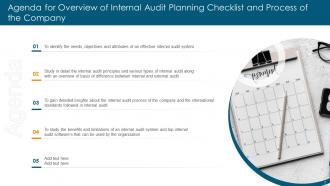
Slide 2: This slide shows Agenda for Overview of Internal Audit Planning Checklist and Process of the Company.
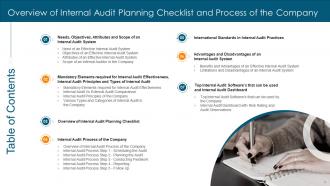
Slide 3: This slide presents Table of Content for the presentation.
Slide 4: This slide shows title for needs, objectives, scope of internal audit system.
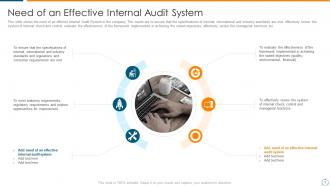
Slide 5: This slide shows the need of an efficient Internal Audit System in the company.
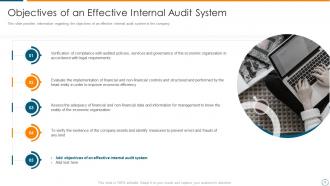
Slide 6: This slide provides information regarding the objectives of an effective internal audit system in the company.
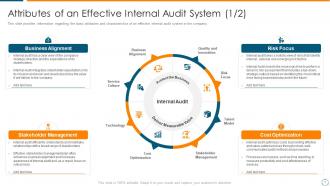
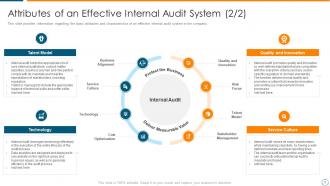
Slide 7: This slide provides information regarding the basic attributes and characteristics of an effective internal audit system in the company.
Slide 8: This slide provides information regarding the basic attributes and characteristics of an effective internal audit system in the company.
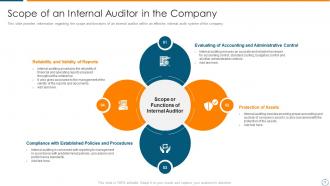
Slide 9: This slide provides information regarding the scope and functions of an internal auditor within an effective internal audit system of the company.
Slide 10: This slide shows title for mandatory elements required for internal audit effectiveness.
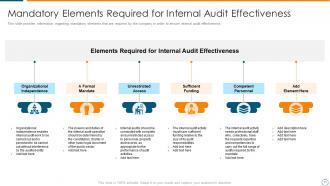
Slide 11: This slide provides information regarding mandatory elements that are required by the company in order to ensure internal audit effectiveness.
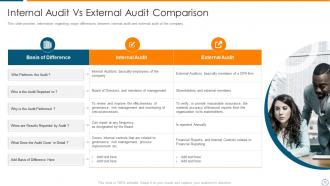
Slide 12: This slide provides information regarding major differences between internal audit and external audit of the company.
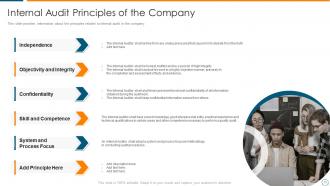
Slide 13: This slide provides information about the principles related to internal audit in the company.
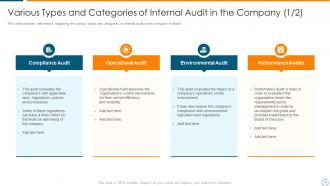
Slide 14: This slide provides information regarding the various types and categories of internal audit in the company in detail.
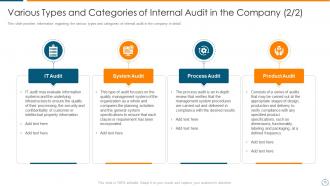
Slide 15: This slide provides information regarding the various types and categories of internal audit in the company in detail.
Slide 16: This slide displays the title for overview of internal audit planning checklist.
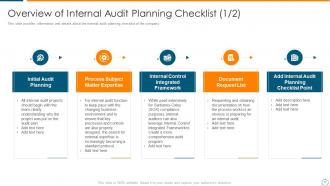
Slide 17: This slide provides information and details about the internal audit planning checklist of the company.
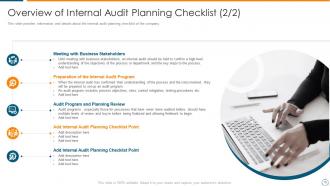
Slide 18: This slide provides information and details about the internal audit planning checklist of the company.
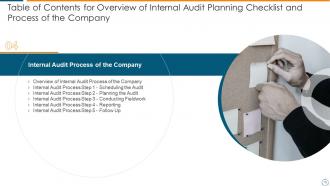
Slide 19: This slide shows title for internal audit process of company.
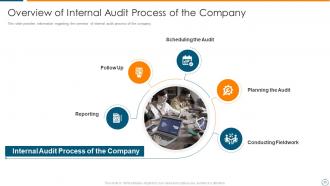
Slide 20: This slide provides information regarding the overview of internal audit process of the company.
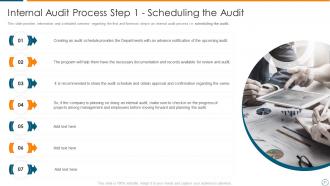
Slide 21: This slide provides information and a detailed overview regarding the first and foremost step in an internal audit process i.e. scheduling the audit.
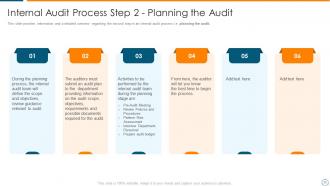
Slide 22: This slide provides information and a detailed overview regarding the second step in an internal audit process i.e. planning the audit.
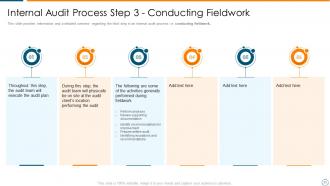
Slide 23: This slide provides information and a detailed overview regarding the third step in an internal audit process i.e. conducting fieldwork.
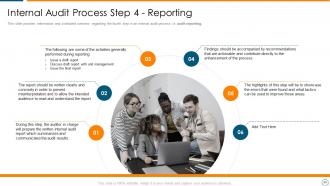
Slide 24: This slide provides information and a detailed overview regarding the fourth step in an internal audit process i.e. audit reporting.
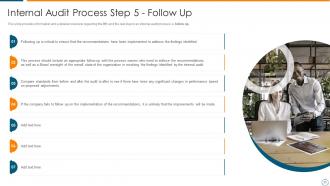
Slide 25: This slide provides information and a detailed overview regarding the fifth and the last step in an internal audit process i.e. follow up.
Slide 26: This slide displays title for international standards in internal audit practices.
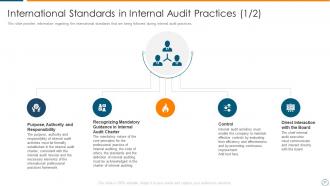
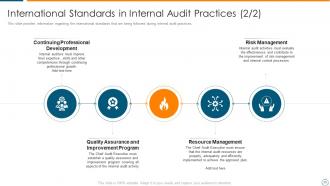
Slide 27: This slide provides information regarding the international standards that are being followed during internal audit practices.
Slide 28: This slide provides information regarding the international standards that are being followed during internal audit practices.
Slide 29: This slide presents the title for advantages & disadvantages of internal audit system.
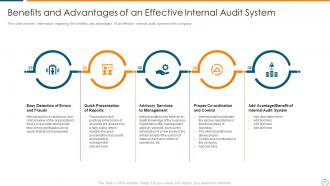
Slide 30: This slide provides information regarding the benefits and advantages of an effective internal audit system to the company.
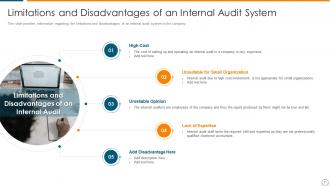
Slide 31: This slide provides information regarding the limitations and disadvantages of an internal audit system to the company.
Slide 32: This slide presents the title for top internal audit's software.
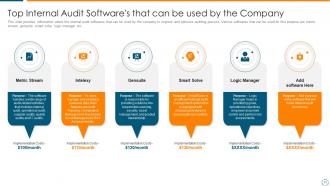
Slide 33: This slide provides information regarding the limitations and disadvantages of an internal audit system to the company.
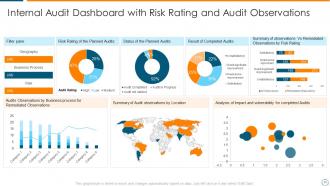
Slide 34: This slide shows internal audit dashboard with risk rating and audit observations.
Slide 35: This slide displays Icons for Overview of Internal Audit Planning Checklist and Process of the Company.
Slide 36: This slide is titled as Additional Slides for moving forward.
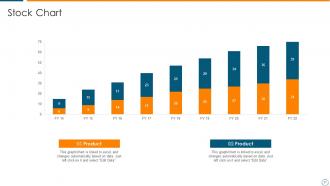
Slide 37: This slide displays Stock chart with two products comparison.
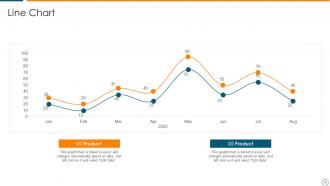
Slide 38: This slide describes Line chart with two products comparison.
Slide 39: This slide shows Post It Notes. Post your important notes here.
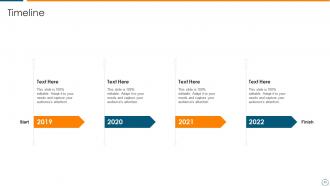
Slide 40: This is a Timeline slide. Show data related to time intervals here.
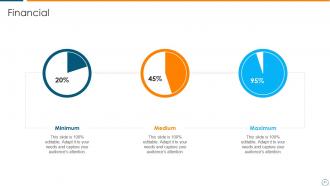
Slide 41: This is a Financial slide. Show your finance related stuff here.
Slide 42: This slide showcases Magnifying Glass to highlight information, specifications etc
Slide 43: This slide provides 30 60 90 Days Plan with text boxes.
Slide 44: This is Our Mission slide with related imagery and text.
Slide 45: This is Our Target slide. State your targets here.
Slide 46: This is a Thank You slide with address, contact numbers and email address.
Overview of internal audit planning checklist and process of the company powerpoint presentation slides with all 51 slides:
Use our Overview Of Internal Audit Planning Checklist And Process Of The Company Powerpoint Presentation Slides to effectively help you save your valuable time. They are readymade to fit into any presentation structure.









FAQs for Overview of internal audit planning checklist and process of the company
Ok so you need four main things: risk assessment, mapping out what you can actually audit, figuring out your resources, and scheduling everything. I'd start with the riskiest stuff first - honestly, leadership always has opinions but focus on what could actually hurt the company. Map out every area you could possibly audit, then get real about your budget and people. Don't pack your schedule too tight though, because random fires will definitely come up. Oh and make sure you're hitting any regulatory stuff you absolutely have to. It's basically juggling what everyone wants with what actually matters risk-wise.
Start with your risk assessment - what's screaming for attention right now? I always dig into the audit universe first, then check old findings that might still be lurking around. Talk to management too, they'll tell you what's keeping them up at night. Honestly, I waste way too much time here but whatever, it pays off later. Make your scope tight enough that you won't drown, but wide enough to actually matter. For objectives, just be real about what you're doing - testing controls? Process evaluation? Risk investigation? Write it all down so nobody can say "wait, I thought you were doing X" six weeks from now.
Think of risk assessment as your audit GPS - it shows you exactly where to go first. You'll identify all the potential trouble spots, then rank them by how likely they are to blow up and how bad the damage would be. High-risk areas? Those go straight to the top of your schedule. The boring, low-risk stuff can honestly wait or just get a quick once-over. I mean, you can't deep-dive into everything equally - nobody has that kind of time. Use this ranking to build your audit plan so you're actually tackling what could really hurt the company, not just checking boxes.
Look at your past audit findings like a cheat sheet for planning ahead. Departments or processes that keep showing up with control issues? That's where you dump more hours next time. I'd dig through your last few audits to spot these patterns - compliance gaps don't usually fix themselves magically. Major findings with management action plans need follow-up audits too. Fair warning though - half the time they haven't actually done the fixes they promised. Your findings database should show you these trends pretty clearly, then just allocate your audit time based on where the real problems keep popping up.
So there are three main approaches you'll run into - risk-based, cycle-based, and compliance-based auditing. Honestly, risk-based is where I'd put my money since it targets actual problem areas instead of wasting time on low-risk stuff. Cycle-based just rotates through everything systematically, which is fine but not super efficient. Compliance-based focuses on regulatory stuff you have to hit anyway. Most companies mix and match these though - like, nobody does just one. Start with identifying your biggest risks first, then build your plan around those while making sure compliance boxes get checked too. Way more effective than going in blind.
Honestly, go after the stuff that'll actually hurt the company if it breaks - revenue processes, compliance issues, anything that could tank them. I always peek at what's making management lose sleep first. Risk assessment data helps too, but don't overthink it. High probability + big impact = priority. Also check when areas were last audited - some places get ignored for years which is kinda crazy. The goldmine is finding high-risk spots that align with company goals but haven't been touched recently. That's where you'll actually move the needle.
Look, regulatory deadlines and board meetings aren't moveable - lock those in first. Then map out when your team's actually available (seriously, Sarah always books her vacation right when you need her most). Business cycles matter too - don't schedule inventory audits during their crazy season or compliance stuff before year-end madness hits. Complex audits need breathing room between them, plus some audits depend on others finishing first. Honestly? Buffer time is your best friend here. Things will shift mid-year anyway, so have a backup plan ready to go.
Analytics completely changes the audit game - you can spot weird patterns and red flags that would take forever to find manually. I mean, who has time to dig through spreadsheets looking for anomalies? The software does the heavy lifting and shows you exactly where to focus your attention. Real-time monitoring keeps flagging new issues too, so your plan actually evolves instead of being this static document from six months ago. Just start with whatever data you already have access to and play around with some basic tools first.
Look, regulatory stuff basically forces your hand on audit planning. You've gotta hit certain areas every year whether you want to or not - SOX, banking regs, whatever applies to your industry. Honestly, it can be a pain because it eats up so much of your resources. But I guess it does keep you focused on the really risky areas. Start by listing all the mandatory audits first, then see what's left for the discretionary stuff you actually want to review. Oh, and regulators usually dictate how often you need to audit certain things too, which affects your whole timeline.
Hey! So the trick is getting them involved from day one. Start with one-on-ones where you actually listen to what's keeping them up at night - their real business headaches, not just compliance stuff. I always send risk surveys first so people feel heard before we even meet. Then do workshops where you map priorities together instead of just dropping your audit plan on them. Honestly, half the battle is ditching audit jargon and connecting everything back to what they actually care about. Think partnership, not "surprise, you're getting audited." Trust me, stakeholder meetings during planning make all the difference.
Honestly, you've gotta actually read through your company's strategic plan first - I know it sounds basic, but tons of auditors just wing it without this step. Get face time with the executives early on to figure out what's keeping them up at night. Then map your audit work to those big picture goals instead of just doing the same old routine stuff. Oh, and don't just disappear after planning season! Stay plugged into board meetings and executive chatter year-round. I'd set up quarterly coffee chats with key people so you can pivot when priorities inevitably shift.
Start with a one-page executive summary, then add your detailed schedules behind it. Management and the board really just want to know how your audits connect to their biggest risks and strategic stuff - honestly, I've watched so many auditors drone on about methodology when execs are sitting there like "just tell me what this means for us." Call out any resource issues or timing problems right up front. Don't forget to leave space for questions. Oh, and meet with management first, then the board separately - they'll have totally different concerns you can tackle.
Yeah, definitely update that audit plan when stuff changes in your business. New regulations, tech rollouts, reorganizations - they all bring different risks you didn't plan for originally. We got burned once when a client did this massive system overhaul halfway through the year and we weren't prepared. Build some wiggle room into your annual plan so you're not scrambling later. I'd say check your risk situation every quarter or so. The plan should flex with what's actually happening, not sit there collecting dust because that's honestly pretty useless.
Honestly, you're looking at three big categories here: people, tech, and money. The team needs folks who can handle risk assessment and data analytics, plus experts in whatever you're actually auditing. Software-wise, get some decent audit management tools and platforms for documentation - trust me, the days of doing this stuff manually are long gone. Your budget has to cover salaries, training, maybe some outside consultants. Time's probably gonna be your biggest headache though. I'd map out everything you need to audit first, then figure out what resources each piece requires. Makes prioritizing way easier.
Honestly, just look back at your last few audits before planning the next one. What bombed? What actually helped people? I hate seeing teams literally copy-paste old plans without thinking. After each audit, grab feedback from the people you audited and figure out where you added real value. Do this quarterly - like, actually schedule it, don't just chat about it randomly. Your risk approach needs updating as the business changes anyway. Make it formal so insights don't get lost. Then you'll actually improve your planning instead of just repeating the same mistakes.
-
Easily Understandable slides.
-
Best Representation of topics, really appreciable.