

Packed food product company investment pitch deck ppt template




Try Before you Buy Download Free Sample Product
 Impress Your
 Audience
 100%
100% Editable
 Save Hours
 of Time


Our Packed Food Product Company Investment Pitch Deck Ppt Template are topically designed to provide an attractive backdrop to any subject. Use them to look like a presentation pro.
People who downloaded this PowerPoint presentation also viewed the following :
Content of this Powerpoint Presentation
Slide 1: This slide displays title i.e. 'Packed Food Product Company Investment Pitch Deck' and your Company Name.
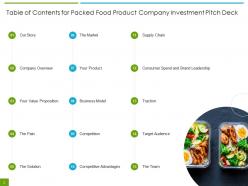
Slide 2: This slide presents table of contents.
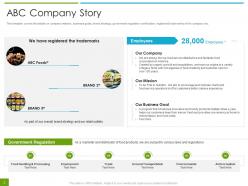
Slide 3: This slide covers the details on company mission, business goals, brand strategy, government regulation certification, etc.
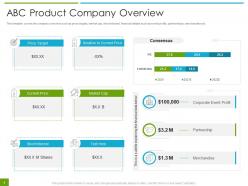
Slide 4: This slide covers the company overview such as price targets, market cap, short interest, financial details, etc.
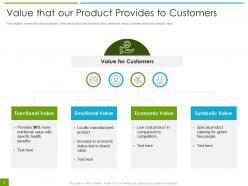
Slide 5: This slide covers the value proposition of the product such as functional value, emotional value, etc.
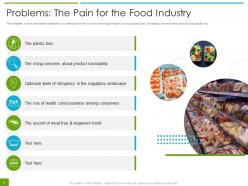
Slide 6: This slide covers the problem statement or challenges for the food and beverage industry such as plastic ban, etc.
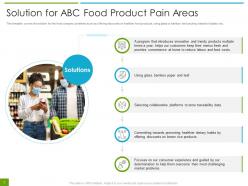
Slide 7: This slide covers the solution for the food company problems such as offering discounts on healthier food products, etc.
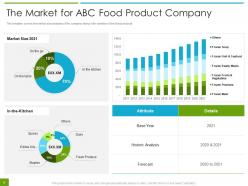
Slide 8: This slide covers the market size analysis of the company along with variation of the food products.
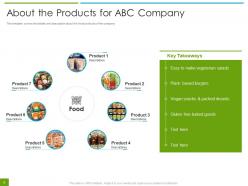
Slide 9: This slide covers the details and description about the food products of the company.
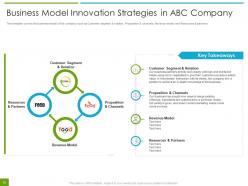
Slide 10: This slide covers the business model of the company such as Customer segment & relation, Proposition & channels, etc.
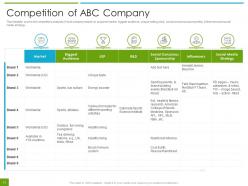
Slide 11: This slide covers the competitors analysis of food company based on acquired market, biggest audience, unique selling point, etc.
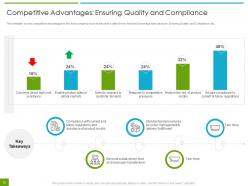
Slide 12: This slide covers competitive advantages to the food company such as Become a data-driven food and beverage manufacturer, etc.
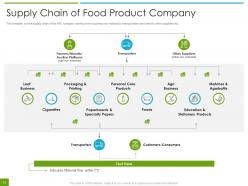
Slide 13: This slide covers supply chain of the ABC company starting from acquiring raw material to transportation and stent to other suppliers etc.
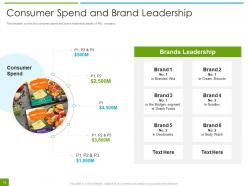
Slide 14: This slide covers the consumer spend and brand leadership details of ABC company.
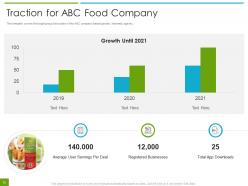
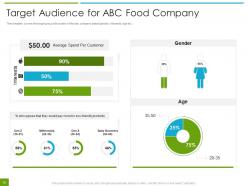
Slide 15: This slide covers the target group bifurcation of the ABC company based gender, interests, age etc.
Slide 16: This slide covers the target group bifurcation of the abc company based gender, interests, age etc.
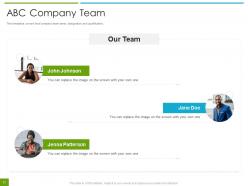
Slide 17: This slide covers food company team name, designation and qualification, etc.
Slide 18: This is the icons slide.
Slide 19: This slide presents title for additional slides.
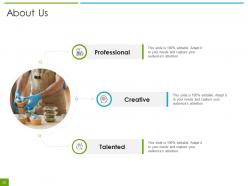
Slide 20: This slide shows about your company, target audience and its client's values.
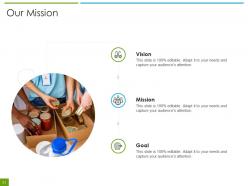
Slide 21: This slide presents your company's vision, mission and goals.
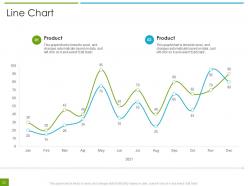
Slide 22: This slide exhibits monthly line charts for different products. The charts are linked to Excel.
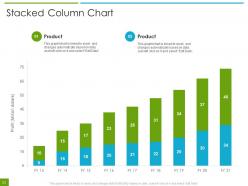
Slide 23: This slide displays yearly profits stacked column charts for different products. The charts are linked to Excel.
Slide 24: This slide depicts posts for past experiences of clients.
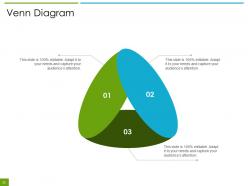
Slide 25: This slide displays Venn.
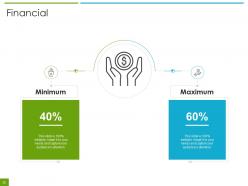
Slide 26: This slide showcases financials.
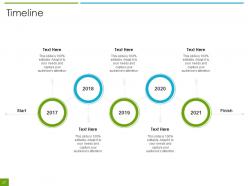
Slide 27: This slide exhibits yearly timeline.
Slide 28: This slide exhibits ideas generated.
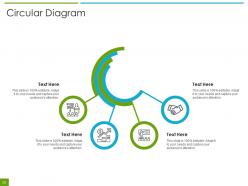
Slide 29: This slide presents circular diagram.
Slide 30: This is thank you slide & contains contact details of company like office address, phone no., etc.
Packed food product company investment pitch deck ppt template with all 30 slides:
Use our Packed Food Product Company Investment Pitch Deck Ppt Template to effectively help you save your valuable time. They are readymade to fit into any presentation structure.
FAQs for Packed food product company investment pitch
Honestly, everyone's obsessed with health stuff right now - protein snacks, plant-based everything, you know the drill. Convenience is massive too since people are still ordering groceries online like crazy. What's really hot though? Anything with "clean" ingredients and sustainable packaging. I swear investors can't throw money fast enough at companies doing eco-friendly stuff. Ready-to-eat meals are killing it. If you find a brand that's healthy AND convenient with good packaging, that's where the real money is. Those are getting funded left and right.
People are literally driving every decision companies make with their wallets. Plant-based stuff, keto products, clean ingredients - that's where the money's going. Everyone's obsessed with being healthy now, so brands are scrambling to cut sodium and throw probiotics into everything. Sustainability costs more but shoppers don't seem to care (trust me, I feel it every grocery trip). Companies are switching to eco-packaging and local sourcing like crazy. Here's the thing though - if you want to get ahead of this for investing, watch TikTok food trends and consumer surveys. They're usually a year ahead of what actually shows up in stores.
Dude, sustainability is absolutely crushing it in food packaging investments right now. Consumers are literally forcing this shift with their spending habits. Most funds won't even look at you unless you've got solid ESG credentials - it's crazy how quickly that became non-negotiable. Companies ignoring this stuff? They're getting hammered by regulations and losing customers to competitors doing it right. Short sentences work. Your move is finding companies already deep into circular economy stuff or throwing serious cash at green innovation. Trust me, the writing's on the wall here.
Dude, the food packaging space is getting wild right now. Smart sensors can literally tell you when your food's about to go bad by changing colors - I saw this at the grocery store last week and it blew my mind. Companies are using oxygen scavengers and antimicrobial films that fight bacteria right inside the package. There's also this crazy nanotechnology stuff where coatings slowly release preservatives over time, extending shelf life for months. I'd focus on companies doing multiple things at once rather than just one trick. The sustainability angle is huge too - edible coatings and biodegradable materials are where the real money's flowing.
Honestly, supply chain chaos and razor-thin margins are brutal right now. Inflation literally kills profits overnight - it's insane how fast things can flip. Then you've got everyone wanting "clean" ingredients and healthy stuff, so companies are scrambling to reformulate constantly. Oh and don't get me started on the regulatory maze with all the labeling requirements. Competition's fierce too, with legacy brands fighting off trendy startups left and right. But here's what I've noticed works: stick with brands that have loyal customers and multiple product lines. They don't panic when one thing tanks.
Dude, regulations will absolutely mess with your timeline and budget. FDA approvals take forever, labeling rules are super specific, and don't even get me started on food safety compliance - my cousin went through this nightmare last year. Organic certification? That's a whole other beast if you're thinking about it. But honestly, once you get through all that bureaucratic nonsense, it's actually kind of brilliant because most people can't handle it. Creates this weird competitive advantage. I'd throw an extra 25-30% on top of whatever you think you'll need just for regulatory stuff alone.
Dude, the whole health food thing is totally flipping the packaged food game upside down. Traditional junk food companies are getting hammered while organic and plant-based brands see crazy valuations. Remember Beyond Meat's insane IPO run? That was wild - though it's been rough for them lately. Consumers will drop serious cash on stuff they think is healthier, so margins are way better for the right brands. Honestly, half of it's just good marketing. But if you're investing in this space, stick with companies that can actually back up their health claims and aren't gonna get screwed by supply chain issues.
Look, market research saves you from that classic founder trap where you think everyone loves what you love. Check out competitor pricing first. Then dig into what your actual target customers buy and why - not just what makes sense to you. Focus groups and surveys are your starting point, but honestly? Testing small batches in a few markets tells you way more than any survey ever will. You'll figure out the right price point, packaging, where to sell it... all before you blow your budget on mass production. I've watched so many people skip this step and then wonder why nobody's buying their "obviously amazing" product.
Don't even think about going head-to-head with Nestlé right away. Pick a niche first - keto, plant-based, whatever's underserved but has passionate customers. Distribution's gonna be your biggest headache, so start online or with local stores. Big chains can wait. Keep your product line tiny at first and make it really good. Most brands that actually work either fix a specific problem (like "finally, a protein bar that doesn't taste like cardboard") or put a premium spin on something people already love. Oh, and test demand first - farmers markets, pre-orders, anything before you blow money on huge production runs.
So supply chain chaos is a double-edged sword for food stocks. Raw materials get expensive fast, shipping gets messy, and suddenly profit margins disappear. Companies that figured out local sourcing or have backup suppliers though? They absolutely crushed it during COVID. I'd focus on ones with multiple supplier networks and solid inventory systems. Honestly, the winners are usually companies that learned from past disasters - they don't rely on just one source for ingredients. Those are way safer bets when everything goes sideways again.
Honestly, smart packaging and sustainability tech are where the money is right now. Those color-changing freshness labels you've seen? That's just the start. Sensors detecting spoilage, biodegradable films, antimicrobial surfaces - there's tons happening. I'm personally excited about edible coatings and packaging that literally texts your phone about expiration dates. Sounds crazy but it's real. Active packaging extending shelf life is huge too. Just heads up though - regulatory stuff takes forever, so focus on tech that already has consumer buzz and can hit market in 2-3 years max.
Dude, packed food investments are super regional - you can't just copy-paste strategies. What kills it in India (hello, spice tolerance!) might bomb elsewhere. Religious stuff matters too - halal requirements, vegetarian markets, all that. Even packaging is different based on how families shop and eat together. Honestly, I'd partner with someone local who actually knows the food scene before throwing money at it. My cousin tried launching some snack brand in Southeast Asia without doing homework first... didn't go well. Research the cultural norms hard, or you'll learn expensive lessons.
So margins are your starting point - gross margins show if they can price well, operating margins show efficiency. Revenue growth matters but break down whether it's volume or just price hikes driving it. Debt-to-equity is key since these companies load up on debt for acquisitions. ROE and ROIC show how smart they are with money. Inventory turnover is massive though - food goes bad so they better move it fast. Free cash flow generation too, plus dividend health if they pay one. Honestly I'd compare everything to industry peers rather than looking at raw numbers. Makes way more sense that way.
Dude, e-commerce is crushing it for packaged food investments right now. People are ordering groceries online like crazy instead of going to stores. Packaged stuff ships way better than fresh food - less spoilage, fewer logistical nightmares, you know? What's really cool is that new brands don't have to beg for shelf space at grocery stores anymore. They can just sell direct to customers online. That was always the impossible part before. I'd look at companies that have solid partnerships with Amazon/Instacart or their own websites. It's honestly a pretty obvious play if you think about it.
Honestly, branding can make or break your funding chances with packed food. Investors see tons of products daily - strong branding shows you actually get your customers and can stand out from the noise. I've watched companies with okay products but amazing brand stories get funded while better products with boring branding got passed over. It's wild how much that matters. Your brand tells investors you can compete with the big guys and build real loyalty. People buy the story as much as the product itself. Get your brand narrative locked down before you pitch - it'll show market share potential way better than just talking features.
-
Awesome use of colors and designs in product templates.
-
Top Quality presentations that are easily editable.
-
Informative presentations that are easily editable.