Pdca cycle for continuous improvement

Pdca cycle for continuous improvement
Slide 1 of 5

or

Favourites Favourites

Try Before you Buy Download Free Sample Product

Audience Impress Your
Audience
Editable 100%
Editable
Time Save Hours
of Time
The Biggest Sale is ending soon in
0
0
:
0
0
:
0
0
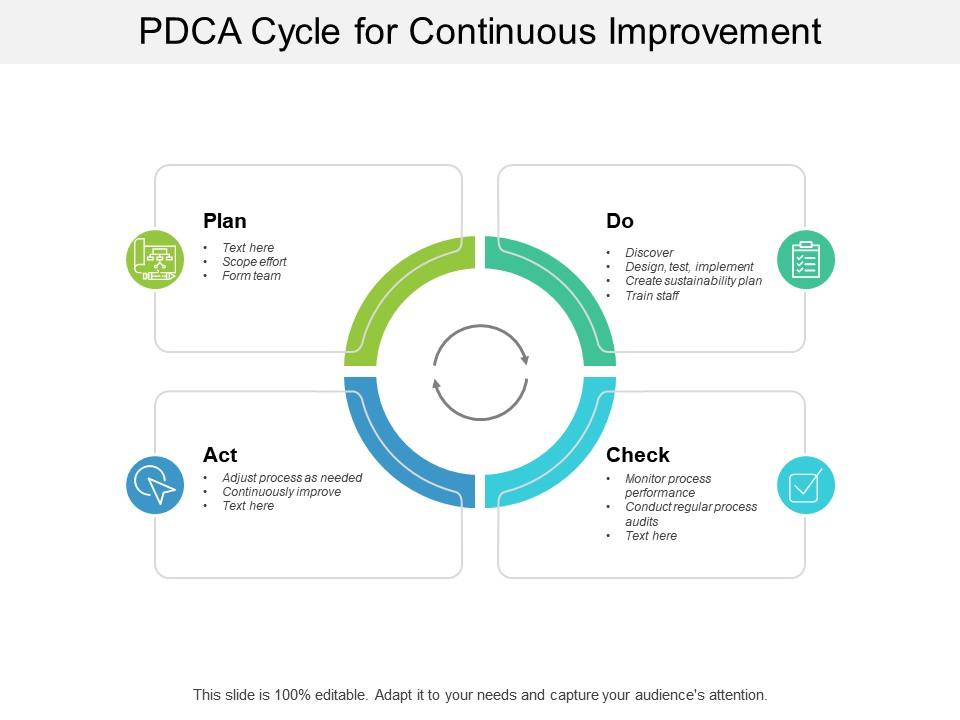
Presenting this set of slides with name PDCA Cycle For Continuous Improvement. This is a four stage process. The stages in this process are PDCA Cycle, Continuous Improvement, Quality Management. This is a completely editable PowerPoint presentation and is available for immediate download. Download now and impress your audience.

FAQs for Pdca cycle

Plan, Do, Check, Act - honestly it's way more useful than it sounds. Start by planning what you want to achieve. Then implement it (but keep it small-scale at first). Check how it went versus what you expected. Act on whatever you learned. The cool part? Your "act" becomes the starting point for your next cycle. It's not a one-and-done thing - you keep looping through all four stages. I'd just pick something tiny from your current project and try running through it once. You'll get the hang of it pretty quick.

Figure out exactly what you want to fix first and make your goals super specific - that's honestly half the battle right there. Test it small scale, maybe just one team or department. Then actually measure if it worked against those goals you set up front. Here's where most places mess up though: the follow-through. You've got to either roll it out everywhere if it worked, or scrap it and try something else if it didn't. Oh, and keep your cycles short - like 30-90 days tops. Otherwise you'll lose momentum and people will forget what you're even doing.

Okay so measurement is huge in the Check phase - that's literally how you figure out if your Plan and Do phases actually did anything. Compare your results to whatever targets you set up front. Without good data, you're basically just winging it (been there, done that). The whole thing feeds right into Act, where you decide if the change stays, gets tweaked, or gets tossed completely. Just make sure you're tracking stuff that actually matters - I've seen people measure random things that don't even relate to the original problem they were trying to solve.

Oh yeah, PDCA works great with agile! Sprint planning becomes your Plan phase. Do is just sprint execution. Then Check maps to retros and reviews, and Act is when you actually fix stuff in the next sprint. The whole cycle speeds up like crazy though - we're talking 1-2 weeks instead of months. Some teams I know even do tiny PDCA cycles during daily standups, which honestly feels like overkill to me. But the rapid iteration thing is what makes it powerful. Start with your next retro as the Check phase and actually follow through on improvements. That's where most teams drop the ball.

So PDCA is basically this loop that keeps your manufacturing stuff improving without you having to think too hard about it. You plan out changes, test them small-scale, check if they actually worked like you thought, then either roll it out or try something else. What's cool is each round builds on the last one - you're always finding problems and fixing them systematically instead of just winging it. Honestly, most people skip the "check" part and wonder why nothing sticks. Pick some annoying process issue this week and run through one cycle. You'll probably spot your next improvement before you even finish.

Honestly, most teams just skip the "Check" part completely - they make changes and never bother measuring if anything actually improved. Super frustrating to watch. People also treat PDCA like some one-time project instead of an ongoing thing, which misses the whole point. Your "Plan" stage needs concrete goals too, not just "let's make things better" because then you can't tell if you succeeded. And don't go overboard in the "Do" phase - I've seen companies try to change everything at once instead of testing small stuff first. Start tiny, actually look at your results, then decide what's next.

Honestly, just pick regular check-in points for each PDCA step and actually stick to them. Start with Plan - get everyone on the same page about what you're trying to fix through proper meetings (boring but necessary). Keep people updated during Do with quick check-ins because nobody wants to feel left out. The Check phase gets awkward when results suck, but share the data anyway - transparency beats sugar-coating. When you hit Act, write down what you learned and tell people about changes clearly. Oh, and whatever communication schedule you pick at the beginning? Don't abandon it halfway through like most teams do.

So for the Plan stage, start with root cause stuff - 5 Whys or fishbone diagrams work great. SMART goals are your friend here too. I'm obsessed with Gantt charts honestly, probably use them way too much lol. Process mapping helps you see the big picture. Don't forget brainstorming sessions and stakeholder analysis - you'll want to know who might cause problems later. Risk assessment matrices are clutch for spotting issues early. Oh, and figure out what data you're actually going to track. My advice? Pick like 2-3 tools max. Otherwise you'll just get overwhelmed and procrastinate.

Oh, PDCA is perfect for this! Pick one annoying customer pain point first - like those brutal wait times. Plan out a fix, then test it small-scale with just a few customers. Most companies totally bomb this next part: actually checking if it worked. Look at satisfaction scores, read the feedback. I swear, half the "improvements" I've seen made things worse because nobody bothered measuring. If the results look good, roll it out everywhere. Bad results? Tweak it and try again. Think of each round as a mini-experiment rather than some magic bullet solution.

Oh man, Toyota's the classic example - they basically built their whole lean manufacturing thing around PDCA. Amazon does it constantly too, tweaking their website layout and checkout flow with tiny experiments. Hospitals use it for cutting wait times and medication mistakes. 3M's obsessed with it for product development. Honestly, you don't need to be some huge company though. Small teams do this stuff all the time - better meetings, social media campaigns, whatever. My advice? Start super small with something you can actually measure, like how fast you respond to emails or customer feedback scores. Makes it way less overwhelming.

PDCA runs through both Six Sigma and Lean like DNA - it's everywhere once you notice it. Six Sigma's DMAIC process? That's basically PDCA in fancy clothes. Each phase follows the same plan-do-check-act pattern. Lean does the same thing, especially during kaizen events. I actually think PDCA might be more useful than people realize because you can use it solo or mix it into whatever methodology you're already doing. It's weirdly flexible that way. So yeah, if you're looking for something that plays well with others, PDCA's your friend.

While you're doing the work, watch your leading indicators - completion rates, how you're burning through resources, timeline stuff. The outcome metrics come later in the "check" phase, and honestly that's where it gets real about what actually worked vs what didn't. Compare everything against your original targets from planning. Look for weird patterns or unexpected side effects too. I always set up measurement points beforehand because scrambling for data later sucks. Be brutal about both wins and failures - that's how you'll actually improve next time.

Make PDCA feel natural instead of like extra homework. Train your people properly first - seriously, so many managers skip this step and wonder why things fall apart. Schedule regular team check-ins where people can honestly talk about wins and failures without getting thrown under the bus. Short sessions work better than marathon meetings, trust me. Celebrate when teams learn from mistakes, not just when everything goes perfectly. Use PDCA yourself and actually share your screw-ups with the team. Shows them you're human too. Focus on getting better over time rather than nailing everything immediately.

Start your team with some basic lean training - free online courses work fine. But honestly, they'll learn way more by actually doing it than sitting through lectures. Pick a few small, low-stakes projects where they can practice the whole Plan-Do-Check-Act cycle. Give them templates to track everything and maybe buddy them up with people who've done this before. The biggest thing they need to get? It's not a one-time fix - you keep cycling through it. Let them mess up on smaller stuff first before throwing them at your big problems. Trust me, the confidence boost makes all the difference.

Honestly, tech makes PDCA so much less painful. All that tedious tracking and data collection gets automated, which is a game changer. I'd grab something like Asana for planning, then use analytics dashboards to actually see what's happening in real-time. Way better than waiting forever to figure out if something worked. The automated reporting thing has saved me hours - no more manual spreadsheet hell. My advice? Don't go crazy trying to digitize everything at once. Pick one tool per phase and see how it goes. You'll probably end up loving the continuous feedback loops.

Ratings and Reviews

0% of 100
Review Form
Write a review
Most Relevant Reviews

No Reviews