People process technology strategy powerpoint presentation

Rating:
100%
People process technology strategy powerpoint presentation
Slide 1 of 5
Favourites Favourites

Try Before you Buy Download Free Sample Product

Audience Impress Your
Audience
Editable 100%
Editable
Time Save Hours
of Time
The Biggest Sale is ending soon in
0
0
:
0
0
:
0
0
Rating:
100%
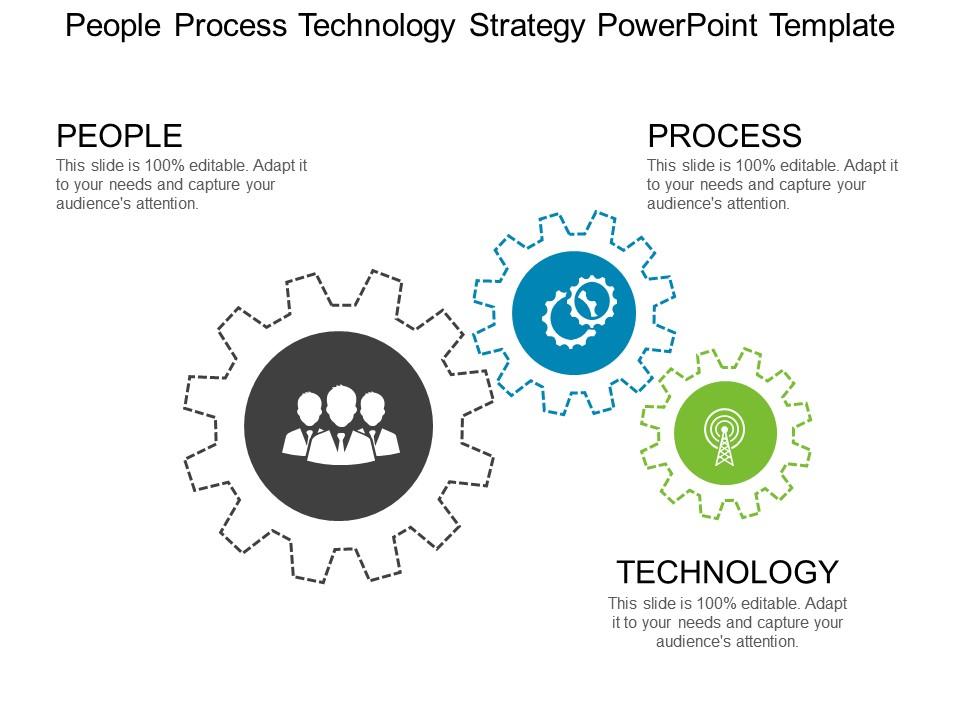
We bring to you completely editable professionally made People, Process and Technology PowerPoint strategy template for high-impact presentation results. The slide is fully editable with various icons, shapes and colors to choose from. This PPT slide is also compatible with Google Slides and can be saved in different formats. This professionally designed PowerPoint template is apt to showcase people process and technology. Create stunning presentation with our fully-customizable, ready-to-download PPT graphic.

FAQs for People process technology

Key components include talent acquisition and development, streamlined operational workflows, integrated technology platforms, change management frameworks, and performance measurement systems. These elements work together by aligning human capabilities with automated processes and digital tools, enabling organizations to enhance productivity, reduce operational costs, and deliver superior customer experiences while building sustainable competitive advantage.

Organizations effectively align people strategy with technology initiatives through strategic workforce planning, comprehensive skills assessment, and targeted training programs that bridge capability gaps. This alignment enables seamless technology adoption, enhances employee engagement, and accelerates digital transformation outcomes, with many companies finding that integrated people-technology strategies deliver sustainable competitive advantage and improved operational efficiency.

Change management ensures smooth adoption of People Process Technology strategies by addressing employee concerns, facilitating training programs, and managing organizational resistance to new workflows. Through structured communication, stakeholder engagement, and phased rollouts, organizations streamline transitions while maintaining productivity, with many companies finding that proactive change management reduces implementation timelines and enhances employee buy-in significantly.

Data analytics enhances people processes by identifying skill gaps, predicting turnover patterns, optimizing recruitment strategies, and measuring performance metrics more accurately. Through advanced analytics platforms, organizations streamline talent acquisition, improve employee engagement initiatives, and accelerate leadership development programs, while reducing hiring costs and time-to-fill positions, ultimately delivering stronger workforce outcomes and competitive advantage.

**INPUT**: What are the common challenges organizations face when integrating technology into their people processes? **OUTPUT**: Common challenges include resistance to change, skills gaps, data integration complexities, system compatibility issues, and maintaining human-centered experiences during digital transformation. Organizations across healthcare, financial services, and manufacturing find that addressing these through strategic training, phased implementation, and employee feedback ultimately streamlines operations while enhancing workforce engagement and operational efficiency. [Word count: 53 words]

Organizations measure People Process Technology strategy success through key performance indicators like employee productivity, process efficiency rates, technology adoption metrics, and customer satisfaction scores. These measurements enable strategic assessment by tracking reduced operational costs, faster service delivery, and improved employee engagement, with many companies finding that integrated dashboards ultimately deliver comprehensive visibility into transformation outcomes and competitive advantage.

AI-powered recruitment platforms, employee analytics systems, performance management software, digital learning platforms, and workforce planning tools are currently trending in HR. These technologies streamline talent acquisition, enhance employee engagement, and optimize resource allocation, with many organizations finding that strategic automation delivers faster hiring processes, personalized development experiences, and ultimately stronger competitive advantage in talent management.

AI and automation transform traditional people processes by streamlining recruitment through intelligent candidate screening, automating payroll and benefits administration, and enhancing performance management with data-driven insights. These technologies enable HR teams to focus on strategic initiatives while delivering faster onboarding, personalized employee experiences, and predictive workforce analytics, ultimately reducing operational costs and improving talent retention across organizations.

**INPUT**: What best practices can be adopted for training employees on new technology tools? **OUTPUT**: Effective technology training practices include hands-on workshops, role-based learning paths, peer mentoring programs, microlearning modules, and continuous support systems. These approaches enhance adoption by addressing different learning styles, providing real-world applications, and maintaining ongoing reinforcement, with many organizations finding that combining multiple training methods significantly accelerates proficiency while reducing resistance to technological change. [Word count: 58 words]

A People Process Technology strategy enhances employee engagement by streamlining workflows, providing user-friendly digital tools, and creating transparent communication channels that reduce frustration and increase productivity. Through integrated platforms, organizations deliver personalized learning experiences, automated feedback systems, and flexible work arrangements, with many companies finding that employees feel more valued and empowered, ultimately reducing turnover rates.

Organizations must consider data privacy and consent, algorithmic bias prevention, transparency in automated decisions, employee surveillance boundaries, and maintaining human dignity throughout digital transformation. These considerations require establishing clear governance frameworks, regular bias auditing, and employee involvement in technology deployment, ultimately building trust while delivering competitive advantage through ethical innovation.

Organizations ensure adaptable People Process Technology strategies by building flexible frameworks, fostering continuous learning cultures, implementing scalable technologies, and establishing regular review cycles. Through agile methodologies and cross-functional collaboration, companies can pivot quickly when market conditions shift, while investing in employee development and modular tech architectures that evolve with changing business needs, ultimately maintaining competitive advantage.

Leadership drives People Process Technology strategy execution by establishing clear vision, securing necessary resources, fostering cross-functional collaboration, and championing cultural change initiatives throughout the organization. Effective leaders bridge silos between HR, IT, and operations teams, while consistently communicating strategic benefits and measuring progress, with many organizations finding that executive sponsorship ultimately determines whether technology investments deliver enhanced employee experiences and operational efficiency.

Organizations can leverage employee feedback through regular surveys, focus groups, user experience testing, and digital feedback platforms to identify process bottlenecks and technology gaps. This strategic approach enables companies to streamline workflows, enhance system usability, and optimize resource allocation, with many finding that employee-driven insights ultimately deliver improved productivity, higher engagement, and competitive advantage in talent retention.

Several frameworks assess People Process Technology maturity, including the Capability Maturity Model Integration (CMMI), Digital Maturity Assessment frameworks, and custom organizational readiness models that evaluate skill alignment, process optimization, and technology integration levels. These frameworks help organizations identify gaps across talent development, workflow efficiency, and technological capability, with many companies finding that systematic maturity assessments enable strategic resource allocation and competitive positioning.

Ratings and Reviews

100% of 100
Write a review
Most Relevant Reviews
  1. 100%

    by Chris Watson

    Good research work and creative work done on every template.
  2. 100%

    by Daniel Mcdonald

    Illustrative design with editable content. Exceptional value for money. Highly pleased with the product.

2 Item(s)

per page: