Pillars of success four steps defines think logical respect and inspire innovation
Try Before you Buy Download Free Sample Product
Audience
Editable
of Time
Electrify your audience with your ideas. Our Pillars Of Success Four Steps Defines Think Logical Respect And Inspire Innovation will get the current flowing.
People who downloaded this PowerPoint presentation also viewed the following :
Content of this Powerpoint Presentation
Description:
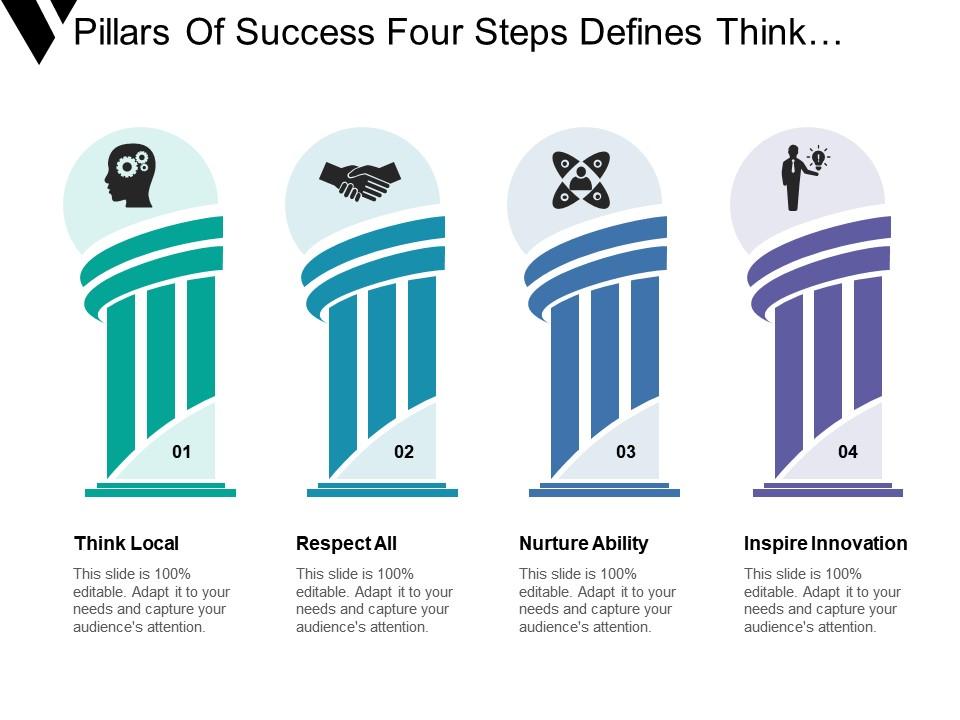
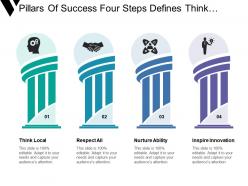
The image shows a presentation slide titled "Pillars Of Success Four Steps Defines Think...". It seems to represent four key principles or steps symbolized by columns, each labeled with a number and a distinct icon, and each principle is named and briefly described below its respective pillar:
1. Think Local (Pillar 01):Â
The associated icon features a lightbulb with gears, suggesting innovative thinking or local wisdom. The text indicates that local considerations and insights are crucial for success.
2. Respect All (Pillar 02):Â
Displaying an icon with two hands shaking, this principle emphasizes the importance of mutual respect in interactions and dealings, possibly suggesting teamwork or ethical business practices.
3. Nurture Ability (Pillar 03):Â
Accompanied by an icon depicting a shield and a check mark, this step alludes to the idea of protecting and developing skills or talents within an organization or community.
4. Inspire Innovation (Pillar 04):Â
This column shows an icon with a figure holding a lightbulb, which symbolizes leading by inspiration and encouraging creativity and new ideas.
Use Cases:
Considering these elements, here are seven industries where these slides can be used:
1. Education:
Use: To encourage students to think critically about local issues and foster a culture of respect, skill development, and innovation.
Presenter: Teacher or Academic Administrator
Audience: Students and Faculty
2. Sales & Marketing:
Use: To align marketing strategies with local markets, ensure respect for customer diversity, nurture sales skills, and drive innovative campaigns.
Presenter: Sales or Marketing Manager
Audience: Sales Team or Marketing Department
3. Nonprofit Organizations:
Use: To craft community-centric approaches, build respectful collaborations, enhance volunteer skills, and generate innovative solutions for social issues.
Presenter: Nonprofit Leader or Coordinator
Audience: Volunteers and Community Partners
4. Technology:
Use: To emphasize the importance of local user needs, maintain a respectful workplace culture, develop technical skills, and encourage innovative product development.
Presenter: Technology Executive or Team Leader
Audience: Tech Team and Stakeholders
5. Finance:
Use: To address local financial service needs, create an environment of respect within the workplace, nurture financial expertise, and inspire innovative financial products.
Presenter: Financial Analyst or Manager
Audience: Investment Team or Financial Planners
6. Healthcare:
Use: To focus on community health needs, establish a respectful patient care framework, develop medical skills, and inspire innovation in healthcare services.
Presenter: Healthcare Administrator or Medical Professional
Audience: Medical Staff and Healthcare Partners
7. Manufacturing:
Use: To optimize products for local markets, enforce a culture of respect on the production floor, improve workforce skills, and foster innovation in manufacturing processes.
Presenter: Operations Manager or Plant Supervisor
Audience: Production Team and Factory Workers
Pillars of success four steps defines think logical respect and inspire innovation with all 5 slides:
Srengthen the credibility of your views. Add to their credence with our Pillars Of Success Four Steps Defines Think Logical Respect And Inspire Innovation.
FAQs for Pillars of success four steps defines think logical respect
Honestly, it's all about whether you're actually moving toward what you want. Career-wise, I look for things like getting better at my job, decent feedback from my boss, and taking on bigger projects that don't make me want to cry. Personal stuff matters too though - good relationships, not feeling like garbage health-wise, having some money saved up. The annoying truth? Everyone's version looks different. Maybe you want balance while your friend's climbing the corporate ladder at breakneck speed. I'd say check in with yourself every few months - are you happy with where things are headed?
Honestly, goal setting is like giving your brain a roadmap instead of just wandering around hoping you'll stumble onto success. Write down 3 specific things you want this quarter - not vague stuff like "get healthier" but actual measurable targets. Then break those into weekly steps you can actually do. There's this weird dopamine hit from crossing things off lists that I'm probably too obsessed with, but it works. Goals help you figure out what's worth your time and what's just noise. Without them you're basically throwing spaghetti at the wall and hoping something sticks.
Honestly, resilience is just being able to get back up when life knocks you down - which it will, constantly. Everyone fails. The difference is some people let it destroy them while others dust themselves off and try again. When you mess up (and trust me, you will), try seeing it as data instead of proof you suck. I know that sounds cheesy but it actually works. Slow progress beats no progress, even when it's frustrating as hell. The people crushing it long-term aren't the naturally gifted ones - they're just stubborn enough to keep going.
Honestly, the biggest thing I've noticed is that high achievers are brutal about saying no to stuff that doesn't actually matter. Like, they'll batch all their emails into 2-3 specific times instead of checking constantly (which I'm still terrible at, not gonna lie). Planning the next day before bed is another weird habit that actually works - makes mornings less chaotic. They delegate anything someone else can handle. Oh, and they automate the boring repetitive stuff whenever possible. Basically treat your time like it's cash. Track how you spend a week first, then ruthlessly cut the time-wasters.
Dude, networking is seriously everything for your career. Like 70% of jobs aren't even posted online - it's all about who you know. Your connections become the people vouching for you, giving you insider info, and honestly just opening doors you didn't even know existed. Even in tech where your coding skills should speak for themselves, having someone put in a good word changes the game completely. My advice? Start by actually helping other people out first. Sounds backwards but those relationships pay off later when it's natural and not forced or weird.
Honestly? You gotta keep learning or you'll get left behind. Everything moves so damn fast now - like, skills that were hot five years ago are already outdated. Just look at how AI flipped the whole job market upside down practically overnight. The people who stay ahead are always picking up new stuff. Reading books, taking random courses, whatever. I try to set aside maybe 30 minutes each week for it, though I'll admit I don't always stick to it. But when I do? It pays off. Your career basically needs that constant updating, you know?
Honestly? Stop seeing failure as this huge defeat and start treating it like useful info instead. Most successful people actually fail way more than everyone else - they just don't quit. Break your big scary goals into smaller experiments so when things go wrong, it doesn't feel like the world's ending. Write down what you learn each time (I know, sounds nerdy but it works). And here's the thing - sometimes you gotta know when to pivot instead of being stubborn about something that's clearly not working. Each failure is basically just another step forward, not a wall blocking your path.
Dude, success means totally different things depending on where you're from. Americans obsess over individual wealth and achievements. Asian families? They care way more about harmony and taking care of elders. Those Scandinavian countries have it figured out though - they actually prioritize work-life balance over just making bank. Latin cultures mix family success with personal goals, and in many African communities it's about lifting up everyone around you, not just yourself. Honestly, when you're dealing with people from different backgrounds, just ask what success looks like to them. Don't assume your version is universal.
Honestly, the biggest ones are grit and self-discipline - like actually sticking with stuff when it sucks. Growth mindset too, where you believe you can get better at things through practice. Resilience is huge. Bouncing back from failures without spiraling for weeks (guilty lol). Delayed gratification matters - you know, the whole marshmallow test thing where kids who waited got better outcomes later. Emotional intelligence is pretty critical since nobody really makes it completely alone. You need to work with people without being a total disaster socially. I'd figure out what you're already decent at first, then pick one weak spot to actually work on.
Honestly, the biggest thing is changing how you see failure - it's just info, not some personal attack on your worth. Try adding "yet" to the end of "I can't do this" because it actually works. Small wins matter way more than people think, they keep you going when everything feels impossible. Oh and surround yourself with people who push you but aren't jerks about it. Daily habits don't have to be huge - even stupid small ones add up over time. Write down three things you want to get better at tomorrow, plus one tiny step for each. That's it.
Dude, I used to think work-life balance was just some HR buzzword until I completely burned out at my first startup. Your brain literally stops working when you're running on empty - like, I'd make the dumbest mistakes and couldn't think creatively at all. Now I'm pretty protective of my downtime because it actually makes me better at work. Short sentences here, but when you give yourself time to recharge, you come back sharper and way more productive. The people crushing it long-term? They all guard their personal time religiously. It's counterintuitive but taking breaks = better results.
Honestly, tech just makes everything you're already doing way more efficient. Instead of doing boring repetitive stuff manually, you can automate it. LinkedIn completely changed how we network - like, remember when you actually had to meet people in person? Wild. Data analytics helps you make better choices, and there's tons of AI tools now that actually save time. Oh, and you can learn basically anything online whenever you want. Don't just use tech because it's shiny though. Pick one annoying task you do all the time and find something to fix it.
Honestly, mentorship changed everything for me - wish I'd figured this out sooner. Industry programs are great, but don't sleep on just grabbing coffee with senior people at work. Professional associations help too, or you can slide into someone's LinkedIn DMs if you do it right. Here's what's cool though - reverse mentoring is huge now. Younger folks can teach you tons about new tech stuff. Join networking events when you can. The trick is showing up prepared and actually being curious about their experience, not just wanting something from them.
Look, personal branding is just about making yourself memorable in your field. You want to be that person everyone thinks of for specific skills - like when someone needs marketing help, they immediately go "oh, call Sarah." Honestly, it's kind of like dating but for your career. Share your expertise consistently and people will start associating you with those qualities before they even meet you. This opens doors to better jobs, speaking opportunities, all that good stuff. Plus it builds trust with employers and clients. Figure out what you want to be known for first, then just keep showing that expertise everywhere - work, LinkedIn, wherever you're visible professionally.
Ugh, I totally used to think you had to climb the corporate ladder super fast to "make it." But honestly? Real success is way more about the relationships you build and actually being good at stuff that matters. Don't be the person shouting over everyone in meetings or pulling all-nighters just to look busy. Ask smart questions instead. Be the teammate people can count on. Help others win too - sounds cheesy but it works. That's how you actually get promoted AND don't hate your job.
-
Easily Editable.
-
Great designs, Easily Editable.