Planning process in tqm timelines roadmap ppt powerpoint presentation ideas portfolio

Slide 1 of 5
Favourites Favourites

Try Before you Buy Download Free Sample Product

Audience Impress Your
Audience
Editable 100%
Editable
Time Save Hours
of Time
The Biggest Sale is ending soon in
0
0
:
0
0
:
0
0
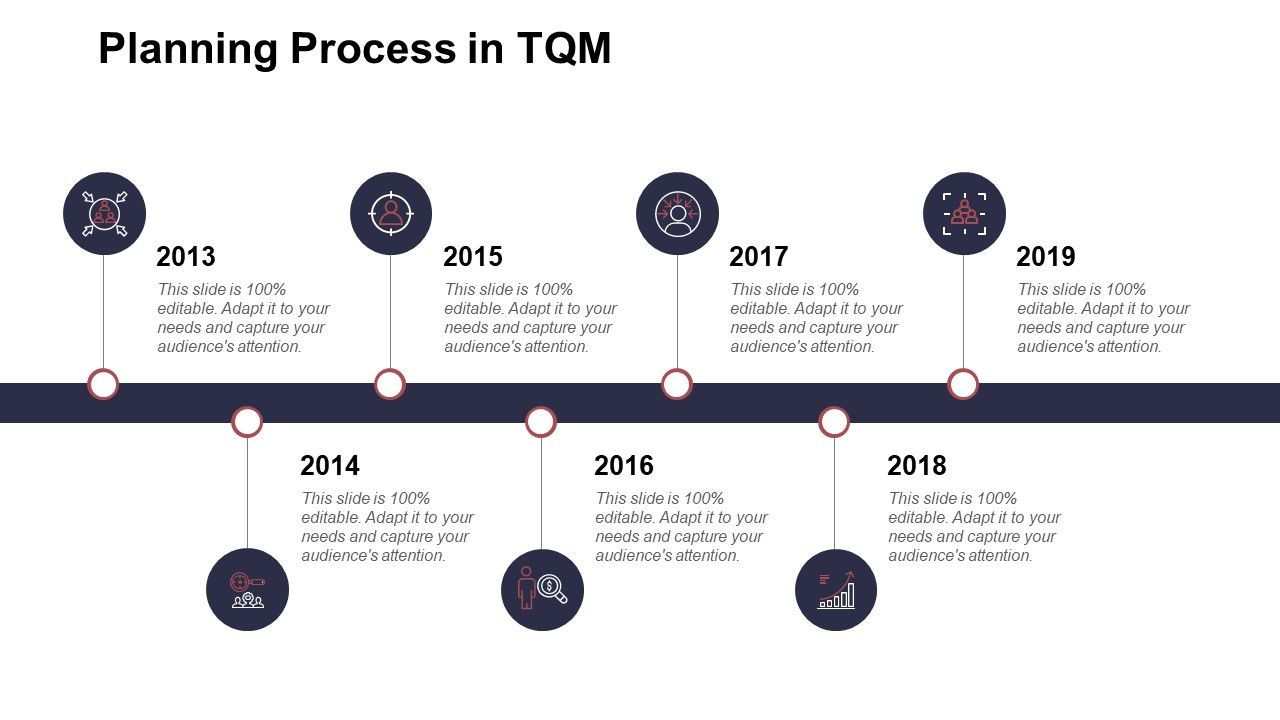
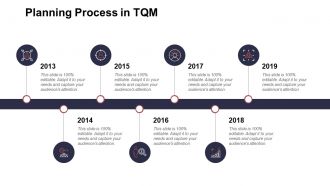
Presenting this set of slides with name Planning Process In TQM Timelines Roadmap Ppt Powerpoint Presentation Ideas Portfolio. This is a seven stage process. The stages in this process are Timeline, Business, Planning, Management, Process. This is a completely editable PowerPoint presentation and is available for immediate download. Download now and impress your audience.

People who downloaded this PowerPoint presentation also viewed the following :

FAQs for Planning process in tqm timelines roadmap ppt powerpoint

So you basically need four things: customer focus, continuous improvement, getting employees involved, and solid process management. First figure out what customers actually want - not what you assume they want (this is where most people mess up tbh). Set up ways to measure and improve quality across everything you do. Leadership has to be all-in, and you need good data to track how you're doing. The tricky part? Getting everyone on board from executives down to floor workers. TQM falls apart if it's not baked into your whole culture. Start small with one process first - way easier than going company-wide right off the bat.

Dude, you really need to loop in your stakeholders from day one. Getting input from customers, employees, suppliers - basically anyone who deals with your processes - helps you spot actual problems instead of making stuff up. People will actually support changes they helped design, which honestly is huge for avoiding drama later. Short sentences work. You'll also catch issues before they blow up your timeline. Oh and pro tip - I learned this the hard way - map out your key players first, then create regular check-ins with them. It's way less painful than trying to fix things after the fact.

Honestly, leadership makes or breaks TQM planning. Without them actually buying into the quality vision, you're dead in the water. They control the budget, make the hard calls on process changes, and set the whole culture. Plus someone has to get departments talking to each other instead of working in their own little bubbles. The thing that trips up most companies? Leaders who preach quality but don't practice it themselves. Get your leadership team on the same page first - like, really aligned on what quality means - then worry about everyone else.

Start with process mapping - can't improve what you don't understand, right? Then grab some SPC tools and control charts for monitoring performance. Fishbone diagrams are solid for root cause analysis. PDCA cycles keep everything structured (though they can feel repetitive at first). Pareto analysis helps you figure out which fires to put out first - honestly saves so much time. Flowcharts seem super basic but they're actually clutch for spotting where things go wrong. Your team will thank you for the visual clarity before you start changing stuff.

Honestly, you'll want to track the obvious stuff first - defect rates, customer satisfaction, how engaged your employees actually are. Process cycle times too. But here's the thing: pulse surveys matter way more than people think because attitudes about quality really drive everything else. Don't just look at snapshots though - watch for trends over time compared to your baseline. The real win? When quality improvements stop feeling like some separate project and just become how you operate. Monthly check-ins help you course-correct as needed.

Honestly, the worst part is always getting people to actually change - they're so stuck in their ways even when stuff clearly isn't working. Leadership usually doesn't back you up either, which is brutal. Then you've got unclear goals, crappy training, and everyone trying to fix everything at once instead of picking what matters most. Departments barely talk to each other too. Oh, and good luck getting proper resources while they still expect miracles! Start with small pilot programs though. Get the bosses visibly on board and never stop explaining why you're doing this stuff.

Honestly, data analytics completely changes how you approach TQM planning. Instead of guessing what's wrong, you get real numbers showing exactly where quality issues are happening. You can catch problems before they blow up into major disasters - which has saved my butt more times than I can count. The cool thing is you can actually see if your quality improvements are working or just wasting time and money. Root cause analysis becomes way easier too. I'd start simple though - pick maybe 2 or 3 key metrics and track them religiously. You'll start seeing patterns pretty quickly that'll blow your mind.

Honestly, three things work best in my experience. First, create feedback loops where people can actually share ideas without waiting forever for approvals - that bureaucracy stuff kills motivation fast. Give your team real authority to make changes in their own areas too. Nothing's worse than having great ideas die in approval limbo. Also celebrate the small wins, not just huge breakthroughs. Set up some cross-functional teams and do regular "what did we learn" sessions. The whole point is making everyone feel like improvement is their thing, not just something management worries about. Start with one pilot area and let it spread naturally from there.

So basically, TQM planning works by baking quality goals right into your business strategy instead of treating them as separate things. Your quality objectives should match whatever you're trying to achieve - market growth, cutting costs, innovation, whatever. It's like quality becomes the method for hitting your strategic targets. Honestly, it's pretty smart when companies actually do it right. Map out your current business goals and see where quality improvements could directly help you get there. That way every process tweak you make actually moves the needle on real results.

Look at Toyota - they basically invented lean manufacturing with their TQM approach. Motorola's Six Sigma thing saved them billions by cutting defects. IBM was struggling hard in the 90s but turned it around focusing on customer satisfaction through quality management. Even McDonald's (weird example but hear me out) uses it to keep everything consistent across like 40,000 locations worldwide. The companies that actually succeed with this stuff don't just slap on some quality program. They get leadership buying in completely and involve everyone from top to bottom. That's what separates the winners from companies that just talk about quality.

Don't treat training like some box you check at the end - weave it right into your TQM planning from day one. Figure out where people's skills are lacking during your initial assessment, then build targeted programs around your actual quality goals. Honestly, those one-off workshop marathons are pretty useless since everyone just forgets everything anyway. Instead, spread training throughout your timeline and connect it to the specific metrics you're tracking. Cover both the technical stuff and the mindset changes people need to make. Bottom line? Train before you launch new processes, not after everything's already going sideways.

Look, customer feedback is where all your TQM planning starts - it shows you what's broken and what people actually care about. Without it, you're basically guessing at problems. Think of it like trying to diagnose car trouble without hearing the engine knock, right? Their input helps you figure out which processes need fixing first and sets realistic quality goals. Honestly, I've seen too many companies waste time on internal projects nobody asked for. Focus on what customers tell you matters. Oh, and don't forget to circle back - show them how you used their feedback to make changes. They'll appreciate knowing you listened.

Honestly, you've gotta bake flexibility into your TQM planning right from the start. Quarterly reviews work way better than annual ones - trust me on this. I've watched so many teams get completely stuck because they made these massive year-long plans that were basically useless after a few months. Your quality metrics should be able to change too. Always build some wiggle room into your budget and timeline for when things inevitably shift or you discover better approaches. Oh, and treat the whole plan like it's alive, not set in concrete. Those regular check-ins? Schedule them now before you forget.

Digital transformation totally changes how you can do TQM planning. Real-time data means you're tracking quality metrics instantly instead of waiting around. Automation helps predict problems before they blow up. Your team can actually collaborate on improvements through digital platforms now - way faster than those painful paper processes we used to deal with. The trick is redesigning your workflows around these tools, not just copying your old manual stuff digitally. That's where most people mess up honestly. Figure out what quality data you can automate first, then build some decent dashboards.

So cross-functional teams are honestly game-changers for TQM planning. You get marketing, ops, finance - all these different departments working together instead of in silos. The cool thing is they'll catch problems you'd never see coming from just one perspective. Implementation goes way smoother too since everyone had a hand in creating the plan, so they're actually bought in. I learned this the hard way at my last job - we tried doing quality planning with just our department and missed so many obvious issues. Get your key people from each area involved right from the start. Trust me on this one.

Ratings and Reviews

0% of 100
Write a review
Most Relevant Reviews

No Reviews