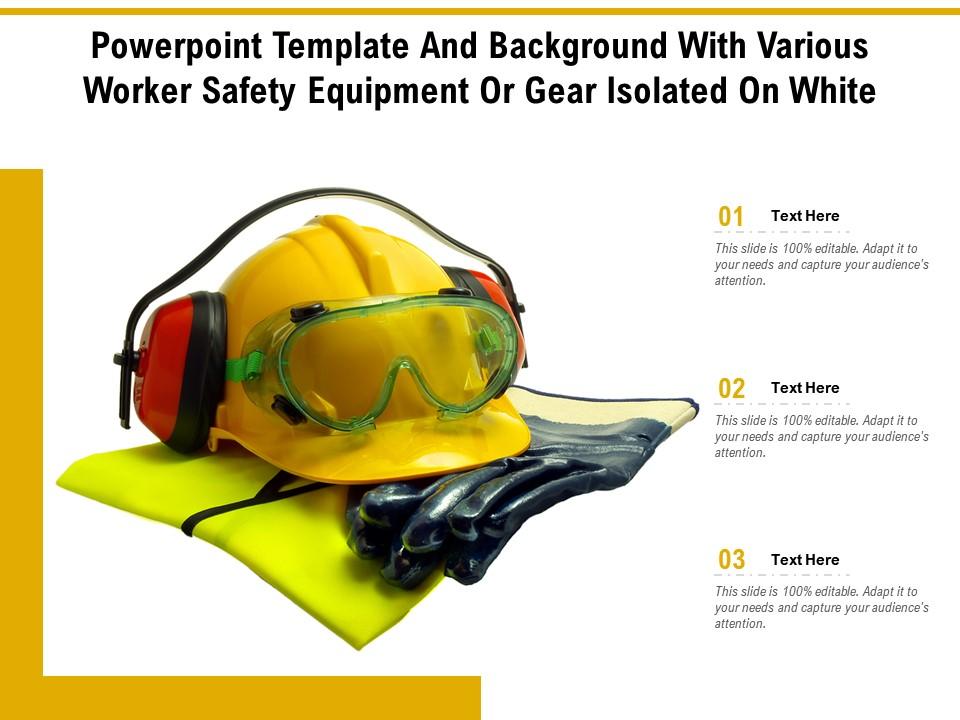
Powerpoint template and background with various worker safety equipment or gear isolated on white

Rating:
100%
Powerpoint template and background with various worker safety equipment or gear isolated on white
Slide 1 of 2
Favourites Favourites

Try Before you Buy Download Free Sample Product

Audience Impress Your
Audience
Editable 100%
Editable
Time Save Hours
of Time
The Biggest Sale is ending soon in
0
0
:
0
0
:
0
0
AI-Ready
Upload this template to AI and ask it to make any changes to content or color
100% editable Powerpoint Template for AI-assisted presentations. Finish your work in less time. Download Prompt Kit ​
Works with
Microsoft PowerPoint
Microsoft 365
Claude for PowerPoint
ChatGPT
Google Slides
Microsoft Copilot
Rating:
100%
Boost your presentation and its significance with this neatly presented Powerpoint Template And Background With Various Worker Safety Equipment Or Gear Isolated On White. This is a sharp professional presentation design that adheres to the standards of user friendliness and utility. It includes built in sections laden with content to help you portray important information with ease. Its versatility and flexibility is something that can help you take your presentation off the charts. Also an assortment of customizations that this layout responds to is noteworthy. Since it is a user friendly template it is suitable for any setting whether it is business academic or personal. With pre loaded graphics images content etc. it is very simple to use and include in your operations. Also presenting complex information and data in an easy to interpret format is one of the most notable features of this design that can be altered to fit your needs. Use it on multiple occasions as once downloaded this template can be saved for future portrayal.

People who downloaded this PowerPoint presentation also viewed the following :

FAQs for Powerpoint template and background with various worker safety equipment or gear

Essential PPE components include head protection, eye and face shields, respiratory equipment, hearing protection, hand and foot safety gear, and high-visibility clothing. These safety systems enhance worker protection by preventing injuries, reducing liability costs, and ensuring regulatory compliance, with manufacturing, construction, and healthcare industries finding that comprehensive PPE programs ultimately deliver improved productivity and reduced workplace incidents.

Employers can effectively assess safety equipment needs through comprehensive workplace hazard evaluations, employee consultations, regulatory compliance reviews, and task-specific risk assessments. Manufacturing facilities, construction companies, and chemical plants increasingly use safety audits, incident analysis, and worker feedback surveys to identify equipment gaps, ultimately ensuring regulatory compliance while reducing workplace injuries and enhancing operational efficiency.

Training plays a crucial role in worker safety equipment effectiveness by ensuring proper usage, maintenance procedures, hazard recognition, and emergency response protocols. Through comprehensive training programs, organizations significantly reduce workplace accidents, enhance equipment longevity, and improve regulatory compliance, with many manufacturing and construction companies finding that well-trained workers demonstrate higher safety performance.

Latest innovations in worker safety gear include smart helmets with augmented reality displays, lightweight composite materials for protective clothing, wearable sensors monitoring vital signs and environmental hazards, and ergonomic designs reducing fatigue. These technologies enhance protection by providing real-time safety alerts, improving durability while reducing weight, and delivering greater comfort, with manufacturing and construction industries finding that advanced gear significantly improves compliance rates and worker productivity.

Businesses ensure safety equipment compliance by conducting regular regulatory audits, implementing standardized procurement protocols, maintaining comprehensive documentation, and establishing ongoing staff training programs. Through partnerships with certified suppliers and compliance consultants, organizations across manufacturing, construction, and healthcare sectors streamline regulatory adherence while minimizing liability risks, ultimately delivering enhanced worker protection and operational continuity.

Companies should evaluate vendor criteria including regulatory compliance certifications, product quality standards, comprehensive training support, responsive customer service, and competitive pricing structures. Through strategic vendor partnerships, organizations across manufacturing, construction, and industrial sectors enhance workplace safety protocols, streamline equipment procurement processes, and ensure regulatory adherence, ultimately delivering reduced incident rates and improved employee protection.

Poorly fitting or heavy safety equipment significantly reduces worker productivity by causing fatigue, restricting movement, and creating discomfort that leads to decreased focus and efficiency. Modern ergonomic designs enhance comfort through lightweight materials, adjustable components, and breathable fabrics, with construction, manufacturing, and healthcare sectors finding that properly fitted equipment ultimately improves compliance, reduces workplace injuries, and maintains operational effectiveness.

Regular safety equipment inspection processes include scheduled visual checks, functional testing, documented maintenance logs, calibration procedures, and replacement tracking systems. These systematic approaches enhance workplace safety by identifying wear patterns, ensuring compliance standards, and minimizing equipment failures, with many manufacturing and construction organizations finding that proactive maintenance schedules reduce incidents while streamlining operational efficiency.

Wearable devices enhance worker safety by monitoring vital signs, detecting hazardous gas exposure, tracking location in real-time, and providing instant alerts for dangerous conditions. Through smart helmets, safety vests, and environmental sensors, construction companies and manufacturing facilities streamline incident prevention, accelerate emergency response times, and ultimately reduce workplace injuries while improving regulatory compliance.

Common misconceptions include believing safety equipment slows productivity, costs outweigh benefits, accidents won't happen to experienced workers, and compliance equals actual protection. These misconceptions create significant risks across manufacturing, construction, and industrial sectors, with many organizations finding that proper safety equipment actually enhances efficiency, reduces insurance costs, and ultimately delivers stronger operational performance and workforce retention.

Organizations promote safety culture through comprehensive training programs, clear policies with consequences, leadership modeling, employee involvement in safety decisions, and regular safety communications. By implementing peer accountability systems, recognition programs for safe behaviors, and making quality protective equipment easily accessible, companies create environments where safety becomes ingrained in daily operations, ultimately reducing workplace incidents and enhancing overall productivity.

Neglecting worker safety equipment in high-risk environments can result in severe injuries, fatalities, regulatory violations, legal liabilities, and substantial financial penalties. These consequences ultimately lead to increased insurance costs, operational shutdowns, damaged reputation, and reduced productivity, with many manufacturing, construction, and chemical processing companies finding that comprehensive safety protocols deliver significant cost savings and competitive advantages.

Businesses can balance cost-effectiveness with quality safety gear by implementing strategic procurement practices, bulk purchasing agreements, and comprehensive lifecycle cost analysis rather than focusing solely on upfront prices. Many manufacturing and construction companies find that investing in durable, certified equipment ultimately reduces replacement costs, minimizes workplace incidents, and delivers long-term operational savings while ensuring regulatory compliance.

**INPUT**: What strategies can be adopted to educate workers about the importance of safety equipment? **OUTPUT**: Effective safety education strategies include interactive training sessions, hands-on demonstrations, visual safety campaigns, peer mentorship programs, and regular safety briefings with real incident case studies. These approaches enhance worker engagement by combining practical experience with clear communication, ultimately reducing workplace accidents and improving compliance rates, with many manufacturing and construction organizations finding that comprehensive education programs significantly streamline safety protocols. [Word count: 60]

Worker feedback significantly enhances safety equipment selection by identifying real-world usability issues, comfort concerns, and operational limitations that specifications alone cannot reveal. Through systematic surveys, focus groups, and pilot testing programs, organizations streamline equipment adoption while minimizing resistance, ultimately delivering improved compliance rates and reduced workplace incidents across manufacturing, construction, and industrial sectors.

Ratings and Reviews

100% of 100
Review Form
Write a review
Most Relevant Reviews
  1. 100%

    by Garcia Ortiz

    Amazing product with appealing content and design.

1 Item

per page: