Slides de apresentação em PowerPoint de modelagem preditiva
Try Before you Buy Download Free Sample Product
Audience
Editable
of Time
Preveja resultados de negócios com slides de apresentação em PowerPoint de modelagem preditiva. Identifique valores discrepantes em um dado e determine qualquer atividade de fraude usando modelos de apresentação PPT de modelagem preditiva. Use o layout de apresentação do PowerPoint de modelagem preditiva pronta para o conteúdo para CRM para descobrir os clientes que provavelmente comprarão de você. Além disso, incorpore a apresentação de slides PPT de modelagem preditiva para vários outros aplicativos, como gerenciamento de desastres, planejamento de capacidade, gerenciamento de mudanças, engenharia e muito mais. Este deck é composto por modelos que o ajudarão a coletar e analisar dados para identificar as chances de resultados futuros com base em dados históricos. Possui slides PPT como etapas de análise preditiva, definição de projeto, coleta de dados, análise de dados, resultados estatísticos, estágios de análise preditiva, benefícios da análise preditiva e muito mais. Descubra em que tipo de produtos e serviços os consumidores podem estar interessados e o que os atrai com os modelos PPT de análise preditiva. Use o intervalo de previsão da sua empresa para aumentar os resultados financeiros e a vantagem competitiva. Tenha um modelo estatístico de apresentação de slides do PowerPoint para produzir informações valiosas. Nossos slides de apresentação em PowerPoint de modelagem preditiva têm o impacto de serem sucintos e diretos.
Recursos desses slides de apresentação em PowerPoint:
Apresentação de slides de apresentação em PowerPoint de modelagem preditiva. Deck pré-projetado completo de 20 modelos PPT prontos para conteúdo. Esses modelos são totalmente editáveis. Altere a cor, o texto e o tamanho da fonte de acordo com suas necessidades. Fácil de baixar. Pode ser facilmente convertido em formatos PDF ou JPG. Esses slides PPT são bem compatíveis com os slides do Google. Baixe Agora.
People who downloaded this PowerPoint presentation also viewed the following :
Conteúdo desta apresentação em PowerPoint
Slide 1 : Este slide apresenta a modelagem preditiva. Indique o nome da sua empresa e comece.
Slide 2 : Este é um slide da agenda. Declare suas agendas aqui.
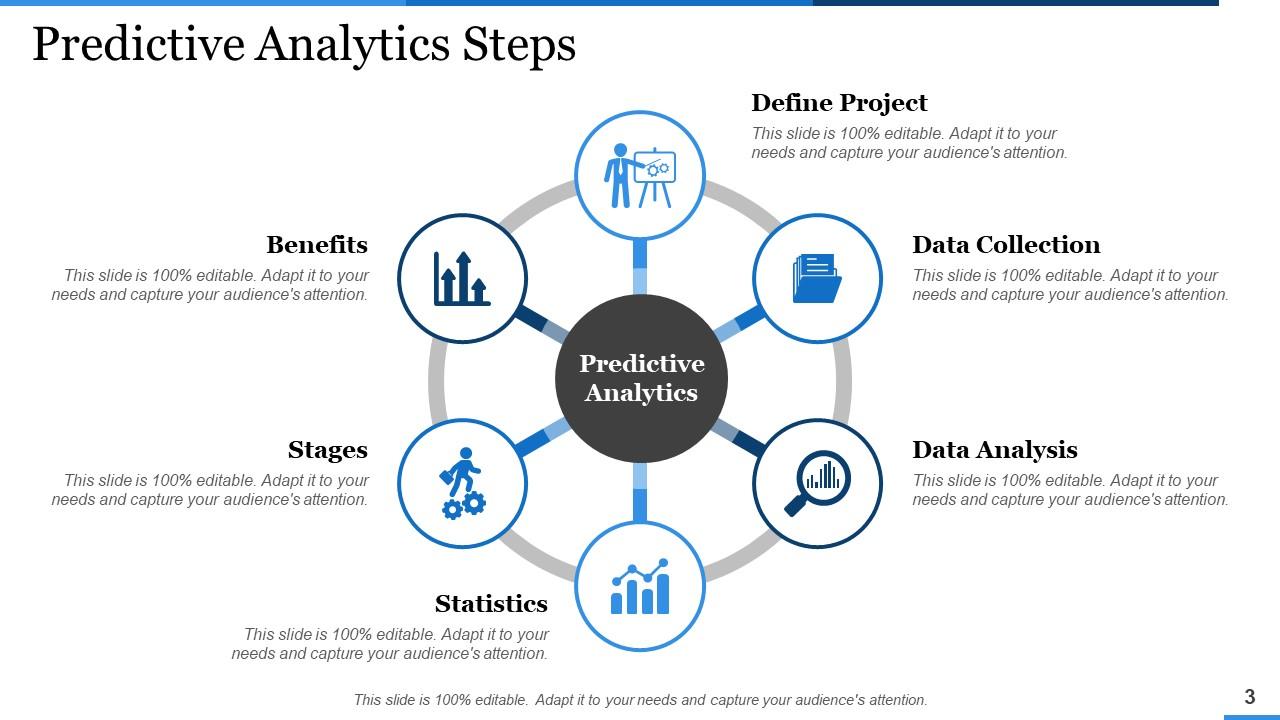
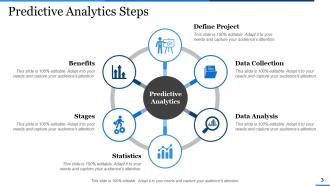
Slide 3 : Este slide apresenta as etapas de análise preditiva com os seguintes pontos - Definir projeto, estatística, análise de dados, etapas, coleta de dados, benefícios.

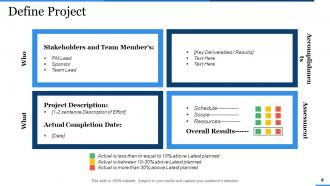
Slide 4 : Este slide apresenta Definir quem do projeto {Stakeholders and Team Member's, (PM Lead Sponsor Team Lead)} O quê {(Project Descriptio, Actual Completion Date} Avaliação / Resultados gerais (cronograma, escopo, recursos)
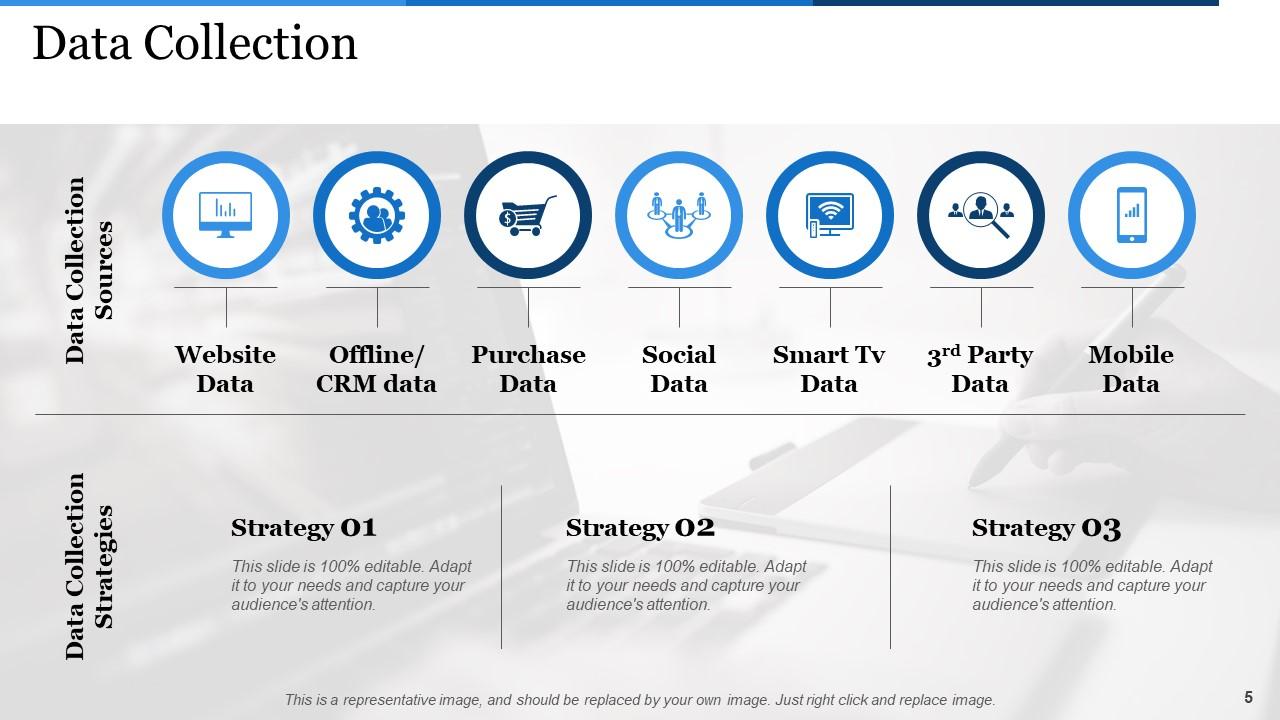
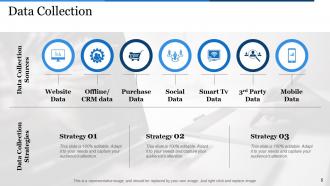
Slide 5 : Este slide mostra Coleta de Dados com Fontes de Coleta de Dados: Dados do site, Dados offline / CRM, Compra, Dados, Dados Sociais, Dados de Smart Tv, Dados de Terceiros, Dados Móveis e Estratégias de Coleta de Dados.

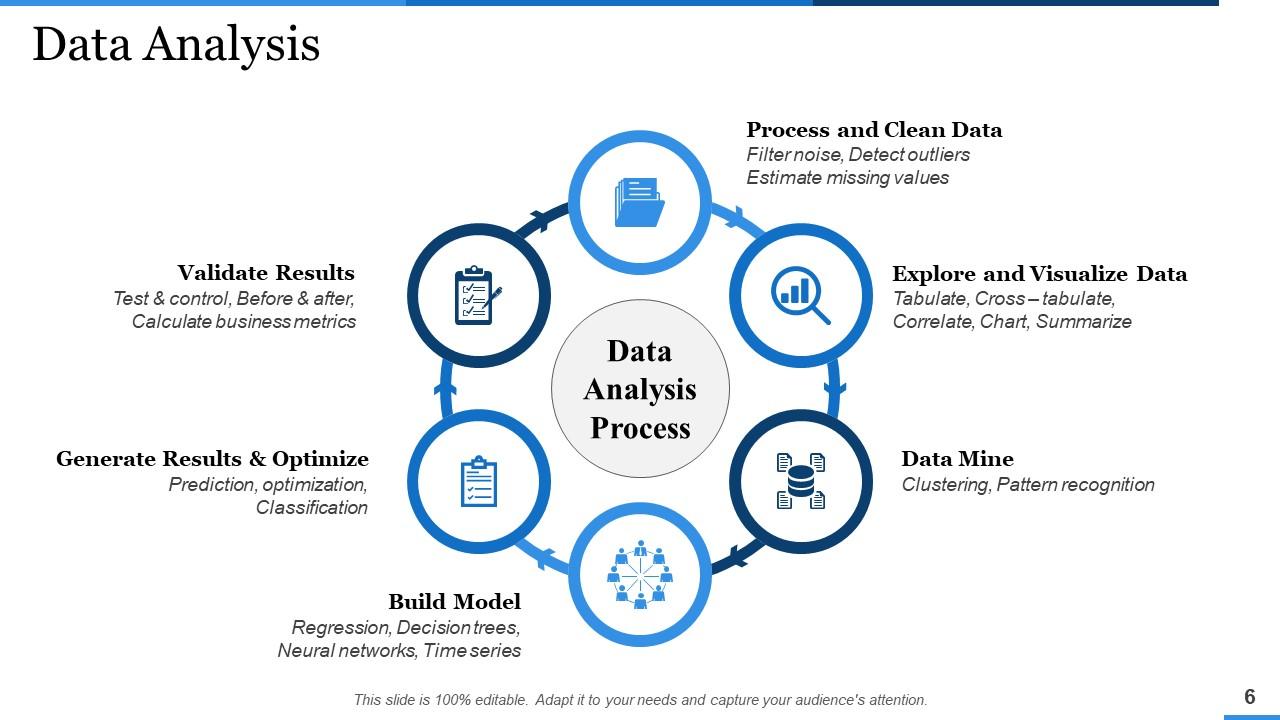
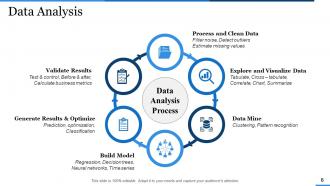
Slide 6 : Este slide apresenta a Análise de Dados com os seguintes pontos - Processar e Limpar Dados (Filtrar ruído, Detectar outliers, Estimar valores ausentes) Construir Modelo (Regressão, Árvores de Decisão, Redes Neurais, Séries temporais) Data Mine (Clustering, Reconhecimento de padrões) Gerar resultados e otimizar (previsão, otimização, classificação) Explorar e visualizar dados (tabular, tabular, correlacionar, traçar, resumir) Validar resultados (testar e controlar, antes e depois, calcular métricas de negócios). Processo de análise de dados.
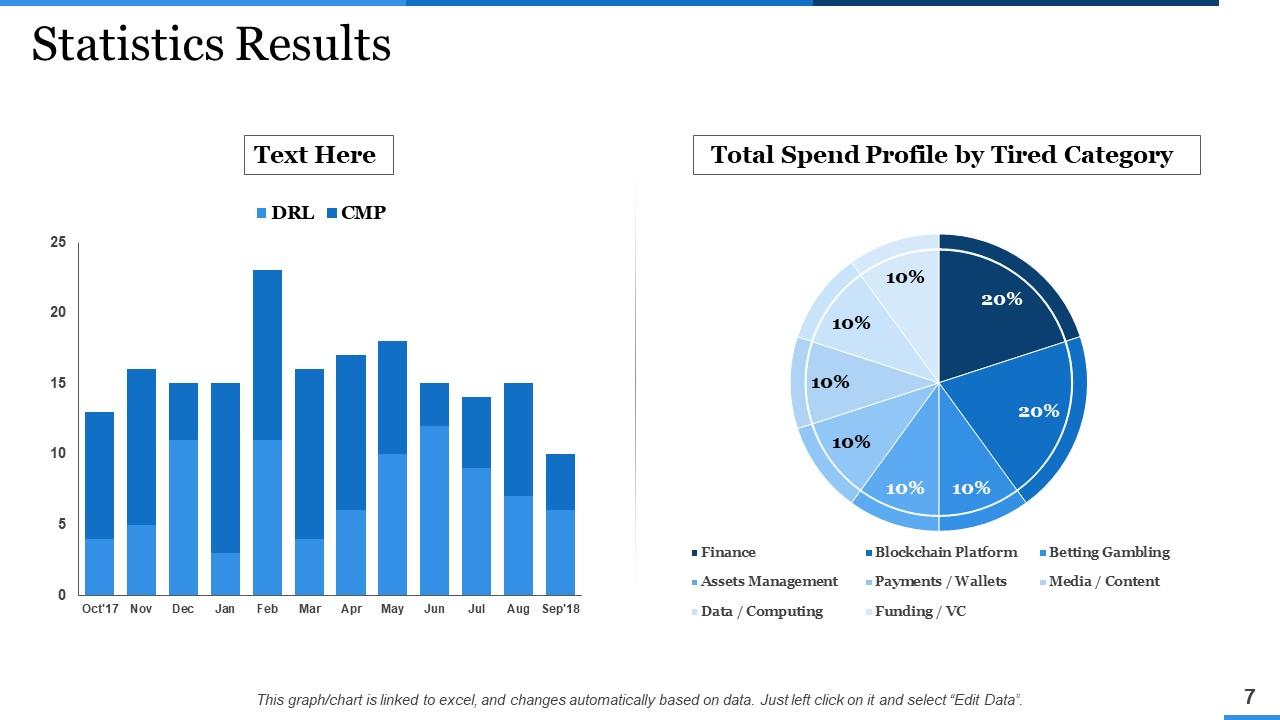
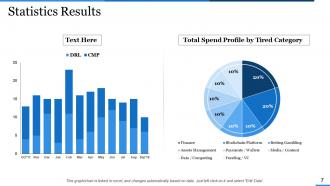
Slide 7 : Este slide apresenta os resultados das estatísticas com - Perfil de gasto total por categoria de cansaço, etc.
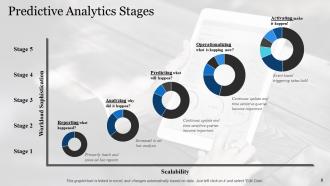
Slide 8 : Este slide exibe os estágios do Predictive Analytics em termos de escalabilidade e sofisticação da carga de trabalho. Os constituintes estão- Reportando o que aconteceu? Principalmente em lote e alguns relatórios ad hoc. Analisando por que isso aconteceu? Aumentado na análise ad hoc. Prevendo o que vai acontecer? A atualização contínua e as consultas urgentes tornam-se importantes. Operacionalizando o que está acontecendo agora? A atualização contínua e as consultas urgentes tornam-se importantes. Ativando faça acontecer! (O acionamento baseado em evento é acionado).
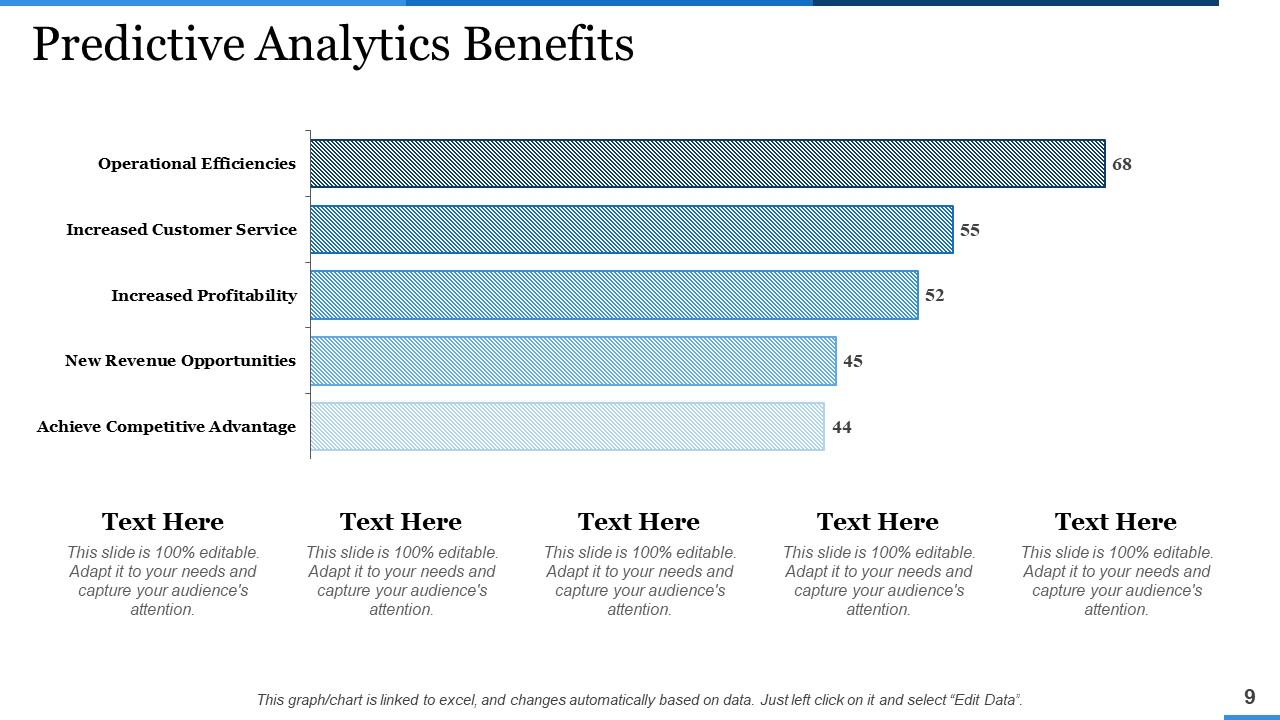
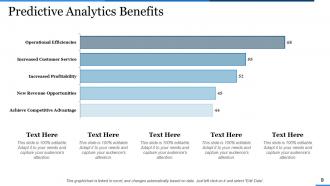
Slide 9 : Este slide apresenta os benefícios do Predictive Analytics. Declare-os aqui em forma de gráfico.
Slide 10 : Este é o slide de ícones de modelagem preditiva. Use os ícones conforme a necessidade.
Slide 11 : Esta é uma imagem do intervalo para o chá. Esta é uma imagem representativa e deve ser substituída por sua própria imagem.
Slide 12 : Este slide é intitulado Slides adicionais para prosseguir.
Slide 13 : Este slide apresenta Nossa Equipe com nome, designação e caixas de imagem para indicar.
Slide 14 : Este slide mostra Nossa Meta. Declare-os aqui.
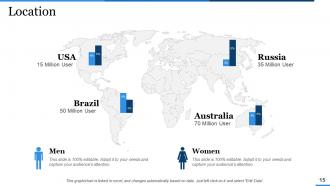
Slide 15 : Este é um slide de localização do mapa mundial para apresentar o crescimento da presença global, etc.
Slide 16 : Este é um slide de lupa para informações de estado, sepcificações etc.
Slide 17 : Este slide é intitulado Tabelas e gráficos para prosseguir.
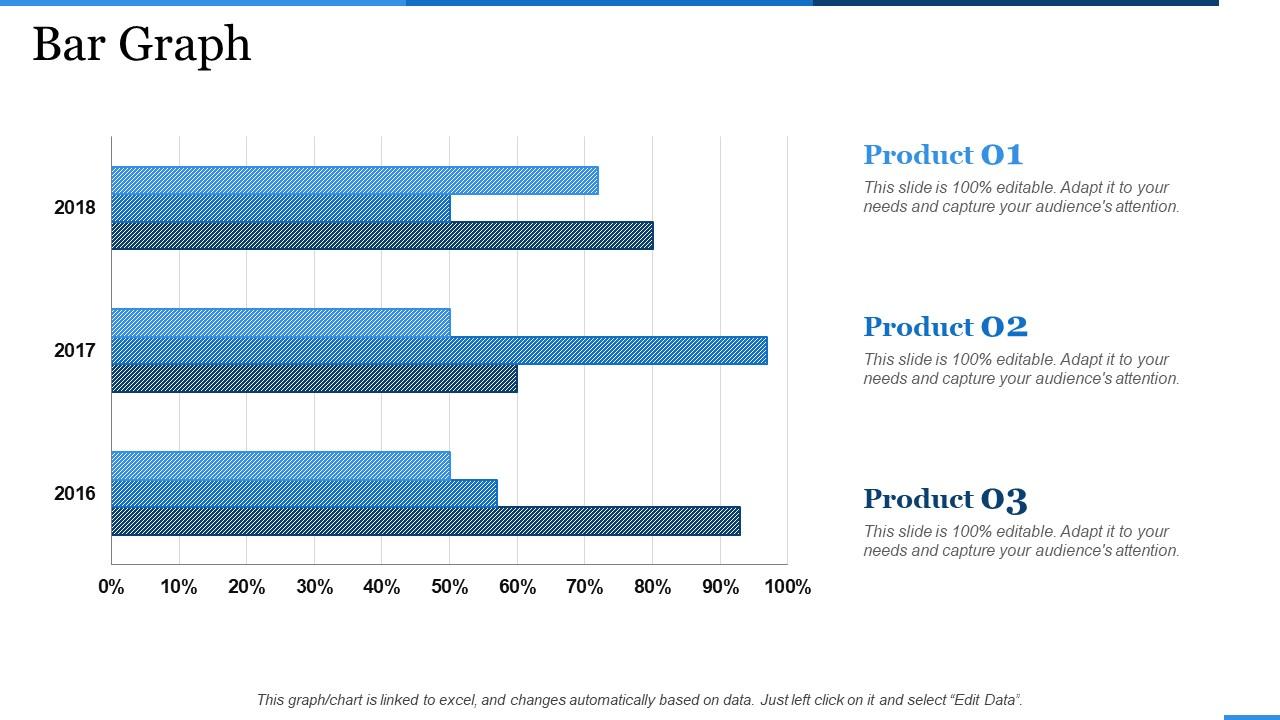
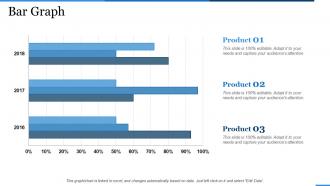
Slide 18 : Este é um slide de gráfico de barras para mostrar a comparação de produto / entidade, etc.
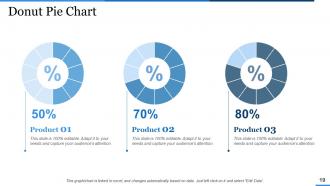
Slide 19 : Este é um slide de gráfico de pizza de rosca para mostrar a comparação de produto / entidade, etc.
Slide 20 : Este é um slide de agradecimento com endereço #, rua, cidade, estado, número de contato, endereço de e-mail.
Slides de apresentação em PowerPoint de modelagem preditiva com todos os 20 slides:
Competir de forma eficaz com nossos slides de apresentação em Powerpoint de modelagem preditiva. Suas ações serão mais bem coordenadas.
FAQs for Predictive Modelling
So first you gotta define your problem and get good data - that's huge. Clean it up and explore what you're actually dealing with. Then do feature engineering to make useful variables, split everything into training/test sets, and pick an algorithm. People obsess over algorithms but honestly? Your data quality matters way more. Train the model, check how it performs with the right metrics, maybe tune some hyperparameters. Deploy when you're happy with it. Oh and seriously - spend forever on data cleaning at the start. I learned that the hard way lol.
Honestly, it just comes down to your data and what you're trying to solve. Linear regression is your best friend for simple stuff - fast and you won't confuse anyone when explaining it. Random forests are solid for most problems, plus they don't freak out over missing data which is nice. Got massive datasets with weird patterns? That's when you break out gradient boosting or neural networks. I always start basic first though - sometimes the simple approach works better than you'd expect. Test a few different ones because your data might have preferences you didn't see coming.
Honestly, preprocessing your data is huge - like probably the most important step. I'd say 80% of machine learning is just cleaning up your messy data and dealing with missing values. Your model learns from whatever you feed it, so garbage in = garbage out, you know? Start with basic stuff like removing outliers and scaling your features. Even just doing that can bump your accuracy up 10-30% easily. It's kinda boring work but totally worth it. Without it, your algorithm's basically trying to find patterns in noise and weird formatting issues.
Honestly, feature engineering is where you'll see the biggest jumps in performance. Your model can only work with what you give it, right? So when you scale your numerical stuff properly, handle categorical encoding well, or create new features from existing ones - that's when things get interesting. Even basic transformations like log scaling can help tons with skewed data. I always spend way more time here than I probably should, but experimenting with different feature combinations is where you actually move those validation scores. Just gotta understand your data first, then see what works.
So basically, supervised learning needs labeled data - you're showing the model examples with correct answers, like "here's house features and what it sold for." Unsupervised is the opposite. No labels, just raw data, and you're hunting for patterns you didn't even know existed. Customer groupings, weird correlations, that kind of stuff. Most companies go straight for supervised because they want concrete predictions (totally makes sense from a business angle). But honestly? Don't sleep on unsupervised - it can reveal some pretty wild insights you'd never think to ask about. If you've got a clear target to predict though, start there.
You definitely need multiple metrics to see what's actually happening. Precision, recall, F1-score for classification stuff - RMSE and MAE if you're doing regression. Never trust just one though, they'll lie to you sometimes! Split your data properly with train/validation/test sets. Cross-validation is huge for seeing if your model works on new data. Compare training vs validation performance to catch overfitting. Oh, and test on real production-like data before you go live - learned that one the hard way. Accuracy alone won't tell you much.
Honestly, missing data is such a pain but there are decent ways to handle it. If you're only missing like 5% of your data, just delete those rows - easy fix. Most of the time though you'll need to fill in the gaps. For numbers, median imputation is a good starting point (mean gets weird with outliers). Categorical stuff? Either use the most common value or just create a whole "missing" category. KNN imputation is pretty solid if you want something fancier, and some algorithms like XGBoost don't even care about missing values. I'd start with median imputation first - see how your model performs, then get creative if needed.
Basically check if your training accuracy is way higher than validation - that's the dead giveaway. Your model's just memorizing instead of actually learning, which sucks. Try L1/L2 regularization or just make your model simpler. More training data helps too if you can get it. Early stopping is clutch - don't let it train forever. Oh and cross-validation catches this stuff early. Honestly I always start with basic models first. You'd be surprised how often something simple works just as well. Only make it complex when you actually need to.
So basically ensemble methods are just using multiple models together instead of betting everything on one. Different models screw up in different ways, right? When you combine their predictions - either averaging or voting - the errors kinda balance out. Random forests are probably the most common example you'll see. Honestly, gradient boosting is pretty solid too but can be trickier to tune. You get better accuracy because you're reducing both bias and variance (fancy stats terms but whatever). If you wanna try it, start simple - train like 3-4 different models and just average what they spit out.
Start with your performance metrics - accuracy, precision, recall, whatever fits your problem. Feature importance is huge too, shows you which variables actually matter (honestly this part always surprises me). Check those residual plots for weird patterns or bias issues. Don't just trust the numbers though. Run it by domain experts and test some edge cases. Document everything and make visuals that won't confuse your stakeholders. Pick maybe 2-3 key insights that actually answer the business question you started with. That's usually enough to make your point without overwhelming people.
Okay so first thing - check your training data for bias against protected groups. Garbage in, garbage out is painfully real here. Your models need to be interpretable enough that people can actually understand the decisions being made. Nobody trusts a black box when jobs or healthcare are on the line, you know? Always have humans in the loop since wrong predictions can seriously hurt people. Bias audits are clutch - run them on both your data and outputs before you launch anything. Oh, and document everything because you'll need to show your work later.
So predictive modeling is literally everywhere now. Healthcare uses it to predict patient readmissions and treatment outcomes - helps doctors work faster. Finance? Risk assessment and fraud detection (your credit score is basically a predictive model). Retail does demand forecasting and those "recommended for you" sections. Manufacturing predicts when machines will break down before it actually happens. What's crazy is the same techniques work across all these different fields - just different data and problems. My advice? Start with an industry you already know well since understanding the business side really makes or breaks your models.
Honestly, there's a bunch of different routes you could go. Python's probably your best bet if you don't mind coding - scikit-learn, pandas, TensorFlow are all solid. The community around it is huge so you'll find help everywhere. R's great too, especially if you're doing heavy stats work or need fancy visualizations. Not into coding? Tableau and SAS have those drag-and-drop interfaces. Even Excel can do basic predictive stuff, which I forget about sometimes. For bigger company projects there's IBM SPSS, Azure ML, AWS SageMaker. I'd start with Python though. Takes a bit to learn but it's worth it.
So basically real-time data keeps your predictive models current instead of working off old info. Like if you're trying to predict what customers will do but your model only knows last month's data - you're missing everything happening now. Way more accurate when they're learning from current trends. You can spot weird stuff as it happens too, which is honestly pretty useful. Oh and definitely start small - pick one thing that'll make a big impact and test real-time feeds there first. Don't go crazy trying to do everything at once.
Oof, data drift is gonna be your worst enemy - your model will slowly get worse as real-world data changes from what you trained on. You need monitoring set up ASAP to catch when performance starts tanking. Scaling infrastructure is another pain, especially for real-time stuff or traffic spikes. Version control gets weird too when you're updating models but need old versions working. Oh, and rollback plans! Seriously, figure those out before you deploy anything. I learned that one the hard way. Build dashboards early so you actually know what's happening in production.
-
Very well designed and informative templates.
-
Great quality slides in rapid time.