Problem statement ppt model professional
Try Before you Buy Download Free Sample Product
Audience
Editable
of Time
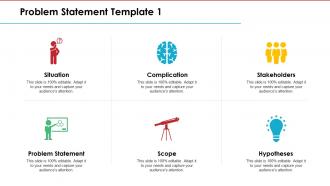
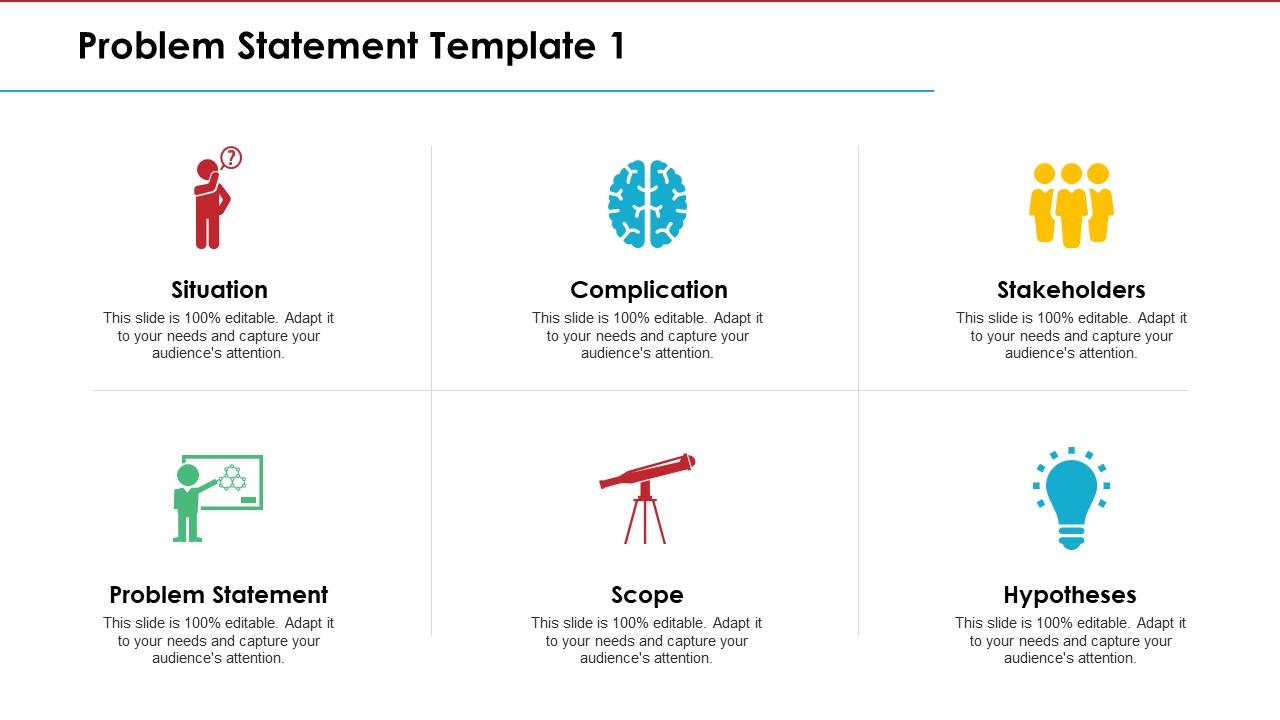
Our Problem Statement Ppt Model Professional encourage assessment from every angle. They excel at conceptual discussions.
People who downloaded this PowerPoint presentation also viewed the following :
Problem statement ppt model professional with all 5 slides:
Everyone feels better with our Problem Statement Ppt Model Professional. They bring in an element of cheer.
FAQs for Problem statement
Start with what's actually broken and who's getting screwed over by it. Then dig deeper - like, what's really causing this mess, not just the obvious stuff on the surface? You'll want measurable goals so you know when you've actually won. Timeline matters too (obviously can't fix everything overnight). Don't forget your assumptions and what you're depending on - that stuff always bites you later. Honestly, most people skip the root cause part and just treat symptoms. Each piece needs to be specific enough that you can actually act on it, not just pretty words on a slide.
Think of a solid problem statement like your project's North Star - keeps everyone on the same page about what you're actually solving. Your team will make decisions way faster when they know what "winning" looks like. No more awkward meetings where people go "um, remind me what we're doing here?" Stakeholders love it too because they can actually track progress instead of wondering if you're just burning money. Honestly, I've seen too many projects go sideways because nobody took time upfront to nail this down. Do yourself a favor and write something so clear your mom could understand it. Trust me on this one.
Honestly, the worst thing you can do is be super vague or jump straight to solutions. Like, don't write "we have communication issues" - that tells me absolutely nothing. Instead, get specific about what's actually going down and who it's hitting. Start with one real example of the problem happening, then expand from there. And here's the thing - if someone reads your problem statement and goes "okay... so?" then you haven't nailed the impact yet. I always do this little test where I ask myself: would I actually care about this if I wasn't the one dealing with it? Really helps you focus on what matters.
Oh man, you definitely need their input - they're dealing with this mess every single day while you're just theorizing about it. I'd hit up different people early on to see how they actually experience the problem. What's blocking them? What would "fixed" look like to them? Here's the thing though - their version of the problem is usually totally different from whatever management thinks is going on. Makes for some interesting conversations. But that's exactly why you need those perspectives to frame something that's actually worth solving. Just ask open questions and let them vent about their pain points.
Look, it really depends on what you're trying to fix. Tech focuses on user experience stuff and system problems. Healthcare is all about patient safety - which honestly makes sense given the stakes. Manufacturing deals with production issues and quality defects, and their problems actually feel more concrete somehow. Financial services? They're obsessed with risk and compliance nightmares. The language shifts too - tech says "pain points" while manufacturing talks about "root causes." But whatever industry you're in, you still need to quantify the impact and specify who's getting hurt by the problem. Figure out your industry's key metrics first, then work from there.
Dude, you HAVE to nail down your problem statement first. I learned this the hard way - when everyone's confused about what you're actually solving, they all go off and work on completely different stuff. It's honestly a mess. A good problem statement is like giving your whole team the same roadmap so nobody's lost. People make way smarter decisions when they get the real goal. Plus you'll avoid those awkward meetings where someone's like "wait, weren't we doing something totally different?" Trust me, spend 30 minutes getting this right upfront. You'll dodge so many headaches later.
Talk to people who'd actually deal with this problem - like 5-10 stakeholders to start. Do some market research and dig into data that shows the issue exists. Honestly, the best test is asking potential users straight up what they think. Are people already complaining about this or trying janky workarounds? That's a good sign. Check out competitors too since they wouldn't waste time on fake problems. Here's the thing though - if nobody's actively struggling with this right now, you might be solving something that doesn't need fixing. Their reactions will tell you everything you need to know.
You need solid data to back up your problem statement - otherwise you're just guessing. Start with the numbers: surveys, analytics, whatever metrics you can find to show how big this thing actually is. Then dig into the human side with interviews and observations. Honestly, I've watched so many projects crash because someone thought they understood the problem but never bothered researching it. The data tells you who's getting hit hardest and why it's happening. Check existing research first before you go collecting new stuff. Way more efficient that way.
Honestly, empathy is like your cheat code for figuring out what users actually need. You can't just look at data and call it a day - you gotta get into their headspace. People might bail on checkout for reasons that have nothing to do with your "perfectly functional" button placement, you know? Talk to real users constantly. Listen to their frustrations, not just their feedback. Sometimes they'll say one thing but their tone tells you something totally different. It's wild how much context you miss when you're just staring at analytics all day. That emotional stuff matters way more than we think.
Honestly, visuals are a game-changer for problem statements. Nobody wants to read massive text blocks - flowcharts and infographics just work better. Templates keep you focused too. I swear by them because they force you to hit the important stuff without rambling (which I definitely do sometimes). Non-tech people especially get it faster when there's a clear before/after visual. Decision-makers remember pictures way more than paragraphs. Start simple - problem definition, key metrics, maybe a chart or two. You'll notice people actually pay attention instead of checking their phones.
Honestly, bias is such a sneaky thing when you're writing problem statements. Who's getting left out of the conversation? What assumptions are you bringing to the table without even realizing it? I've seen people accidentally frame things in ways that totally exclude the communities they're trying to help - it's more common than you'd think. Your framing basically sets the tone for everything that comes after, so it matters. Try showing your draft to friends with different backgrounds before you lock it in. They'll catch blind spots you missed. Also think about whether you're reinforcing any weird stereotypes along the way.
Check your problem statement weekly if things are moving fast, but honestly? After any big discovery or pivot is when it really matters. I've watched so many teams just plow ahead with some outdated statement while everything they learned completely changed the game. Don't wait for things to hit the fan - schedule regular check-ins. When stakeholders start going "wait, why are we even doing this?" that's your red flag right there. Just set a recurring reminder to glance at it. Five minutes of review beats hours of work going sideways later.
Honestly, a killer problem statement is like having a cheat code for stakeholder buy-in. People actually care when they can see exactly what's broken and why it matters to them personally. Vague problems? You'll get vague commitment every time. But nail down the specifics - the real impact, who it affects - and suddenly everyone gets why this can't wait. It gives your whole team something concrete to get behind instead of just... whatever you were doing before. I know it feels like extra work upfront, but trust me, you'll thank yourself later when you're not constantly having to re-sell people on caring about your project.
Tech can seriously speed up how you write problem statements. AI analysis tools and data visualization help you spot root causes way faster than doing it manually. I'd start with whatever data you already have - even basic survey tools show you if you're actually solving the right problem or just guessing. Sentiment analysis is great for customer feedback, and honestly, mind mapping software makes complex issues so much clearer visually. The best part? These tools force you to be specific instead of writing vague descriptions that don't help anyone.
Look at companies like Airbnb - they figured out travelers wanted authentic, affordable places to stay that weren't just another generic hotel. Uber? Same deal. People needed reliable rides without the hassle of car ownership. Netflix nailed it too, honestly - who wanted to deal with DVDs when you could just stream whatever? The pattern here is they all focused on what was actually bugging people, not on building some flashy feature. When you're writing yours, dig into the real frustration users feel. What gap are they dealing with every day? That's your goldmine right there, not whatever sounds impressive on paper.
No Reviews