


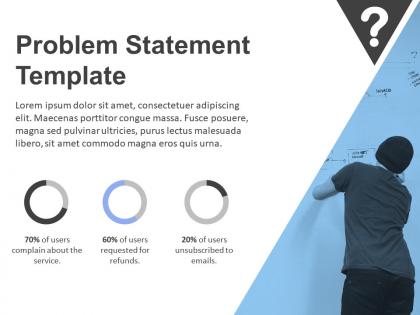
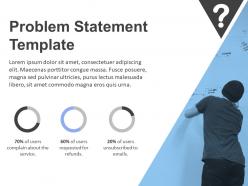
Problem Statement Template With Man Writing On Whiteboard And Data Driven Pie Charts
You must be logged in to download this presentation.




Try Before you Buy Download Free Sample Product
 Impress Your
 Audience
 100%
100% Editable
 Save Hours
 of Time


Our Problem Statement Template With Man Writing On Whiteboard And Data Driven Pie Charts act like a gym. They help you exercise your brains.
People who downloaded this PowerPoint presentation also viewed the following :
Problem Statement Template With Man Writing On Whiteboard And Data Driven Pie Charts with all 5 slides:
Be aware of ethnic differences with our Problem Statement Template With Man Writing On Whiteboard And Data Driven Pie Charts.They enable you to be aware of diverse cultures.

FAQs for Problem Statement Template With Man Writing On Whiteboard And Data
Honestly, you need three main things: where you are now, where you want to be, and what's stopping you from getting there. Don't just say "sales are down" - get specific like "Q3 enterprise sales dropped 23% from last quarter." That gap between current and desired? That's where your actual problem lives. Also figure out who this affects and your timeline. I've seen too many people spin their wheels because they were too vague upfront. Once you nail down these pieces, solutions start becoming way more obvious.
Honestly, those templates are lifesavers because they stop you from going all over the place when you're presenting. Like, we've all sat through those painful meetings where someone just rambles without actually saying what the problem is, right? The template keeps you laser-focused on three things: what's broken, who's getting screwed over by it, and why we need to fix it now. Your audience will actually follow along instead of zoning out. I'd grab a basic template that hits problem-impact-urgency, then tweak it however makes sense for your situation. Way better than winging it.
Don't be vague - that's the worst thing you can do. I see people write these massive 20-point lists that somehow say absolutely nothing useful. Focus on what's actually happening, not the solutions or root causes. That comes later. Try starting with "The problem is..." and nail it in 2-3 sentences max. Your stakeholders need to get it immediately. Throw in some numbers if you've got them - makes everything more real. Oh, and resist the urge to solve everything in your problem statement. Just describe the mess you're dealing with.
Dude, audience analysis is everything when writing problem statements. Different people care about totally different stuff. Executives? They want business impact and ROI numbers. Your tech team needs the nitty-gritty about system constraints. I bombed my first problem statement with leadership because I didn't get this! Same core problem, but you've got to switch up your language and focus on what actually matters to them. Like, emphasize pain points they'll relate to. Draft it with your main audience's priorities in mind first - saves you from looking clueless later.
Honestly, visuals are a game-changer for problem statements. Charts show trends way better than paragraphs of text. Diagrams help when you're explaining broken processes - people get confused otherwise. Screenshots are perfect if it's a UI thing. I've noticed stakeholders understand problems instantly when they can actually see what's wrong instead of just reading about it. Don't just slap in random graphs though (I see this all the time). Pick stuff that actually connects to what you're saying. Simple before/after mockups work great too for showing current vs. ideal situations.
You absolutely need context when writing problem statements - it's what makes people actually care about what you're saying. Without it, stakeholders just won't get why this matters or what the real stakes are. Paint the whole picture first: what's happening now, where this problem lives, the background stuff that got you here. Short version? Set the stage before jumping into the messy details. I always think of it like... you wouldn't just blurt out "we have a problem" without explaining the situation first, right? Start with that foundation, then hit them with the specific issue. Way more effective.
Honestly, problem statement templates are a game changer. Your whole team stops wandering around with their own random interpretations of what needs fixing. Everyone gets on the same page fast. The template makes you spell out the actual problem, who's getting screwed over by it, and what winning looks like. Think of it as guardrails for brainstorming - focused but not suffocating. No more of those cringe moments where someone goes "uh, what are we solving again?" I swear, use one at your next kickoff and you'll see how quickly people align on what actually matters.
Talk to the actual people dealing with this mess first. Figure out what's really bugging them, then write your problem statement using their words - not some corporate buzzword soup. Honestly, I've watched so many of these fail because they read like textbook examples instead of real issues. Put numbers on it that matter to them - lost revenue, angry customers, whatever keeps their boss breathing down their necks. Draft it up and run it by a couple key people. If they don't immediately go "YES, exactly!" then you're not there yet. Keep tweaking until it clicks.
So you've gotta back up your problem with real numbers - like actual percentages, dollar amounts, whatever shows the scope. Don't just say "this is bad," prove it with research and studies that make your point undeniable. Think of it like you're building a case in court or something. The trick is being picky about what data you include - nobody wants to wade through everything you found. Focus on the stuff that hits hardest and gets to root causes, not just surface issues. Make it impossible for people to brush off.
You gotta define your problem scope or your team will go off the rails - I've watched this happen so many times. People start fixing everything remotely connected to the issue instead of the actual problem. Clear boundaries tell everyone what counts and what doesn't. Helps with budgets, timelines, all that stuff. Otherwise you get scope creep where someone's always like "oh but what about this other thing?" Super annoying. Just list what you're tackling and then - this part's key - write down what you're NOT doing. Sounds obvious but most people skip that second part.
Honestly, just nail down what's broken and who it's hurting - that's your starting point. Give enough context so anyone can get it, but don't write a damn novel about every tiny detail. I've seen way too many of those. Tell them who's affected, what's not working, and why the business should care. Throw in real numbers when they help your case. Cut the fluff though. Here's what I do: read it back and ask "would someone actually approve a fix based on this?" If not, you're not done yet.
So basically, your problem statement is the big picture issue - like "our customers keep leaving." But your research question? That's the specific thing you're gonna dig into to figure it out. Maybe something like "does slow response time make customers bail?" The problem statement sets up why anyone should care about your research in the first place. Your research question though - that's what actually drives how you'll study it. I always tell people to nail down the broader problem first, then get super focused with your questions. Otherwise you end up studying random stuff that doesn't really help solve anything.
Oh yeah, totally! Your problem statement will definitely change as you dig deeper. I always start with my best guess, but then user interviews and stakeholder convos reveal stuff I missed. Tech constraints pop up too. Sometimes you realize - wait, we're solving the completely wrong thing here. It's honestly pretty common. I treat it like a living doc that gets updated when new info comes in. Just make sure your team knows when it shifts! I usually do a quick review at major milestones to keep everyone on the same page about what we're actually building.
So it really comes down to what industry you're in. Healthcare has all those compliance headaches plus patient safety stuff. Tech companies? They're obsessed with scalability and how users actually experience things. Manufacturing focuses more on keeping operations smooth and supply chains running. Financial services though - ugh, they've got the most red tape with risk management and regulations. You'll want to figure out what "winning" looks like in your specific field first. Then frame everything using the buzzwords and priorities your industry folks actually care about. Makes a huge difference when you're talking their language.
Definitely talk to different people - users, experts, whoever's gonna be impacted. Start with one-on-ones because people actually tell you the truth that way. Then do some small groups to see where opinions clash. Surveys alone are basically useless, you lose all the good stuff. Ask pointed questions like "what's actually missing?" instead of generic "thoughts?" Document everything (I know, boring but necessary). Look for patterns, then tweak your problem statement and run it by a couple key people again. Rinse and repeat until it clicks.
-
Professional and unique presentations.
-
Best Representation of topics, really appreciable.