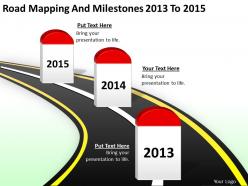
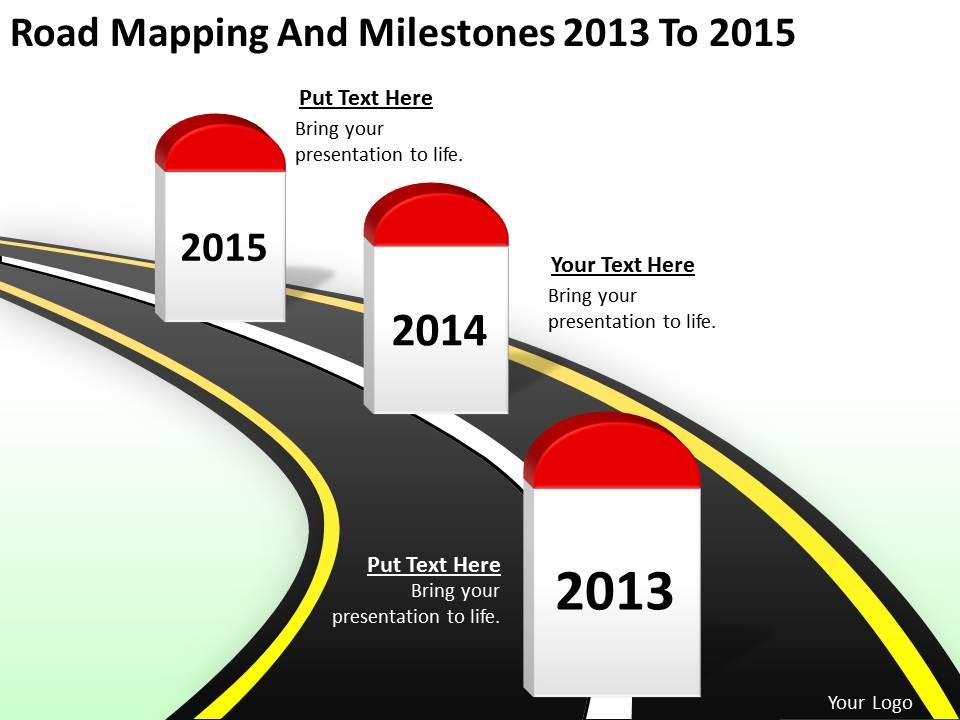
Product Roadmap Timeline Road Maping and Milestones 2013 to 2015 Powerpoint Templates Slides

Rating:
80%
Product roadmap timeline road mapping and milestones 2013 to 2015 powerpoint templates slides
Slide 1 of 5
Favourites Favourites

Try Before you Buy Download Free Sample Product

Audience Impress Your
Audience
Editable 100%
Editable
Time Save Hours
of Time
The Biggest Sale is ending soon in
0
0
:
0
0
:
0
0
Rating:
80%

Características de estas diapositivas de presentación de PowerPoint:

Calidad rica en píxeles de las imágenes y los gráficos en las diapositivas. Permita la descarga y el guardado instantáneos del diseño de la diapositiva. Contenido visualmente atractivo y gráficos de diapositivas. Compatible con Google Slides y otros softwares sin conexión. Útil para los profesionales del marketing, los diseñadores de estrategias y los emprendedores de negocios.
FAQs for Product roadmap timeline road mapping and milestones 2013 to 2015

A product roadmap timeline is a strategic visual framework that outlines product development phases, key milestones, feature releases, and resource allocation across specific timeframes. It provides cross-functional teams with clear direction and stakeholders with realistic expectations, while enabling organizations to prioritize initiatives, coordinate launches, and adapt to market changes, ultimately delivering competitive advantage through structured innovation and efficient resource management.

A clear product roadmap timeline helps align team members and stakeholders by establishing shared expectations, defining deliverable milestones, prioritizing feature development, and creating accountability across departments. This strategic alignment enables organizations to streamline decision-making processes, minimize resource conflicts, and enhance cross-functional collaboration, with many teams finding that transparent timelines ultimately deliver faster product launches and improved stakeholder satisfaction.

Effective product roadmap timelines include strategic goals, feature priorities, development phases, resource allocation requirements, and milestone markers. These components work together by aligning cross-functional teams, managing stakeholder expectations, and providing clear visibility into product evolution, with many organizations finding that comprehensive roadmaps streamline development cycles and enhance strategic decision-making.

Feature prioritization involves evaluating customer impact, business value, technical feasibility, resource requirements, and strategic alignment with company goals. Through frameworks like value-based scoring, MoSCoW prioritization, and stakeholder feedback analysis, product teams balance urgent customer needs with long-term vision, ultimately delivering maximum value while maintaining development efficiency and competitive advantage.

Customer feedback serves as a critical driver in product roadmap timeline decisions, influencing feature prioritization, development sequencing, and release scheduling based on user needs and market demands. Through systematic feedback analysis from surveys, user testing, and support interactions, product teams can accelerate high-impact features while delaying less critical ones, ultimately delivering more market-aligned products and enhanced customer satisfaction.

**INPUT**: What tools and software are most effective for creating and managing a product roadmap timeline? **OUTPUT**: Effective product roadmap timeline tools include Aha!, ProductPlan, Roadmunk, Monday.com, and Asana, each offering specialized features for strategic planning. These platforms streamline collaboration by enabling real-time updates, stakeholder alignment, and progress tracking, with many organizations finding that integrated timeline management ultimately enhances product delivery efficiency and cross-team communication. **Word count: 54 words**

Product roadmap timelines should be reviewed quarterly and updated as needed based on market changes, customer feedback, and development progress. Many successful organizations combine regular quarterly assessments with agile monthly check-ins, enabling teams to adjust priorities, reallocate resources, and respond to competitive pressures while maintaining strategic direction and stakeholder alignment.

Common pitfalls include overcommitting to unrealistic deadlines, failing to account for dependencies between features, neglecting stakeholder input, and creating overly rigid timelines without buffer periods. These mistakes often lead to missed milestones and team burnout, with many organizations finding that building in flexibility while maintaining clear priorities ultimately delivers better outcomes and stakeholder confidence.

A product roadmap timeline supports agile development by providing flexible framework boundaries, enabling sprint prioritization based on strategic goals, and maintaining stakeholder alignment while preserving iteration flexibility. Through quarterly milestone mapping and feature prioritization frameworks, development teams can adapt sprint cycles, respond to customer feedback, and pivot features while maintaining overall product vision, ultimately delivering faster time-to-market and enhanced user experiences.

Visual presentation improves product roadmap communication by transforming complex timelines into clear, digestible formats through interactive charts, color-coded phases, milestone markers, and progress tracking dashboards. These visual elements enable stakeholders across departments to quickly grasp priorities, dependencies, and deliverables, while facilitating better alignment and faster decision-making in increasingly collaborative development environments.

Product roadmap flexibility requires building buffer time into development cycles, establishing regular review checkpoints, and maintaining modular feature prioritization that allows for strategic pivots. Through agile methodologies and stakeholder feedback loops, organizations can accommodate market shifts, customer demands, and resource changes while preserving core objectives, ultimately delivering adaptive products that respond to evolving business landscapes.

Essential metrics include milestone completion rates, feature delivery velocity, resource utilization efficiency, stakeholder satisfaction scores, and timeline variance analysis. These tracking mechanisms streamline project oversight by identifying bottlenecks early, optimizing resource allocation, and maintaining stakeholder alignment, with many organizations finding that consistent metric monitoring ultimately delivers faster product launches and enhanced competitive positioning.

Consumer product roadmaps typically feature shorter development cycles, frequent feature releases, and rapid market feedback integration, while enterprise solution timelines involve extended development phases, comprehensive testing periods, and longer implementation cycles. Enterprise roadmaps often span 12-18 months with major releases, whereas consumer products may deploy updates monthly or quarterly, ultimately reflecting different user expectations and market demands.

Product managers should present roadmap timelines using clear visual formats, prioritize high-impact features first, communicate dependencies and risks transparently, and align deliverables with business objectives. These presentations work best when managers include buffer time for unexpected challenges, provide regular progress updates, and frame timelines around customer value delivery, with many organizations finding that stakeholder buy-in increases significantly when roadmaps connect directly to revenue goals and competitive positioning.

Cross-functional collaboration enhances product roadmap timelines by aligning diverse expertise, improving resource allocation, and reducing development bottlenecks through shared accountability. Teams across engineering, marketing, and sales collaborate to identify realistic milestones, anticipate market needs, and streamline execution phases, ultimately delivering faster product launches and stronger competitive positioning.

Ratings and Reviews

80% of 100
Review Form
Write a review
Most Relevant Reviews
  1. 80%

    by Damian Martin

    Enough space for editing and adding your own content.
  2. 80%

    by Dusty Hoffman

    Illustrative design with editable content. Exceptional value for money. Highly pleased with the product.

2 Item(s)

per page: