

Project Communication Channels And Tools Powerpoint Ppt Template Bundles DK MD





Try Before you Buy Download Free Sample Product
 Impress Your
Audience
 100%
Editable
 Save Hours
of Time


Our Project Communication Channels And Tools Powerpoint Ppt Template Bundles DK MD are topically designed to provide an attractive backdrop to any subject. Use them to look like a presentation pro.
People who downloaded this PowerPoint presentation also viewed the following :
Content of this Powerpoint Presentation
Slide 1: This slide introduces Project Communication Channels and Tools. Commence by stating Your company Name.
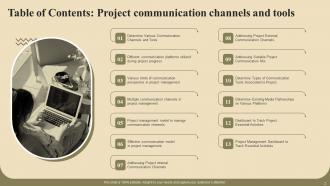
Slide 2: This slide includes the Table of Contents.
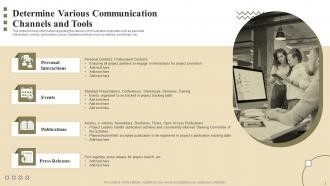
Slide 3: This slide provides information regarding the various communication channels.
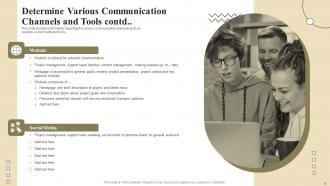
Slide 4: This slide showcases the various communication channels.
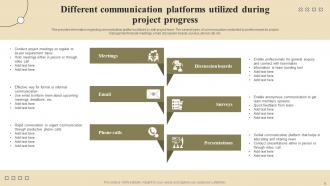
Slide 5: This slide exhibits the Different communication platforms utilized during project progress.
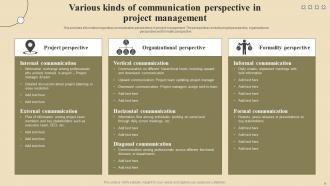
Slide 6: This slide depicts the Various kinds of communication perspective in project management.
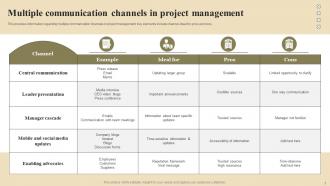
Slide 7: This provides information regarding multiple communication channels in project management.
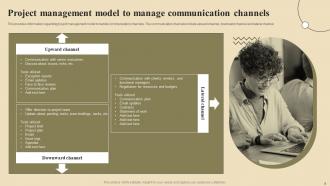
Slide 8: This slide talks about the Project management model to manage communication channels.
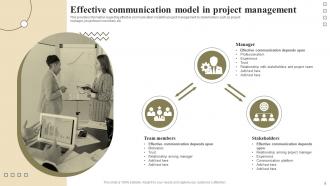
Slide 9: This slide shows the Effective communication model in project management.
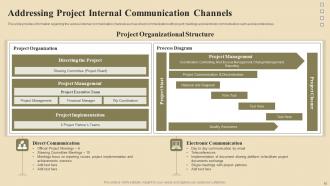
Slide 10: This slide deals with Addressing Project Internal Communication Channels.
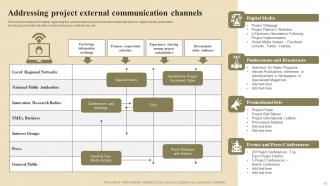
Slide 11: This slide focuses on Addressing project external communication channels.
Slide 12: This slide provides information regarding the various external communication channels.
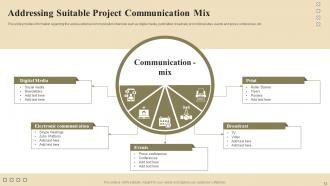
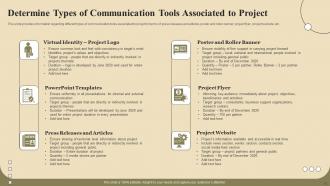
Slide 13: This slide highlights different types of communication tools associated to project.
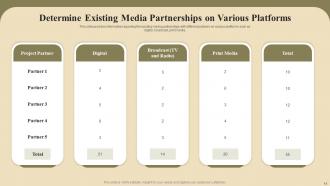
Slide 14: This slide showcases the existing media partnerships with different partners on various platforms.
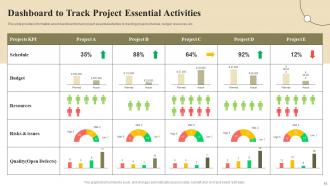
Slide 15: This slide reveals the Dashboard to Track Project Essential Activities.
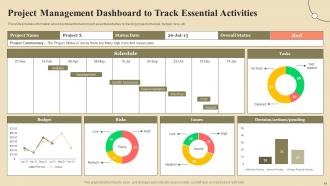
Slide 16: This slide exhibits the Project Management Dashboard to Track Essential Activities.
Slide 17: This is the Thank You slide for acknowledgement.
Project Communication Channels And Tools Powerpoint Ppt Template Bundles DK MD with all 22 slides:
Use our Project Communication Channels And Tools Powerpoint Ppt Template Bundles DK MD to effectively help you save your valuable time. They are readymade to fit into any presentation structure.





FAQs for Project Communication Channels And Tools Powerpoint Ppt Template
The most effective communication channels for remote project teams include video conferencing platforms, instant messaging tools, project management software, shared document repositories, and asynchronous communication systems. These channels streamline collaboration by enabling real-time discussions, centralized task tracking, and seamless information sharing, with many organizations finding that strategic combinations ultimately deliver enhanced productivity and stronger team cohesion.
Project managers can determine the best tools by assessing team size, project complexity, communication preferences, integration requirements, and budget constraints. Through stakeholder interviews, workflow analysis, and pilot testing, managers can evaluate options like Slack for instant messaging, Microsoft Teams for collaboration, or Asana for task management, ultimately selecting solutions that enhance productivity and streamline coordination across their specific organizational context.
Email serves as a foundational project communication tool for formal documentation, stakeholder updates, decision records, and cross-functional coordination, providing essential audit trails and asynchronous collaboration capabilities. While it excels at structured communication and maintaining project history, optimization through clear subject lines, standardized templates, defined response timeframes, and integration with project management platforms ultimately delivers streamlined workflows and enhanced team accountability.
Collaboration tools enhance team engagement by streamlining communication, facilitating real-time document sharing, and providing centralized project visibility across distributed teams. Through platforms integrating messaging, video conferencing, and task management, organizations achieve faster decision-making, reduced email overload, and improved accountability, with many project teams finding that enhanced transparency ultimately delivers higher completion rates and stronger stakeholder satisfaction.
Instant messaging apps enhance project communication by enabling real-time collaboration, quick decision-making, reducing email overload, and creating searchable conversation histories. While these tools streamline team coordination and accelerate project timelines, they can also create information fragmentation and notification fatigue, with many organizations finding that establishing clear messaging protocols ultimately delivers improved productivity and team engagement.
Visual collaboration tools improve project clarity by transforming complex data into intuitive dashboards, interactive timelines, and real-time status boards that stakeholders can quickly understand. These platforms enable teams to share progress through visual workflows, annotated designs, and collaborative whiteboards, while reducing miscommunication and accelerating decision-making, ultimately delivering faster project cycles and enhanced stakeholder engagement.
Effective cross-timezone communication strategies include asynchronous messaging platforms, overlapping work hours scheduling, rotating meeting times, comprehensive documentation practices, and clear response time expectations. Through tools like Slack and project management systems, global teams streamline collaboration by maintaining continuous information flow, with many organizations finding that structured handoff processes and recorded updates ultimately deliver seamless 24/7 productivity and enhanced project outcomes.
Project teams should hold weekly status meetings, bi-weekly stakeholder updates, and daily stand-ups for agile projects, with formats including structured video calls, collaborative workshops, and brief check-ins. These meeting cadences streamline communication by maintaining momentum, addressing blockers quickly, and ensuring alignment across departments, with many organizations finding that hybrid formats combining in-person collaboration and virtual participation ultimately deliver greater flexibility and engagement.
Key communication features in project management software include real-time messaging, file sharing capabilities, task commenting systems, video conferencing integration, and automated notification settings. These tools streamline collaboration by centralizing discussions, enabling instant feedback on deliverables, and maintaining transparent project timelines, with many organizations finding that integrated communication reduces email overload while accelerating decision-making processes.
Project stakeholders can be effectively engaged through tailored communication channels including dedicated project portals, regular video conferences, collaborative platforms, structured email updates, and interactive dashboards. These channels enable transparency and participation by providing real-time project visibility, facilitating two-way feedback, and ensuring consistent information flow, with many organizations finding that strategic channel selection significantly enhances stakeholder buy-in and project success rates.
Using multiple communication tools creates information silos, message fragmentation, reduced productivity from constant platform switching, and inconsistent documentation across channels. Organizations can mitigate these challenges by establishing clear tool-specific protocols, implementing centralized communication hubs, providing comprehensive training, and regularly auditing channel effectiveness, ultimately streamlining workflows and enhancing team collaboration.
Feedback loops can be established through regular check-ins, structured review sessions, anonymous feedback tools, cross-functional meetings, and real-time communication platforms. These mechanisms enable project teams to identify communication gaps quickly, adjust messaging strategies, and improve stakeholder engagement, with many organizations finding that systematic feedback collection ultimately delivers enhanced project outcomes and stronger team collaboration.
Transparent communication significantly enhances team morale by building trust, reducing uncertainty, fostering collaboration, and enabling informed decision-making across all project levels. Through clear channels and regular updates, organizations experience improved productivity, faster problem resolution, and stronger stakeholder alignment, with many project teams finding that transparency ultimately delivers higher success rates and competitive advantage in increasingly complex business environments.
Sensitive information should be communicated through secure, encrypted channels like protected project management platforms, confidential documentation systems, and restricted access meetings with verified stakeholders only. These approaches streamline confidential communications by limiting exposure, maintaining audit trails, and ensuring regulatory compliance, with many organizations finding that structured protocols ultimately deliver enhanced security, stakeholder trust, and reduced project risks.
**INPUT**: What are the best practices for integrating communication tools with project management platforms? **OUTPUT**: Best practices include establishing centralized notification systems, creating automated workflow triggers, maintaining consistent data synchronization, setting clear communication protocols, and implementing unified dashboards for comprehensive visibility. These integrations streamline project coordination by reducing information silos, minimizing context switching, and enabling real-time collaboration, with many organizations finding that strategic tool integration ultimately delivers enhanced team productivity and faster project delivery timelines. [Word count: 59 words]
-
Easy to edit slides with easy to understand instructions.
-
Perfect template with attractive color combination.