Project Integration Management For Seamless Project Managers Playbook

Rating:
90%
Project Integration Management For Seamless Project Managers Playbook
Slide 1 of 6

or

Favourites Favourites

Try Before you Buy Download Free Sample Product

Audience Impress Your
Audience
Editable 100%
Editable
Time Save Hours
of Time
The Biggest Sale is ending soon in
0
0
:
0
0
:
0
0
Rating:
90%
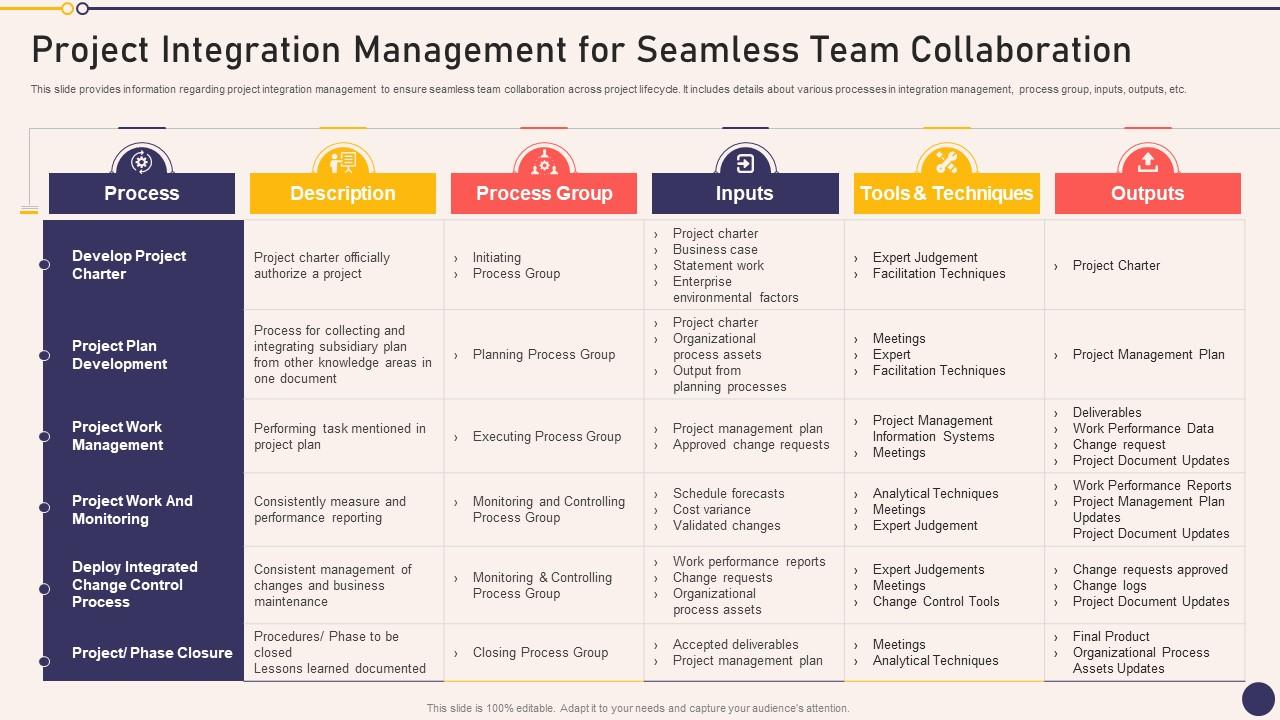
This slide provides information regarding project integration management to ensure seamless team collaboration across project lifecycle. It includes details about various processes in integration management, process group, inputs, outputs, etc. Deliver an outstanding presentation on the topic using this Project Integration Management For Seamless Project Managers Playbook. Dispense information and present a thorough explanation of Project Plan Development, Develop Project Charter, Project Work And Monitoring, Project Phase Closure using the slides given. This template can be altered and personalized to fit your needs. It is also available for immediate download. So grab it now.

FAQs for Project Integration Management For Seamless

Okay so there are six main processes you'll want to nail down: project charter, management plan, directing the actual work, knowledge management, monitoring everything, and closing it out. Start with your charter and plan - that's your foundation right there. Then honestly, the monitoring stuff is where most people slack off but it'll save your ass later. Knowledge management sounds boring but it's actually pretty clutch for capturing what went wrong (or right). I always think of it like... you're not doing everything yourself, but you're the one making sure nothing falls through the cracks. Short version: charter first, then monitor like crazy.

Think of Project Integration Management as the thing that stops your project from becoming a complete mess. All your processes need to actually talk to each other - otherwise you'll have teams working against each other without realizing it. Dependencies matter more than people think. When someone changes scope (and they will), you've got to figure out how that ripples through everything else. Your project charter should match what you're actually delivering, not just sound good on paper. Honestly, I'd start with a solid project management plan that maps out how everything connects. Trust me, it beats scrambling later when stuff inevitably goes sideways.

Okay so the Project Charter is like your official "yes you can actually do this project" document. It gives you real authority to grab resources and start working - otherwise you're just that person with big ideas but zero power lol. High-level scope, objectives, main stakeholders all get defined here. This becomes super useful when you're trying to pull together all the moving pieces later. Honestly, you'll be going back to reference it during basically every integration process, especially when developing your project management plan. Don't rush through creating it because everything builds off this thing.

Honestly, getting stakeholders involved early saves you so much headache later. You'll catch problems and conflicts before they blow up during crunch time - and trust me, that's when everything goes wrong. Map out who has influence over different parts of your project first. Then set up regular check-ins with them throughout planning and execution. The cool thing is they start helping you prioritize changes instead of fighting you on everything. I learned this the hard way on my last project. Once they feel heard and understand the bigger picture, they actually become your biggest supporters rather than obstacles.

Track your actual progress against your baseline - earned value management or simple dashboards work great for this. Scope creep will absolutely destroy you, so get solid change control processes in place early. I learned this the hard way on my last big project! Schedule regular stakeholder meetings and milestone reviews to catch problems before they spiral. Your team's expert judgment is gold - don't ignore their insights. Set up automated alerts if you can, and do weekly integration checkpoints to review how all the dependencies are playing together. Short meetings work better than marathon sessions.

So agile does integration constantly - daily standups, sprint planning, retros, all that stuff. You're basically adjusting on the fly every sprint. Traditional PM saves all the integration for specific phases with formal sign-offs and gates. Think of it like... agile is tasting your soup while you cook and adding salt as needed. Traditional is following the recipe exactly then crossing your fingers it's edible at the end (spoiler: not always). Honestly, I've seen both approaches work depending on your stakeholders. Some people love the ongoing tweaks, others need those structured milestones to feel sane.

Honestly, the worst parts are competing priorities and scope creep - plus stakeholders who just don't talk to each other. Such a headache. Get your change control process nailed down early, that's huge. Weekly integration reviews help too, where everyone actually shows up and syncs. Make sure your project charter is solid and people read it (good luck with that part lol). Don't wait around for things to explode. Set up regular check-ins between teams and write everything down. I always start Monday mornings asking "what's gonna break this week?"

Look, change management is huge for project integration - you're juggling so many moving parts. Every change ripples through scope, schedule, budget, the works. I've seen projects go completely sideways without proper change control. Scope creep becomes this monster that devours everything. Your change control process lets you weigh each request against your actual project goals. Get a change control board set up early (seriously, don't skip this step). It sounds bureaucratic but trust me, following the process saves you from chaos later. Otherwise you'll have stakeholders pulling in different directions and budgets that make no sense.

So I'd probably start with whatever your company already has - like if you're using Teams or Slack, build from there. Microsoft Project is solid for the heavy lifting, but honestly Smartsheet is my go-to because it's basically Excel on steroids (way easier to get people to actually use it). Asana and Monday.com are good too for tracking everything. For docs, SharePoint or Google Workspace keeps stuff from getting lost in email hell. Oh and don't underestimate Slack for quick coordination - saves so many unnecessary meetings. Just add tools gradually as things get more complex.

Look, communication is honestly what makes or breaks project integration. Without it, you're basically coordinating everything with a blindfold on. All your project pieces - scope changes, resource decisions, different teams - they need to stay aligned somehow. Integration means pulling together tons of moving parts and stakeholders, which just can't happen if everyone's working off different info. I've seen it mess up so many projects. Regular check-ins with key people help a lot, and you'll want consistent channels for updates. Most integration failures? They usually trace back to some communication breakdown that could've been avoided.

From what I've seen, the biggest screwup is skipping the project charter - people just dive in without any plan. Change control is another disaster waiting to happen. No clear process means chaos later. Stakeholder alignment gets messy too, especially when sponsors can't agree on anything (which happens way more than it should). Integration planning always gets rushed because everyone's stressed about deadlines, but that just creates bigger headaches down the road. Start with a solid project plan, set up your change procedures right away, and do regular integration check-ins. Trust me, catching problems early beats scrambling to fix them later.

So lessons learned are basically your "what worked, what didn't" notes from finished projects. You write them down during closure and add them to your company's knowledge bank - honestly, the messiest handoffs usually give you the best insights. Scope changes gone wrong? Gold mine. These help you improve charter templates and spot integration problems early. I'd definitely check old lessons learned when starting new projects. Why repeat mistakes someone already made? It's like having cheat codes for project management, but you actually have to read through them first.

Honestly, I'd focus on the basics first - schedule and budget variance will tell you tons about how well you're coordinating everything. Change request turnaround time is probably the most telling metric though, since that's where integration really gets tested. Stakeholder satisfaction scores are worth tracking too (they'll let you know if people actually think you're doing a good job). Oh, and milestone achievement percentages. Resource utilization can be useful but might be overkill depending on your project size. Pick maybe 3-4 of these that match your biggest headaches and check them weekly.

Start with clear touchpoints right from the beginning - don't let teams work in silos or you'll regret it later. Your project charter needs to map out how everything connects, then do regular integration reviews to spot problems early. I learned this the hard way on my last project actually. Make sure your WBS shows dependencies super clearly. Schedule those cross-functional meetings where people actually communicate face-to-face (or Zoom, whatever). Any changes need to go through integrated change control so modifications get evaluated across the whole project, not just one piece. Integration checkpoints aren't optional - treat them like hard deadlines.

Okay so the Project Management Plan is basically your master blueprint that ties everything together. All your subsidiary plans - scope, schedule, budget, whatever - they all connect through this one document. I'm not gonna lie, it looks intimidating when you first see it. But once you figure it out, you'll reference it constantly for integrated change control and keeping everyone on the same page. Performance monitoring becomes way easier too. My advice? Start by sketching out how your different knowledge areas actually relate to each other. That connection piece is where most people get tripped up initially.

Ratings and Reviews

90% of 100
Review Form
Write a review
Most Relevant Reviews
  1. 80%

    by O'Connor Collins

    “I really like the convenient operation and professionalism I saw on the SlideTeam website. I want to express my regards and appreciation to the team.”
  2. 100%

    by Danilo Woods

    Much better than the original! Thanks for the quick turnaround.

2 Item(s)

per page: