

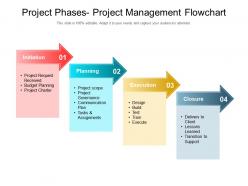
Fases do projeto Resumo do fluxograma de gerenciamento de projetos






Try Before you Buy Download Free Sample Product
 Impress Your
 Audience
 100%
100% Editable
 Save Hours
 of Time


Convide bênçãos com nosso Fluxograma de gerenciamento de projetos de fases do projeto Resumo de pontos. A Força lhe concederá boa sorte.
People who downloaded this PowerPoint presentation also viewed the following :
Conteúdo desta apresentação em PowerPoint
Fases do projeto Fluxograma do gerenciamento do projeto Resumo do ponto com todos os 5 slides:
Dê a todos os aspectos um exame detalhado com nosso Resumo das fases do projeto do fluxograma de gerenciamento do projeto. Cada elemento recebe uma boa inspeção.

FAQs for Project phases project management
So the initiation phase is where you figure out what your project actually *is* and if it's even worth doing. Define the business need, set your big-picture goals, make sure it fits with company strategy. Also check if you can realistically pull this off - do you have the resources and budget? I know it's tempting to rush through when you're pumped about an idea, but seriously don't. Get your stakeholders identified and grab that initial approval. Oh, and really nail down the "why" here because scope creep will definitely try to mess with you later.
Dude, you absolutely need to figure out your stakeholders early or you'll get blindsided later. I've watched projects completely implode because someone overlooked that one cranky department head who suddenly had "concerns." Map out everyone who gives a damn about your project - anyone affected by it, influencing it, or with decision-making power. Getting their buy-in upfront saves you so much headache. Plus you'll find your allies who can actually help when things get messy. Honestly, skipping this step is like walking into a minefield blindfolded.
So your project charter needs a few must-haves to actually work. Clear purpose first - like why are we even doing this? Then nail down specific objectives so everyone knows what success looks like. Stakeholder roles matter too, trust me on that one. You'll want rough timeline and budget estimates (I always lowball the timeline btw). High-level scope keeps things focused. But honestly? The most critical piece is getting executive sponsorship documented upfront. That's what saves your butt when everything inevitably goes sideways. Run it by your team before calling it done.
Start by getting super detailed requirements from everyone involved - seriously, dig deep because vague stuff will come back to haunt you. Write down exactly what you're delivering and what's NOT included (this part's crucial). Set clear boundaries, success metrics, and any constraints right away. This document becomes your shield when people inevitably ask for "tiny changes" mid-project. Oh, and definitely get stakeholders to actually sign off before you start - learned that one the hard way. It'll save you so much drama later when scope creep tries to derail everything.
Honestly, start with a work breakdown structure - everything else builds from that. Gantt charts help visualize your timeline, and you'll definitely want risk assessment matrices too. I've been stuck in Microsoft Project lately (kind of hate it but whatever), though Asana or Monday work just as well. Hell, even a good spreadsheet if you're organized enough. Don't forget stakeholder analysis templates so you know who to bug for what info. Resource allocation charts are clutch for not burning people out. The WBS thing sounds boring but trust me on this one.
Look, risk assessment totally changes how you approach projects. You spot potential problems early and build in buffers and backup plans right from the start. Way better than scrambling later when everything's on fire - though honestly, some chaos always happens no matter what. But here's the thing: it affects your whole resource allocation. Maybe you'll add extra testing rounds or set up more milestone checks based on what risks you've mapped out. The biggest mistake people make? Treating it like a one-and-done thing. Keep updating that risk list as new stuff comes up throughout the project.
Dude, communication is literally everything when you're trying to execute a project. Most of your day will be spent keeping everyone on the same page - checking in with your team, updating the higher-ups, making sure nobody's confused about their role. I swear bad communication tanks more projects than running out of money ever does. You want regular team meetings, status updates for leadership, and those quick "hey what's going on" conversations when stuff goes sideways. Oh and don't wait around for people to tell you there's a problem - stay ahead of it.
Pick 3-5 metrics that actually matter first - budget variance, timeline stuff, scope completion. Those are your bread and butter. Numbers don't tell the whole story though. I learned this the hard way on my last project when everything looked green but the team was miserable. Set up dashboards for the data tracking, sure, but also do regular check-ins with people. Like actual conversations, not just status meetings. Team morale and quality issues won't show up in your spreadsheets. Stakeholders love seeing the quantitative stuff, but you need both sides to really know what's happening.
Start with a change control process - it's basically your safety net. Regular review meetings are crucial where you look at each change and how it'll mess with your timeline and budget. Document everything because future you will be pissed if you don't. Impact analysis is huge - show stakeholders the real consequences before they decide. Keep talking to your team constantly so nobody gets caught off guard. Oh, and try to see changes coming instead of just reacting to them. Having backup plans ready makes you look like you actually know what you're doing.
So you'll want to go hard on stakeholder engagement right at the start - figure out who actually matters and get them bought in. During planning and execution, it's more about consistent check-ins and managing expectations. Here's the thing though - most PMs totally mess this up because they think the hard work's done once people are on board. Wrong! You need to circle back strong during closing to grab those lessons learned and make sure everyone's happy. Each phase needs its own approach, not some cookie-cutter strategy. Oh, and map this stuff out early or you'll be scrambling later.
Honestly, the closure phase is where you learn the most valuable stuff - like what actually worked and what totally bombed. Document everything while it's still fresh in your mind, because six months from now you'll have zero memory of the details. Capture the technical failures AND the team drama (or lack thereof). Here's the thing though - most people skip this step entirely, which is nuts. The real value comes from spotting patterns across different projects. Otherwise you just keep making the same dumb mistakes over and over. Feed those lessons back into your next planning cycle.
Oh man, this is so true from what I've seen. Asian teams will spend forever building relationships and getting everyone on board before anything actually starts - but it pays off later. Europeans? They're all about the paperwork and formal sign-offs. Sometimes it feels excessive but honestly their stuff rarely falls apart. North Americans just want to jump in and show results fast, which can backfire if you skip too much groundwork. You've gotta read the room based on who you're working with or you'll be banging your head against the wall wondering why nothing's moving.
Dude, don't jump straight into doing stuff without planning first - I learned this the hard way. Figure out what "winning" actually looks like and who needs to be involved. Budget and timeline? Be realistic or you're screwed. Those boring risk conversations where you talk about everything that could go wrong are annoying but worth it. Oh, and get your sponsors to officially approve the project plan before you start anything. Otherwise they'll keep asking for more things and your scope will blow up. Trust me on this one.
Your methodology totally dictates how phases connect and flow together. Waterfall keeps things linear - you wrap up initiation, move to planning, then execution. Simple but inflexible. Agile does the opposite by cramming mini-versions of every phase into each sprint. You're planning, executing, and wrapping up constantly in these short bursts. Way more room to change direction when stuff inevitably goes sideways (and trust me, it will). Team dynamics, what you deliver, even how stakeholders get involved - it all shifts based on your approach. Just match whatever fits your project's chaos level.
Pick one tool per phase so you don't overwhelm everyone. Project charters and stakeholder mapping work great for getting started. Gantt charts are lifesavers for planning - way better than trying to track everything in your head. Slack keeps everyone talking during execution, plus dashboards show real progress. Honestly, automated reporting is a game-changer for monitoring. You'll actually know what's happening without hunting down updates constantly. Don't forget documentation tools for wrapping up. Oh, and those lessons-learned databases? Super helpful if people actually use them (big if).
-
Design layout is very impressive.
-
Unique and attractive product design.