

Project quality management plan checklist powerpoint presentation slides




Try Before you Buy Download Free Sample Product
 Impress Your
 Audience
 100%
100% Editable
 Save Hours
 of Time


When you are looking for a project quality management plan checklist Powerpoint presentation then don't settle for the second best. Leave it up to the graphic designers of SlideTeam. We have crafted a complete pre designed slide presentation to portray various concepts of project quality management. Using this quality management plan PPT example you can not only share insights about timeline of project management, but can also cast spotlight on the quality control checklist. Going further, Powerpoint presentation slides used in this PowerPoint deck helps to depict critical analysis of current status as well as also talks about future plans. Apart from this, with help of this PPT sample file you can also define the set of activities planned initially to accomplish quality in the project being executed. To make it more simple we have included creative slide templates like evolution of quality management, 8 principles of quality management, benefits of customer focus, process approach, continual improvement and many more like these. So, what are you waiting for? Just click to download our readymade project quality plan PPT model.Jockey for advantage with our Project Quality Management Plan Checklist Powerpoint Presentation Slides. Implement your ideas before anyone else.
People who downloaded this PowerPoint presentation also viewed the following :
Content of this Powerpoint Presentation
Slide 1: This slide introduces Project Quality Management Plan Checklist. State your company name and continue.
Slide 2: This is an Agenda slide. State your agendas here.
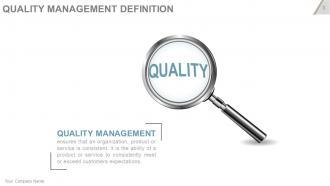
Slide 3: This slide shows Quality Management Definition with magnifying glass imagery.
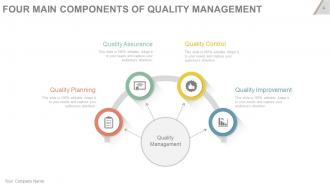
Slide 4: This slide shows the Four Main Components Of Quality Management- Quality Assurance, Quality Control, Quality Planning, Quality Improvement.
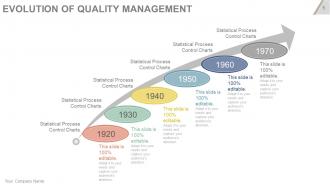
Slide 5: This slide shows the Evolution Of Quality Management with Statistical Process Control Charts.
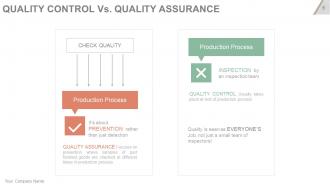
Slide 6: This is Quality Control Vs. Quality Assurance slide showing Check Quality, Production Process etc.
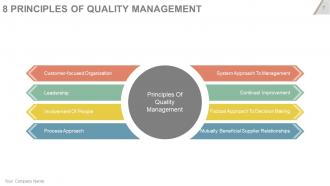
Slide 7: This slide states the 8 Principles Of Quality Management- Customer-focused Organization, Leadership, Involvement Of People, Process Approach, System Approach To Management, Continual Improvement, Factual Approach To Decision Making, Mutually Beneficial Supplier Relationships.
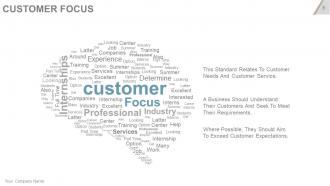
Slide 8: This slide shows Customer Focus with creative brain imagery.
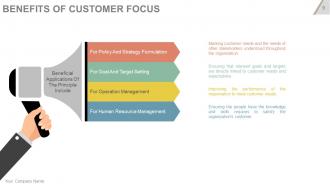
Slide 9: This slide shows four points describing the Benefits Of Customer Focus- Marking customer needs and the needs of other stakeholders understood throughout the organisation, Ensuring that relevant goals and targets are directly linked to customer needs and expectations, Improving the performance of the organisation to meet customer needs, Ensuring the people have the knowledge and skills requires to satisfy the organization's customer.
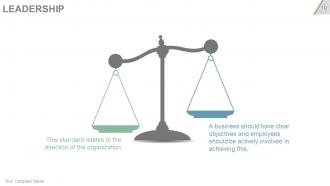
Slide 10: This slide shows Leadership with a balancing scale imagery and two points- A business should have clear objectives and employees should be actively involved in achieving this, This standard relates to the direction of the organization.
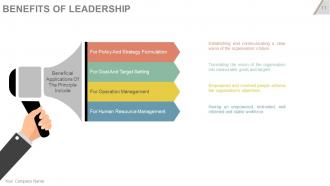
Slide 11: This is another slide describing the Benefits Of Customer Focus with the following four points- Establishing and communicating a clear vision of the organisation’ s future, Translating the vision of the organisation into measurable goals and targets, Empowered and involved people achieve the organization's objectives, Having an empowered, motivated, well informed and stable workforce.
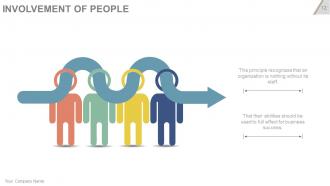
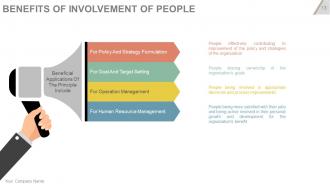
Slide 12: This slide shows Involvement Of People with creative imagery.
Slide 13: This slide presents four points describing the Benefits Of Involvement Of People- People effectively contributing to improvement of the policy and strategies of the organization. People sharing ownership of the organization's goals. People being involved in appropriate decisions and process improvements. People being more satisfied with their jobs and being active involved in their personal growth and development for the organization's benefit.
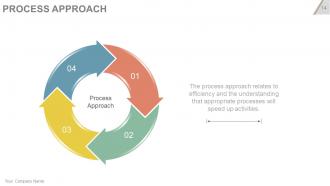
Slide 14: This slide shows Process Approach in a circular flow diagram form.
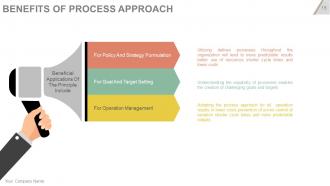
Slide 15: This slide shows the Benefits of Process Approach- Utilizing defines processes throughout the organization will lead to more predictable results better use of resources shorter cycle times and lower costs, Understanding the capability of processes enables the creation of challenging goals and targets, Adopting the process approach for all operation results in lower costs prevention of errors control of variation shorter cycle times and more predictable outputs.
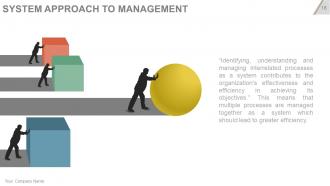
Slide 16: This slide shows System Approach To Management with creative imagery.
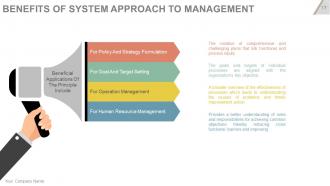
Slide 17: This slide states the Benefits Of System Approach To Management- The creation of comprehensive and challenging plans that link functional and process inputs. The goals and targets of individual processes are aligned with the organization's key objective. A broader overview of the effectiveness of processes which leads to understanding the causes of problems and timely improvement action. Provides a better understanding of roles and responsibilities for achieving common objectives thereby reducing cross functional barriers and improving.
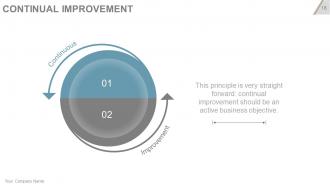
Slide 18: This slide shows Continual Improvement.
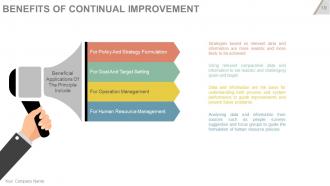
Slide 19: This slide states four Benefits Of Continual Improvement- Strategies based on relevant data and information are more realistic and more likely to be achieved, Using relevant comparative data and information to set realistic and challenging goals and target, Data and information are the basis for understanding both process and system performance to guide improvements and prevent future problems, Analysing data and information from sources such as people surveys suggestion and focus groups to guide the formulation of human resource policies.
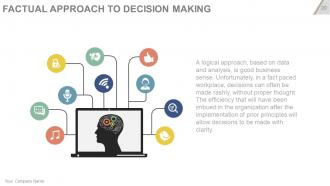
Slide 20: This slide shows the Factual Approach To Decision Making with creative human brain imagery to go with.
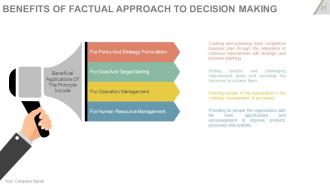
Slide 21: This slide states the Benefits Of Factual Approach To Decision Making with loud speaker imagery.
Slide 22: This slide shows Mutually Beneficial Suplier Relations with relevant imagery.
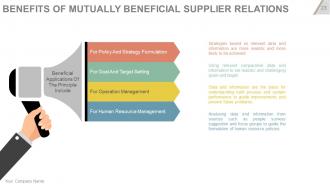
Slide 23: This slide shows the Benefits Of Mutually Beneficial Suplier Relations- Strategies based on relevant data and information are more realistic and more likely to be achieved. Using relevant comparative data and information to set realistic and challenging goals and target. Data and information are the basis for understanding both process and system performance to guide improvements and prevent future problems. Analysing data and information from sources such as people surveys suggestion and focus groups to guide the formulation of human resource policies.
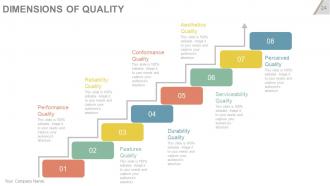
Slide 24: This slide presents a list of Dimensions Of Quality- Performance Quality, Reliability Quality, Conformance Quality, Aesthetics Quality, Features Quality, Durability Quality, Serviceability Quality, Perceived Quality.
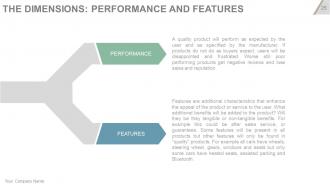
Slide 25: This slide shows The Dimensions: Performance And Features.
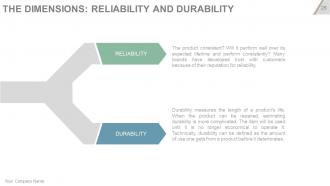
Slide 26: This slide shows The Dimensions: Reliability And Durability.
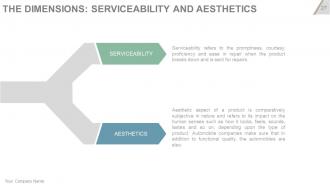
Slide 27: This slide shows The Dimensions: Serviceability And Aesthetics.
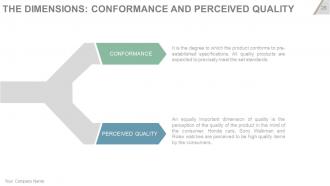
Slide 28: This slide shows The Dimensions: Conformance And Perceived Quality.
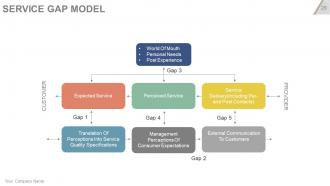
Slide 29: This slide presents the Service GAP Model in a flow chart form.
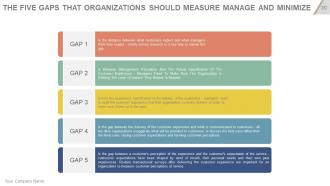
Slide 30: This slide shows The Five Gaps That Organizations Should MeasureManage And Minimize- GAP 1- Is the distance between what customers expect and what managers think they expect - clearly survey research is a key way to narrow this gap. GAP 2- Is Between Management Perception And The Actual Specification Of The Customer Experience - Managers Need To Make Sure The Organization Is Defining The Level Of Service They Believe Is Needed. GAP 3-Is from the experience specification to the delivery of the experience - managers need to audit the customer experience that their organization currently delivers in order to make sure it lives up to the spec. GAP 4- Is the gap between the delivery of the customer experience and what is communicated to customers - all too often organizations exaggerate what will be provided to customers, or discuss the best case rather than the likely case, raising customer expectations and harming customer perceptions. GAP 5- Is the gap between a customer's perception of the experience and the customer's expectation of the service - customers' expectations have been shaped by word of mouth, their personal needs and their own past experiences. Routine transactional surveys after delivering the customer experience are important for an organization to measure customer perceptions of service.
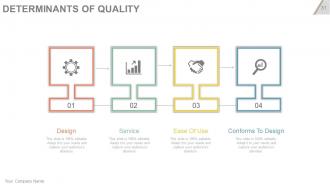
Slide 31: This slide shows four Determinants Of Quality with icon imagery- Design, Service, Ease Of Use, Conforms To Design.
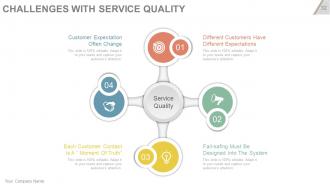
Slide 32: This slide states four Challenges With Service Quality that a company faces- Customer Expectation Often Change, Different Customers Have Different Expectations, Each Customer Contact Is A “ Moment Of Truth”, Fail-safing Must Be Designed Into The System.
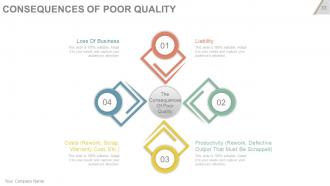
Slide 33: This slide shows The Consequences Of Poor Quality. We have mentioned four of these- Loss Of Business, Liability, Costs (Rework, Scrap, Warranty Cost, Etc.), Productivity (Rework, Defective Output That Must Be Scrapped). There are other consequences too which you can add as per your requirement.
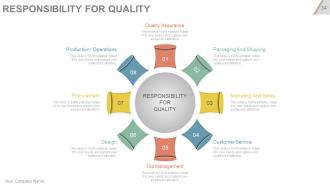
Slide 34: This slide shows eight points to describe the Responsibility For Quality- Top Management, Quality Assurance, Packaging And Shipping, Marketing And Sales, Customer Service, Production / Operations, Procurement, Design.
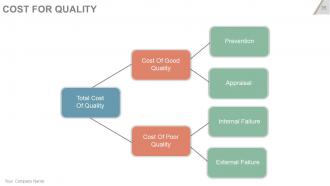
Slide 35: This slide shows the Cost For Quality flow chart with Total Cost Of Quality as its main sub heading.
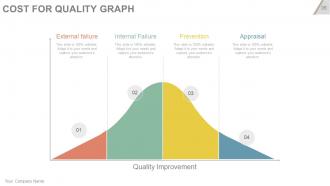
Slide 36: This slide shows Cost For Quality Graph with the following stages- External failure, Internal Failure, Prevention, Appraisal.
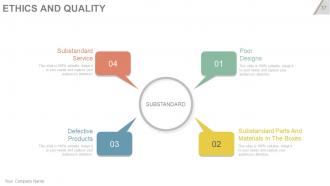
Slide 37: This slide shows Ethics and Quality with Substandard as its main subheading and Substandard Service, Poor Designs, Defective Products and Substandard Parts And Materials In The Boxes as its sub parts.
Slide 38: This slide is titled Additional Slides to move forward. You can change the slide content as per need.
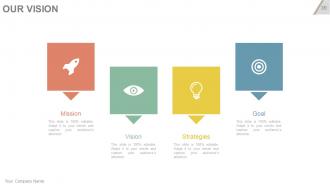
Slide 39: This is Our Vision slide with text boxes. State your vision along with mission and goals here.
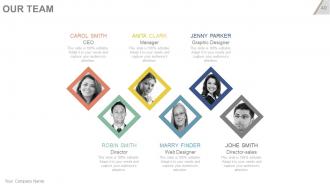
Slide 40: This is Our Team slide. Mention name, designation etc. here.
Slide 41: This is an About Us slide. Provide a brief introduction about company/ team here.
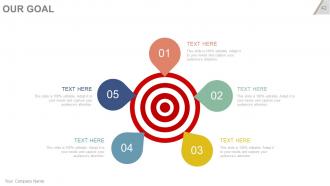
Slide 42: This is Our Goal slide to state company goals, aspirations etc.
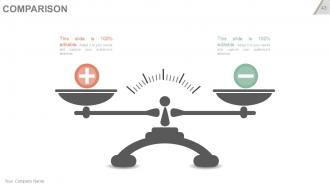
Slide 43: This is a Comparison slide with balancing scale imagery to compare two products/ entities etc.
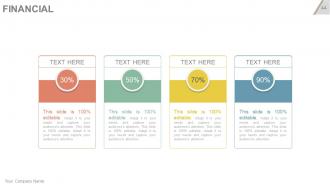
Slide 44: This is a Financial stats slide to state financial aspects etc.
Slide 45: This slide presents Quotes. Sate your inspirational quotes here. You may change the slide content as per need.
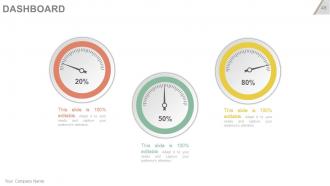
Slide 46: This is Dashboard slide to show information in percentages etc.
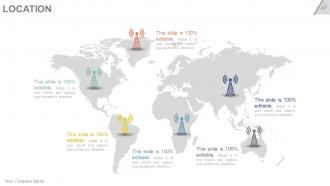
Slide 47: This is Location slide on a world map image to show global growth, presence etc.
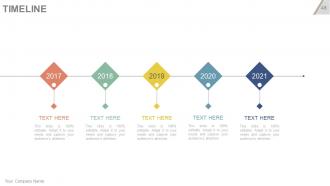
Slide 48: This is a Timeline slide to show milestones, growth or highlighting factors.
Slide 49: This is a Post it slide to mark reminders, events etc.
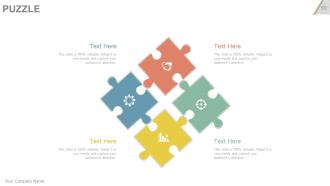
Slide 50: This is a Puzzle image slide to show information, specification etc.
Slide 51: This is a Target slide. State targets here.
Slide 52: This is a Circular image slide. State information, specifications etc. here.
Slide 53: This is a Venn diagram image slide to show information, specifications etc.
Slide 54: This is a MATRIX slide. Put relevant comparing data here.
Slide 55: This is a Silhouettes slides with text boxes. State information etc. here.
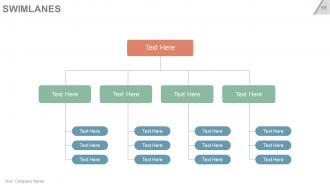
Slide 56: This slide presents SWIMLANES to show information, specifications etc.
Slide 57: This is a Bulb or Idea image slide to show ideas, innovative information etc.
Slide 58: This is a Magnifying Glass image slide to show information, specifications etc.
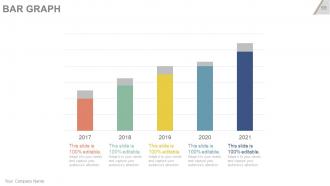
Slide 59: This is a Bar Graph slide to show product/ entity growth, comparison etc.
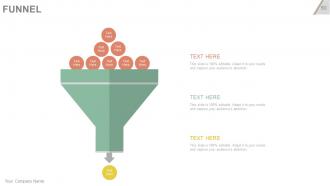
Slide 60: This slide shows a Funnel diagram with text boxes. State your specifications in funnel form.
Slide 61: This is a Thank You slide with Address# street number, city, state, Contact Number, Email Address.
Project quality management plan checklist powerpoint presentation slides with all 61 slides:
Avoid any haggling with our Project Quality Management Plan Checklist Powerpoint Presentation Slides. Get them to believe in your fairness.



FAQs for Project quality management plan checklist
So start with defining what "good" actually looks like for your deliverables - your quality standards and metrics. Then map out how you'll prevent problems (QA processes) and catch them when they happen anyway (QC activities). Someone's gotta own this mess, so nail down who's responsible for what. Testing procedures are huge, plus you need review checkpoints throughout. Oh, and definitely plan for when stuff doesn't meet standards - because it will happen. Templates and reporting methods help keep everything organized. Honestly, I'd work backwards from your acceptance criteria first. Makes the whole thing way less overwhelming and you won't miss the obvious stuff.
Look, you've got to connect your quality standards to what the project's actually trying to do. Check your project charter and stakeholder requirements first - I know it sounds boring but people skip this all the time. Define quality criteria that match their goals. Fast delivery? Focus on preventing defects instead of running endless test cycles. Your metrics should measure what stakeholders actually care about, not just textbook standards. Oh and definitely do regular check-ins with them. Their expectations change constantly and you don't want to be stuck following outdated quality measures that nobody values anymore.
Control charts work great for tracking performance over time. For root cause stuff, fishbone diagrams are your friend - way better than just guessing what went wrong. Pareto charts help you focus on the biggest problems first (honestly, this one's a game-changer). Don't forget basic tools like checklists and flowcharts for daily operations. Statistical sampling saves you from checking literally everything. Quality audits give you formal checkpoints, and if you're dealing with messy variables, design of experiments can help sort things out. My advice? Pick 3-4 tools max that actually make sense for your situation. Your team won't use complicated stuff they don't understand anyway.
First, figure out what "good quality" actually means for your project - defect rates, completion percentages, customer feedback scores, whatever makes sense. Get your stakeholders involved in setting realistic targets (honestly, this part can be a pain but it's worth it). Use SMART criteria because vague goals are pretty much worthless. Document your measurement process - which tools you'll use, when you'll check things, all that stuff. Base your benchmarks on real data or industry standards, not just hopes and dreams. Build in regular quality checkpoints so you can fix problems early instead of scrambling at the end.
Look, continuous improvement is what keeps your Quality Management Plan from turning into dead weight. Most teams create these documents then never touch them again - huge mistake. Your project changes, so your quality standards should too. Schedule regular check-ins to see what's actually working. Those feedback loops? They're gold for catching problems before they blow up. I've seen too many projects where people ignore the retrospectives and then act shocked when their quality processes feel totally out of touch. Just make sure you're not just talking about improvements - actually implement the changes you identify.
Talk to your stakeholders first - like, really talk to them. Ask what they're worried about with quality, what would make them panic. Then do workshops where they actually help build the standards with you. People will fight for something they helped create, which is honestly just human nature. Don't show up with a finished plan and expect applause. Share pieces as you go and actually use their feedback - make it obvious you listened. I always document who suggested what so they can see their fingerprints on the final thing. Make it feel collaborative instead of you presenting to them, and you'll get way less pushback later.
Build your risk mitigation right into the quality plan from day one. Define clear standards upfront and set checkpoints throughout each phase. Regular audits are your friend here - seriously, catching stuff early will save you so much headache later. Don't forget contingency plans for when things go sideways (and they will). Map out rework procedures, escalation paths, maybe backup vendors too. Track your quality metrics constantly so you can spot patterns before they blow up. Oh, and those monitoring dashboards? Set them up now, review weekly. Trust me on this one.
Honestly, automated tools are a game-changer for quality management. They handle all the boring repetitive tasks that normally drain your day - testing, defect tracking, compliance checks. Real-time dashboards show you exactly what's happening, so you catch problems before they blow up (learned that one the hard way). The reporting gets way more reliable since you're not dealing with manual data entry mistakes. I'd say start small though - pick your biggest time-waster process first and find a tool for that. Don't try to automate everything at once or you'll go crazy.
Honestly, I'd start with milestone-based audits - they just make sense with your project timeline. Most teams I've worked with do them at phase gates to catch stuff early. You could also go periodic (monthly/quarterly) or set triggers based on deliverables or when your quality metrics get wonky. Some folks do random spot-checks too, which honestly keeps people more honest. The main thing is nailing down who's doing the audits, what they're actually reviewing, and how you'll track findings. Random audits sound intimidating but they're pretty effective if your team can handle it.
Dude, skipping quality standards is like asking for trouble. Your costs will shoot up from all the rework. Delays become inevitable. Stakeholders get pissed when deliverables suck. Customer satisfaction? Forget about it. Plus your team looks incompetent - which honestly bugs me more than anything else. The real kicker is how these problems multiply. One small screw-up turns into this massive disaster that can tank entire projects. Depending on your field, you might even face legal issues. Bottom line: treat quality checks like they're non-negotiable and bake them into your timeline from day one.
So after your project wraps up, compare what you planned versus what actually happened with quality stuff. Check your defect rates, how much you spent on rework, customer satisfaction scores - the usual suspects. Stakeholder feedback sessions are honestly where you'll get the real tea about what went wrong. Did your processes catch problems early or just find them when it was too late to fix easily? That's a big one. Document everything that worked and what totally flopped, then figure out if your quality activities actually saved money. Turn those lessons into something you can actually use next time instead of just filing it away somewhere.
Honestly, make sure everyone can actually find your Quality Management Plan first - can't tell you how many times I've seen these things buried in some random SharePoint folder nobody checks. Skip the fancy jargon and use normal words people understand. Visual flowcharts help a ton too. When you update it, actually tell people instead of just uploading a new version and hoping they notice. Maybe do a quick walkthrough with your key players so they're not totally lost. The whole point is getting everyone to care about quality, not just having some document that exists somewhere.
Definitely dig through your old retrospectives and post-mortems - that's where the real gold is. What quality issues kept showing up? Which testing methods actually worked vs. the ones that were total wastes of time? I've seen too many teams make the same mistakes over and over because they didn't bother looking back. Focus on the quality gates that actually stopped bad stuff from hitting production. Those are your winners. Then figure out how to adapt those lessons into actual standards for this project. Don't just copy-paste though - make sure they fit your current situation.
Dude, changing requirements are the absolute worst - you're constantly chasing new quality targets halfway through projects. Plus there's never enough budget or time, so everyone wants to skip testing phases. Different team members have totally different ideas about what counts as "good enough" too. Oh and stakeholders? They'll say "make it high quality" but never actually define what that means, which creates endless back-and-forth later. My advice: nail down exactly what quality looks like before you start anything, and build in checkpoints at every stage. Otherwise you're just setting yourself up for pain.
Quality can't just be the QA team's problem - everyone needs to own it. Celebrate people who catch bugs early or suggest fixes. Those recognition moments really matter. Regular check-ins help too, where folks share what they've learned. Honestly, it only works if the PM actually shows up instead of just demanding it from others. People need to feel safe reporting problems without getting blamed. Make your quality metrics visible somehow - dashboards, quick daily updates, whatever works. Show the team how this stuff directly affects whether your project succeeds or tanks.
-
Professional and unique presentations.
-
Innovative and Colorful designs.