

Project Team Powerpoint Presentation Slides





Try Before you Buy Download Free Sample Product
 Impress Your
 Audience
 100%
100% Editable
 Save Hours
 of Time


Download this Project Team PowerPoint Presentation Slides to highlight the key steps of team management. Team management is important in every stage of business. This outlines the ways managers can effectively manage their teams. The team structure PowerPoint complete deck includes slides which are important to manage business project successfully such as project manager, project team structure, core team example, work breakdown structure, activities sequence, communication plan, about us, our goals, financial planning, dashboard, timeline etc. Using this business team Presentation graphics, you can ensure that various elements of the projects are properly coordinated. The project management PPT slide is very useful for team managers and business men. Moreover, this project group PowerPoint template can also be used to boost productivity, improve efficiency and control. Download Team building in project management PPT design for successful project delivery. Identify factors generating discord with our Project Team Powerpoint Presentation Slides. Be able to address any bitterness.
People who downloaded this PowerPoint presentation also viewed the following :
Content of this Powerpoint Presentation
Slide 1: This slide introduces Project Team. Add the name of your company and logo to begin.
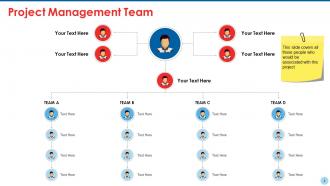
Slide 2: This slide presents Project Management Team in a hierarchy chart form. Add in the names and designations of all those people who are associated with this project.
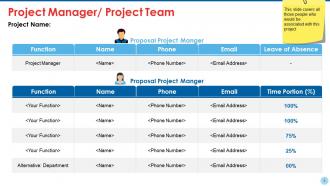
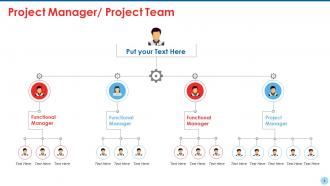
Slide 3: This slide shows Project Manager/ Project Team with the following content to be displayed- Project Name, Function, Name, Phone, Email, Leave of Absence, Time Portion (%).
Slide 4: This slide also shows Project Manager/ Project Team in a flow chart form. Add in the names and designations of your team members in the text boxes.
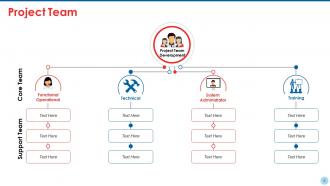
Slide 5: This slide shows Project Team with Project Team Development flow chart divided into the following four parts- Functional Operational, Technical, System Administrator, and Training.
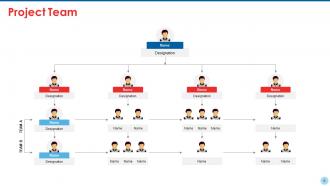
Slide 6: This is another slide showing Project Team flow chart with names and designations to state.
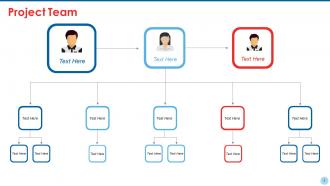
Slide 7: This too is a Project Team slide. Add your team members information, names etc. here.
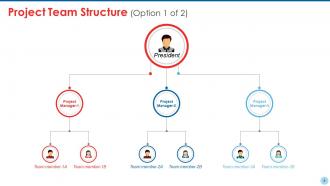
Slide 8: This slide shows Project Team Structure in a flow chart form.
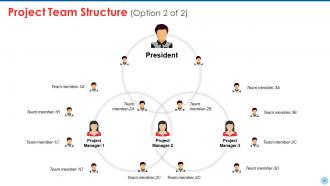
Slide 9: This slide also shows Project Team Structure in a venn diagram image form with text boxes to add relevant text.
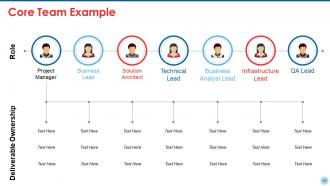
Slide 10: This slide shows Core Team Example with Role and Deliverable Ownership.
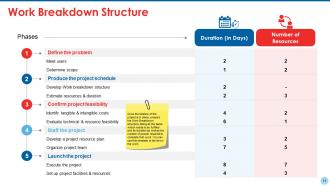
Slide 11: This slide shows Work Breakdown Structure with Phases, Duration and Number of Resources to add. Once the timeline of the project is in place, prepare the Work Breakdown structure, listing all the tasks which needs to be fulfilled and its duration as well as the number of people required to complete that work. You can use this template to list down the work.
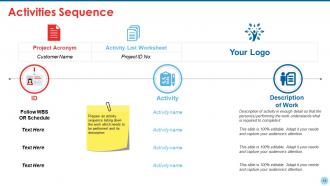
Slide 12: This slide shows Activities Sequence. Prepare an activity sequence listing down the work which needs to be performed and its description.
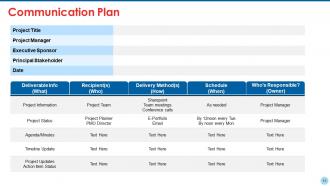
Slide 13: This slide shows Communication Plan with- Deliverable Info (What), Recipient(s) (Who), Delivery Method(s) (How), Schedule (When), Who’s Responsible? (Owner).
Slide 14: This is a Break Time slide with coffee imagery to halt. Alter the slide content as per your requirement.
Slide 15: This slide is titled Charts & Graphs to move forward. You may change it as per requirement.
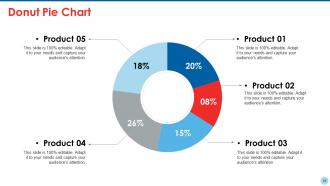
Slide 16: This is a Donut Pie Chart slide to present product or entity comparison, information etc.
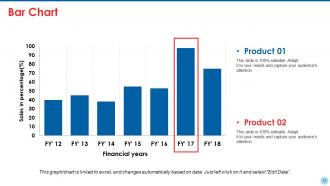
Slide 17: This slide showcases Bar Chart. Compare the products with this.
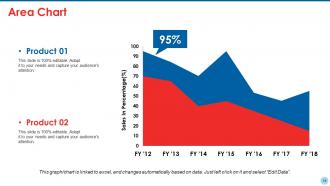
Slide 18: This is an Area Chart slide to show two product comparison, specifications etc.
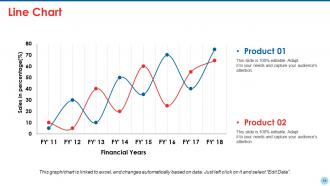
Slide 19: This slide presents a Line Chart showcasing product/ company growth, comparison etc.
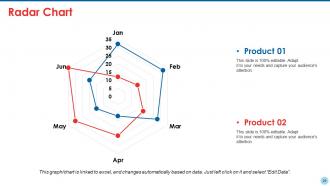
Slide 20: This is a Radar chart slide to show product/ entity growth, comparison etc.
Slide 21: This slide is titled Additional Slides to move forward. You can change the slide content as per need.
Slide 22: This slide contains Our Mission with text boxes and background imagery.
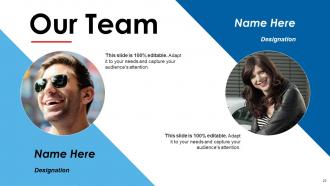
Slide 23: This is Our team slide with names and designation.
Slide 24: This is an About us slide to state company specifications etc.
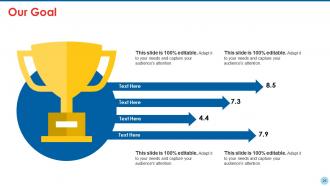
Slide 25: This is Our Goal slide. State your important goals here.
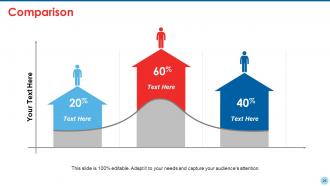
Slide 26: This slide shows a Comparison between products/ entities etc.
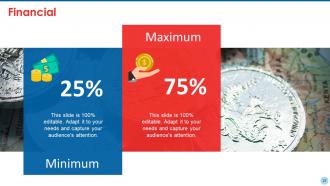
Slide 27: This slide shows the Financial aspects. Add them here.
Slide 28: This is a Quotes slide to highlight, or state anything specific.
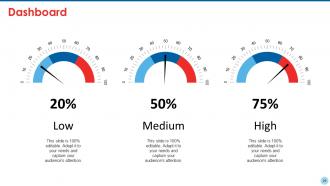
Slide 29: This is a Dashboard slide to state Low, Medium and High aspects, kpis, metrics etc.
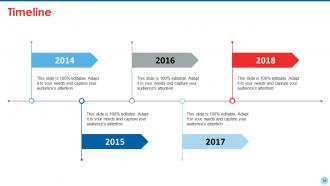
Slide 30: This is a Timeline slide to present important dates, journey, evolution, milestones etc.
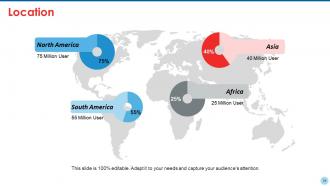
Slide 31: This is a Location slide to show global segregation, presence etc. on a world map image and text boxes to make it explicit.
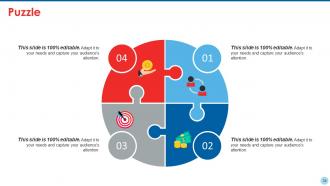
Slide 32: This is Puzzle pieces slide with icon imagery to show information, specifications etc.
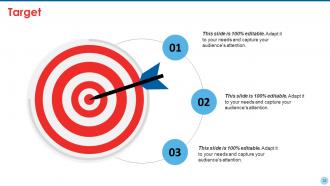
Slide 33: This is a Target image slide. State targets, etc. here.
Slide 34: This is a Mind map image slide to show information, specifications etc.
Slide 35: This is a Bulb Or Idea image slide to show information, innovative aspects etc.
Slide 36: This is a Silhouettes slide to show people related information, specifications etc.
Slide 37: This is a Magnifying Glass image slide to show information, specifications etc.
Slide 38: This is a Thank You image slide with Address, Email and Contact number.
Project Team Powerpoint Presentation Slides with all 38 slides:
Highlight your ideas with ideal backdrops due to our Project Team Powerpoint Presentation Slides. It gives you abundant choices.
-
Project Team
-
Project Management Team
-
Project Manager Project Team
-
Project Manager Project Team
-
Project Team
-
Project Team
-
Project Team
-
Project Team Structure Option 1 of 2
-
Project Team Structure Option 2 of 2
-
Core Team Example
-
Work Breakdown Structure
-
Activities Sequence
-
Communication Plan
-
Break Time Sign
-
Charts Graphs
-
Donut Pie Chart
-
Bar Chart
-
Area Chart
-
Line Chart
-
Radar Chart
-
Additional Slides
-

Our Mission
-
Our Team
-

About Us
-
Our Goal
-
Comparison
-
Financial
-
Project Team
-
Dashboard
-
Timeline
-
Location
-
Puzzle
-
Target
-
Mind Map
-
Bulb Or Idea
-
Silhouettes
-
Magnifying Glass
-
Thank You for Watching
FAQs for Project Team
You definitely need a project manager to wrangle everyone and keep things moving. Technical lead is crucial too - they'll handle all the messy backend stuff you don't want to think about. Get your stakeholders involved from day one since they actually know what the business needs. Oh, and seriously don't skip QA testing - I've seen too many projects crash because people thought they could just wing it. Each person catches different problems before they blow up. Set clear expectations about who does what, otherwise you'll have three people doing the same task while something important gets ignored.
Honestly, good communication just stops all those awkward "wait, who was doing this?" moments. You need regular check-ins and clear ownership of tasks - otherwise people spend more time confused than actually working. I've watched entire projects blow up because someone spotted a problem but didn't want to be the bearer of bad news. Create space where your team can speak up about issues early. Short, consistent meetings help way more than those marathon status calls nobody wants to attend. Pick tools that don't make people want to hide, and you're golden.
Start by figuring out who's actually good at what - skills, perspectives, how they communicate. Don't just look at who's free. Also, please don't be that manager who dumps all the "diversity stuff" on your diverse team members. Mix people up in working groups so different viewpoints happen naturally. Here's the thing though - be super clear about deadlines because "soon" means totally different things to different people. Oh, and check in regularly about whether the workload feels fair. People usually won't complain unless you ask directly, which is honestly kind of annoying but that's how it goes.
Oh definitely, team vibes can totally wreck a project or make it amazing. Good chemistry means everyone's productive and doesn't hate coming to work. Bad dynamics? Complete disaster - missed deadlines, drama, people mentally checking out. I've watched super talented teams implode over personality clashes, it's honestly painful to see. Trust is everything though. If things feel weird with your team, don't wait around hoping it fixes itself. Try some team building stuff, get clearer on who does what, or just have an awkward but necessary conversation about how you're all working together.
Honestly, start simple with just Slack for messaging and Zoom for video calls. Asana's my go-to for project management - way cleaner than Trello IMO. Google Drive handles all your doc sharing needs without the Microsoft headache. Once you're comfortable, maybe add Miro for brainstorming sessions (that whiteboard feature is actually pretty cool). Don't go crazy with tools right away though. I've seen teams drown in apps they never use. Pick maybe three max and see how it goes? You can always layer more stuff on later when you figure out what's missing.
Dude, diverse teams are seriously where it's at for innovation. Different backgrounds mean people tackle problems in totally unique ways - like, someone from marketing might see something an engineer completely misses. They call out each other's blind spots too, which is clutch. Sure, sometimes the clash of ideas gets messy (honestly, I've been in meetings that felt like debates), but that's when the best solutions come out. Just don't let the loudest person steamroll everyone else. Oh, and they're way better at figuring out what different customers actually want, which... yeah, that's pretty important for making stuff people buy.
Ugh, team drama is the worst. Get everyone together ASAP and let each person explain their side without anyone jumping in. Seriously, most of the time people aren't even fighting about the same thing - it's wild. Try steering the conversation back to what you're all trying to accomplish instead of who said what. Sometimes you need someone neutral to step in if it's getting too messy. Don't wait around hoping it'll fix itself because it won't. Oh, and set some ground rules afterward so this doesn't happen again.
Look, your leadership style totally shapes whether your team actually wants to work or just phones it in. Authoritative works best - give clear direction but don't breathe down their necks. Micromanaging? That's a motivation killer for sure. Nobody wants someone hovering constantly. But being too hands-off leaves people confused and hanging. Democratic leaders get better buy-in since everyone feels heard, though decisions take forever (which honestly drives me crazy sometimes). Match your approach to how experienced your team is and how urgent things are. Just figure out what they need most right now and adjust from there.
Get your whole team together (Zoom counts) and nail down exactly what "done" means - specific deliverables, real deadlines. Then chop that massive goal into weekly milestones you can actually track. Trust me, I've watched so many projects crash because people skip this boring part. Put everything in a shared doc where everyone can see progress and update their stuff. Each milestone needs an owner and crystal clear success metrics. Oh, and book those regular check-ins now because something will definitely go wrong and you'll need to pivot fast.
Honestly, start with the basics - are you hitting deadlines and keeping quality up? Track your team's velocity too. I always look at whether people actually seem engaged and if they're collaborating well, because burnt-out teams crash eventually. Stakeholder satisfaction is huge obviously, and staying on budget saves everyone headaches later. Oh, and see how fast issues get resolved - that tells you a lot about communication flow. Don't go crazy tracking everything though. Pick like 3-4 things that actually matter for your specific goals and stick with those.
Build regular check-ins throughout your project - sprint reviews, stakeholder demos, quick team retrospectives. The trick is actually listening to what's working (and what's a total mess). Don't just collect feedback for show - we've all seen those pointless surveys that disappear into the void. Make it actionable instead. Short cycles are your friend since you can fix things fast rather than discovering problems when it's way too late. Honestly, even 15-minute weekly retrospectives with your team work wonders. Small tweaks add up over time.
Honestly, the worst part is gonna be communication falling apart when everyone's freaking out. People stop asking questions and just assume stuff, which creates total chaos. Your team will get decision fatigue from constantly being in crisis mode. Quality always takes a hit too - nobody wants to cut corners, but when you're under that much pressure it just happens. Oh and burnout is real. Try setting up some basic communication rules early on, even though it feels pointless when everything's on fire. Maybe build in tiny buffers if you can swing it.
Dude, stakeholder engagement is literally make-or-break for your team. Get them involved early and you'll have clearer requirements, quicker decisions, and way less scope creep. Skip this step? Your team ends up confused, constantly redoing work, and dealing with conflicting priorities. Plus nobody knows why they're even doing the work, which kills morale. I learned this the hard way on my last project - what a mess. Map out your key stakeholders first, then set up regular check-ins. Trust me, it's one of those boring admin things that actually matters.
Hey! So emotional intelligence is basically reading the room and not being that person who kills the vibe, you know? When you can spot your own moods and pick up on others' energy, you dodge those weird miscommunications that tank projects. I've seen teams fall apart over the dumbest things. You'll get better at giving feedback that doesn't make people defensive, plus you can jump in when someone's having a rough day. It creates that safe space where people actually want to work together. Just start noticing how your energy affects meetings - it's honestly a game changer.
Look, you gotta bake flexibility into everything from the start. Set up regular check-ins so you can actually reassess what matters. Cross-train your people - when stuff shifts (and it will), they can jump into different roles without panicking. I've seen so many teams crash because they act like requirements are set in stone. They're not. Document changes as they happen and pull stakeholders into those priority conversations. Oh, and stop treating uncertainty like some weird exception - it's basically the norm now. Once your team accepts that, they'll get way better at adapting to whatever curveball comes next.
-
Very Nice!
-
i l ike ths
-
Really like the color and design of the presentation.
-
Very unique and reliable designs.