

Projecting Cash Flow Powerpoint Ppt Template Bundles





Try Before you Buy Download Free Sample Product
 Impress Your
 Audience
 100%
100% Editable
 Save Hours
 of Time


Our Projecting Cash Flow Powerpoint Ppt Template Bundles are topically designed to provide an attractive backdrop to any subject. Use them to look like a presentation pro.
People who downloaded this PowerPoint presentation also viewed the following :
Projecting Cash Flow Powerpoint Ppt Template Bundles with all 17 slides:
Use our Projecting Cash Flow Powerpoint Ppt Template Bundles to effectively help you save your valuable time. They are readymade to fit into any presentation structure.







FAQs for Projecting Cash Flow Powerpoint
Key components include revenue forecasts, operating expenses, capital expenditures, working capital changes, and financing activities. These elements help startups streamline financial planning by tracking incoming cash, monitoring burn rates, and identifying funding needs, with many early-stage companies finding that detailed projections ultimately deliver better investor confidence and strategic decision-making capabilities.
Seasonal fluctuations significantly impact cash flow projections by creating predictable peaks and valleys in revenue and expenses across different business cycles. Retail businesses experience holiday surges, agricultural companies face harvest-dependent income, and hospitality sectors see vacation-driven demand, while manufacturing and construction industries navigate weather-related operational changes, ultimately requiring strategic cash reserves and flexible forecasting models.
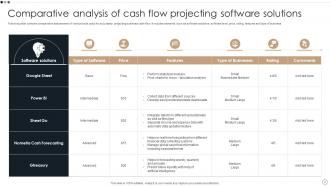
Effective cash flow projection tools include QuickBooks, Excel with advanced modeling templates, Cashflow Manager, Float, and PlanGuru, each offering different levels of automation and integration capabilities. These platforms streamline forecasting by connecting bank accounts, categorizing transactions automatically, and generating scenario analyses, with many growing businesses finding that cloud-based solutions like Float and Pulse deliver real-time visibility and enhanced accuracy for strategic planning.
Historical data serves as the foundation for cash flow forecasting, providing patterns, seasonal trends, customer payment behaviors, and revenue cycles that inform future projections. Through analyzing past performance, businesses can identify cyclical patterns, predict payment delays, and anticipate seasonal fluctuations, with many organizations finding that three to five years of historical data delivers significantly more accurate forecasts and strategic planning capabilities.
**INPUT**: How do you account for unexpected expenses in your cash flow projections? **OUTPUT**: Accounting for unexpected expenses involves creating contingency reserves, implementing scenario planning with multiple forecasting models, and maintaining flexible buffer zones within your projections. These approaches enable organizations to absorb unforeseen costs while maintaining operational stability, with many financial teams finding that allocating 5-15% contingency funds ultimately delivers greater forecasting accuracy and strategic resilience. [Word count: 56 words]
Best practices for updating cash flow projections include establishing regular review cycles, incorporating actual versus projected variances, adjusting for seasonal fluctuations, updating market assumptions, and integrating real-time financial data. These practices enhance accuracy by reflecting current business conditions, economic changes, and operational shifts, with many organizations finding that monthly updates combined with quarterly strategic reviews ultimately deliver improved financial planning and more responsive cash management decisions.
Effective cash flow communication requires clear visual presentations, detailed scenario analyses, transparent assumptions documentation, and regular update schedules. Through comprehensive dashboards and structured reports, businesses demonstrate financial transparency, build investor confidence, and enable informed decision-making, with many organizations finding that consistent, data-driven communication ultimately strengthens stakeholder relationships and enhances funding opportunities.
Short-term cash flow projections typically cover 1-13 weeks with daily or weekly detail, focusing on immediate liquidity needs, while long-term projections span months or years with broader strategic planning emphasis. These different timeframes enable businesses to manage operational expenses and payroll in the near term, while simultaneously planning capital investments, expansion strategies, and resource allocation for sustained growth and competitive advantage.
Cash flow projections enable strategic planning by forecasting liquidity needs, identifying potential shortfalls, and revealing optimal timing for investments, expansions, or cost-cutting measures. These forecasts help businesses evaluate strategic opportunities with confidence, plan debt management effectively, and allocate resources efficiently, with many organizations finding that accurate projections ultimately deliver competitive advantage through informed decision-making.
Cash flow risk mitigation strategies include maintaining adequate cash reserves, diversifying revenue streams, implementing robust credit policies, establishing flexible financing arrangements, and conducting regular cash flow forecasting. Through strategic working capital management and contingency planning, organizations streamline operations while minimizing financial vulnerabilities, with many businesses finding that proactive monitoring and scenario analysis ultimately deliver enhanced liquidity and competitive resilience.
Varying payment terms create timing gaps between cash inflows and outflows, significantly impacting working capital and liquidity forecasting. Longer supplier payment terms improve cash flow by delaying outflows, while shorter customer payment periods accelerate inflows, with many businesses finding that strategic term negotiations can enhance operational efficiency and reduce financing needs, ultimately delivering better cash position management.
Businesses should monitor accounts receivable aging, payment collection rates, seasonal sales patterns, supplier payment terms, and outstanding invoice status. These indicators enable organizations to identify potential cash shortfalls early, adjust payment schedules strategically, and maintain operational liquidity, with many companies finding that regular monitoring ultimately delivers improved financial forecasting and enhanced working capital management.
Companies can balance cash flow needs with reinvestment strategies by implementing rolling forecasts, maintaining strategic cash reserves, and prioritizing investments with shorter payback periods. Through careful timing of capital expenditures and phased investment approaches, organizations across sectors like manufacturing and retail optimize liquidity while funding growth initiatives, ultimately delivering sustained operational stability and competitive advantage in an increasingly dynamic business environment.
Cash flow projections become critically important during economic downturns as they enable businesses to anticipate liquidity challenges, identify potential funding gaps, and make strategic decisions about resource allocation and operational adjustments. These forecasts help organizations navigate uncertainty by providing visibility into incoming and outgoing cash, while many companies find that accurate projections ultimately deliver better survival rates and competitive positioning.
Cash flow projections enhance operational efficiency by identifying seasonal patterns, optimizing inventory levels, and timing major expenditures strategically. Through predictive analysis, businesses streamline resource allocation, reduce emergency borrowing costs, and negotiate better supplier terms, with many organizations finding that proactive cash management delivers improved working capital efficiency and competitive advantage.
-
The customer care of SlideTeam is very responsive. I was having a payment issue and they fixed it for me in no time.
-
Commendable slides with attractive designs. Extremely pleased with the fact that they are easy to modify. Great work!