Research strategy with planning and developing stage

Rating:
85%
Research strategy with planning and developing stage
Slide 1 of 2
Favourites Favourites

Try Before you Buy Download Free Sample Product

Audience Impress Your
Audience
Editable 100%
Editable
Time Save Hours
of Time
The Biggest Sale is ending soon in
0
0
:
0
0
:
0
0
Rating:
85%
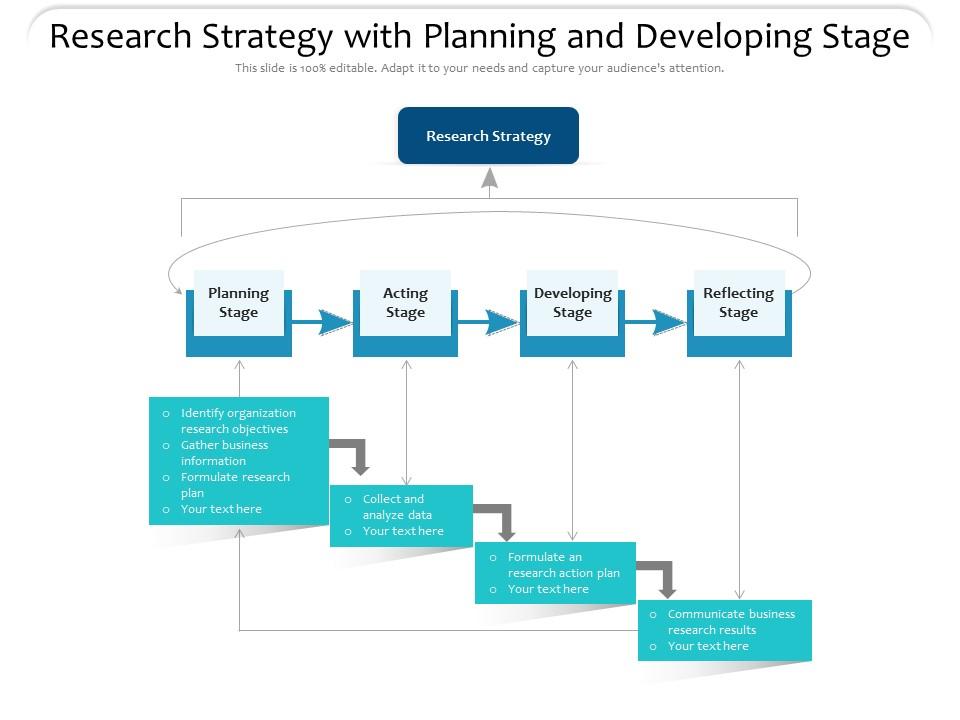
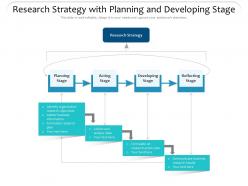
Introducing our Research Strategy With Planning And Developing Stage set of slides. The topics discussed in these slides are Planning Stage, Developing Stage, Research Strategy, Acting Stage, Reflecting Stage. This is an immediately available PowerPoint presentation that can be conveniently customized. Download it and convince your audience.

FAQs for Research strategy with planning

An effective research strategy includes clear objectives definition, comprehensive methodology selection, robust data collection frameworks, systematic analysis protocols, and actionable reporting structures. These components work together by establishing focused direction, ensuring reliable data gathering, and facilitating evidence-based decision making, with many organizations finding that strategic research frameworks ultimately deliver competitive insights and measurable business outcomes.

Research objectives are identified through stakeholder consultation, business goal analysis, problem definition, and target audience assessment, ensuring alignment with organizational priorities. This strategic approach enables companies to focus resources effectively, minimize research scope creep, and generate actionable insights that directly support decision-making processes, ultimately delivering measurable outcomes and competitive advantage.

Common methodologies in research strategy development include mixed-methods approaches, systematic literature reviews, stakeholder analysis, SWOT analysis, and competitive intelligence frameworks. These methodologies enable organizations by combining quantitative data with qualitative insights, identifying knowledge gaps systematically, and aligning research priorities with business objectives, ultimately delivering strategic advantage and informed decision-making across industries.

Ensuring research strategy alignment requires establishing clear connections between research objectives and business priorities, conducting stakeholder consultations across departments, and creating measurable outcomes that directly support organizational KPIs. Through regular strategy reviews and cross-functional collaboration, organizations streamline decision-making processes, enhance resource allocation, and ultimately deliver actionable insights that drive competitive advantage and measurable business growth.

Stakeholder analysis identifies key individuals, groups, and organizations who influence or are affected by research outcomes, enabling targeted engagement, resource allocation, and strategic communication planning. This systematic approach helps researchers anticipate potential roadblocks, secure necessary support, and align research objectives with stakeholder expectations, ultimately delivering more relevant findings and smoother implementation across diverse organizational contexts.

Research questions are prioritized through stakeholder impact assessment, resource requirements analysis, timeline feasibility, and strategic alignment with business objectives. Organizations typically rank questions by potential ROI, data availability, and competitive advantage opportunities, with many companies finding that addressing high-impact, low-complexity questions first builds momentum while enabling more complex investigations to deliver sustained strategic value.

Essential market research tools include survey platforms like SurveyMonkey, analytics tools such as Google Analytics, social listening software, focus group facilities, and industry databases like IBISWorld. These resources streamline data collection, audience analysis, and competitive intelligence gathering, with many organizations finding that combining digital analytics with traditional research methods delivers comprehensive market insights and strategic competitive advantage.

Assessing research strategy risks involves evaluating methodological limitations, resource constraints, timeline feasibility, data quality issues, and stakeholder alignment challenges through systematic risk matrices and contingency planning. Organizations mitigate these risks by diversifying data sources, establishing checkpoint reviews, securing backup methodologies, and maintaining flexible timelines, with many research teams finding that proactive risk management ultimately delivers more reliable insights and strategic outcomes.

Literature reviews critically shape research approaches by identifying knowledge gaps, establishing theoretical frameworks, refining methodologies, and preventing duplication of existing studies. Through systematic analysis of current research, organizations and academic institutions streamline their investigation processes, enhance research validity, and ultimately deliver more targeted outcomes, with many researchers finding that comprehensive reviews significantly improve project focus and strategic direction.

Integrating qualitative and quantitative research methods involves combining numerical data analysis with in-depth interviews, surveys with focus groups, and statistical findings with observational insights to create comprehensive research strategies. This mixed-methods approach enables organizations across sectors like healthcare, retail, and financial services to validate quantitative trends through qualitative context, ultimately delivering more accurate insights and strategic decision-making capabilities.

Primary data collection techniques include surveys, interviews, focus groups, observations, experiments, and case studies. These methods enable researchers to gather firsthand information tailored to specific objectives, with many organizations finding that combining multiple techniques, such as interviews for depth and surveys for scale, delivers comprehensive insights and competitive advantage in strategic decision-making.

Measuring research strategy success involves tracking key performance indicators like research timeline adherence, budget efficiency, data quality metrics, stakeholder satisfaction scores, and actionable insights generated. These measurements enable organizations to assess research ROI, identify process improvements, and demonstrate strategic value, with many companies finding that regular evaluation cycles ultimately enhance decision-making capabilities and competitive advantage.

When drafting research timelines, consider project scope, resource availability, data collection methods, analysis complexity, stakeholder review periods, and potential delays or bottlenecks. Strategic timeline development enables organizations across industries like pharmaceuticals, market research, and consulting to optimize resource allocation, manage client expectations, and deliver insights efficiently, ultimately enhancing project success rates and competitive advantage.

Fostering collaboration during research involves establishing clear communication protocols, shared digital workspaces, and regular team check-ins to ensure alignment and knowledge sharing. Through collaborative platforms and structured workflows, research teams can streamline data collection, enhance cross-functional insights, and accelerate decision-making processes, ultimately delivering more comprehensive findings and stronger strategic outcomes.

Ethical considerations in research strategy include informed consent protocols, data privacy protection, participant confidentiality measures, bias mitigation frameworks, and transparent reporting standards. These safeguards enhance research credibility by ensuring regulatory compliance, building stakeholder trust, and maintaining institutional reputation, with many organizations finding that robust ethical frameworks ultimately deliver stronger research outcomes and competitive advantage.

Ratings and Reviews

85% of 100
Review Form
Write a review
Most Relevant Reviews
  1. 80%

    by Chi Ward

    Illustrative design with editable content. Exceptional value for money. Highly pleased with the product.
  2. 80%

    by Don Hansen

    Unique design & color.
  3. 80%

    by Thomas Garcia

    Excellent Designs.
  4. 80%

    by Cliff Jimenez

    Good research work and creative work done on every template.
  5. 80%

    by Chuck James

    Excellent Designs.
  6. 100%

    by Daren Henry

    Good research work and creative work done on every template.
  7. 80%

    by Rodriguez Morgan

    I discovered this website through a google search, the services matched my needs perfectly and the pricing was very reasonable. I was thrilled with the product and the customer service. I will definitely use their slides again for my presentations and recommend them to other colleagues.
  8. 100%

    by Darwin Mendez

    Topic best represented with attractive design.

8 Item(s)

per page: