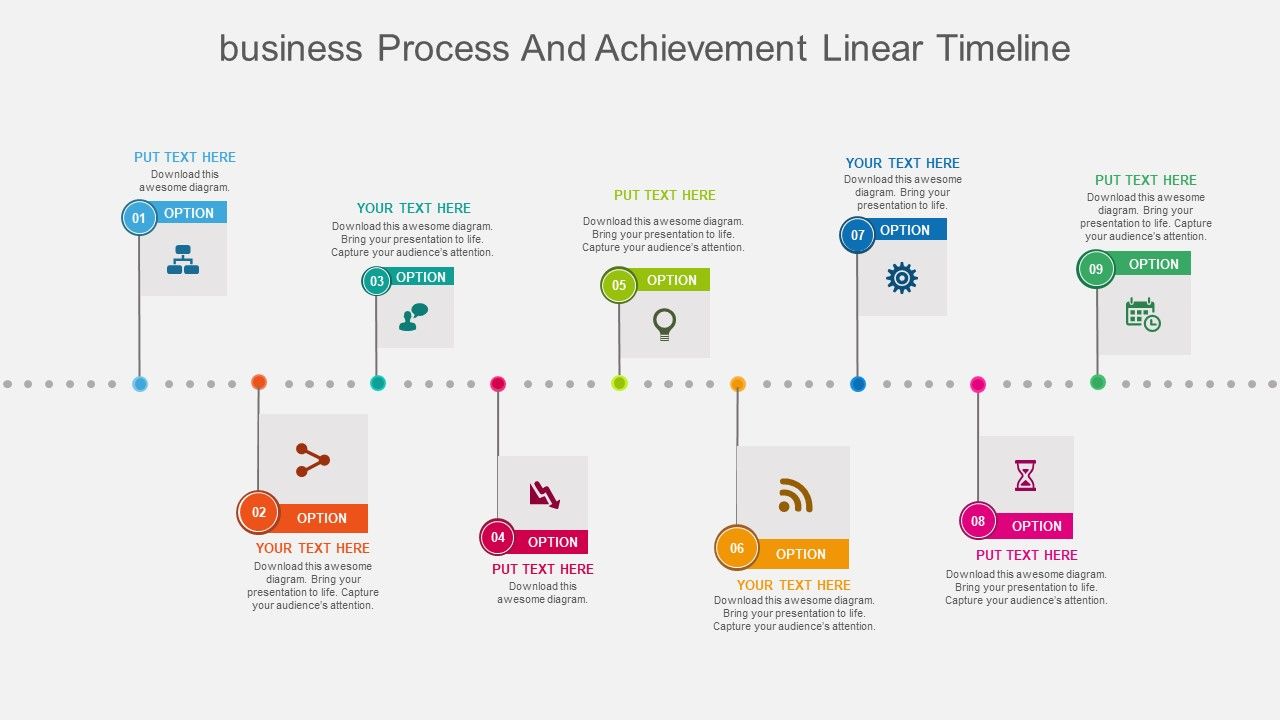
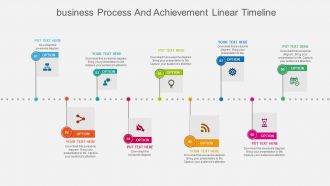
Roadmap business process and achievement linear timeline flat powerpoint design

Rating:
87%
Slide 1 of 4
Favourites Favourites

Try Before you Buy Download Free Sample Product

Audience Impress Your
Audience
Editable 100%
Editable
Time Save Hours
of Time
The Biggest Sale is ending soon in
0
0
:
0
0
:
0
0
Rating:
87%
Presenting roadmap business process and achievement linear timeline flat PowerPoint design. High-resolution images and the slide icons. Easy to download and save in the variety of formats. Access to open on a wide screen preview. Compatible with the Google Slides and the PowerPoint Software’s. Access to edit the style, size and the background of the slide icons as per your needs. Useful for the business owners, marketing executives and the students.

People who downloaded this PowerPoint presentation also viewed the following :

FAQs for Roadmap business process and achievement linear timeline

So basically you start by figuring out where you are right now - map everything out. Then decide where you actually want to end up. Gap analysis comes next to see what's missing, and honestly this is where things get weird because you'll find random stuff you never thought about. Prioritize what matters most, set up your timeline and milestones. Figure out who's doing what and how you'll measure success. Oh, and get everyone on the same page about the vision first - I can't stress this enough. Everything falls apart if people aren't aligned from the start.

Start by listing out all your current processes - then score them on three things: business impact, how many resources they'd need, and complexity. Go after the high-impact, low-complexity stuff first since those are your easy wins. Honestly, this whole thing feels like a lot at first, but you start seeing patterns pretty quick. Don't forget about regulatory stuff and customer complaints when you're scoring everything. I'd make a simple chart to see it all laid out. Get other people involved in deciding what's most important - they always catch things you miss. Review it every quarter because priorities change.

Honestly, it depends what you're going for. Visio and Lucidchart are solid if you need detailed mapping with swimlanes and all that. Miro's way more collaborative though - great for workshops where everyone's throwing ideas around. Excel works in a pinch but gets messy fast. Monday.com and Asana have timeline stuff too, which is handy if you're already tracking projects there. I'd probably just use whatever tool your team knows already. Nobody wants to learn another platform, you know? Oh, and Mural's pretty similar to Miro if that matters.

Track the hard stuff first - cycle time, error rates, costs, throughput. Numbers don't lie. But also grab employee satisfaction surveys and customer feedback because I've watched "perfect" processes totally tank morale (learned that one the hard way). Adoption rates matter too - are people actually using it? Monthly dashboard checks work well, then do a bigger review at 90 days. Oh, and set your baseline measurements before you change anything or you'll be guessing later.

Dude, you absolutely need their input or you're setting yourself up to fail. They know stuff you don't - like realistic deadlines and weird dependencies that'll bite you later. Getting them involved early means no one can pull the "I never agreed to this" card down the road. They'll also call you out if your timeline is completely insane or if you forgot about busy seasons. Oh, and seasonal stuff is way more important than people think. I'd chat with key stakeholders before you finalize anything, then check back with them at major milestones to make sure you're not going off the rails.

Honestly, treat your roadmap like it's gonna change - because it will. Short sprints work best, like 2-4 weeks tops. That way when your stakeholders flip (and oh boy, they always do), you're not completely screwed. Keep everything lightweight - heavy documentation is just extra work when things shift. Monthly check-ins are clutch for staying on track. The whole thing should feel alive, not carved in stone. Regular reviews help you figure out what's actually working vs what's just busy work. I learned this the hard way after getting burned by rigid timelines too many times.

Honestly, the worst mistake is being way too optimistic about timelines - like thinking you can revolutionize everything in 3 months. Don't skip talking to the actual people doing the work either, because I've watched roadmaps crash and burn when someone just assumed they knew how things operated. Dependencies will bite you. Keep your first 6 months super detailed but everything after that should be pretty high-level since priorities change constantly anyway. Oh, and definitely schedule regular check-ins so you can pivot when your perfect plan meets messy reality.

Dude, visual aids are a total game changer for timelines. Nobody wants to read through paragraphs of boring text. Throw in some flowcharts or Gantt charts and suddenly people actually pay attention - I swear I've watched entire meetings flip from zombie mode to engaged once we put up a simple visual. Your brain just processes pictures faster than words. Plus you'll catch stuff like overlapping tasks or resource conflicts that you'd totally miss in a spreadsheet. PowerPoint's timeline tool works fine to start, or if you want something fancier, Lucidchart is pretty solid. Trust me, it's worth the extra effort.

Honestly, customer feedback is like a reality check for your roadmap. What you think is working great? Half the time it's making people want to throw their laptop out the window. Those complaints become your new top priorities real fast. Plus you'll uncover requirements that never crossed your mind - stuff that seems obvious once customers point it out. The hard part is juggling quick fixes for angry customers against those bigger strategic moves. I'd set up regular check-ins and literally map each complaint to a specific project. Makes prioritizing way less of a guessing game.

Track milestone completion rates and budget burn - those are your bread and butter. Also watch resource utilization and how you're hitting deadlines. Stakeholder satisfaction scores matter more than people think, trust me on that one. Risk mitigation progress too, since that stuff always comes back to haunt you. Set baselines early so you can catch problems fast. For each phase, keep an eye on deliverable quality and team velocity. Honestly, just build a simple dashboard that updates weekly and actually look at it during standups - sounds obvious but you'd be surprised how many teams skip this.

Dude, figure out your regulatory stuff FIRST - don't leave it for later. I've watched teams crash and burn trying to add compliance at the end. Map out which regulations hit your project, then work backwards from any hard deadlines. Those review cycles will eat up way more time than you think. Build in buffer time too because there's always some random compliance thing that pops up. Oh, and document everything as you go - regulators love their paperwork. Basically your whole timeline revolves around these checkpoints, not the other way around.

Honestly, just draw literal lines from your milestones to your big-picture goals - sounds weird but it works. Get finance and ops in the room early or you'll regret it later (trust me on this one). Those regular check-ins are clutch because priorities always shift. Oh, and pad your timelines like crazy. That "simple" two-week thing? It'll take six weeks minimum. I learned this the hard way when our last integration turned into a total nightmare. Build in time to pivot when - not if - things change direction.

Quarterly minimum, but monthly is way better if you can pull it off. Stuff changes so damn fast now. Market shifts, priorities flip, resources get tight - your roadmap has to keep up or it becomes useless pretty quick. Super volatile industry? Maybe check every few weeks. I learned this the hard way when we stuck to our original plan way too long last year. Don't wait until things feel obviously broken. Just set a monthly reminder and treat it like your other regular reviews. Makes a huge difference.

Dude, change management can make or break your whole timeline. I've watched so many projects crash because nobody prepared the team for what's coming. Your process might be flawless on paper, but if people don't get why things are shifting or how to roll with it, you're basically screwed. The human element always takes longer than you think it will. Build in extra time for training and getting everyone on board. Find your change champions early - they're gold. Oh, and buffer time for adoption periods is non-negotiable. Trust me on this one.

Honestly, good tech integration is what saves your roadmap from becoming a total mess. Project management tools can handle task assignments automatically, plus you get dashboards showing real-time progress. No more awkward "so... where exactly are we?" meetings. Automated alerts ping you when milestones get hit or missed, which is clutch. The data flows between systems too, so your team isn't stuck updating spreadsheets forever - been there, it sucks. Pick one solid platform that plays nice with your current tools and just expand from there.

Ratings and Reviews

87% of 100
Write a review
Most Relevant Reviews
  1. 80%

    by Dick Ryan

    Unique and attractive product design.
  2. 80%

    by John Walker

    Excellent work done on template design and graphics.
  3. 100%

    by Luthfi Hadianto

    good template

3 Item(s)

per page: