


Roadmap to future ppt slide current vs future state ppt model





Try Before you Buy Download Free Sample Product
 Impress Your
 Audience
 100%
100% Editable
 Save Hours
 of Time


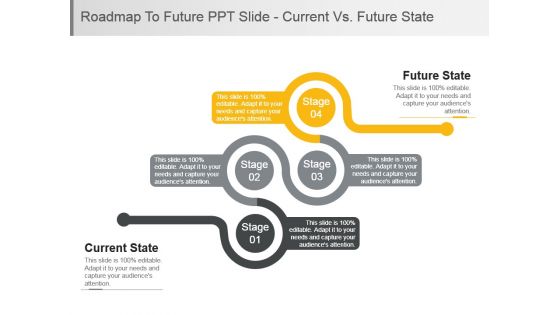
This is our roadmap to future PPT slide current vs future state PPT model. This presentation slide of roadmap to future is a four-stage process and it can be used to define current state assessment and for define the desired future state. Use this current state vs future state diagram to take initiatives needed to close the gap between both stages such as reviewing both stages, conduct gap analysis, and prioritize the business initiatives. This future state roadmap template help you define the current state, desired end state and to discover the optimum actions for the roadmap. This roadmap PowerPoint template has been designed by our team of professional, using which you can create attractive roadmaps for presentations and project planning. These roadmap template will help you determine directions through goals, objective, values and mission. Current state future state PowerPoint theme assist you draw preferred sequence in this designing process to have structure, and to measure developments. Conduct iconic events with our Roadmap To Future Ppt Slide Current Vs Future State Ppt Model. Create conditions that inspire devotion.
People who downloaded this PowerPoint presentation also viewed the following :
Roadmap to future ppt slide current vs future state ppt model with all 6 slides:
Our Roadmap To Future Ppt Slide Current Vs Future State Ppt Model help compassion develop. They encourage a charitable approach.
FAQs for Roadmap to future ppt slide current vs future
Okay so first things first - figure out exactly where you're starting from. Like, the real situation, not whatever pretty picture your boss wants to see. Then get super specific about what success actually looks like with numbers you can measure. I'd break everything into smaller chunks so you get some early wins (trust me, you'll need the momentum). Map out what depends on what and where things might go wrong - they always do. Oh, and definitely schedule regular check-ins to pivot when stuff hits the fan. Realistic timelines are everything here.
Honestly, most roadmaps I've seen look pretty but don't actually help with what the executives want - like, if they're pushing for growth, make sure your future state can actually scale. Connect each big milestone to real business results and get buy-in from stakeholders upfront. That part's non-negotiable. Your strategy's gonna shift anyway, so build in regular check-ins to adjust course. I learned this the hard way on a project last year. Treat the whole thing like a living doc that moves with your priorities, not some set-in-stone plan that'll just collect dust.
Look, you absolutely need those stakeholders on board or your roadmap's basically dead in the water. They're the ones who know what's actually broken right now and what resources you're working with. Map out who has real influence first, then get them involved early - like, way earlier than you think you need to. Regular check-ins are huge for catching stuff you missed and making sure they stay invested. I've seen brilliant plans completely tank because someone forgot to loop in the right people. Bottom line: their buy-in isn't just nice to have, it's make-or-break for execution.
Set up concrete milestones that actually connect to your end goal. Pick numbers you can track - like cutting processing time by 30% or hitting 95% customer satisfaction. Do quarterly check-ins to see what's working. Honestly, I've watched so many roadmaps just sit there collecting dust because no one bothered following up! Your metrics should tell the real story of whether you're getting closer to your target. Oh, and don't go crazy with too many - stick to 3-5 indicators that really matter for what you're trying to change.
Honestly, the worst thing you can do is be super vague about what "success" means. You'll end up with this pretty roadmap that tells nobody what they're supposed to actually *do*. Don't skip getting input from stakeholders either - I've seen people build entire things nobody wanted because they didn't ask around first. Try not to plan every detail like 3 years out. Things change way too fast for that to work. Your milestones need to be real and measurable, not just hopeful thinking. I'd start with maybe 2-3 solid outcomes you want, then just work backwards from there.
Definitely track tech trends when building your roadmap. Look for stuff that could either mess with your industry or give you an edge - AI, automation, whatever applies to your business. I get distracted by shiny new things too easily sometimes, but honestly you want trends with real impact first. Research maybe 2-3 major ones each quarter and figure out how they'd affect you. Early adoption can pay off, but timing matters more than being first. Don't blow your budget chasing every trend that pops up.
Honestly, there are tons of options depending on what you're dealing with. Most people go with capability maturity models, value stream mapping, or that basic current→transition→future state thing. I'm weirdly obsessed with mixing Kotter's 8-step model with TOGAF's architecture stuff - sounds complicated but it's really not. Simpler routes? Try outcome-based roadmaps or OKR frameworks if you don't want the headache. Just pick whatever fits your company's vibe and how messy things are right now. You can always tweak it later.
Honestly, I'd focus on three things: business impact, how much effort it'll take, and what depends on what else. Quick wins are your best friend - they show value fast and get people excited about bigger changes later. Map out which initiatives make money, save money, or unlock other important stuff. Don't overwhelm your team though (I've watched so many roadmaps crash because of this). Figure out what has to happen first before other things can even start. Sequence everything based on that logic. Also think about whether your org can actually handle the amount of change you're planning.
Start with the big picture, then get specific about how it hits each team differently. People need to see where they fit. Be real about timelines and what could go wrong - surprises later are the worst. Mix up your communication too. Town halls work, but so do smaller team chats and follow-up emails, depending on what clicks with your crowd. Here's the thing though: you can't just drop the news and vanish. Create space for pushback and questions. Keep checking in regularly to show you're making progress and actually listening to their concerns. Repetition is your friend here.
Build in flexibility from day one - modular milestones work way better than rigid deadlines. Every quarter, actually reassess what's changed in your market instead of blindly following some plan you wrote months ago (I've watched so many teams do this, it's painful). Your end goal should have multiple ways to get there, not just one "perfect" path. Plans will change - that's not failing, that's being realistic. Oh and figure out early which parts are absolutely untouchable versus what you can pivot on. Trust me, you'll need that flexibility sooner than you think.
Your vision statement is like your North Star - keeps everyone heading in the same direction instead of wandering around confused about what "winning" actually means. Without one? Teams just pull in opposite directions with their own random ideas of success. I always think of it as plugging your destination into GPS first, then figuring out the route. It makes prioritizing way easier and helps you explain the "why" behind decisions to stakeholders who love asking questions. Plus you get something real to track progress against. Just make it specific enough that people can picture what you're aiming for - vague vision statements are basically useless.
Honestly, just bake feedback into every phase - don't make it an afterthought. Set up regular check-ins with your stakeholders, team, whoever. Could be monthly surveys, sprint retros, quarterly deep dives. Whatever works for your timeline, but make them actual calendar blocks that can't get moved around (trust me on this one). When you get feedback, actually use it to tweak your next milestones. Oh, and write down what changes you make based on what people tell you - it's annoying but helps prove the whole thing's working. Start small with one feedback thing this month.
So many choices here! Basic flowcharts? Visio or Lucidchart work great. Miro is amazing for team brainstorming - honestly my go-to these days. ProductPlan and Roadmunk have fancier roadmapping stuff if you need it. Don't overlook PowerPoint or Google Slides either, they're surprisingly decent for simple roadmaps. Monday.com and Aha! are solid if you're dealing with enterprise-level chaos (though maybe overkill). My advice? Start with whatever you already have access to. You can always upgrade later when you figure out what features you actually need vs. what sounds cool.
Dude, culture will absolutely make or break your roadmap - I've seen this mess up so many projects. People hate change, especially when it messes with their routine. Your brilliant strategy means nothing if the team's fighting you every step of the way. Start identifying what mindset shifts you need early on. Work on winning people over while you're building the technical stuff, not after. Sacred cows are the worst - everyone gets weirdly attached to old processes. But honestly? If you don't tackle the people side, you're just setting yourself up to fail spectacularly.
Look, scenario planning basically saves your ass by making you think through different "what if" situations ahead of time. You're not just building one path forward - you're creating backup plans for when things go sideways. Funding gets slashed? Tech pivots? Market crashes? You've already thought it through. Honestly, it's like having GPS that actually works when there's construction everywhere. You'll spot potential disasters early and build wiggle room into your timeline. Start with 3-4 realistic scenarios and map out decision trees for your big milestones. Trust me, future you will thank present you.
-
Unique research projects to present in meeting.
-
Unique and attractive product design.