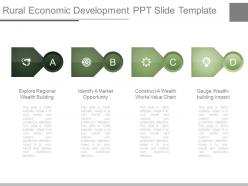
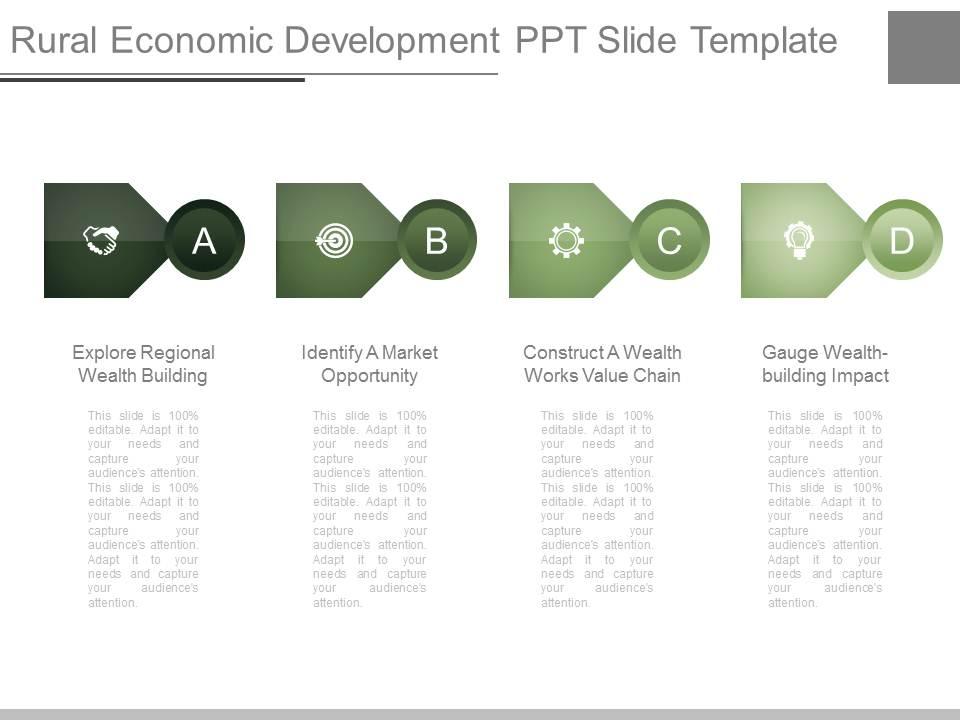
Rural economic development ppt slide template
Try Before you Buy Download Free Sample Product
Audience
Editable
of Time
Our Rural Economic Development Ppt Slide Template exemplify aesthetic appeal. Created to ensure an exquisite display.
People who downloaded this PowerPoint presentation also viewed the following :
Rural economic development ppt slide template with all 7 slides:
Charge their ambitions with our Rural Economic Development Ppt Slide Template. Everyone in the hall will feel electrified.
FAQs for Rural economic development
Honestly, you'll want to watch a few key things. Job creation and rising household incomes are obvious ones. Better roads, internet, healthcare access - that infrastructure stuff matters way more than people think. But here's what I'd really focus on: are young people sticking around or coming back? That's probably your best indicator right there. Agricultural productivity is another big one that gets overlooked. Don't just track the hard numbers though - employment rates, income levels, sure. Community engagement tells you a lot too. How diverse are the local businesses getting? Those softer metrics can be just as telling as the data.
Honestly, precision farming is where it's at. Start with GPS tractors or drones for monitoring - the aerial shots are actually pretty sick. Soil sensors will tell you exactly what's happening with moisture and nutrients in real time. There's tons of apps now that connect farmers straight to buyers and give weather updates. IoT stuff can handle your irrigation automatically, which saves you time and water costs. Don't try to do everything at once though. Pick whatever's bugging you most, try that first, then add more tech as you go.
So local governments are basically where rural development actually happens. They know what their communities need way better than anyone sitting in a state capital. These folks handle the permits, zoning decisions, and tax breaks that can totally make or break your project. Plus they're your connection to federal funding - which, trust me, you'll need. Building relationships with local officials should be step one if you're doing anything rural. Yeah, it's sometimes a mess dealing with small-town politics, but they control the land use stuff that matters. Start there first.
Honestly, rural projects crash and burn without community input. Locals know their stuff - like which roads turn into rivers every March or where the good water is. I've seen too many outside "experts" miss obvious things like that. When people help design solutions instead of having them dumped on their doorstep, they actually care about making it work. Plus they'll maintain stuff long-term since they own it. My advice? Do listening sessions first, before you even sketch out ideas. Skip that step and you're basically gambling with other people's money.
Honestly, the teacher shortage hits hardest - nobody wants to move somewhere with zero nightlife or decent coffee shops, you know? Internet's trash in most rural areas, which kills any chance of remote learning. Schools are spread out like crazy so kids spend forever on buses just to get there. Funding's always tight too, so forget about having the fancy tech that city schools get. Oh, and finding qualified teachers willing to stick around? Good luck with that. If you're tackling this stuff, I'd say fix the internet first. Opens up tons of possibilities once kids can actually get online.
Yeah, rural development totally helps keep young people from bouncing to the cities. Basic stuff really - if you've got decent jobs and infrastructure at home, why leave? The trick is creating opportunities that aren't just farming (though nothing wrong with that). Digital connectivity is huge these days. Vocational training matters too. Supporting local entrepreneurs can make a real difference. When rural areas invest in this stuff, youth actually stick around instead of heading off to chase city dreams. Makes sense when you think about it.
Honestly, rainwater collection and drip irrigation are huge wins for water management. Your soil will thank you for crop rotation and composting - way cheaper than constantly buying fertilizer too. Solar's become ridiculously affordable, so that's worth looking into. Trees mixed with crops (agroforestry thing) actually works really well for extra income plus it helps the environment. Oh, and tool sharing with neighbors saves everyone money. I'd pick maybe two things that make sense for your setup first. My cousin started with just composting and now she's got this whole sustainable operation going.
Honestly, focusing on women's empowerment is probably the smartest move you can make for rural development. When women get equal access to education and credit, agricultural productivity jumps immediately. They reinvest their earnings back into families way more than men do - creates this whole ripple effect. Community health improves too. I've noticed they're usually the ones pushing sustainable farming and starting local businesses. It's not just morally right (though obviously it is), but it actually works better than other approaches. If you want lasting change, get women involved in leadership roles first.
Dude, infrastructure is everything for rural areas. Build decent roads and farmers can actually get their stuff to market without losing half their profits to transport costs. Electricity changes the whole game - businesses can operate, food stays fresh, people can work past sunset. I mean, seems obvious but you'd be shocked how many places still don't have reliable power. Once you've got those basics, suddenly local shops and processing plants become worth opening. The whole economy just starts clicking. Roads and power first, then worry about everything else.
Honestly, don't put all your eggs in one basket with funding. Mix it up - government grants, impact investment, community microfinance, public-private partnerships. Grant applications are absolutely brutal but push through anyway. I'm a huge fan of participatory budgeting where communities pick their own priorities. Way better buy-in that way. Development banks and NGOs usually throw in technical help with their money too, which is clutch. Start by mapping every funding source in your area first. Then design your project to hit multiple funders' boxes at once - saves you tons of headaches later.
So remote healthcare is tough but definitely doable. Telemedicine works great - patients can video chat with specialists instead of driving forever to see someone. Mobile clinics are solid too, they just rotate between towns bringing basic care. The doctor shortage thing is real though, nobody wants to move to the middle of nowhere lol. Training locals as community health workers helps fill gaps for routine stuff. Honestly? I'd start with getting good internet for telehealth since you don't need to convince doctors to relocate.
Honestly, the biggest thing I've noticed from rural projects that actually work is getting the community on board from the start. Top-down stuff crashes and burns pretty much every time. Look at Brazil's rural electrification or Rwanda's agricultural co-ops - they built up local leaders instead of making people dependent on outside cash. What's smart is how successful projects bundle things together. Like, why not do infrastructure AND education at the same time? Oh and this should be obvious but apparently isn't - actually listen to what people want before you design anything. Sounds simple but so many organizations skip that part.
Dude, climate change totally flips rural development on its head. You can't just copy-paste old strategies anymore. Weather's getting wild - droughts, floods, the works - so farming needs serious backup plans and tougher infrastructure. Honestly feels like drinking from a fire hose when you start researching this stuff. But there's actually some silver lining here. Rural areas can jump into renewable energy, eco-tourism, new farming tech that might even make them more money than before. The trick is baking that flexibility right into your plans from the start instead of scrambling to adapt later.
Look, you can't just roll into rural areas with cookie-cutter solutions - they never work anyway. Cultural preservation is huge for sustainable development because it gives communities something authentic to build on. Map out what's already there first - traditional crafts, local festivals, farming practices, whatever. Then design programs around those strengths. Tourism follows naturally when culture is genuine, not forced. Plus it keeps young people from bailing to the cities (which honestly happens way too much). Building on existing cultural assets creates real economic opportunities while maintaining community identity. Way better than trying to reinvent the wheel.
Honestly, these partnerships click because you're mixing outside money and expertise with people who actually live there and know what's up. Communities understand their own problems way better than some NGO flying in with a pre-made solution, you know? When locals get to call the shots on how funds get used, projects actually work. The difference is huge - instead of just being handed something, people design their own fixes. Though I've seen some partnerships where the NGO still tries to control everything, which defeats the whole point. Real collaboration means communities lead from the start, not just execute someone else's grand plan.
-
Unique research projects to present in meeting.
-
Great designs, Easily Editable.