Sales channel partner

Sales channel partner
Slide 1 of 5
Favourites Favourites

Try Before you Buy Download Free Sample Product

Audience Impress Your
Audience
Editable 100%
Editable
Time Save Hours
of Time
The Biggest Sale is ending soon in
0
0
:
0
0
:
0
0
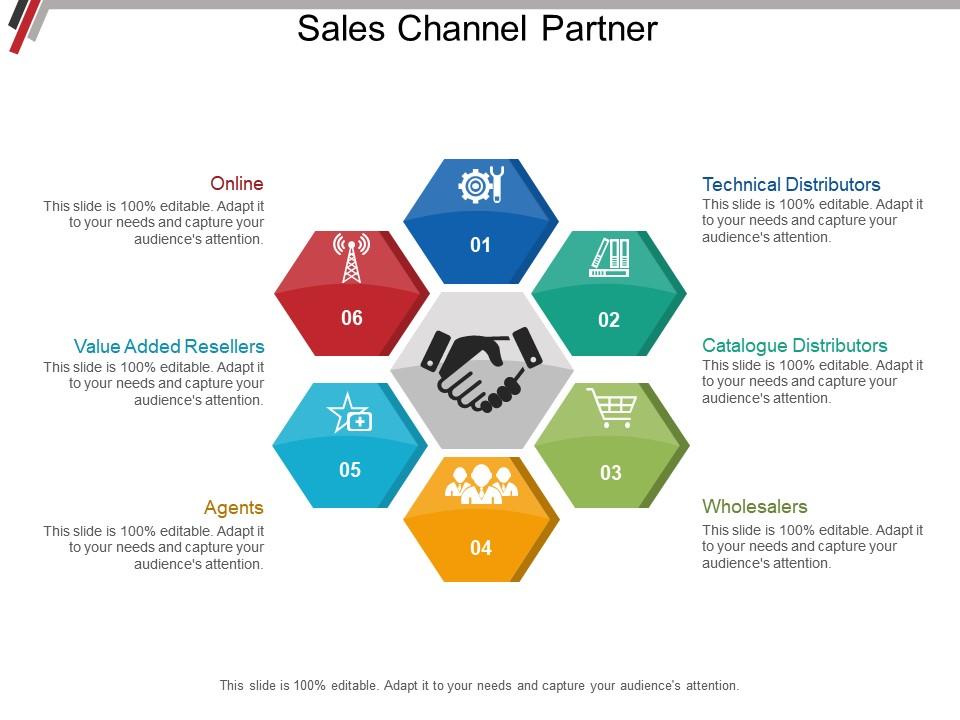
Presenting this set of slides with name - Sales Channel Partner. This is a six stage process. The stages in this process are Channel Partner, Channel Colleague, Channel Associate.

People who downloaded this PowerPoint presentation also viewed the following :

FAQs for

Key benefits of establishing sales channel partnerships include expanded market reach, reduced sales costs, accelerated revenue growth, access to specialized expertise, and enhanced customer relationships. These strategic alliances enable businesses to leverage partner networks, minimize direct sales investments, and penetrate new geographic markets more efficiently, with many organizations finding that channel partnerships deliver faster market entry and significantly improved competitive positioning.

Companies effectively identify channel partners through market research, competitor analysis, partner capability assessment, and alignment evaluation of target audiences and business objectives. Successful selection involves analyzing partners' existing customer relationships, sales expertise, geographic reach, and resource capacity, with many organizations finding that partners with complementary strengths and shared market vision deliver enhanced market penetration and sustainable revenue growth.

Key metrics for evaluating sales channel partner performance include revenue generation, lead conversion rates, market penetration, customer satisfaction scores, and time-to-market for new products. These measurements enable organizations to assess partner effectiveness through comprehensive tracking, identify optimization opportunities, and strengthen strategic relationships, with many companies finding that balanced scorecards ultimately deliver improved channel performance and competitive advantage.

Businesses foster strong channel partner relationships through regular communication, comprehensive training programs, shared goal alignment, performance incentives, and collaborative marketing support. By providing partners with dedicated account management, co-branded materials, and transparent commission structures, companies enable mutual success while strengthening loyalty, ultimately delivering expanded market reach and increased revenue growth across diverse territories.

Training plays a critical role in sales channel partnerships by ensuring partners understand product features, sales processes, target markets, and competitive positioning effectively. Through comprehensive onboarding programs and ongoing education, organizations enable partners to deliver consistent messaging, handle customer objections professionally, and close deals more efficiently, ultimately driving higher conversion rates and stronger revenue growth across the partnership network.

Technology enhances partner communication through unified CRM platforms, real-time messaging systems, shared project management tools, automated reporting dashboards, and collaborative training portals. These solutions streamline information flow by eliminating communication silos, accelerating deal coordination, and providing transparent performance visibility, with many organizations finding that integrated partner platforms ultimately deliver faster time-to-market and stronger relationship alignment.

Common challenges in managing sales channel partnerships include misaligned goals, inconsistent communication, inadequate training, conflicting priorities, and unclear performance metrics. These obstacles can be overcome by establishing clear partnership agreements, implementing regular communication protocols, and providing comprehensive partner enablement programs, with many organizations finding that dedicated partner management platforms and shared incentive structures ultimately enhance collaboration and drive mutual success.

Companies effectively align marketing strategies with sales channel partners through shared goal setting, collaborative campaign development, consistent brand messaging, and integrated communication systems. This strategic alignment enables streamlined lead generation, enhanced customer experiences, and coordinated market positioning, with many organizations finding that regular partner training and joint planning sessions ultimately deliver increased sales velocity and stronger competitive advantage.

Legal considerations for sales channel partnerships include contractual agreements, intellectual property protection, liability allocation, compliance requirements, and territorial rights. These agreements should address revenue sharing, performance standards, termination clauses, and data protection obligations, with many organizations finding that comprehensive legal frameworks ultimately streamline operations while minimizing disputes and regulatory risks.

Sales channel partners significantly influence customer experience through their service quality, product knowledge, responsiveness, and support capabilities. Partners who deliver consistent training, seamless integration, and personalized interactions enhance satisfaction levels, while those lacking expertise or resources can damage brand reputation, with many organizations finding that strategic partner selection and ongoing relationship management ultimately determines long-term customer loyalty and retention.

Best practices for onboarding new channel partners include comprehensive training programs, clear communication protocols, defined performance metrics, dedicated support resources, and structured certification processes. These approaches streamline partner integration by establishing expectations early, providing ongoing guidance, and ensuring brand consistency, with many organizations finding that systematic onboarding accelerates time-to-market and enhances partner satisfaction, ultimately delivering stronger channel performance.

Data analytics informs better channel partnership decisions by analyzing partner performance metrics, identifying market trends, tracking customer behavior patterns, and measuring revenue attribution across different channels. Through predictive analytics and real-time dashboards, organizations can optimize partner selection, adjust commission structures, and allocate resources more strategically, ultimately enhancing partnership ROI and competitive positioning.

Emerging trends include AI-powered partner portals, data-driven channel optimization, automated onboarding systems, collaborative digital ecosystems, and performance analytics integration. These technologies streamline partner management by enhancing communication transparency, accelerating deal registration processes, and delivering real-time insights, with many organizations finding that strategic digital partnerships ultimately drive faster revenue growth and competitive market positioning.

Effective incentive structures should combine performance-based rewards, tiered commission rates, volume bonuses, marketing development funds, and exclusive territory rights to align partner goals with business objectives. These incentives work best when they reward both short-term sales achievements and long-term relationship building, with many organizations finding that balanced structures incorporating recognition programs and growth-based rewards ultimately deliver sustained partner engagement and revenue growth.

Companies can ensure consistent brand messaging through centralized brand guidelines, regular partner training programs, standardized marketing materials, unified communication platforms, and continuous monitoring systems. These strategies streamline messaging by establishing clear protocols, providing ongoing education, and maintaining quality control, with many organizations finding that consistent oversight and collaborative feedback loops ultimately deliver stronger brand recognition and improved customer trust across all channels.

Ratings and Reviews

0% of 100
Write a review
Most Relevant Reviews

No Reviews