


Sales CRM Unlocking Efficiency And Growth Powerpoint Presentation Slides SA CD





Try Before you Buy Download Free Sample Product
 Impress Your
 Audience
 100%
100% Editable
 Save Hours
 of Time


Grab our comprehensive PowerPoint presentation on Sales CRM Unlocking Efficiency and Growth. This PPT Bundle provides common challenges and pitfalls faced by the company in data management and maintaining consistent communication. Moreover, the CRM Sales Forecasting PPT slides present and explore innovative approaches to integrating CRM software to optimize sales operations, lead tracking, and strong customer relationships. Furthermore, witness transformative impact with Sales Pipeline Management PPT templates, showcasing high revenue growth, increased sales velocity, and team productivity. Implement CRM software into sales operations and workflows to elevate business growth. Download this 100percent editable and customizable PowerPoint, compatible with Google Slides, to streamline your presentation process.
People who downloaded this PowerPoint presentation also viewed the following :
Content of this Powerpoint Presentation
Slide 1: This slide introduces Sales CRM: Unlocking Efficiency and Growth. State your company name and begin.
Slide 2: This is an Agenda slide. State your agendas here.
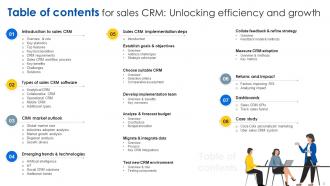
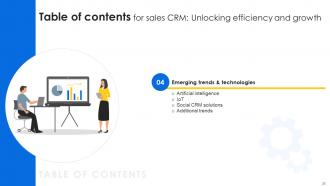
Slide 3: This slide shows Table of Content for the presentation.
Slide 4: This slide shows title for topics that are to be covered next in the template.
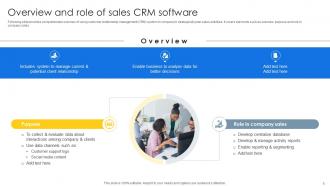
Slide 5: This slide provides comprehensive overview of using customer relationship management (CRM) system in company to strategically plan sales activities.
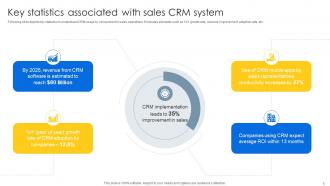
Slide 6: This slide depicts key statistics to understand CRM usage by companies for sales operations. It includes elements such as YoY growth rate, revenue improvement etc.
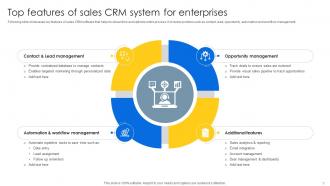
Slide 7: This slide showcases key features of sales CRM software that helps to streamline and optimize entire process. It includes pointers such as contact, lead, opportunity etc.
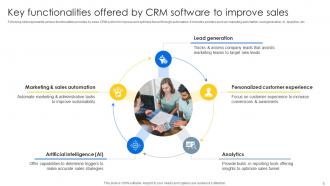
Slide 8: This slide represents various functionalities provides by sales CRM system to improve and optimize funnel through automation.
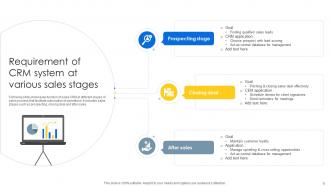
Slide 9: This slide showcases function of sales CRM at different stages of sales process that facilitate automation of operations.
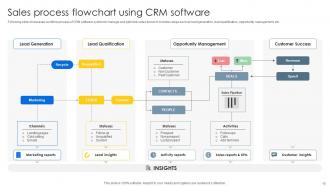
Slide 10: This slide displays workflow process of CRM software system to manage and optimize sales funnel. It includes steps such as lead generation, lead qualification etc.
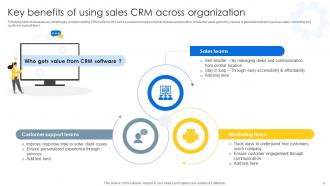
Slide 11: This slide showcases key advantages of implementing CRM systems into sales process to increase market revenue and position.
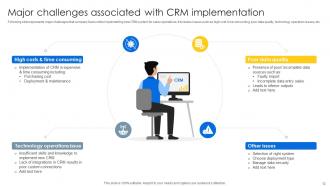
Slide 12: This slide represents major challenges that company faces while implementing new CRM system for sales operations.
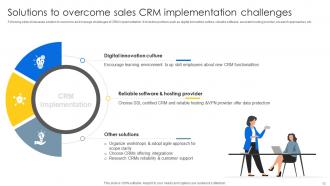
Slide 13: This slide showcases solution to overcome and manage challenges of CRM implementation. It includes pointers such as digital innovation culture, reliable software etc.
Slide 14: This slide shows title for topics that are to be covered next in the template.
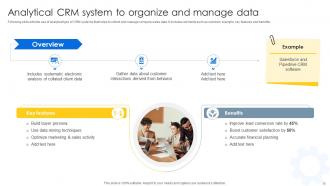
Slide 15: This slide exhibits use of analytical type of CRM systems that helps to collect and manage company sales data.
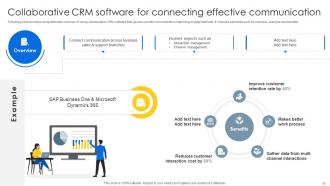
Slide 16: This slide provides comprehensive overview of using collaborative CRM software that assure smooth communication improving engagement rate.
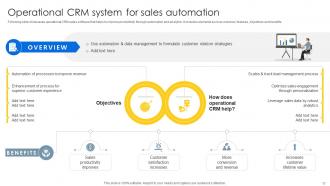
Slide 17: This slide showcases operational CRM sales software that helps to improve productivity through automation and analytics.
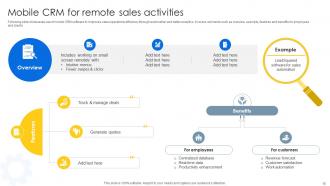
Slide 18: This slide displays use of mobile CRM software to improves sales operations efficiency through automation and better analytics.
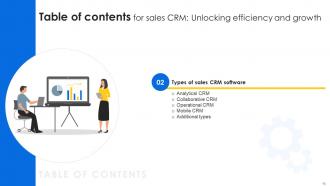
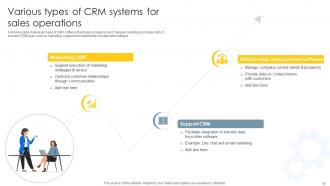
Slide 19: This slide showcases types of CRM software that helps to organize and manage marketing and sales data. It includes CRM types such as marketing, support etc.
Slide 20: This slide shows title for topics that are to be covered next in the template.
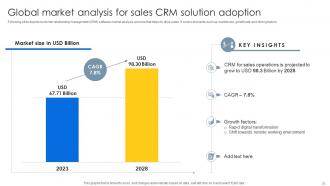
Slide 21: This slide depicts customer relationship management (CRM) software market analysis and size that helps to drive sales.
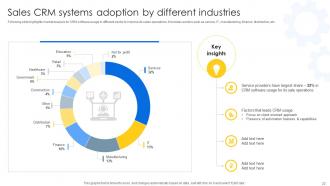
Slide 22: This slide highlights market analysis for CRM software usage in different sector to improve its sales operations.
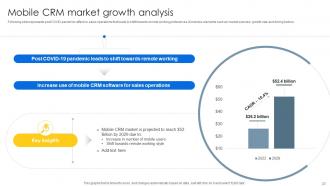
Slide 23: This slide represents post COVID pandemic affect on sales operations that leads to shift towards remote working preferences.
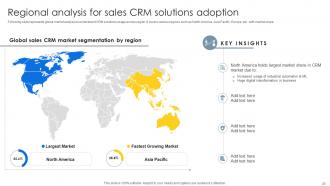
Slide 24: This slide displays global market analysis to understand CRM solutions usage across region. It covers various regions such as North America, Asia Pacific, Europe, etc.
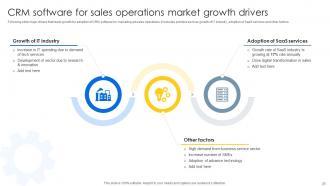
Slide 25: This slide major drivers that leads growth for adoption of CRM software for marketing ad sales operations.
Slide 26: This slide shows title for topics that are to be covered next in the template.
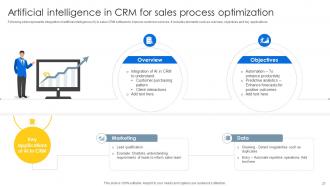
Slide 27: This slide represents integration of artificial intelligence (AI) in sales CRM software to improve customer services.
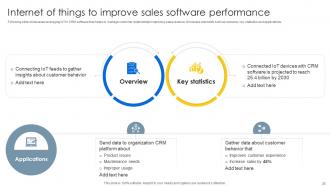
Slide 28: This slide showcases leveraging IoT in CRM software that helps to manage customer relationships improving sales revenue.
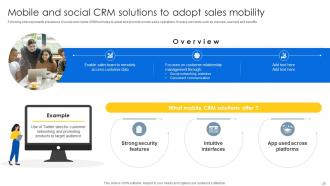
Slide 29: This slide represents prevalence of social and mobile CRM that helps to adopt and promote remote sales operations.
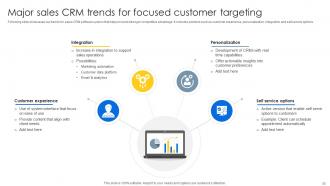
Slide 30: This slide showcases key trends for sales CRM software system that helps to build stronger competitive advantage.
Slide 31: This slide shows title for topics that are to be covered next in the template.
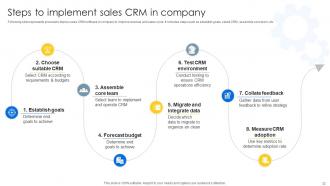
Slide 32: This slide represents process to deploy sales CRM software in company to improve revenue and sales cycle. It includes steps such as establish goals, select CRM etc.
Slide 33: This slide shows title for topics that are to be covered next in the template.
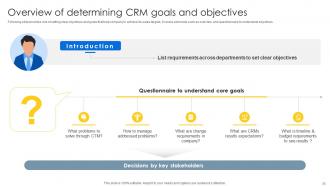
Slide 34: This slide provides role of setting clear objectives and goals that help company to achieve its sales targets.
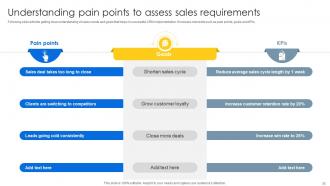
Slide 35: This slide exhibits getting clear understanding of sales needs and goals that helps in successful CRM implementation.
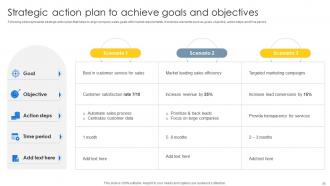
Slide 36: This slide represents strategic action plan that helps to align company sales goals with market requirements.
Slide 37: This slide shows title for topics that are to be covered next in the template.
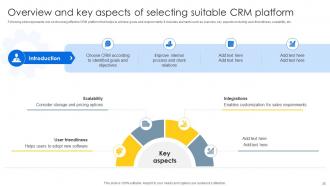
Slide 38: This slide represents role of choosing effective CRM platform that helps to achieve goals and requirements.
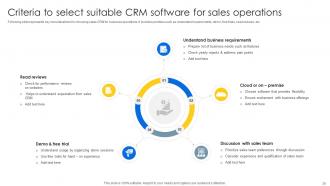
Slide 39: This slide represents key considerations for choosing sales CRM for business operations. It includes pointers such as understand requirements, demo, free trials etc.
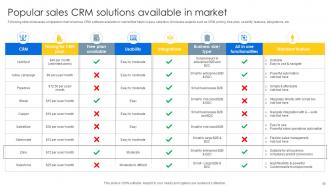
Slide 40: This slide showcases comparison chart of various CRM software available in market that helps in easy selection.
Slide 41: This slide shows title for topics that are to be covered next in the template.
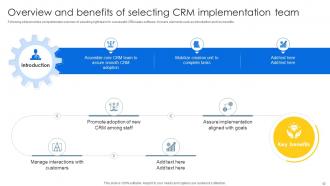
Slide 42: This slide provides comprehensive overview of selecting right team for successful CRM sales software. It covers elements such as introduction and key benefits.
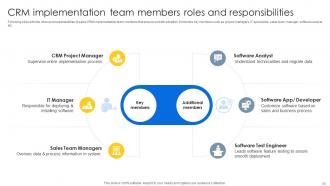
Slide 43: This slide exhibits roles and responsibilities of sales CRM implementation team members that ensure smooth adoption.
Slide 44: This slide shows title for topics that are to be covered next in the template.
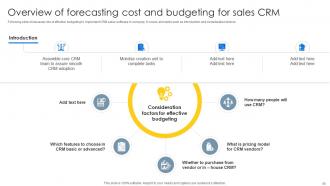
Slide 45: This slide showcases role of effective budgeting to implement CRM sales software in company. It covers elements such as introduction and consideration factors.
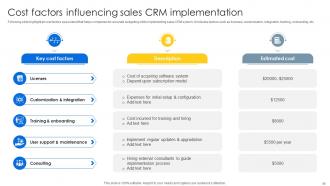
Slide 46: This slide highlight all cost factors associated that helps companies for accurate budgeting while implementing sales CRM system.
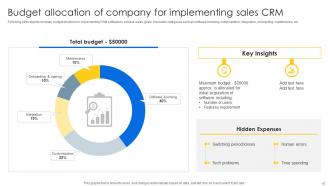
Slide 47: This slide depicts company budget structure for implementing CRM software to achieve sales goals. It includes categories such as software licensing, customization etc.
Slide 48: This slide shows title for topics that are to be covered next in the template.
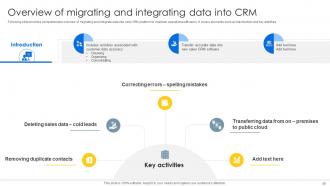
Slide 49: This slide provides comprehensive overview of migrating and integrate data into new CRM platform to maintain operational efficiency.
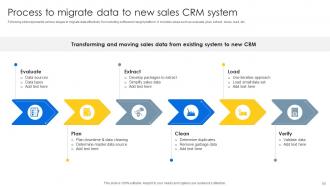
Slide 50: This slide represents various stages to migrate data effectively from existing software to target platform. It includes steps such as evaluate, plan, extract etc.
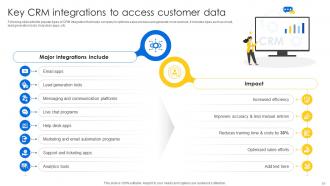
Slide 51: This slide exhibits popular types of CRM integration that helps company to optimize sales process and generate more revenue.
Slide 52: This slide shows title for topics that are to be covered next in the template.
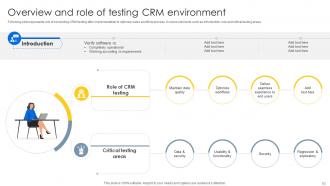
Slide 53: This slide represents role of conducting CRM testing after implementation to optimize sales workflow process.
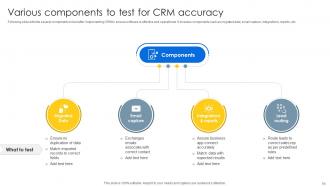
Slide 54: This slide exhibits several components to test after implementing CRM to ensure software is effective and operational.
Slide 55: This slide shows title for topics that are to be covered next in the template.
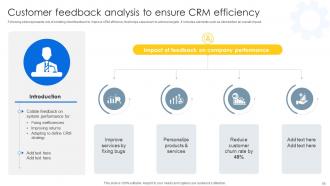
Slide 56: This slide represents role of collating client feedback to improve CRM efficiency that helps sales team to achieve targets.
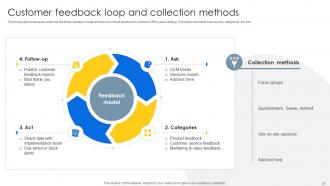
Slide 57: This slide showcases customer feedback strategic model and ways to collect feedback to improve CRM sales strategy. It includes elements such as ask, categorize, act, etc.
Slide 58: This slide shows title for topics that are to be covered next in the template.
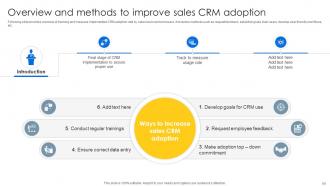
Slide 59: This slide provides overview of tracking and measure implemented CRM adoption rate by sales team and end users.
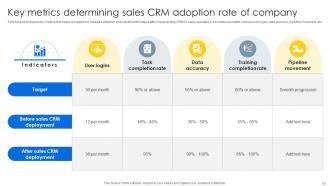
Slide 60: This slide depicts key metrics that helps companies to measure adoption and overall performance after implementing CRM for sales operations.
Slide 61: This slide shows title for topics that are to be covered next in the template.
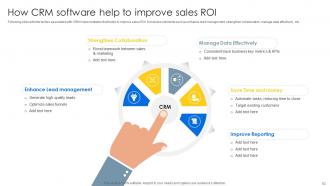
Slide 62: This slide exhibits factors associated with CRM implementation that helps to improve sales ROI. It includes elements such as enhance lead management etc.
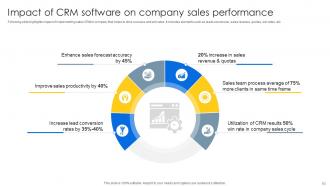
Slide 63: This slide highlights impact of implementing sales CRM in company that helps to drive success and win rates.
Slide 64: This slide shows title for topics that are to be covered next in the template.
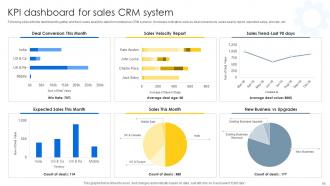
Slide 65: This slide exhibits dashboard to gather and track sales analytics data from enterprise CRM systems. It includes indicators such as deal conversions etc.
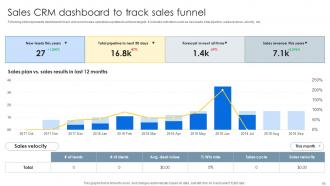
Slide 66: This slide represents dashboard to track and record sales operations updates to achieve targets. It includes indicators such as new leads, total pipeline etc.
Slide 67: This slide shows title for topics that are to be covered next in the template.
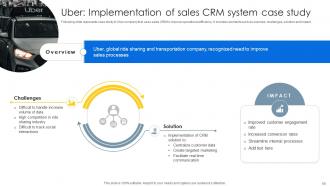
Slide 68: This slide represents case study of Uber company that uses sales CRM to improve operational efficiency.
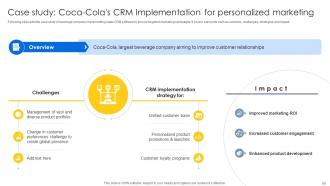
Slide 69: This slide exhibits case study of beverage company implementing sales CRM software to ensure targeted marketing campaigns.
Slide 70: This slide shows all the icons included in the presentation.
Slide 71: This slide is titled as Additional Slides for moving forward.
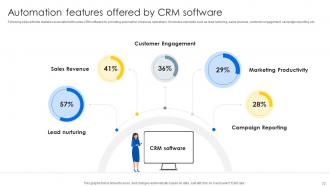
Slide 72: This slide exhibits statistics associated with sales CRM software for providing automation of various operations.
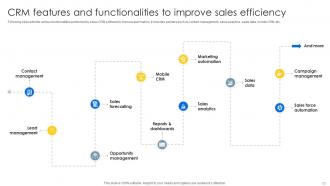
Slide 73: This slide displays various functionalities performed by sales CRM software to improve automation. It includes pointers such as contact management, sales analytics etc.
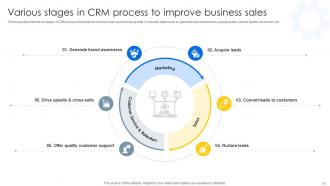
Slide 74: This slide exhibits six stages of CRM process that helps to improve sales and revenue growth. It includes steps such as generate brand awareness, acquire leads etc.
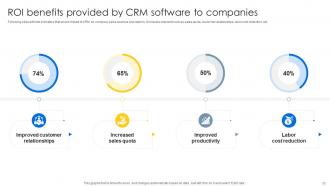
Slide 75: This slide displays indicators that shoes impact of CRM on company sales revenue and returns. It includes element such as sales quota, customer relationships etc.
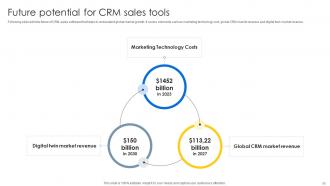
Slide 76: This slide exhibits future of CRM sales software that helps to understand global market growth. It covers elements such as marketing technology cost etc.
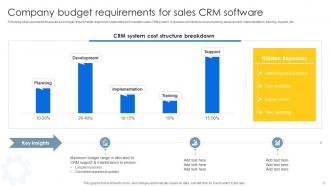
Slide 77: This slide represents financials and budget requirements required to implement and maintain sales CRM system.
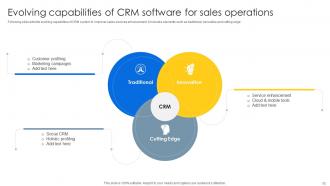
Slide 78: This slide exhibits evolving capabilities of CRM system to improver sales services enhancement. It includes elements such as traditional, innovative and cutting edge.
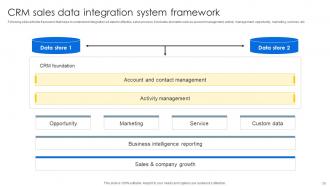
Slide 79: This slide displays framework that helps to understand integration od data for effective sales process. It includes elements such as account management, activity management etc.
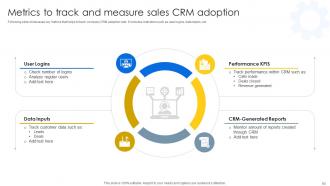
Slide 80: This slide showcases key metrics that helps to track company CRM adoption rate. It includes indicators such as user logins, data inputs, etc.
Slide 81: This slide shows Post It Notes for reminders and deadlines. Post your important notes here.
Slide 82: This slide shows Post It Notes for reminders and deadlines. Post your important notes here.
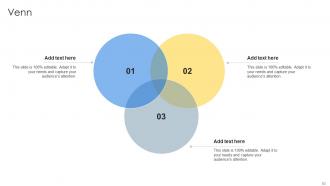
Slide 83: This slide depicts Venn diagram with text boxes.
Slide 84: This is Our Target slide. State your targets here.
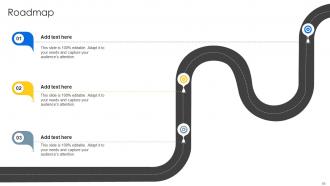
Slide 85: This slide presents Roadmap with additional textboxes. It can be used to present different series of events.
Slide 86: This is a Thank You slide with address, contact numbers and email address.
Sales CRM Unlocking Efficiency And Growth Powerpoint Presentation Slides SA CD with all 94 slides:
Use our Sales CRM Unlocking Efficiency And Growth Powerpoint Presentation Slides SA CD to effectively help you save your valuable time. They are readymade to fit into any presentation structure.











FAQs for Sales CRM Unlocking Efficiency And Growth Powerpoint Presentation
Key features to look for in a Sales CRM system include contact management, lead tracking, pipeline visualization, automated follow-ups, and comprehensive reporting capabilities. These features streamline sales processes by organizing customer data, accelerating deal closure, and providing actionable insights, with many organizations finding that integrated CRM systems ultimately deliver improved conversion rates and enhanced customer relationships.
Sales CRM software improves lead tracking by centralizing prospect data, automating follow-up sequences, scoring leads based on engagement, and providing real-time pipeline visibility. These systems enable sales teams to prioritize high-value prospects, reduce response times, and maintain consistent communication, with many organizations finding that streamlined lead management ultimately delivers higher conversion rates and increased revenue.
Sales CRM integrates with other marketing tools through API connections, data synchronization, automated workflows, lead scoring systems, and unified customer databases. These integrations streamline operations by connecting email marketing platforms, social media management tools, and analytics software, ultimately delivering seamless customer experiences and enhanced sales efficiency across organizations.
Sales CRM data analysis enhances forecasting accuracy by tracking historical patterns, analyzing customer behavior trends, and identifying conversion probabilities across different pipeline stages. Through advanced analytics and machine learning algorithms, sales teams can predict revenue outcomes more precisely, adjust strategies proactively, and ultimately achieve better quota attainment while minimizing forecasting errors.
Common CRM implementation challenges include data migration complexities, user adoption resistance, integration difficulties with existing systems, inadequate training programs, and poor customization alignment with sales processes. While these obstacles can initially slow deployment, organizations in sectors like real estate, manufacturing, and financial services find that strategic planning, comprehensive training, and phased rollouts ultimately deliver enhanced productivity and streamlined customer relationship management.
A Sales CRM system enhances post-sale relationship management by tracking customer interactions, automating follow-up communications, monitoring satisfaction levels, and identifying upselling opportunities through comprehensive customer histories. These capabilities enable sales teams to deliver personalized service, proactively address concerns, and strengthen long-term relationships, with many organizations finding that systematic post-sale engagement significantly increases customer retention and lifetime value.
Automation streamlines sales processes by eliminating manual data entry, triggering follow-up sequences, scoring leads automatically, and generating real-time reports. These capabilities enable sales teams to focus on relationship building rather than administrative tasks, with many organizations finding that automated workflows accelerate deal closure, improve lead nurturing consistency, and ultimately deliver higher conversion rates.
Mobile access to Sales CRM significantly enhances sales team effectiveness by enabling real-time data updates, instant customer information retrieval, and seamless communication from any location. This mobility empowers sales professionals to respond faster to client inquiries, update opportunities immediately after meetings, and access critical insights while traveling, ultimately delivering improved customer responsiveness and higher conversion rates.
Businesses should evaluate CRM vendors based on integration capabilities, scalability, customization options, user interface design, pricing structure, and customer support quality. These criteria ensure the platform grows with organizational needs while streamlining sales processes, with many companies finding that vendors offering seamless third-party integrations and robust analytics ultimately deliver enhanced productivity and competitive advantage.
User training and support services significantly influence Sales CRM success by ensuring proper adoption, maximizing feature utilization, and minimizing resistance to change. Comprehensive training programs enable sales teams to leverage automation tools, reporting capabilities, and customer insights effectively, while ongoing support resolves technical issues quickly, ultimately delivering higher user satisfaction and improved sales performance across organizations.
Essential sales reporting and analytics features include real-time dashboards, customizable report builders, pipeline velocity tracking, lead source attribution, and automated performance alerts. These capabilities enable sales teams to identify bottlenecks, optimize conversion strategies, and forecast accurately, with many organizations finding that comprehensive analytics ultimately deliver improved quota attainment and strategic revenue growth.
Sales CRM systems contribute to personalized customer interactions by centralizing customer data, tracking purchase histories, and analyzing behavioral patterns to enable tailored communications. Through automated segmentation and preference tracking, sales teams deliver customized product recommendations, targeted messaging, and timely follow-ups, with many organizations finding significantly improved conversion rates and stronger customer relationships.
Data security in Sales CRM systems protects sensitive customer information, financial records, and proprietary sales data from breaches, unauthorized access, and compliance violations. With many organizations finding that robust security measures enhance customer trust, regulatory compliance, and competitive advantage, banks and healthcare providers increasingly leverage encrypted CRM platforms, ultimately delivering operational confidence and safeguarding business relationships.
Sales CRM enhances collaboration by centralizing customer data, enabling real-time information sharing, providing unified communication channels, tracking team performance metrics, and facilitating seamless handoffs between departments. Through integrated platforms, sales teams streamline workflows, coordinate follow-ups more effectively, and maintain consistent customer experiences, while eliminating data silos, ultimately delivering improved conversion rates and stronger client relationships.
**INPUT**: What are some best practices for maintaining accurate data within a Sales CRM? **OUTPUT**: Best practices for maintaining accurate CRM data include establishing standardized data entry protocols, implementing regular data audits, requiring mandatory field completions, setting up automated validation rules, and training teams on consistent formatting. These practices streamline sales operations by eliminating duplicate records, enhancing lead tracking accuracy, and improving forecasting reliability, with many organizations finding that clean data ultimately delivers faster deal closures and better customer experiences. [Word count: 60 words]
-
I’ve been your client for a few years now. Couldn’t be more than happy after using your templates. Thank you!
-
Use of icon with content is very relateable, informative and appealing.