

Setting Up An Own Internet Radio Station Powerpoint Presentation Slides





Try Before you Buy Download Free Sample Product
 Impress Your
 Audience
 100%
100% Editable
 Save Hours
 of Time


Grab our thorough PowerPoint presentation on Setting Up an Own Internet Radio Station. This PPT bundle will help you create your own Internet Radio Station. Explore the active world of radio, from global statistics to evolving broadcast trends. Dive into the specifics of Internet Radio, understanding automatic and live broadcasts. Firstly, this guide walks you through crucial considerations, helping you define your stations concept, establish branding, and gather compelling content. It also teaches you about essential Internet Radio Broadcasting Software features and enables you to make informed choices using our comparison matrix. Furthermore, the Streaming Service PPT templates present step-by-step instructions for setting up your station, configuring profiles, adding DJs, and scheduling shows. A detailed cost analysis accommodates various budget options. Maximize your reach with effective promotion strategies, including social media setup, influencer connections, and website development. Moreover, the Broadcasting PPT slides will help you monetize your passion with detailed revenue-generation strategies tailored to your goals. Navigate the Internet Radio Station Dashboard for performance tracking, reporting, and analytics. With a real-world case study on revolutionizing coverage through Internet Radio Broadcasting, this guide is your key to expressing your voice to the world. Download now.
People who downloaded this PowerPoint presentation also viewed the following :
Content of this Powerpoint Presentation
Slide 1: This slide introduces Setting Up an Own Internet Radio Station. State your company name and begin.
Slide 2: This is an Agenda slide. State your agendas here.
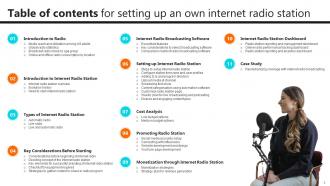
Slide 3: This slide shows Table of Content for the presentation.
Slide 4: This slide shows title for topics that are to be covered next in the template.
Slide 5: This slide determine popularity of traditional media channels across US adults. It outlines media types such as radio, live TV, social media, streaming video etc.
Slide 6: This slide provides vital highlights about radio such as global ad market value, weekly radio listenership, live radio share, average spend per week and percentage reach.
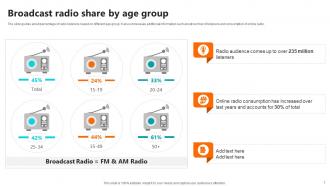
Slide 7: This slide guides about percentage of radio listeners based on different age group. It also showcases additional information such about number of listeners etc.
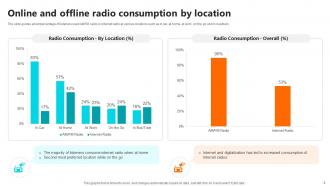
Slide 8: This slide guides about percentage of listeners used AM/FM radio or internet radio at various locations such as in car, at home, at work, on the go and in bus/train.
Slide 9: This slide shows title for topics that are to be covered next in the template.
Slide 10: This slide presents an understanding of internet radio stations along with their features. It outlines elements such as global reach, diverse content, personalization etc.
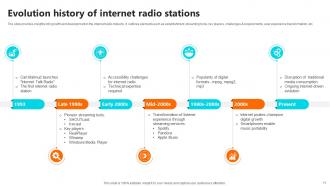
Slide 11: This slide provides insights into growth and development in the internet radio industry. It outlines elements such as establishment, streaming tools etc.
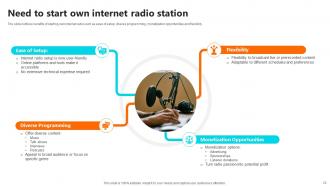
Slide 12: This slide outlines benefits of starting own internet radio such as ease of setup, diverse programming, monetization opportunities and flexibility.
Slide 13: This slide shows title for topics that are to be covered next in the template.
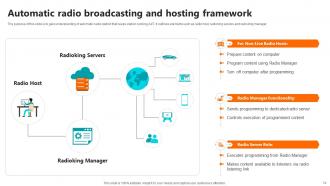
Slide 14: This slide presents understanding of automatic radio station that keeps station running 24/7. It outlines elements such as radio host etc.
Slide 15: This slide showcases understanding of live radio station that provides real time updates across the globe.
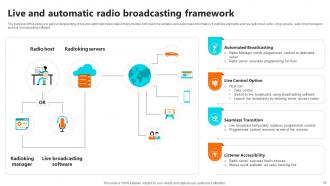
Slide 16: This slide presents understanding of live and automatic radio station that provides both real time updates and automated information.
Slide 17: This slide shows title for topics that are to be covered next in the template.
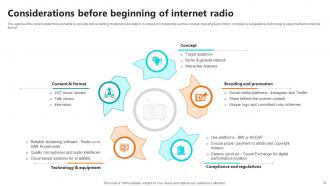
Slide 18: This slide presents elements to consider before starting of internet radio station. It consist of components such as concept, branding & promotion etc.
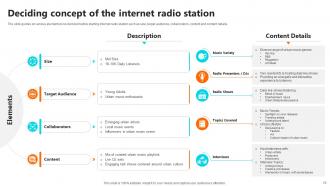
Slide 19: This slide guides on various elements to be decided before starting internet radio station such as size, target audience, collaborators, content and content details.
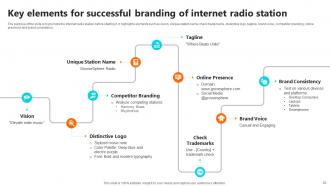
Slide 20: This slide promotes the internet radio station before starting it. It highlights elements such as vision, unique station name, check trademarks, distinctive logo etc.
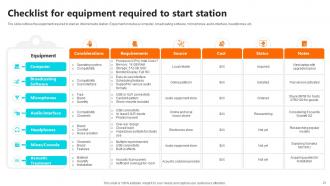
Slide 21: This slide outlines the equipment required to start an internet radio station. Equipment includes a computer, broadcasting software, microphones etc.
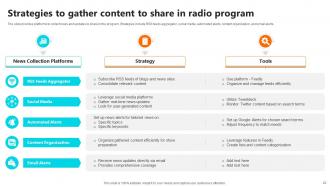
Slide 22: This slide provides platforms to collect news and updates to share in the program. Strategies include RSS feeds aggregator, social media, automated alerts etc.
Slide 23: This slide shows title for topics that are to be covered next in the template.
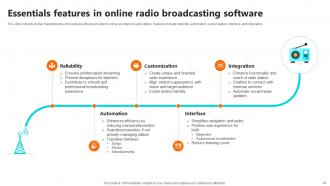
Slide 24: This slide consists of vital characteristics of broadcast software provider to set up an internet radio station. Features include reliability, automation etc.
Slide 25: This slide determines various factors to assess while choosing a broadcast software provider. Considerations are scalability, user support, compatibility and cost.
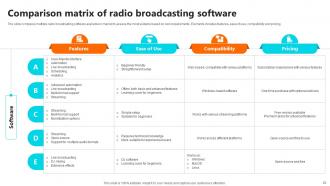
Slide 26: This slide compares multiple radio broadcasting software available in market to assess the most suitable based on own requirements.
Slide 27: This slide shows title for topics that are to be covered next in the template.
Slide 28: This slide provides steps to build an internet radio show through broadcasting software. Steps are to configure station, time zone, and user profiles etc.
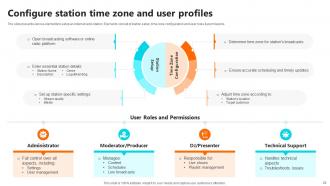
Slide 29: This slide presents various elements to setup an internet radio station. Elements consist of station setup, time zone configuration and user roles & permissions.
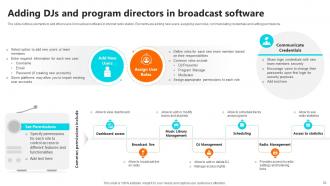
Slide 30: This slide outlines elements to add other users in broadcast software in internet radio station. Elements are adding new users, assigning user roles etc.
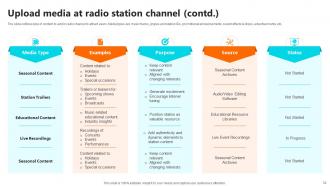
Slide 31: This slide displays type of content to add in radio channel to attract users. Media types are music tracks, jingles and station IDs, promotional announcements etc.
Slide 32: This slide also outlines type of content to add in radio channel to attract users. Media types are music tracks, jingles and station IDs, promotional announcements etc.
Slide 33: This slide displays formatted plan for scheduling the first internet radio show. Elements includes show time, show name, show details, host, status etc.
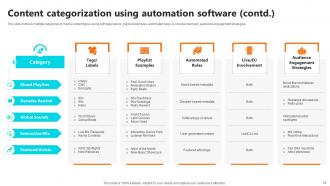
Slide 34: This slide outlines multiple categories of media content types along with tags/labels, playlist examples, automated rules, DJ involvement and audience engagement strategies.
Slide 35: This slide also outlines multiple categories of media content types along with tags/labels, playlist examples, automated rules, DJ involvement etc.
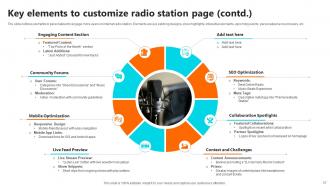
Slide 36: This slide displays elements to personalized to engage more users on internet radio station. Elements are eye catching designs, show highlights etc.
Slide 37: This slide also displays elements to personalized to engage more users on internet radio station. Elements are eye catching designs, show highlights etc.
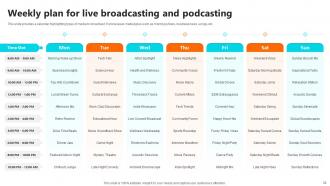
Slide 38: This slide provides a calendar highlighting types of media to broadcast. It showcases media types such as morning shows, business news, songs, etc.
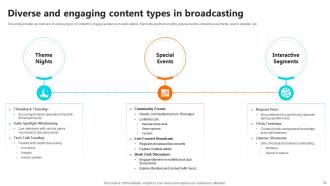
Slide 39: This slide displays an overview of various types of content to engage audience on radio station. Elements are theme nights, special events, interactive segments etc.
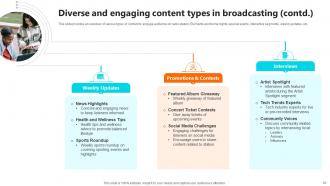
Slide 40: This slide also displays an overview of various types of content to engage audience on radio station. Elements are theme nights, special events, interactive segments etc.
Slide 41: This slide shows title for topics that are to be covered next in the template.
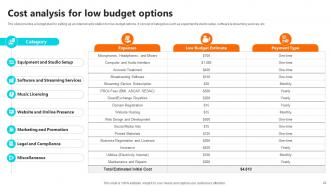
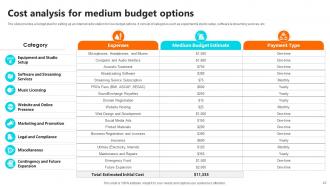
Slide 42: This slide provides a budget plan for setting up an internet radio station for low-budget options.
Slide 43: This slide also provides a budget plan for setting up an internet radio station for low-budget options.
Slide 44: This slide shows title for topics that are to be covered next in the template.
Slide 45: This slide outlines various social media platforms used to promote internet radio stations by identifying the target audience.
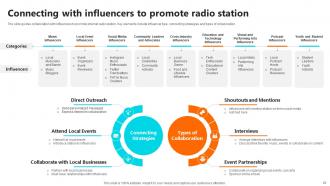
Slide 46: This slide guides collaboration with influencers to promote internet radio station. Key elements include influencer type, connecting strategies and types of collaboration.
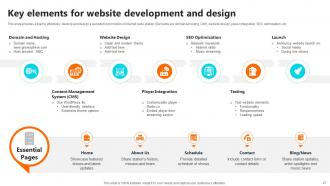
Slide 47: This slide provides a plan to effectively develop and design a website for promotion of internet radio station. Elements are domain & hosting, CMS, website design etc.
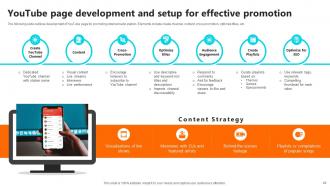
Slide 48: This slide outlines development of YouTube page for promoting internet radio station. Elements include create channel, content, cross promotion, optimize titles, etc.
Slide 49: This slide shows title for topics that are to be covered next in the template.
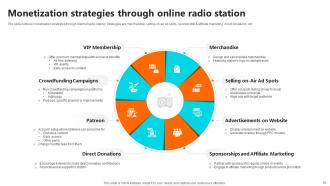
Slide 50: This slide outlines monetization strategies through internet radio station. Strategies are merchandize, selling on-air ad spots etc.
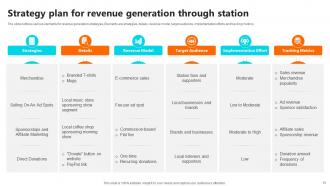
Slide 51: This slide displays various elements for revenue generation strategies. Elements are strategies, details, revenue model, target audience etc.
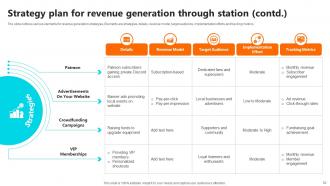
Slide 52: This slide presents various elements for revenue generation strategies. Elements are strategies, details, revenue model, target audience etc.
Slide 53: This slide shows title for topics that are to be covered next in the template.
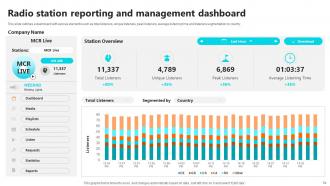
Slide 54: This slide outlines a dashboard with various elements such as total listeners, unique listeners, peak listeners, average listening time etc.
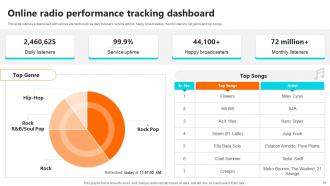
Slide 55: This slide displays a dashboard with various elements such as daily listeners, service uptime, happy broadcasters, monthly listeners, top genre and top songs.
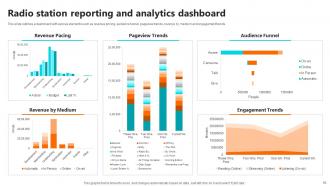
Slide 56: This slide outlines a dashboard with various elements such as revenue pricing, audience funnel, pageview trends, revenue by medium and engagement trends.
Slide 57: This slide shows title for topics that are to be covered next in the template.
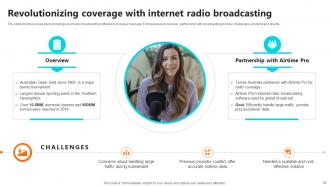
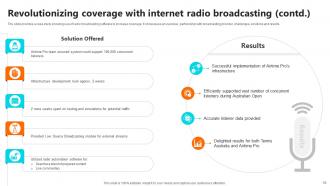
Slide 58: This slide provides a case study showing use of radio broadcasting software to increase coverage.
Slide 59: This slide also provides a case study showing use of radio broadcasting software to increase coverage.
Slide 60: This slide shows all the icons included in the presentation.
Slide 61: This slide is titled as Additional Slides for moving forward.
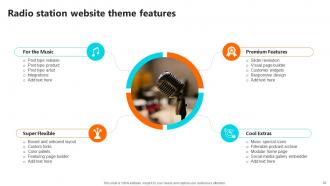
Slide 62: This slide presents Radio station website theme features.
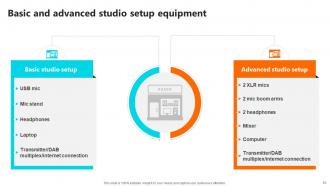
Slide 63: This slide illustrates Basic and advanced studio setup equipment.
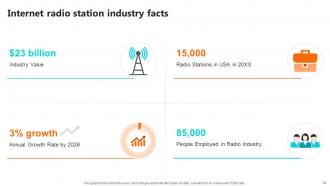
Slide 64: This slide presents Internet radio station industry facts.
Slide 65: This slide presents displays radio station trends and challenges.
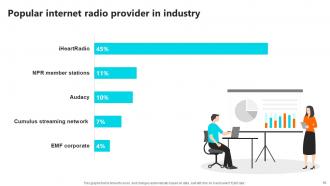
Slide 66: This slide presents Popular internet radio provider in industry.
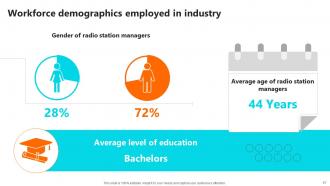
Slide 67: This slide displays Workforce demographics employed in industry.
Slide 68: This slide presents Revenue and profit forecast through internet radio station.
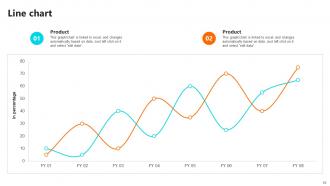
Slide 69: This slide describes Line chart with two products comparison.
Slide 70: This slide shows Post It Notes for reminders and deadlines. Post your important notes here.
Slide 71: This slide contains Puzzle with related icons and text.
Slide 72: This is a Timeline slide. Show data related to time intervals here.
Slide 73: This is a Thank You slide with address, contact numbers and email address.
Setting Up An Own Internet Radio Station Powerpoint Presentation Slides with all 81 slides:
Use our Setting Up An Own Internet Radio Station Powerpoint Presentation Slides to effectively help you save your valuable time. They are readymade to fit into any presentation structure.


























FAQs for Setting Up An Own Internet Radio Station
Essential equipment includes audio mixers, microphones, headphones, audio interfaces, and reliable computers, while software requirements encompass streaming applications, audio editing programs, automation tools, and content management systems. These technologies enable broadcasters to deliver professional-quality programming by streamlining production workflows, automating scheduling processes, and ensuring consistent audio output, with many independent stations finding that strategic equipment combinations significantly reduce operational complexity while enhancing listener experiences.
Choosing the right broadcasting platform involves evaluating streaming quality, listener capacity, geographic reach, monetization options, and integration capabilities with your existing systems. Platforms like Shoutcast, Icecast, and Radio.co enable stations to deliver consistent audio quality, support thousands of concurrent listeners, and provide detailed analytics, while many broadcasters find that scalable solutions ultimately enhance audience engagement and generate sustainable revenue streams.
Starting an internet radio station requires obtaining music licensing from performance rights organizations like ASCAP, BMI, and SESAC, securing streaming licenses through SoundExchange for recorded music, and complying with copyright laws and FCC regulations. These licensing requirements ensure legal operation while enabling stations to broadcast diverse content professionally, with many broadcasters finding that proper compliance streamlines operations and builds credibility with advertisers and listeners.
Effective curation involves developing content pillars around your target audience's preferences, scheduling diverse programming blocks, and maintaining consistent quality standards through pre-screening. Successful stations balance automated playlists with live segments, incorporate listener feedback through social media and requests, and regularly analyze performance metrics, ultimately delivering engaging experiences that build loyal audiences and attract advertisers.
**INPUT**: What are the best practices for promoting your internet radio station to attract listeners? **OUTPUT**: Best practices include social media engagement, search engine optimization, podcast directory submissions, influencer collaborations, and community partnerships with local businesses or organizations. These strategies streamline audience growth by leveraging cross-platform visibility, targeted content marketing, and strategic networking, with many stations finding that consistent interaction and niche-focused programming ultimately delivers sustainable listener loyalty and competitive advantage.
Creating an engaging broadcast schedule requires strategic programming that balances consistent time slots, diverse content themes, audience interaction segments, and seasonal programming that reflects listener preferences and peak listening times. Successful internet radio stations enhance audience retention by incorporating live call-ins, themed music hours, guest interviews, and community spotlights, ultimately delivering personalized experiences that build loyal listener communities.
Social media and online marketing serve as primary audience development channels through content sharing, community building, targeted advertising, influencer partnerships, and cross-platform promotion. These strategies enable stations to reach niche demographics, engage listeners through interactive content and live streaming announcements, while building loyal communities that amplify reach organically, ultimately delivering sustained growth and competitive positioning.
Analytics assess internet radio station performance through listener metrics, engagement data, demographic insights, content performance tracking, and revenue analysis. These tools enable broadcasters to monitor audience size, listening duration, geographic distribution, and popular content, while identifying peak listening times and advertiser-friendly demographics, ultimately delivering targeted programming decisions and enhanced monetization strategies.
Internet radio stations can monetize through advertising revenue, subscription models, sponsorship deals, merchandise sales, live event promotions, and donation-based crowdfunding. These strategies work by diversifying revenue streams, building listener loyalty, and creating multiple touchpoints with audiences, with many stations finding that combining subscription services with targeted advertising and strategic partnerships ultimately delivers sustainable income while maintaining competitive programming quality.
High-quality audio transmission requires professional-grade equipment, reliable internet bandwidth, optimized encoding settings, and redundant streaming servers to minimize dropouts. Broadcasting platforms like Icecast or SHOUTcast, combined with quality microphones and audio interfaces, enable stations to deliver crystal-clear sound consistently, with many finding that investing in proper infrastructure significantly enhances listener retention and engagement.
Internet radio station operators face challenges including licensing complexities, bandwidth costs, content curation demands, audience acquisition difficulties, and monetization pressures. These obstacles can be overcome through strategic partnerships with licensing agencies, cloud-based streaming solutions, automated playlist management systems, and targeted social media marketing, with many stations finding that diversified revenue streams and community engagement ultimately deliver sustainable growth and competitive advantage.
Listener engagement features include live call-in segments, real-time request systems, interactive chat platforms, social media integration, and dedicated listener feedback apps. These technologies enhance broadcasts by enabling direct audience participation, personalizing content delivery, and building community connections, with many radio stations finding that interactive features significantly increase listener retention and create more dynamic programming experiences.
Branding establishes credibility, audience loyalty, and competitive differentiation for internet radio stations through consistent visual identity, memorable station names, and cohesive content themes. Strategic branding combines professional logos, signature jingles, targeted social media presence, and niche programming focus, with many successful stations finding that strong brand recognition ultimately drives listener retention, advertiser interest, and sustainable revenue growth in increasingly crowded digital audio markets.
Playlist updates should occur weekly for music stations and daily for news-focused content, with seasonal rotations every 3-4 months to maintain listener engagement. Regular refreshing enables stations to respond to trending topics, audience feedback, and seasonal preferences, while many broadcasters find that consistent content updates significantly increase listener retention and attract new audiences in competitive markets.
Collaborating with local artists provides fresh, unique content, builds community connections, reduces licensing costs, creates cross-promotional opportunities, and establishes your station as a cultural hub. These partnerships enable stations to discover emerging talent, offer exclusive interviews and live sessions, and develop loyal local audiences, while artists gain valuable exposure and radio experience, ultimately creating sustainable programming that differentiates your station.
-
Innovative and attractive designs.
-
Great quality slides in rapid time.