Six Month Communication Plan Powerpoint Ppt Template Bundles

Rating:
100%
Six Month Communication Plan Powerpoint Ppt Template Bundles
Slide 1 of 17
Favourites Favourites

Try Before you Buy Download Free Sample Product

Audience Impress Your
Audience
Editable 100%
Editable
Time Save Hours
of Time
The Biggest Sale is ending soon in
0
0
:
0
0
:
0
0
Rating:
100%
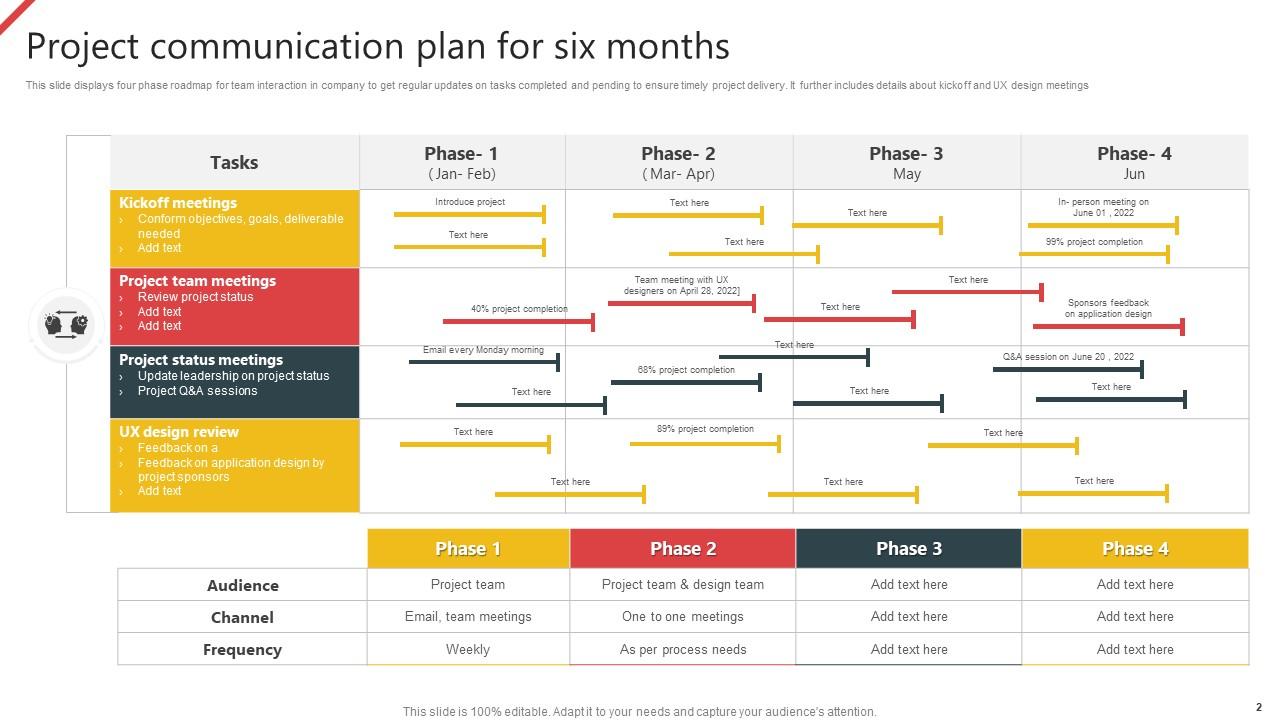
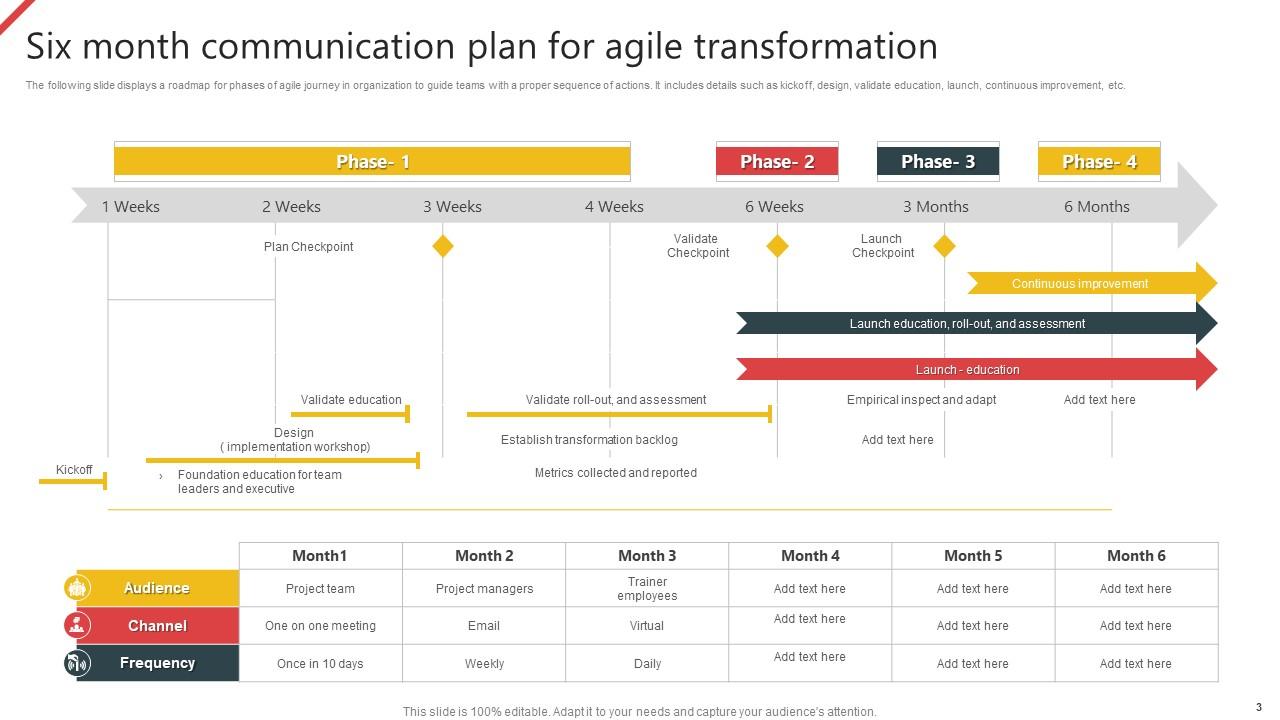
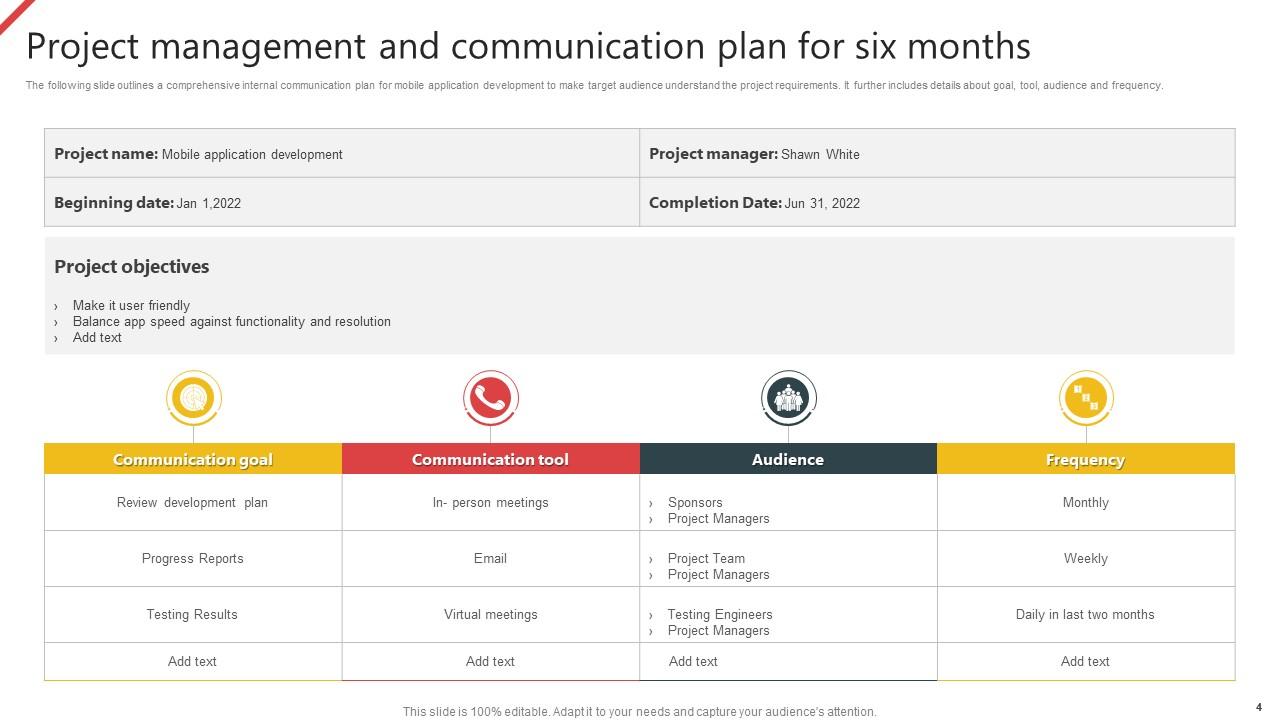
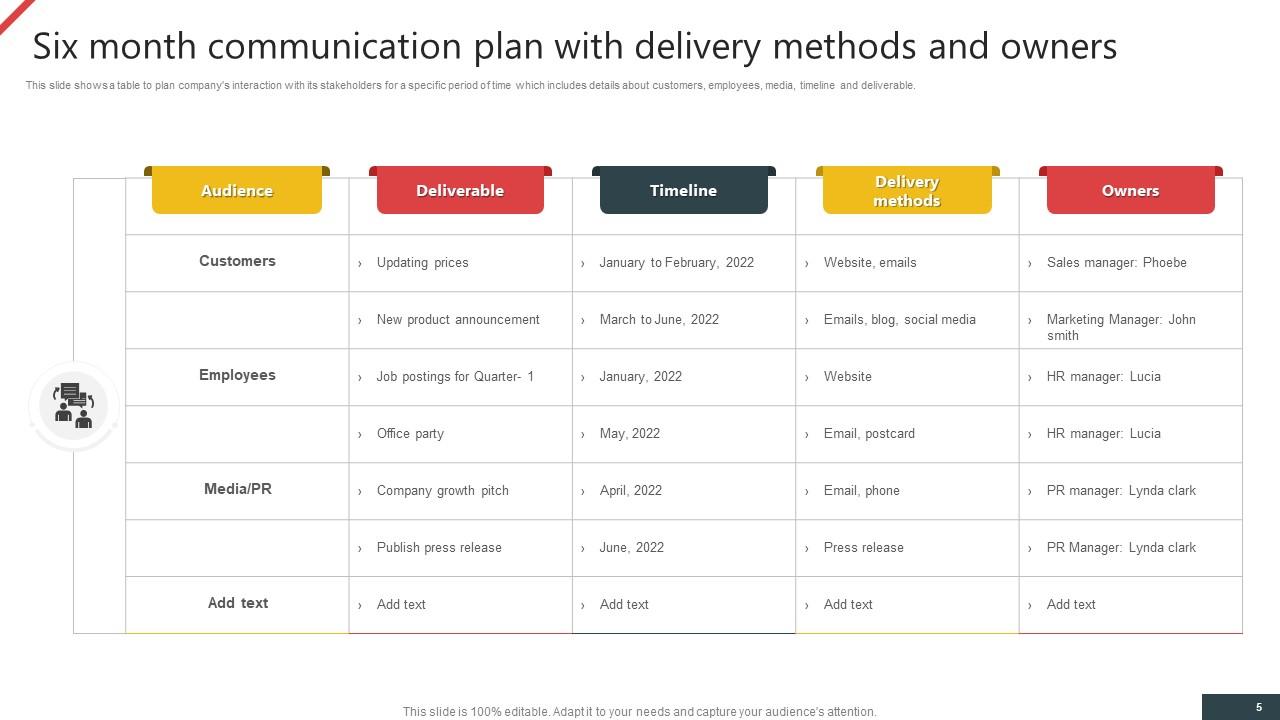
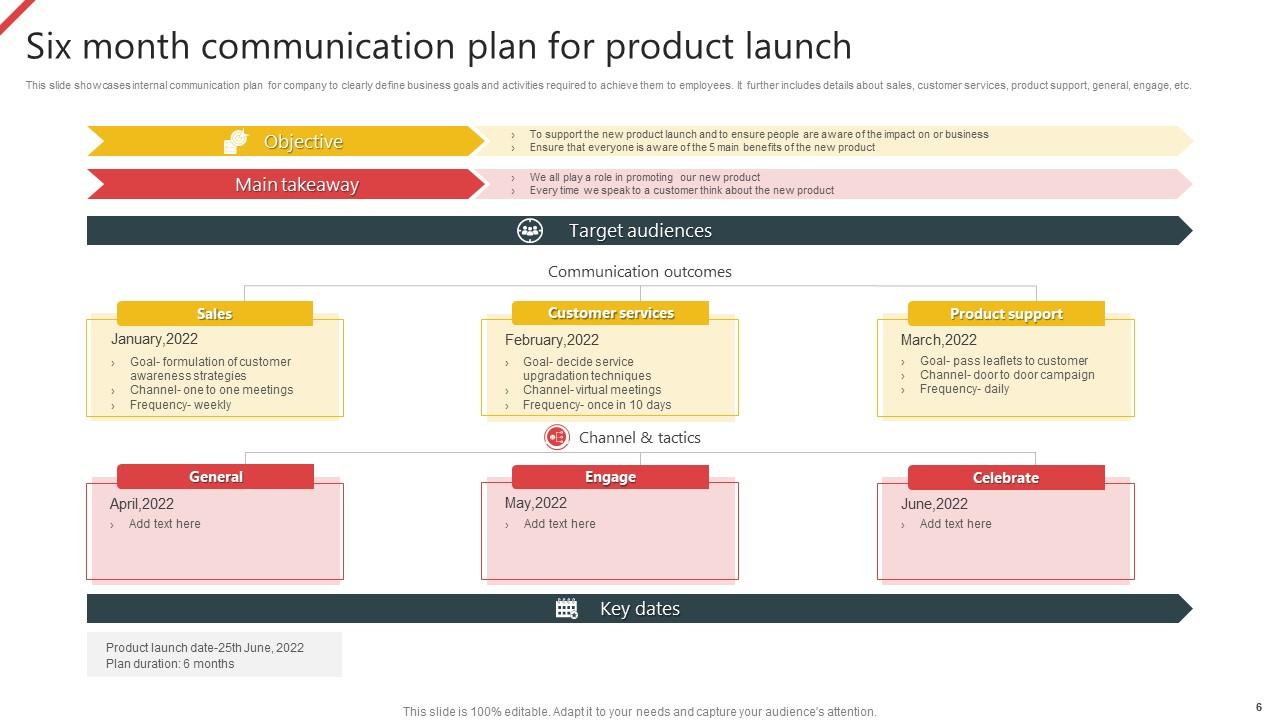
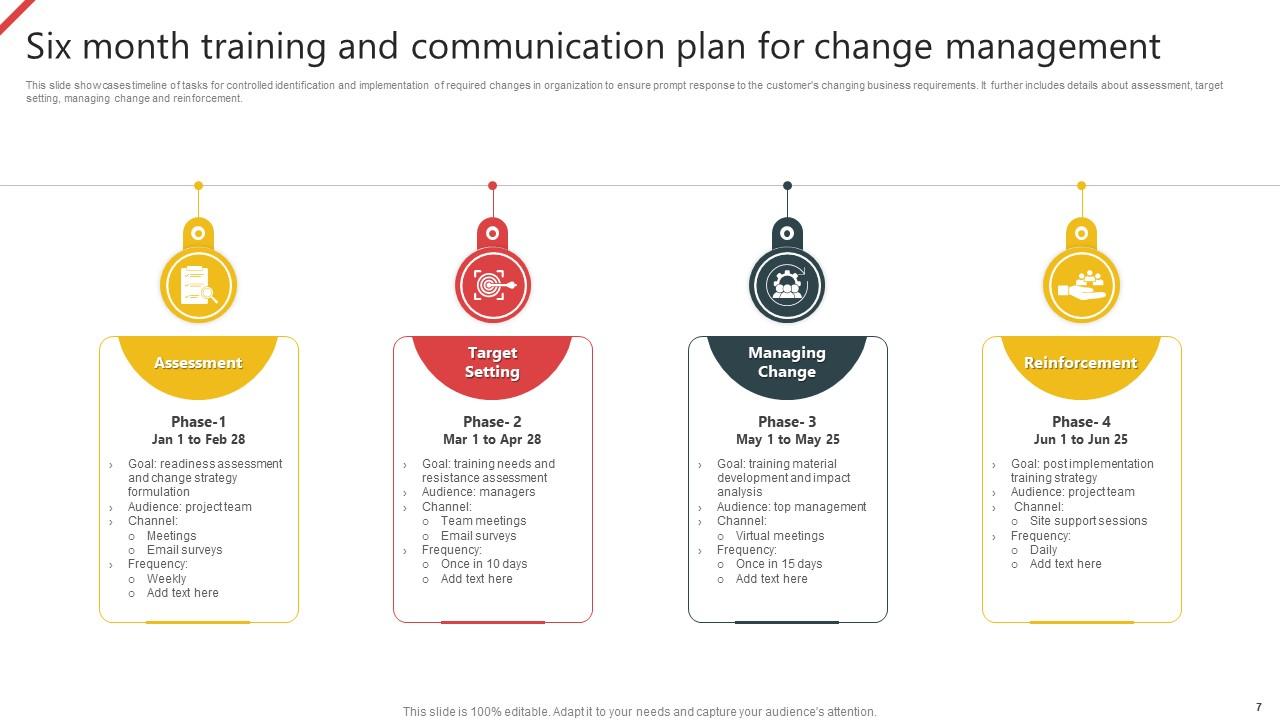
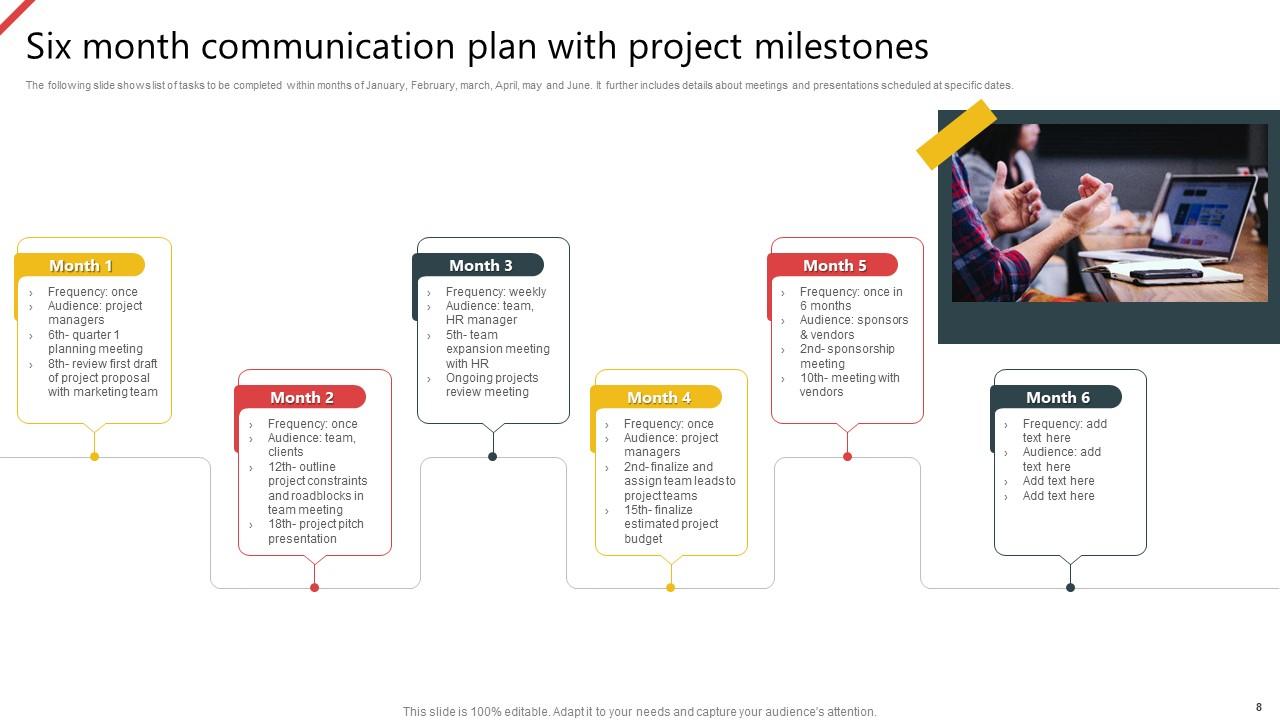
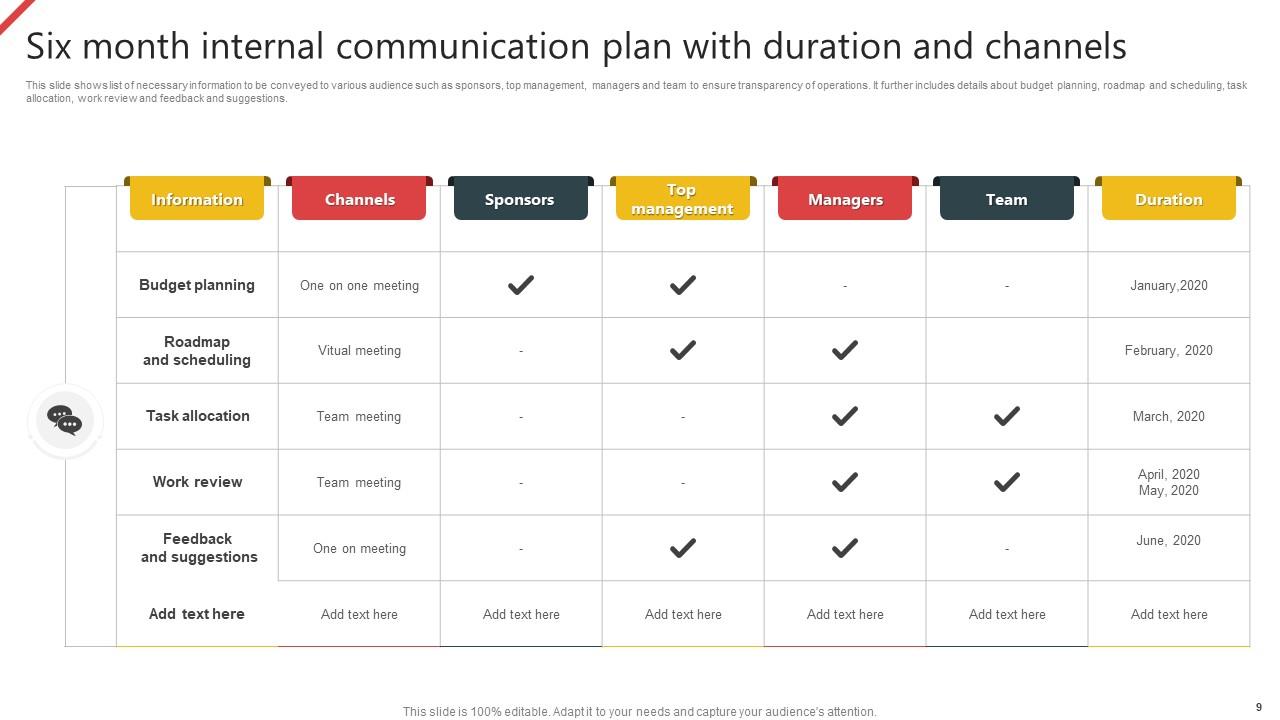
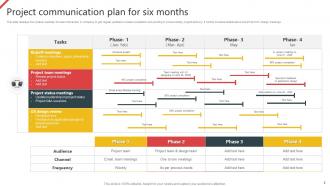
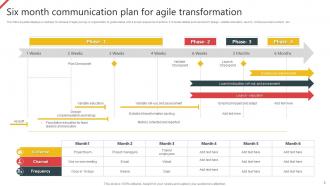
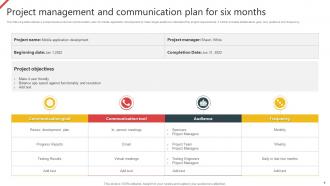
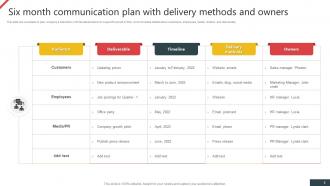
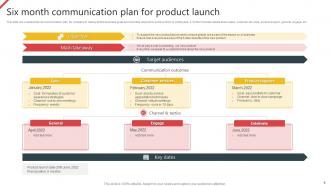
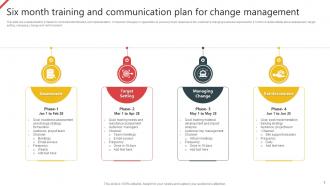
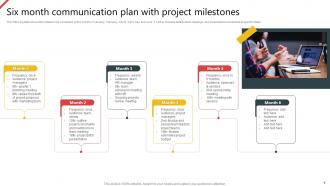
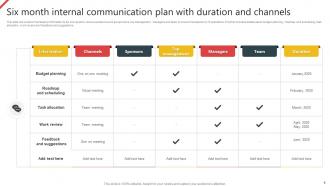
Deliver a lucid presentation by utilizing this Six Month Communication Plan Powerpoint Ppt Template Bundles. Use it to present an overview of the topic with the right visuals, themes, shapes, and graphics. This is an expertly designed complete deck that reinforces positive thoughts and actions. Use it to provide visual cues to your audience and help them make informed decisions. A wide variety of discussion topics can be covered with this creative bundle such as Project Communication, Agile Transformation, Product Launch, Change Management. All the twelve slides are available for immediate download and use. They can be edited and modified to add a personal touch to the presentation. This helps in creating a unique presentation every time. Not only that, with a host of editable features, this presentation can be used by any industry or business vertical depending on their needs and requirements. The compatibility with Google Slides is another feature to look out for in the PPT slideshow.

FAQs for Six Month Communication Plan Powerpoint

A six-month communication plan should aim to achieve brand awareness enhancement, audience engagement improvement, message consistency across channels, stakeholder relationship strengthening, and measurable behavior change among target demographics. These objectives work synergistically by establishing clear messaging frameworks, optimizing content delivery timing, and tracking performance metrics, with many organizations finding that strategic communication planning ultimately delivers increased customer loyalty, improved market positioning, and sustainable competitive advantage.

Understanding target audience fundamentals like demographics, preferences, communication channels, and behavioral patterns directly influences message tone, content format, delivery timing, and platform selection within communication strategies. Through audience segmentation and persona development, organizations can craft personalized messaging that resonates more effectively, ultimately enhancing engagement rates, improving response outcomes, and delivering stronger strategic communication results.

Effective tools include email marketing platforms, social media management systems, project management software, video conferencing solutions, and internal communication portals. These channels enhance message consistency by streamlining content distribution, tracking engagement metrics, and enabling real-time feedback, with many organizations finding that strategic multi-channel approaches deliver improved stakeholder engagement and measurable communication outcomes.

Success measurement involves tracking key performance indicators like audience engagement rates, message reach and frequency, feedback quality, stakeholder satisfaction scores, and behavioral changes throughout the six-month period. Organizations typically use analytics dashboards, surveys, and regular assessment checkpoints to monitor progress, with many finding that combining quantitative metrics with qualitative insights delivers the most comprehensive understanding of communication effectiveness and strategic impact.

Feedback serves as a critical mechanism for optimizing communication effectiveness by identifying gaps, measuring audience engagement, and revealing strategic opportunities for improvement. Through regular surveys, analytics reviews, and stakeholder consultations, organizations can pivot messaging approaches, refine channel selection, and enhance content delivery, ultimately ensuring their communication strategy remains responsive and delivers measurable business outcomes.

Communication plans align with strategic goals by mapping messaging priorities to business objectives, establishing key performance indicators that mirror organizational targets, and coordinating stakeholder engagement timelines with strategic milestones. Through systematic alignment of communication channels with operational goals, organizations streamline resource allocation, enhance cross-departmental collaboration, and ultimately deliver consistent messaging that reinforces strategic priorities while maximizing stakeholder buy-in.

Common pitfalls include setting unrealistic timelines, failing to define clear target audiences, inadequate budget allocation, and lack of measurable objectives. Organizations often struggle with insufficient stakeholder buy-in, rigid plans that can't adapt to market changes, and poor channel integration, ultimately compromising message consistency and audience engagement across their communication efforts.

Storytelling can be integrated through case studies showcasing customer success journeys, employee spotlights highlighting company values, and narrative-driven content that transforms data into compelling business outcomes. These approaches enhance engagement by connecting emotionally with audiences, building brand authenticity, and making complex information more memorable, with many organizations finding that story-based communications significantly improve message retention and stakeholder connection.

A communication plan timeline should include content creation phases, audience segmentation schedules, channel deployment dates, stakeholder review periods, and performance measurement checkpoints. These components work together by establishing clear deadlines for deliverables, coordinating cross-functional teams, and ensuring consistent messaging cadence, with many organizations finding that structured timelines enhance campaign effectiveness and strategic alignment.

Consistency in messaging throughout six months requires establishing clear brand guidelines, content calendars, and approval workflows from the outset. Organizations can maintain coherence by creating standardized templates, conducting regular team alignment meetings, and implementing content management systems that track messaging across all channels, with many finding that centralized oversight and documented communication protocols ultimately deliver stronger brand recognition and customer trust.

Visual aids enhance communication plan effectiveness by improving comprehension, retention, and engagement while streamlining complex information delivery and reducing misunderstandings. These tools enable organizations to present data more clearly, accelerate decision-making processes, and ensure consistent messaging across departments, with many companies finding that visual elements significantly increase stakeholder participation and project alignment rates.

Cultural considerations significantly impact communication strategies by influencing message framing, channel selection, timing preferences, and feedback mechanisms across diverse audiences. Organizations operating globally find that adapting their six-month plans for cultural context enhances engagement rates, minimizes misunderstandings, and builds stronger stakeholder relationships, ultimately delivering more effective outcomes and competitive advantage in multicultural environments.

**INPUT**: What metrics should be prioritized for evaluating audience engagement during the six-month rollout? **OUTPUT**: Priority engagement metrics include open rates, click-through rates, social media interactions, survey response rates, and conversion tracking across touchpoints. These measurements enable organizations to assess message resonance, optimize content delivery, and adjust communication strategies, with many companies finding that combining quantitative data with qualitative feedback ultimately delivers deeper audience insights and improved campaign effectiveness. **Word count: 58 words**

Partnerships enhance communication plans by expanding reach, leveraging complementary expertise, sharing resources, and accessing diverse audiences through trusted channels. Through strategic collaborations, organizations can amplify messaging across multiple platforms, reduce costs, and tap into partners' established credibility, ultimately delivering broader market penetration and more authentic stakeholder engagement.

Innovative engagement techniques include interactive storytelling, gamified challenges, user-generated content campaigns, virtual events with breakout sessions, and personalized communication paths based on audience behavior. These approaches enhance participation by creating two-way dialogue, fostering community connections, and delivering tailored experiences, with many organizations finding that varied content formats and consistent feedback loops ultimately drive higher retention and meaningful audience relationships.

Ratings and Reviews

100% of 100
Review Form
Write a review
Most Relevant Reviews
  1. 100%

    by Rhys Moore

    I am really satisfied with their XYZ products. Used their slides for my business presentations and now I am taking their help for my son's high-school assignments. Super satisfied!!
  2. 100%

    by Cornelius Alexander

    I am so thankful for all of the templates I've found on your site. They have saved me hours every week and helped make my presentations come alive. Keep up with these amazing product releases! 

2 Item(s)

per page: