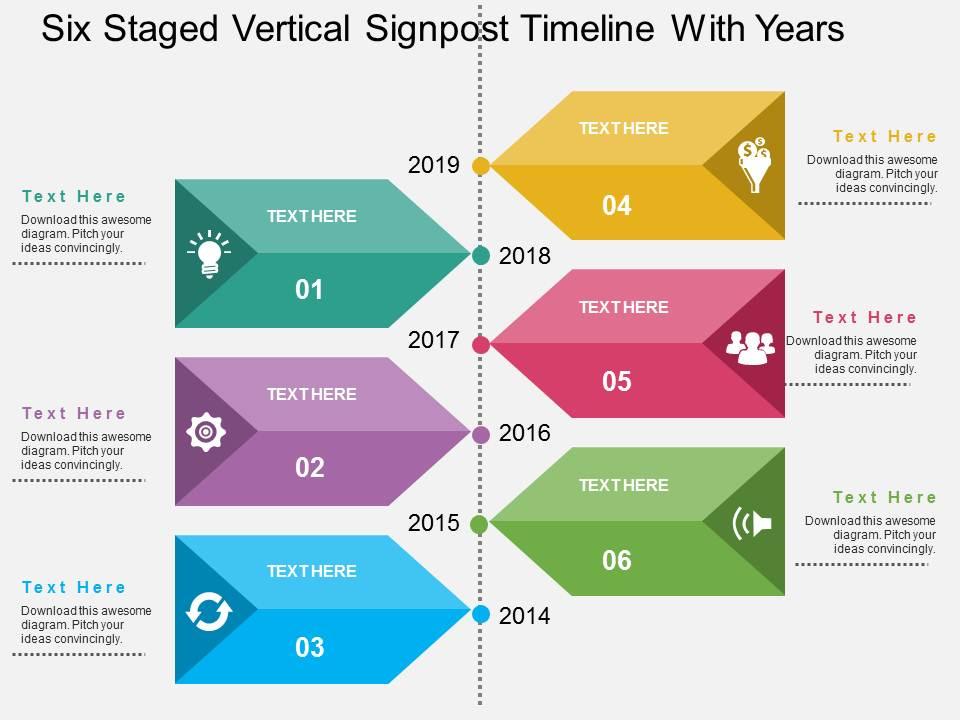
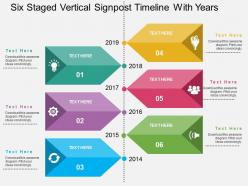
Six staged vertical signpost timeline with years flat powerpoint design

Rating:
90%
Six staged vertical signpost timeline with years flat powerpoint design
Slide 1 of 4
Favourites Favourites

Try Before you Buy Download Free Sample Product

Audience Impress Your
Audience
Editable 100%
Editable
Time Save Hours
of Time
The Biggest Sale is ending soon in
0
0
:
0
0
:
0
0
Rating:
90%
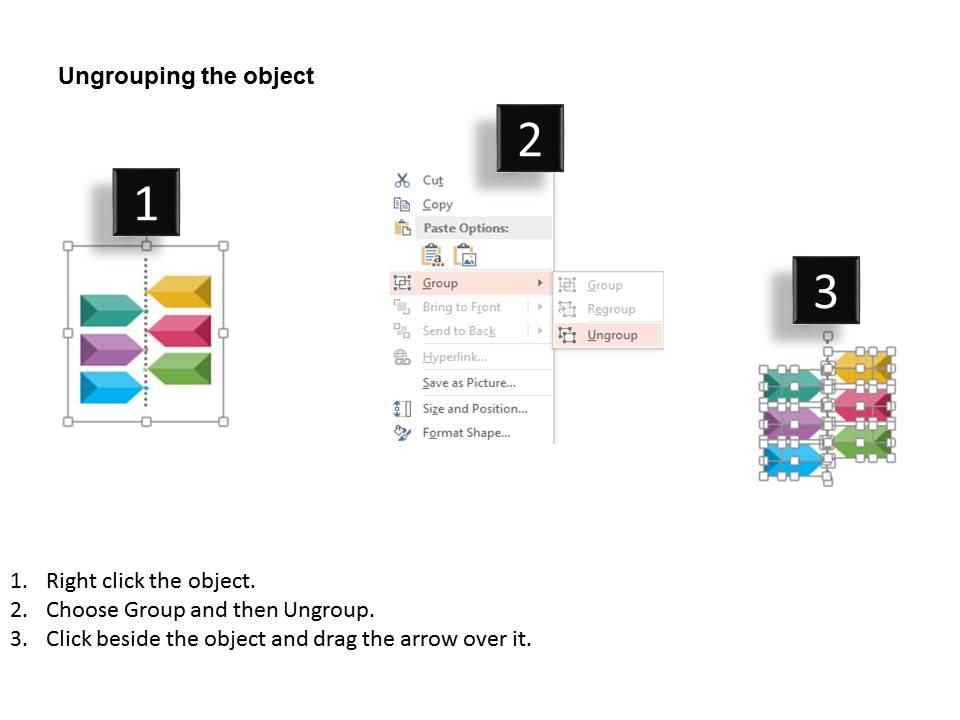
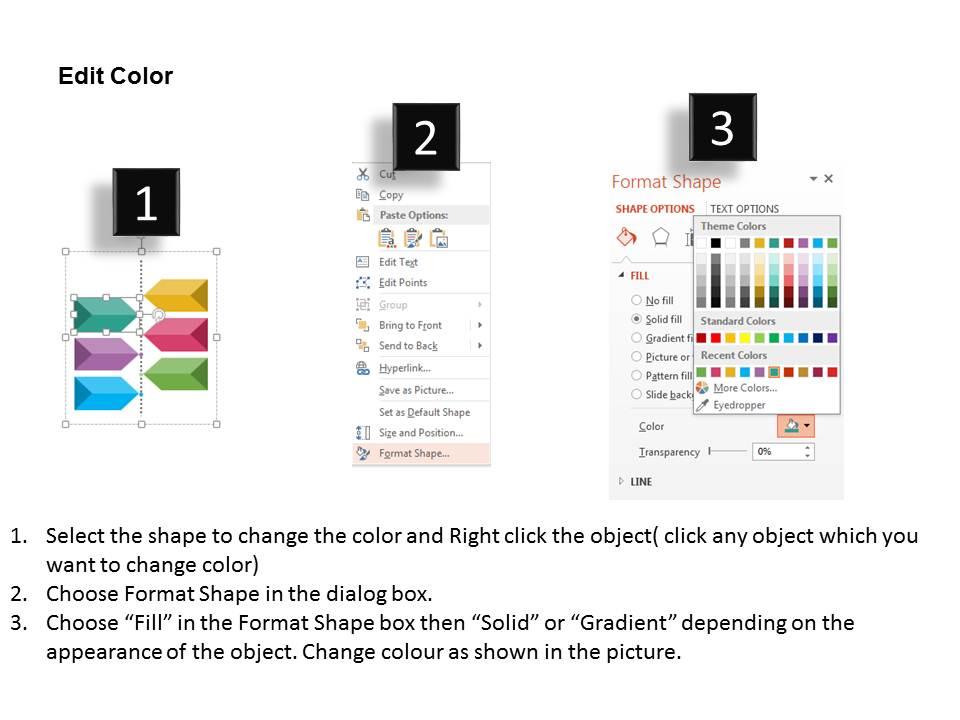
Equipped with high definition graphics and icons to attract the audience. Easy to modify by simply following some simple instructions that come with these slides. Performs error free with all the existing software’s. Compatible with Google framework. Beneficial for the investors, clients and the customers. Professional looking PPT presentation diagrams.

People who downloaded this PowerPoint presentation also viewed the following :

FAQs for Six staged vertical signpost timeline with years

Key elements of an effective timeline presentation include clear chronological structure, consistent visual design, relevant milestones, appropriate time intervals, and actionable data points. These components work together by enhancing audience comprehension, streamlining complex project sequences, and facilitating strategic decision-making, with many organizations finding that well-designed timelines significantly improve stakeholder alignment and project outcomes.

Timelines enhance storytelling by creating narrative structure, showing progression and causality, establishing context for key events, and building dramatic tension through chronological reveals. Through visual timeline presentations, speakers can guide audiences through compelling journeys, highlight pivotal moments and turning points, and demonstrate evolution or transformation, ultimately delivering more engaging and memorable stories that resonate with viewers.

**INPUT**: What types of visual formats work best for timeline data? **OUTPUT**: Effective timeline visual formats include horizontal bar charts, Gantt charts, milestone markers, chronological infographics, and interactive slider presentations. These formats streamline project planning, strategic roadmaps, and historical data presentation by enhancing clarity, enabling quick milestone identification, and facilitating stakeholder communication, with many organizations finding that visual timelines significantly improve project coordination and decision-making processes.

Choosing the right timeline template depends on your content type, audience needs, data complexity, and visual preferences, with project timelines requiring different formats than historical or process timelines. Consider whether you need chronological, comparative, or milestone-focused layouts, with many organizations finding that matching template style to storytelling purpose—such as sequential steps for processes or branching formats for multi-track projects—ultimately delivers clearer communication and enhanced audience engagement.

Common timeline mistakes include unrealistic deadlines, insufficient buffer time, overlooking dependencies between tasks, failing to account for resource constraints, and neglecting stakeholder input during planning phases. These oversights often result in project delays, budget overruns, and team burnout, with many organizations finding that thorough upfront planning and regular timeline reviews ultimately deliver more predictable outcomes and enhanced operational efficiency.

Timelines enhance project management by establishing clear milestones, visualizing task dependencies, allocating resources strategically, and enabling real-time progress monitoring. Through timeline-based tracking, organizations streamline workflows, identify bottlenecks early, and maintain accountability across teams, with many project managers finding that visual timelines ultimately deliver improved coordination and faster project completion rates.

Timelines can be customized through visual design variations, content depth adjustments, interactive features, format modifications, and audience-specific messaging approaches. These customization strategies enable organizations to enhance stakeholder engagement, streamline information delivery, and optimize comprehension across diverse groups, with many companies finding that tailored timelines significantly improve project communication and strategic alignment.

**INPUT**: What software tools are most effective for creating interactive timelines? **OUTPUT**: Interactive timeline software includes Tiki-Toki, TimelineJS, Preceden, Aeon Timeline, and Visme, each offering distinct visualization capabilities and collaboration features. These tools streamline project planning, historical presentations, and business storytelling by enabling dynamic content integration, real-time updates, and seamless sharing, with many organizations finding enhanced audience engagement and improved communication outcomes.

Timelines can be integrated with other presentation elements through strategic layering, synchronized data points, and complementary visual hierarchies. Charts can display quantitative metrics alongside timeline milestones, while infographics enhance key events with visual context, creating comprehensive narratives that transform complex information into cohesive, engaging presentations that audiences can easily follow and remember.

Color and design in timeline presentations enhance visual hierarchy, improve information retention, and guide audience attention through chronological sequences effectively. Strategic color coding helps distinguish phases, milestones, and categories, while thoughtful design elements like spacing and typography ensure clarity, with many organizations finding that well-designed timelines significantly increase audience engagement and comprehension rates.

Historical timelines can be made engaging through interactive digital formats, multimedia storytelling, visual design elements, gamification techniques, and connecting past events to contemporary issues. Modern audiences increasingly respond to immersive experiences that blend historical accuracy with compelling narratives, with museums, educational institutions, and media companies finding that interactive timelines, augmented reality features, and social media integration significantly enhance audience engagement and retention.

Timelines serve as visual frameworks that organize complex educational content chronologically, helping students understand historical progressions, cause-and-effect relationships, and sequential processes across subjects like history, science, and literature. These structured presentations enhance comprehension by breaking down overwhelming information into digestible segments, while enabling educators to highlight key milestones and connections, ultimately delivering improved retention and deeper analytical thinking skills.

Effectively conveying complex information through timelines requires strategic organization, visual hierarchy, clear milestones, consistent formatting, and contextual explanations that connect events meaningfully. Through color coding, progressive disclosure, and selective detail levels, organizations streamline complex narratives while maintaining audience engagement, with many businesses finding that well-structured timelines enhance comprehension and decision-making processes significantly.

Innovative digital timeline approaches include interactive scrolling narratives, immersive 3D visualizations, branching pathway formats, multimedia-rich storytelling, and augmented reality experiences. These technologies enhance audience engagement by enabling personalized exploration, real-time collaboration, and dynamic content updates, with organizations across education, marketing, and project management finding significantly improved comprehension and retention rates.

Timelines assist in emphasizing key milestones by creating visual hierarchy, establishing chronological context, and highlighting critical achievement points that demonstrate progress and strategic value. Through strategic positioning, color coding, and milestone markers, businesses can showcase product launches, revenue targets, and expansion phases, ultimately delivering compelling narratives that reinforce credibility and competitive advantage to stakeholders.

Ratings and Reviews

90% of 100
Write a review
Most Relevant Reviews
  1. 80%

    by Cortez Graham

    Much better than the original! Thanks for the quick turnaround.
  2. 100%

    by Dannie Washington

    Nice and innovative design.

2 Item(s)

per page: