


Steps To Create Content Marketing Strategy Powerpoint Presentation Slides
A content marketing strategy includes tactics for producing and disseminating pertinent information to expand, engage, and keep the audience. Grab our cleverly crafted Steps to Create Content Marketing Strategy template. Its primary goals are to draw in the target market, boost SEO performance, and create plans for increasing company profits. Our Content strategy deck discusses the current difficulties with content marketing as well as the effects of poor strategies. It also illustrates the significance of content marketing strategy, critical indicators of content effectiveness, roles and duties, and significant trends. The Lead Nurturing Strategies PPT also includes a checklist for website content audits, marketing goals and objectives, customer engagement content kinds, an SEO checklist, etc. Additionally, the PPT displays the content marketing channels based on shares and a content distribution matrix for content optimization and budget comparison. Lastly, our Content effectiveness module exhibits a dashboard and data for tracking social media activity and content effectiveness. Access this effective template right away.
A content marketing strategy includes tactics for producing and disseminating pertinent information to expand, engage, and ..





























-

- Google Slides is a new FREE Presentation software from Google.
- All our content is 100% compatible with Google Slides.
- Just download our designs, and upload them to Google Slides and they will work automatically.
- Amaze your audience with SlideTeam and Google Slides.
-

Want Changes to This PPT Slide? Check out our Presentation Design Services
-

- WideScreen Aspect ratio is becoming a very popular format. When you download this product, the downloaded ZIP will contain this product in both standard and widescreen format.
-

- Some older products that we have may only be in standard format, but they can easily be converted to widescreen.
- To do this, please open the SlideTeam product in Powerpoint, and go to
- Design ( On the top bar) -> Page Setup -> and select "On-screen Show (16:9)” in the drop down for "Slides Sized for".
- The slide or theme will change to widescreen, and all graphics will adjust automatically. You can similarly convert our content to any other desired screen aspect ratio.
Compatible With Google Slides

Get This In WideScreen
You must be logged in to download this presentation.


Do you want to remove this product from your favourites?
PowerPoint presentation slides
Deliver this complete deck to your team members and other collaborators. Encompassed with stylized slides presenting various concepts, this Steps To Create Content Marketing Strategy Powerpoint Presentation Slides is the best tool you can utilize. Personalize its content and graphics to make it unique and thought-provoking. All the fifty one slides are editable and modifiable, so feel free to adjust them to your business setting. The font, color, and other components also come in an editable format making this PPT design the best choice for your next presentation. So, download now.

People who downloaded this PowerPoint presentation also viewed the following :
Content of this Powerpoint Presentation
Slide 1: This slide introduces Steps To Create Content Marketing Strategy. Commence by stating Your Company Name.
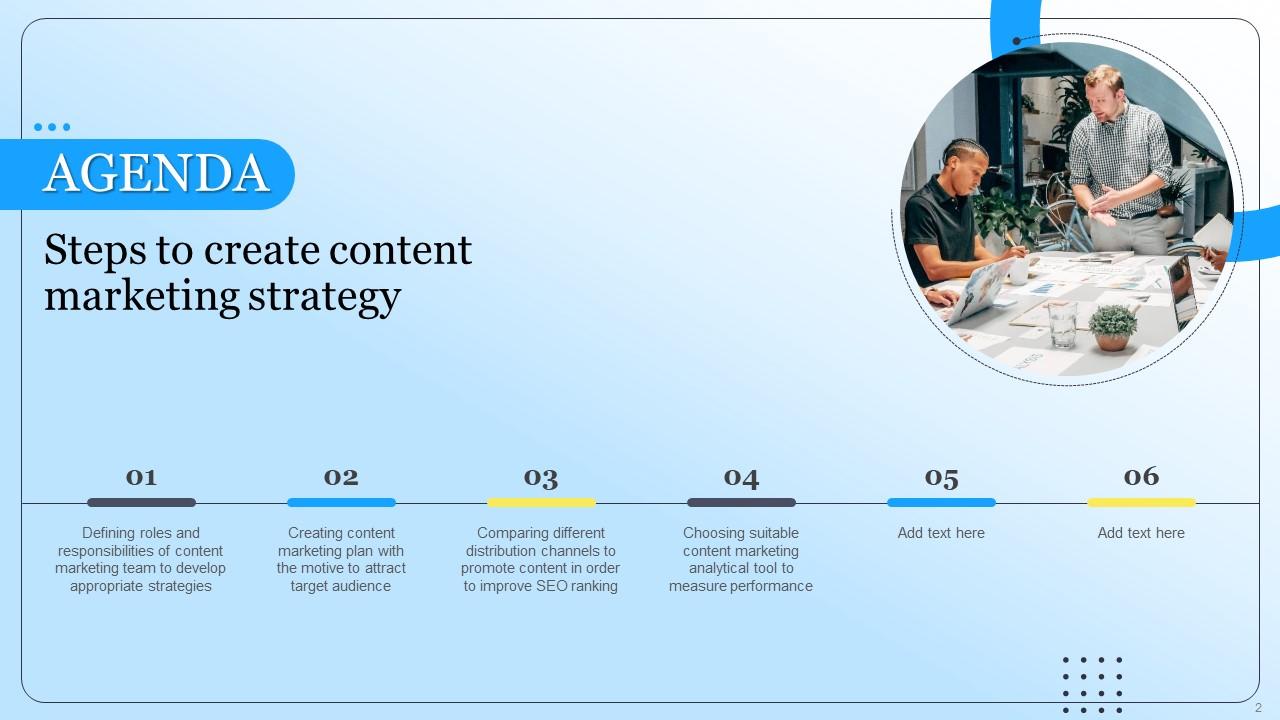
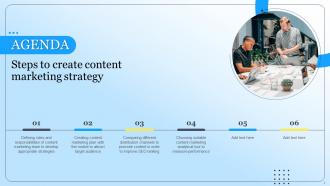
Slide 2: This slide depicts the Agenda of the presentation.
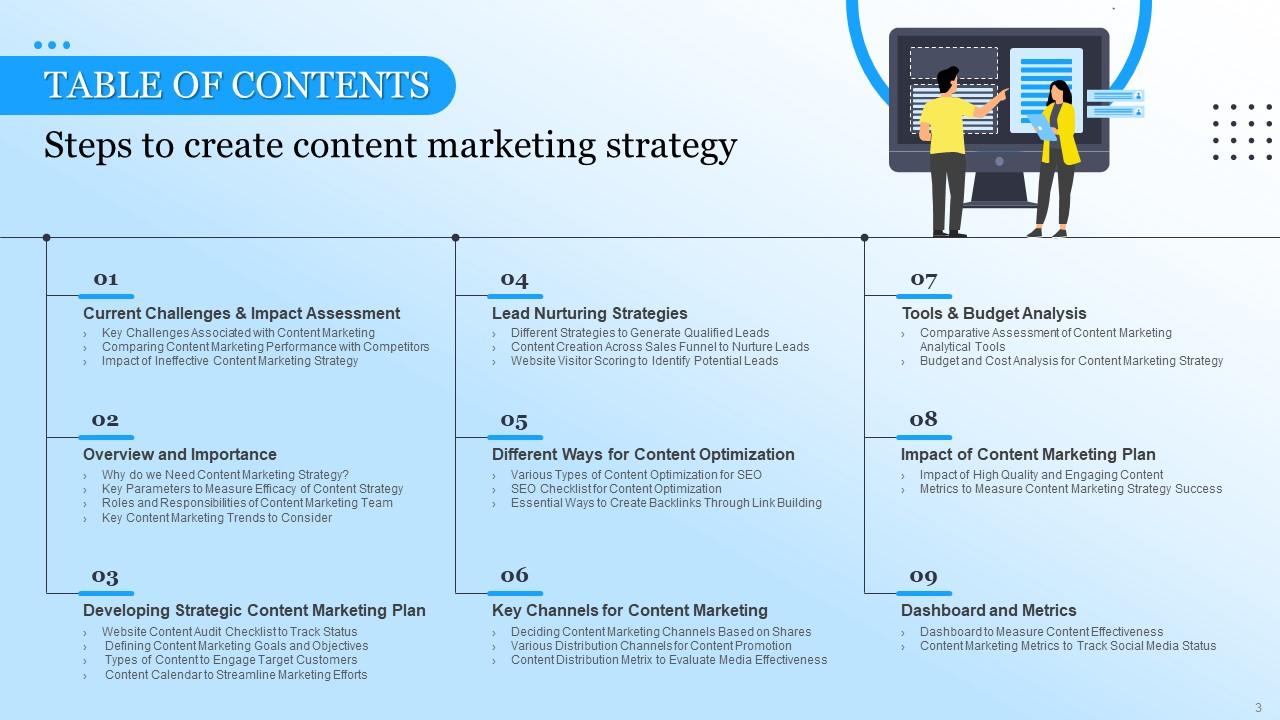
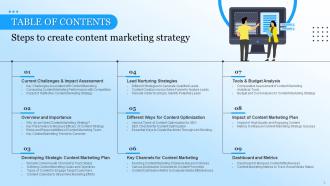
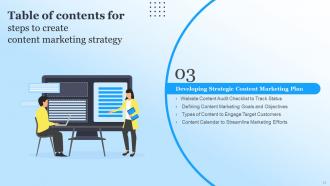
Slide 3: This slide highlights the Table Of Contents.
Slide 4: This slide showcases the Title for the Topics to be discussed next.
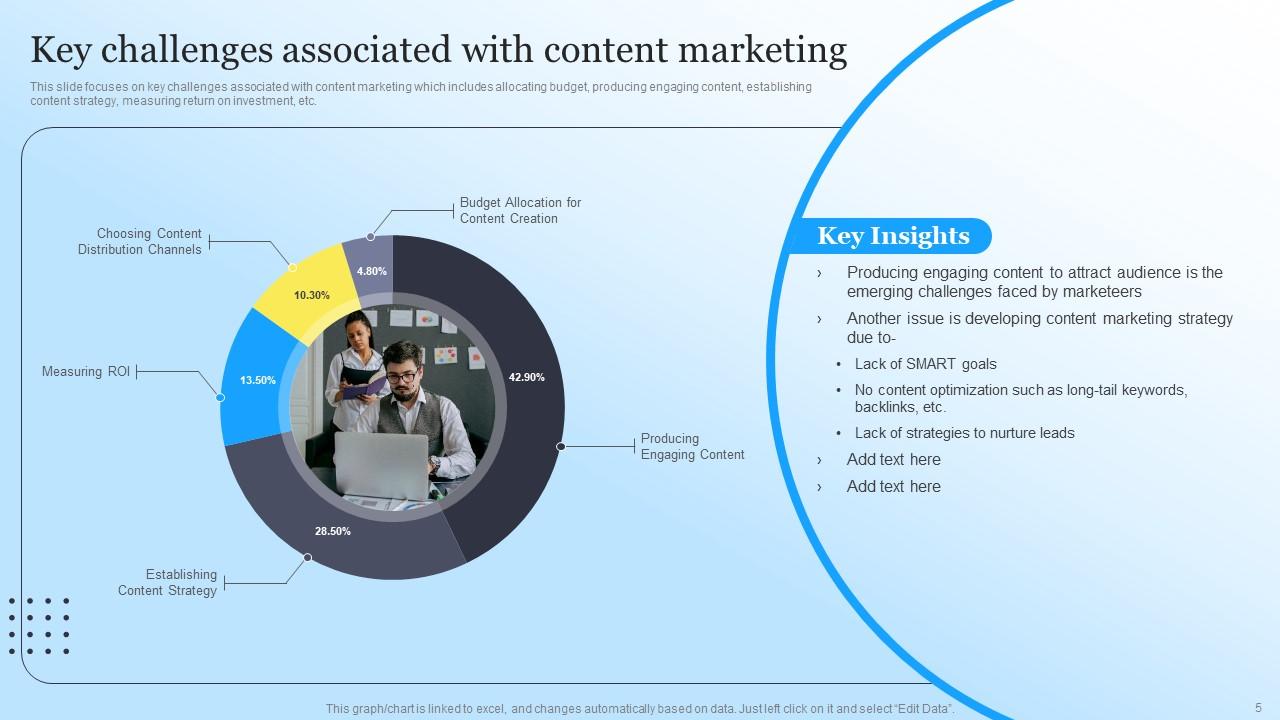
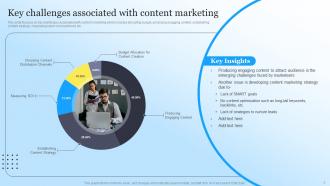
Slide 5: This slide focuses on key challenges associated with content marketing which includes allocating budget, producing engaging content, etc.
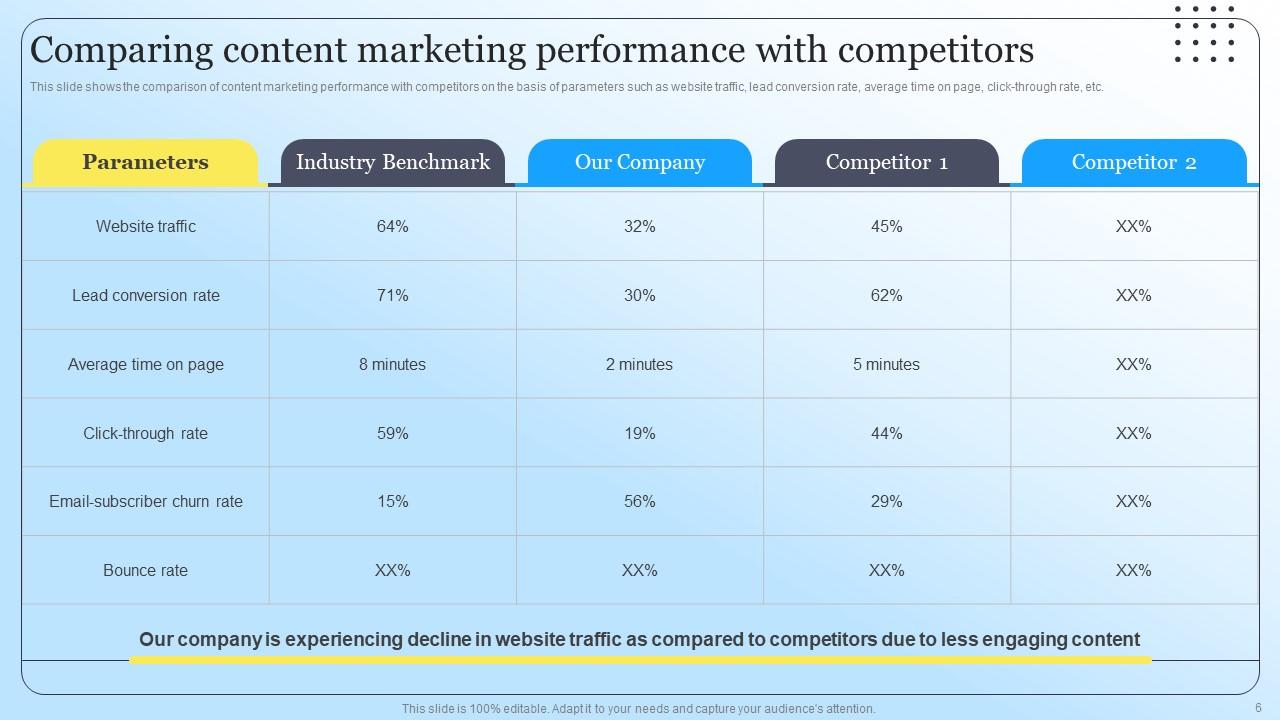
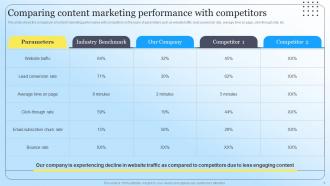
Slide 6: This slide compares the content marketing performance of the Company with competitors.
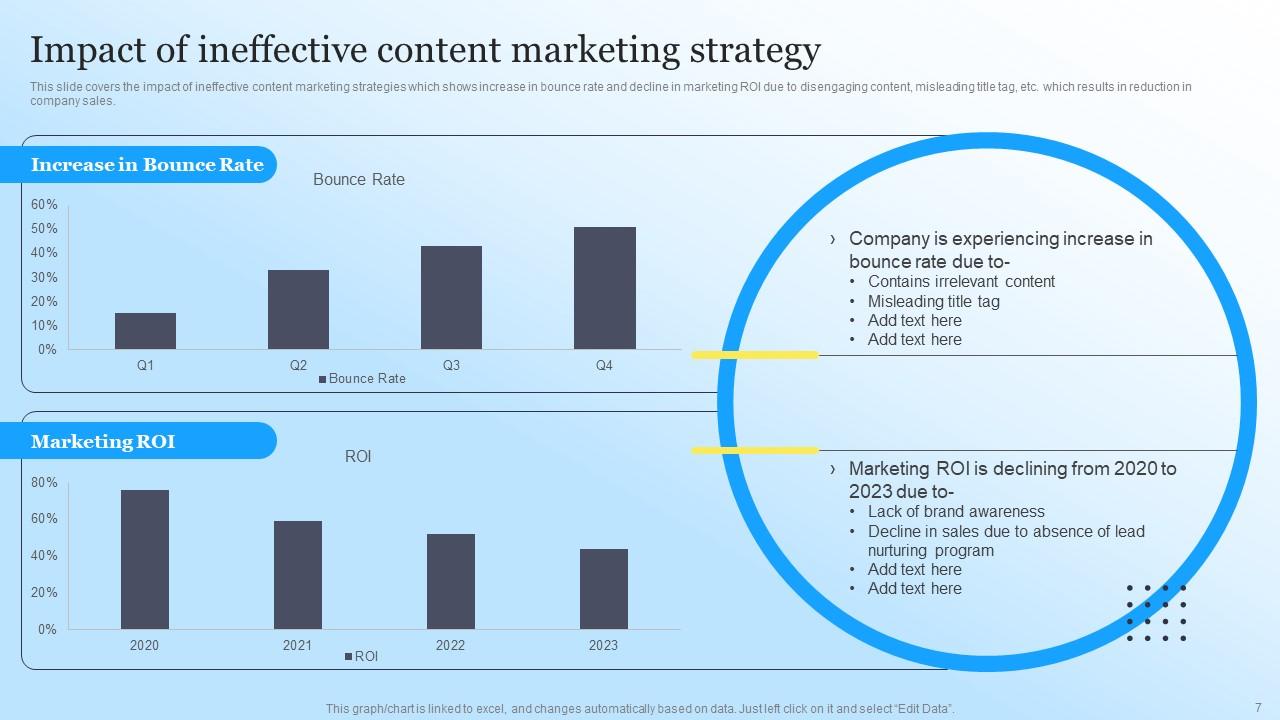
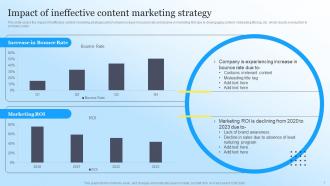
Slide 7: This slide covers the impact of ineffective content marketing strategies which shows increase in bounce rate and decline in marketing ROI due to disengaging content, misleading title tag, etc.
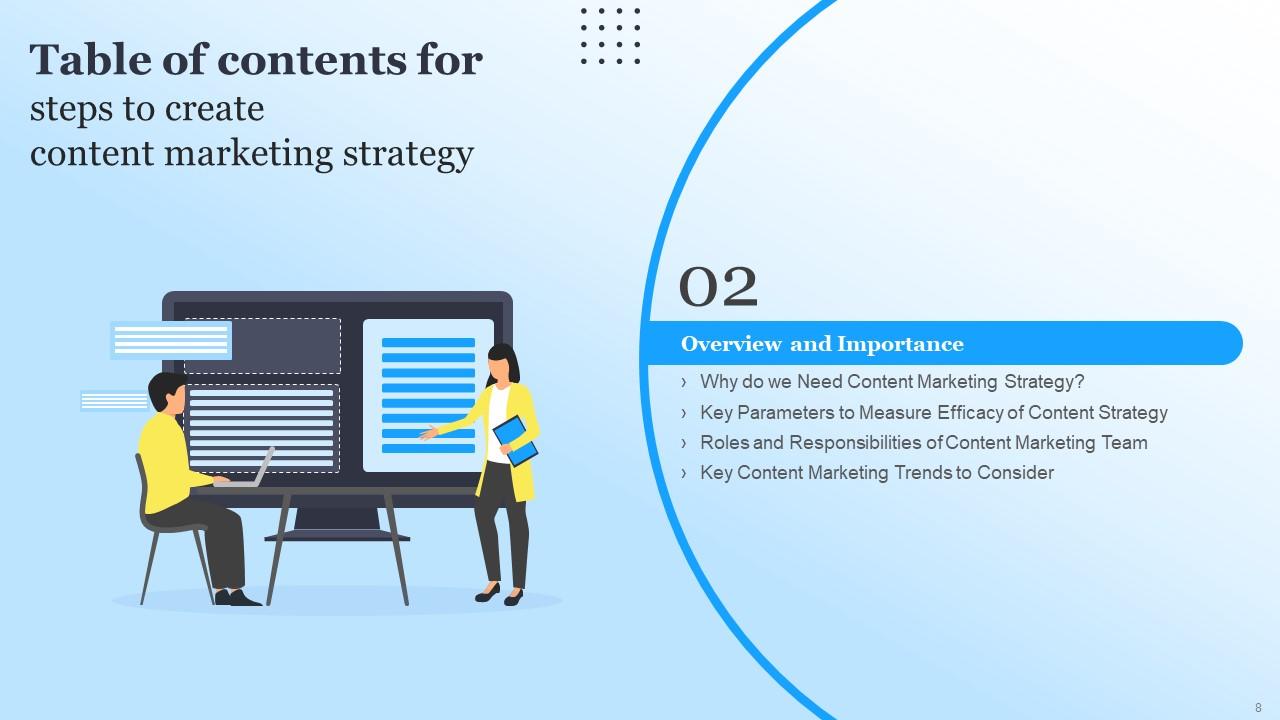
Slide 8: This slide mentions the Heading for the Components to be discussed next.
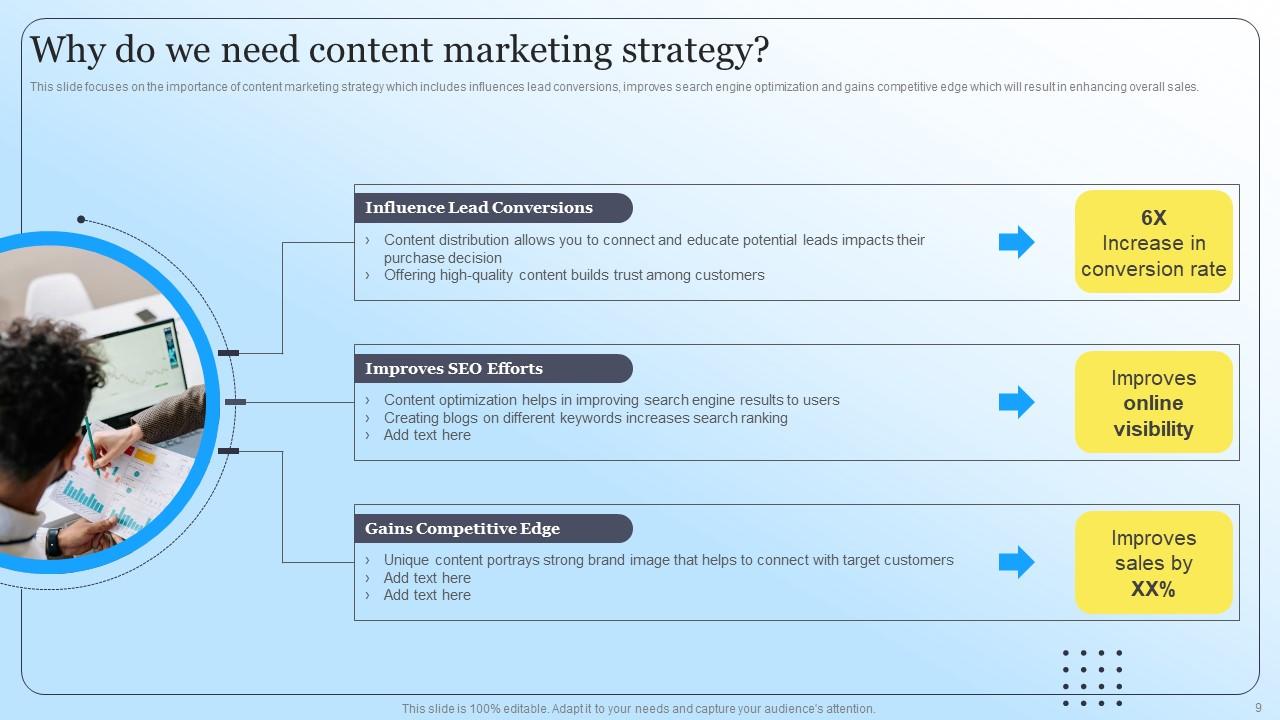
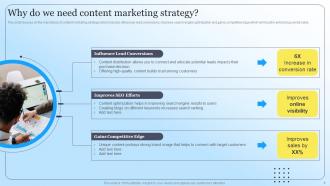
Slide 9: This slide focuses on the importance of content marketing strategy which includes influences lead conversions, improves search engine optimization and gains competitive edge which will result in enhancing overall sales.
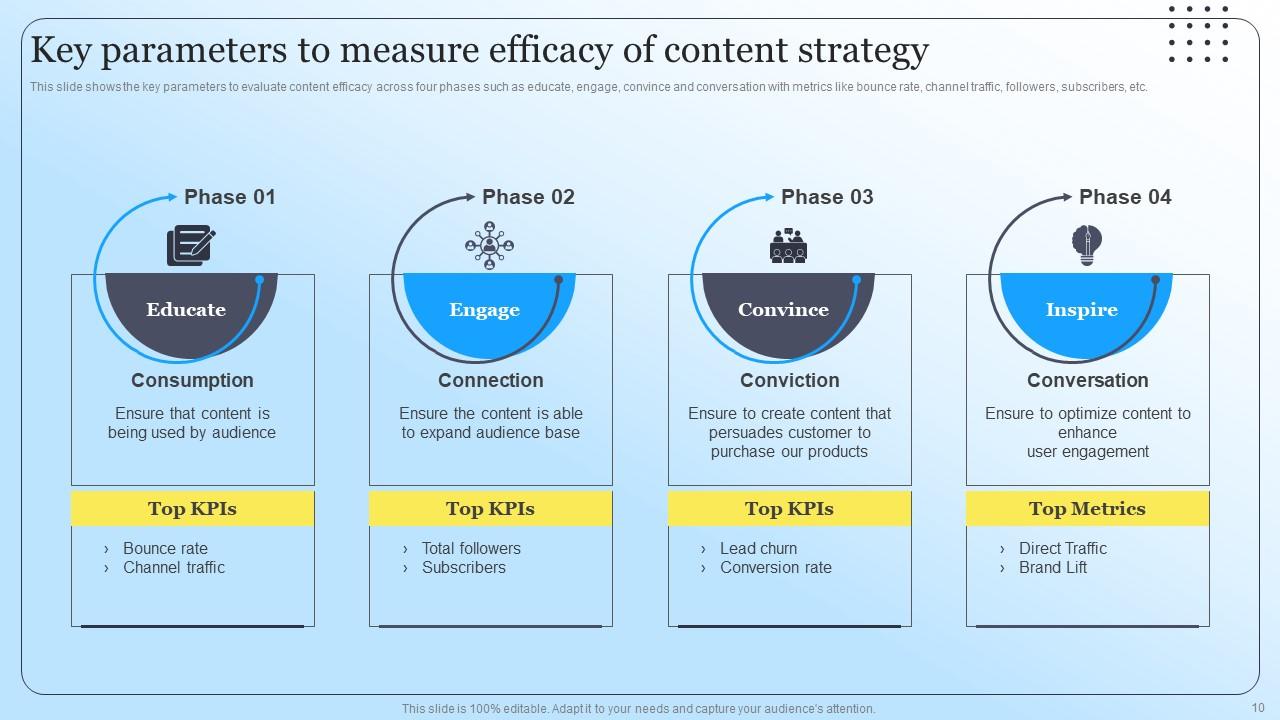
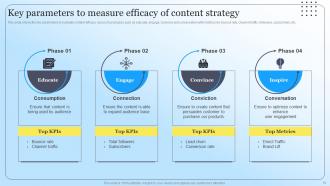
Slide 10: This slide indicates the Key parameters to measure efficacy of content strategy.
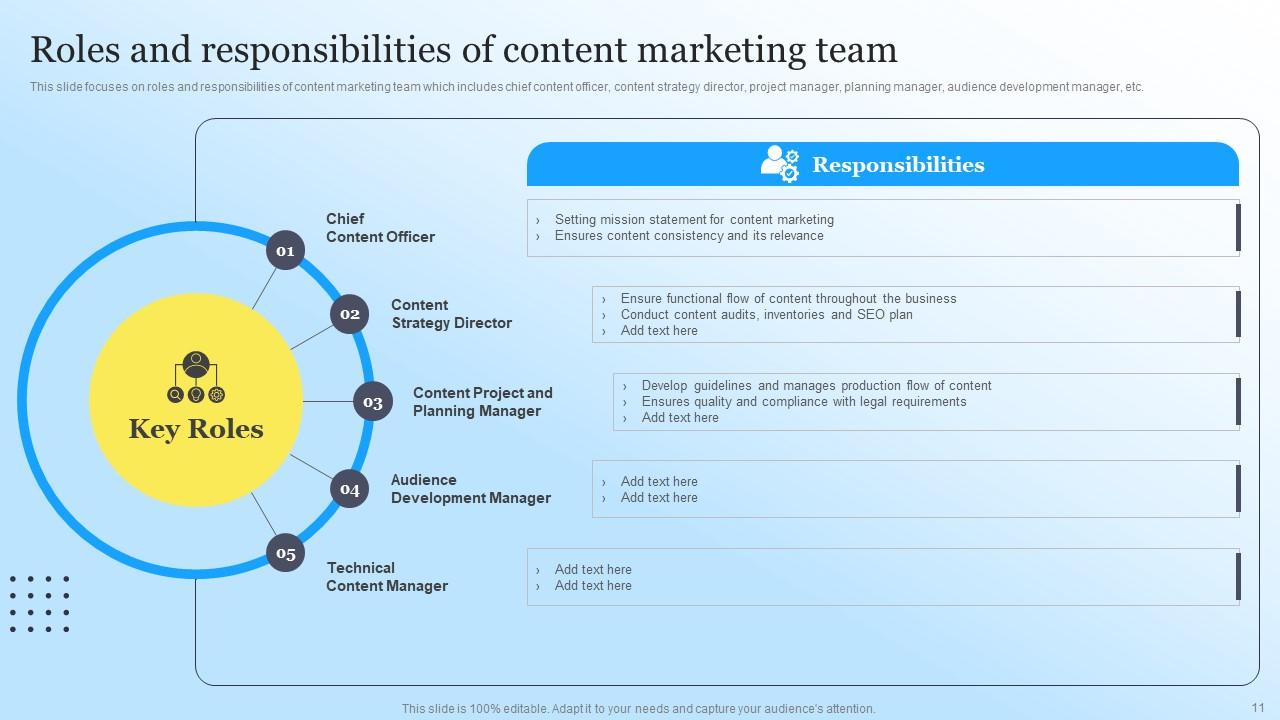
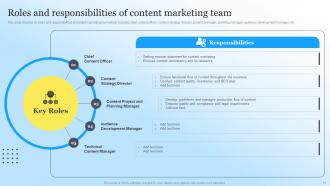
Slide 11: This slide elucidates the Roles and responsibilities of content marketing team.
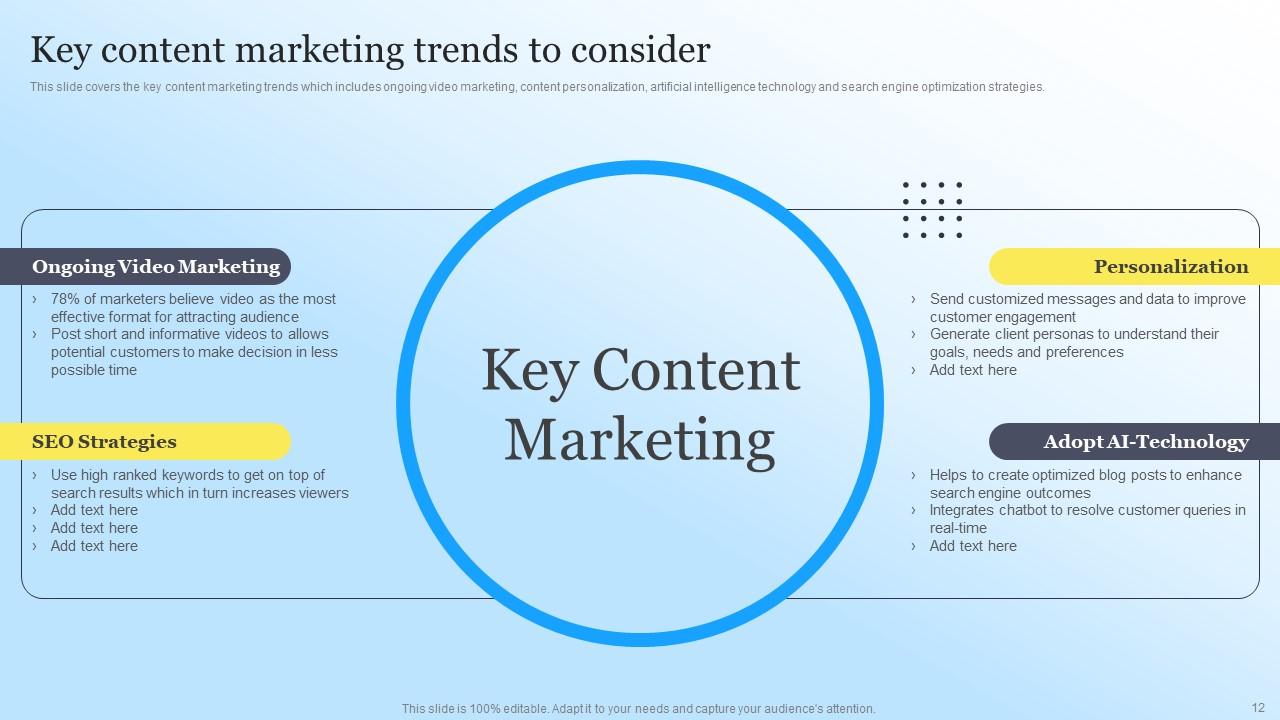
Slide 12: This slide covers the key content marketing trends which includes ongoing video marketing, content personalization, artificial intelligence technology and search engine optimization strategies.
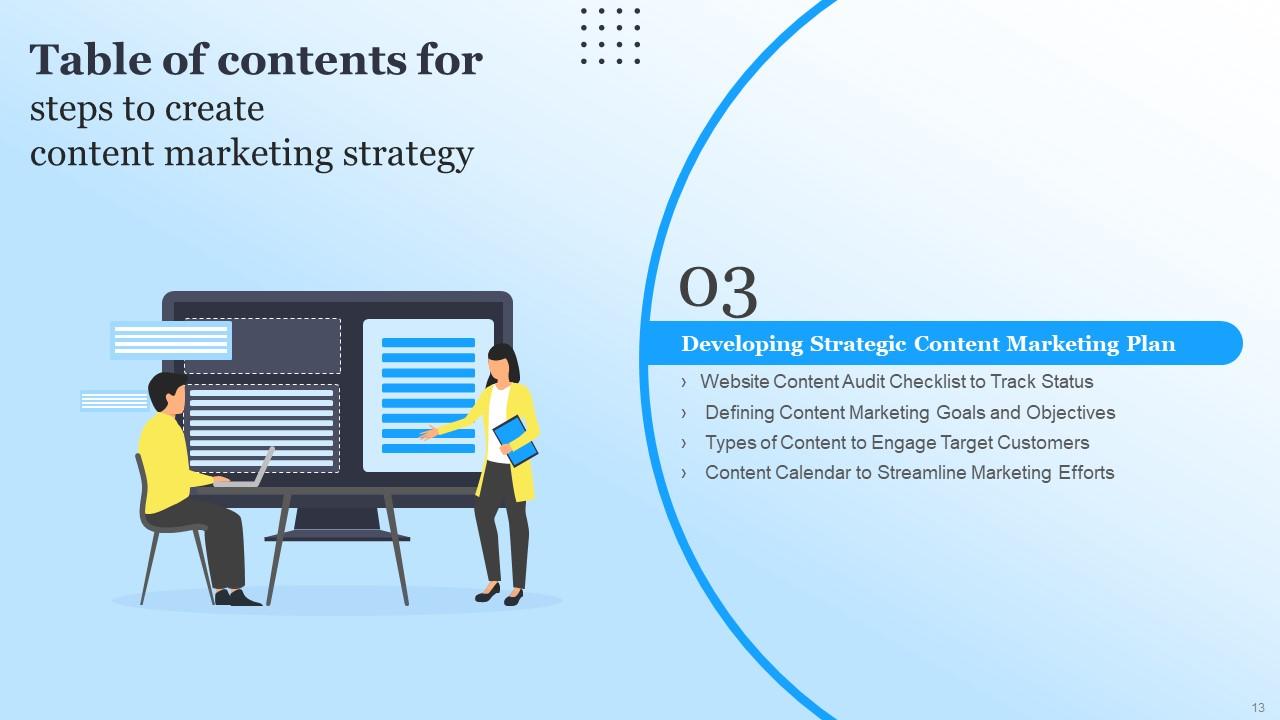
Slide 13: This slide portrays the Title for the Ideas to be covered further.
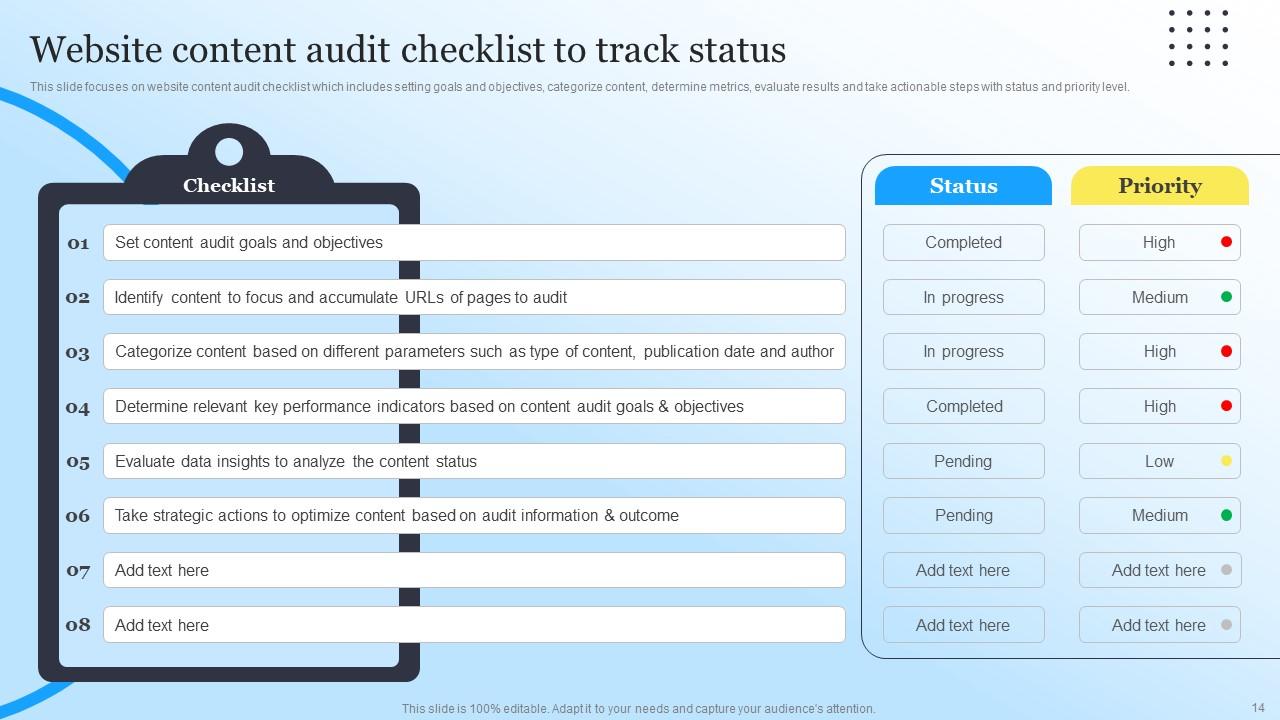
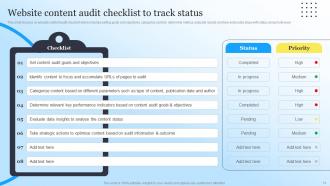
Slide 14: This slide deals with the website content audit checklist which includes setting goals and objectives, categorize content, determine metrics, evaluate results and take actionable steps with status and priority level.
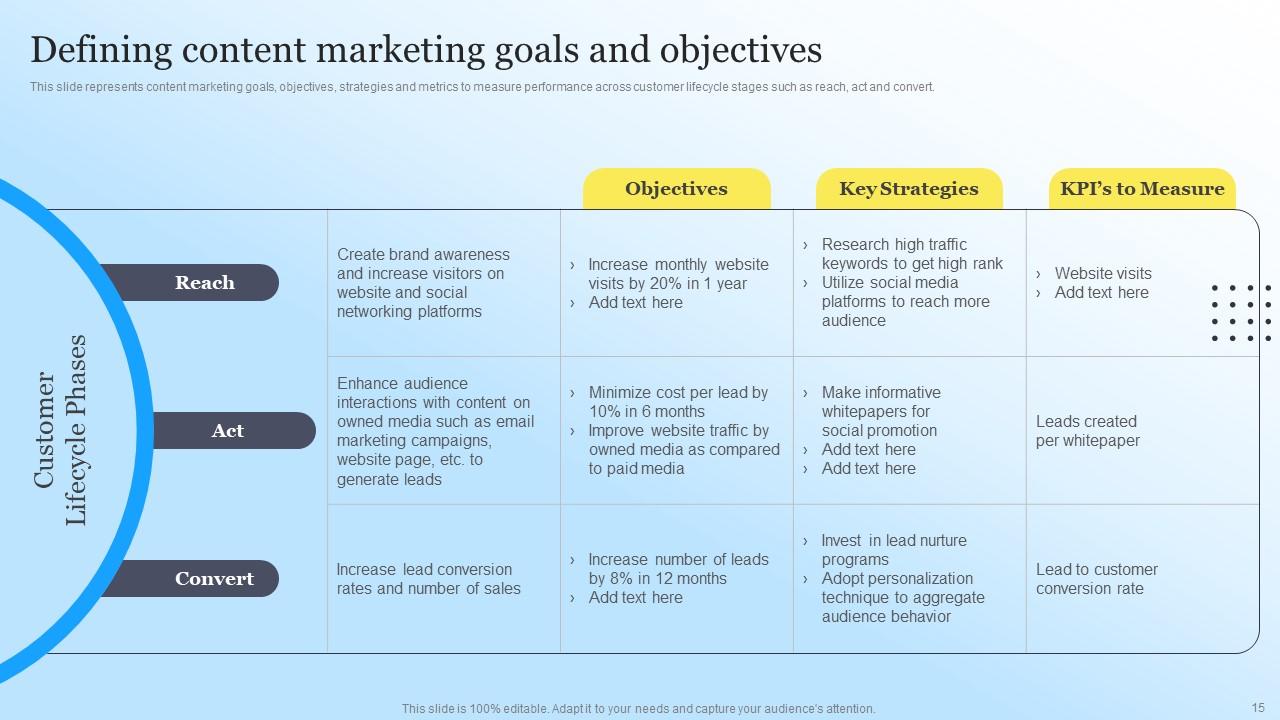
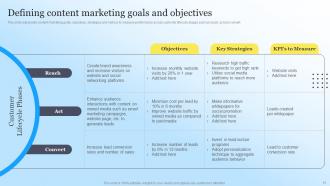
Slide 15: This slide represents content marketing goals, objectives, strategies and metrics to measure performance across customer lifecycle stages such as reach, act and convert.
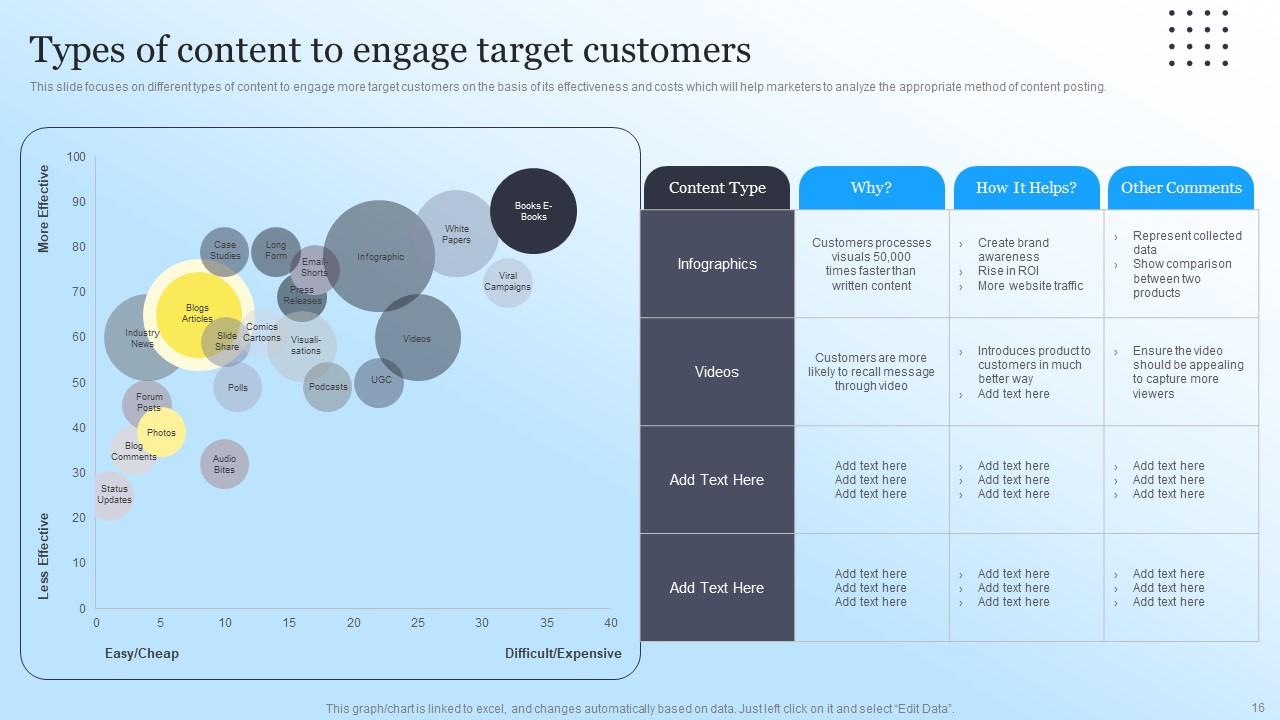
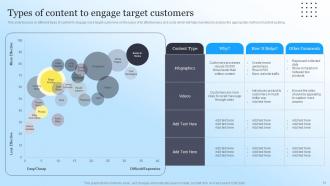
Slide 16: This slide states the Types of content to engage target customers.
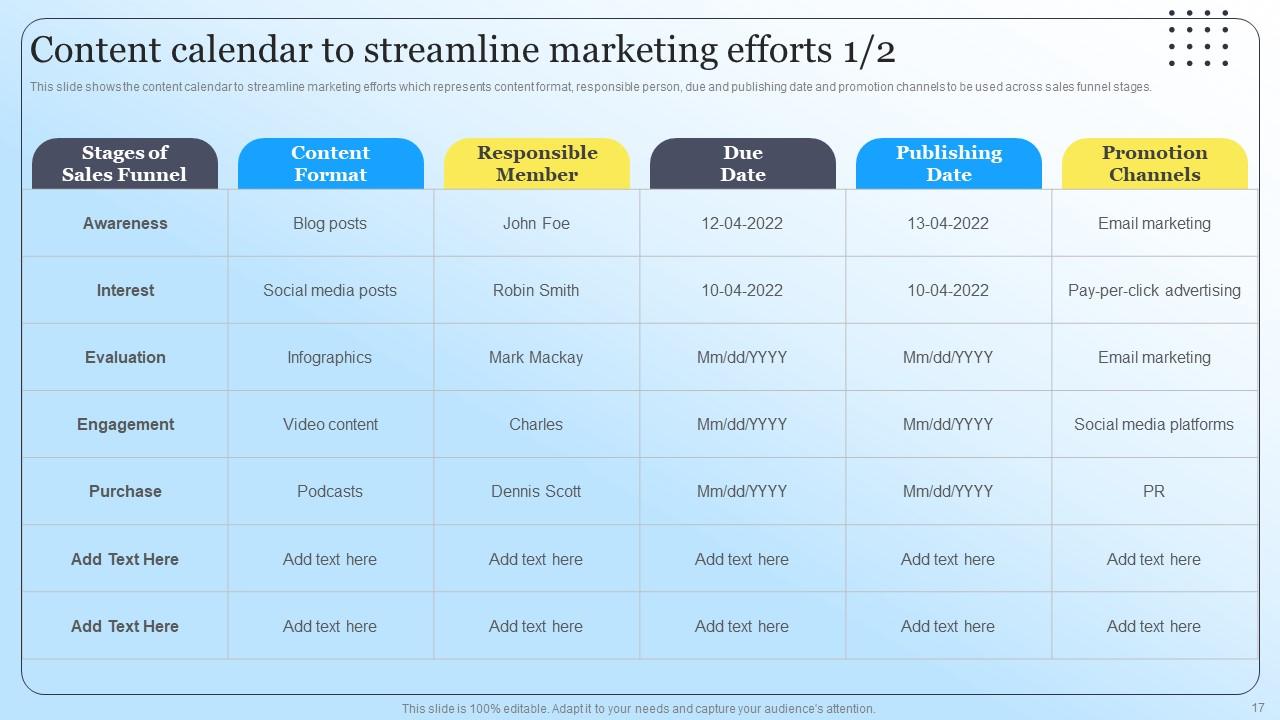
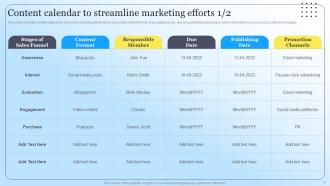
Slide 17: This slide talks about the Content calendar to streamline marketing efforts.
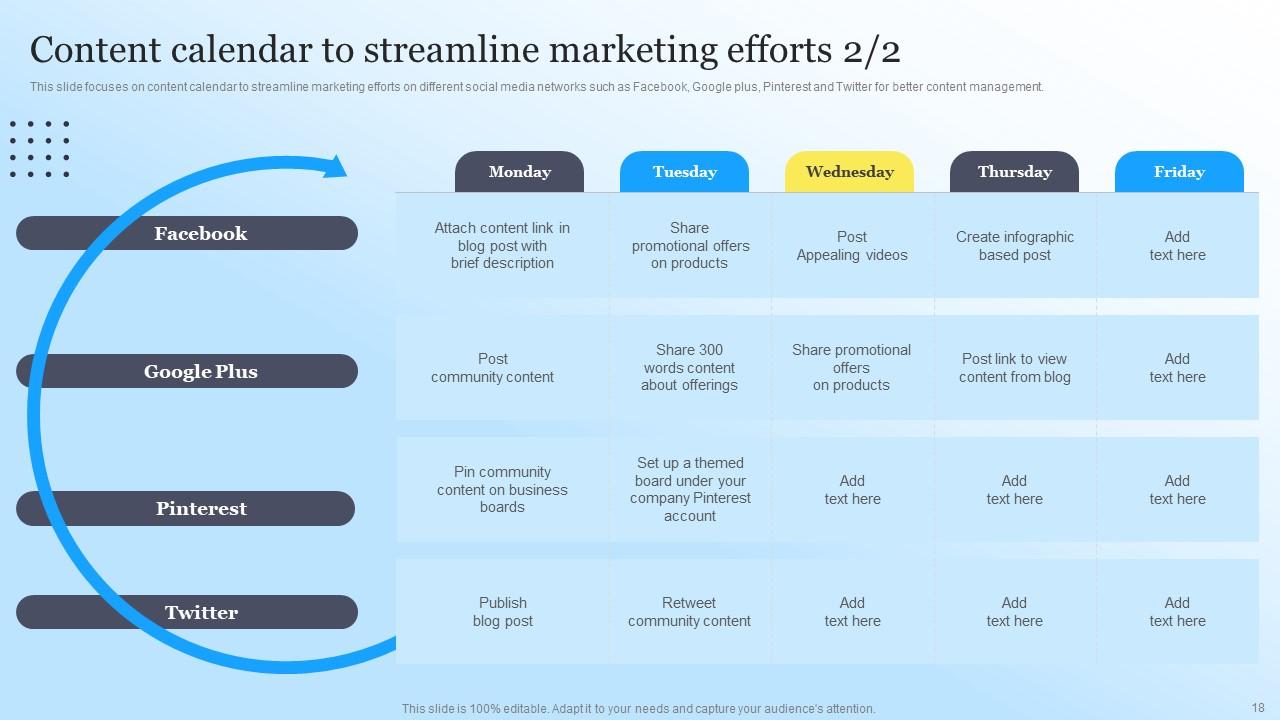
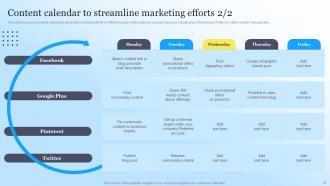
Slide 18: This slide continues the Content calendar.
Slide 19: This slide presents the Heading for the Ideas to be covered in the upcoming template.
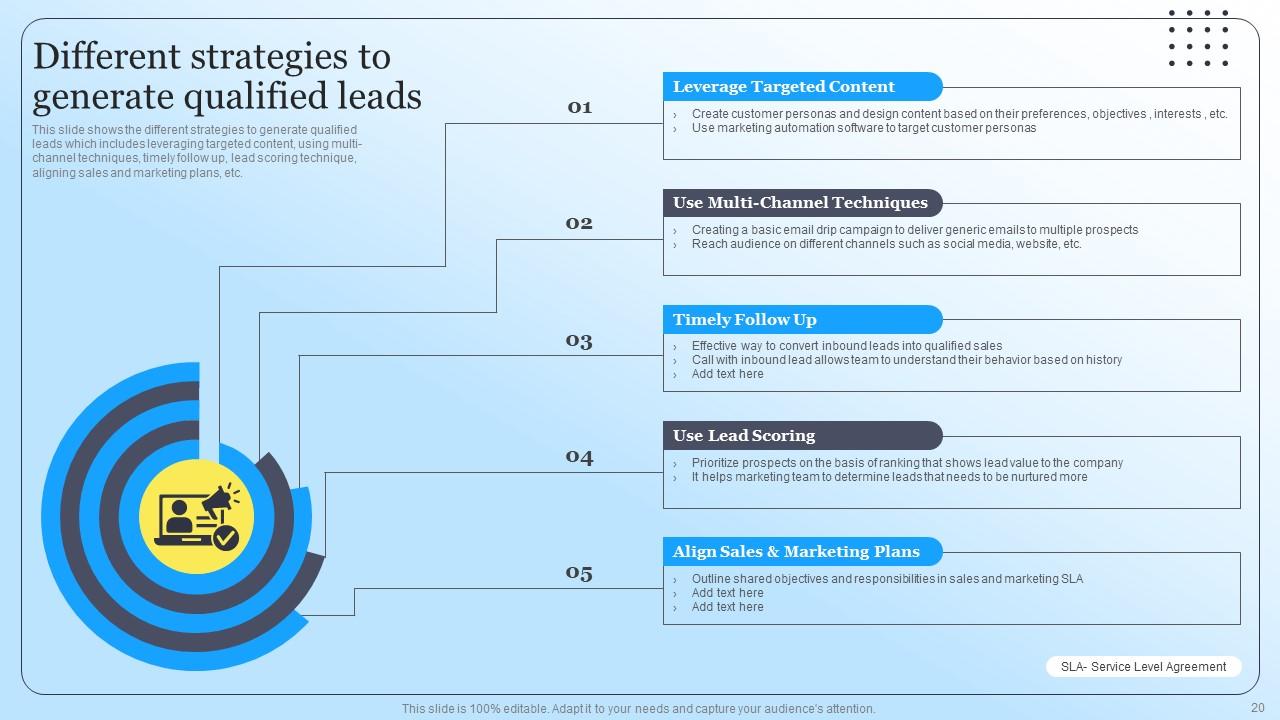
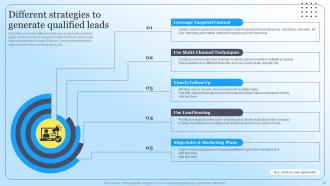
Slide 20: This slide shows the different strategies to generate qualified leads which includes leveraging targeted content, using multi-channel techniques, etc.
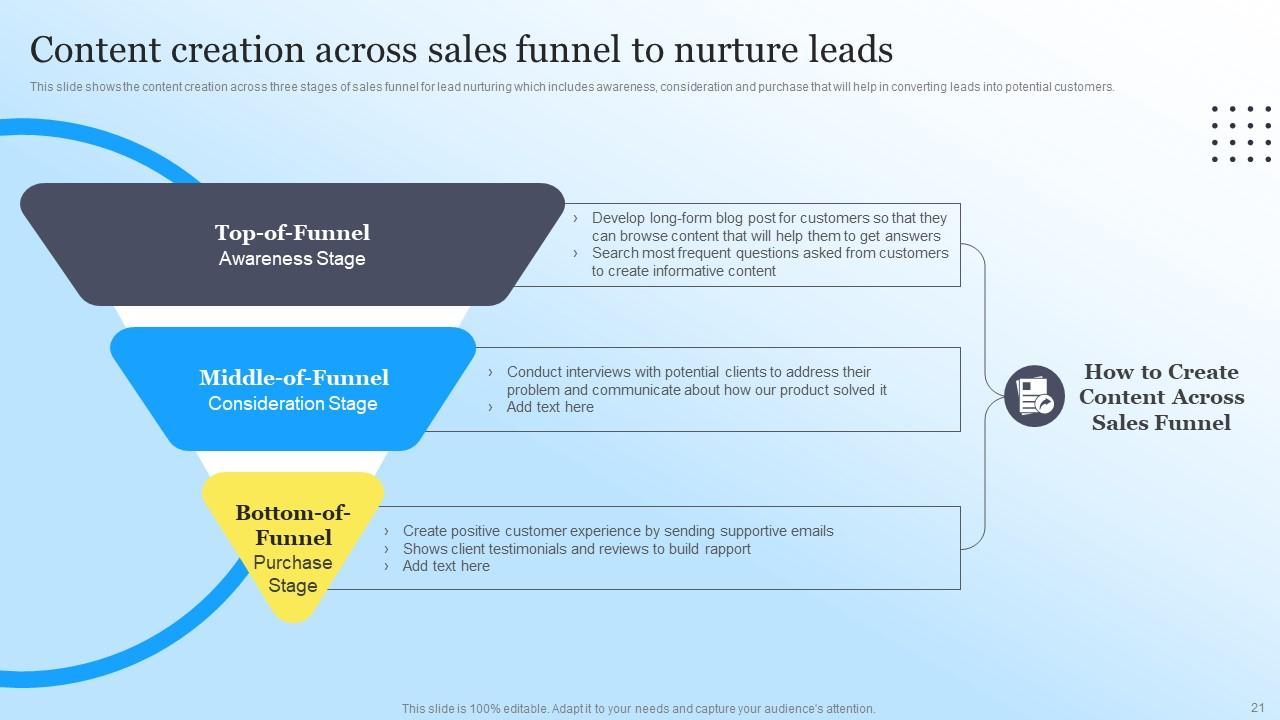
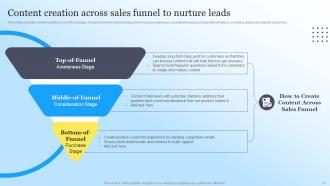
Slide 21: This slide deals with the Content creation across sales funnel to nurture leads.
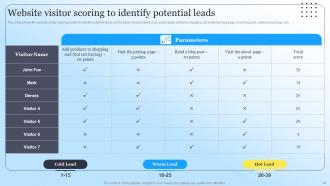
Slide 22: This slide elucidates the Website visitor scoring to identify potential leads.
Slide 23: This slide indicates the Title for the Components to be discussed next.
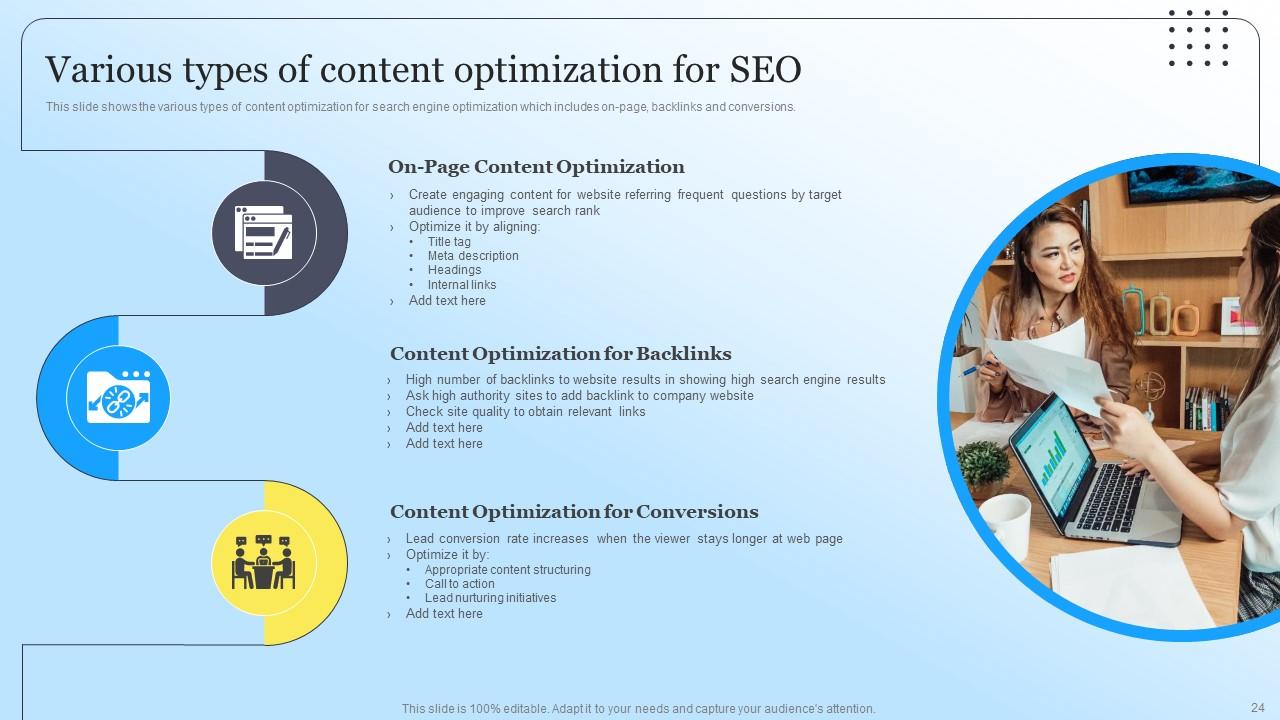
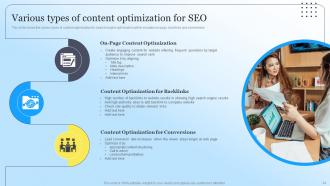
Slide 24: This slide lists the Various types of content optimization for SEO.
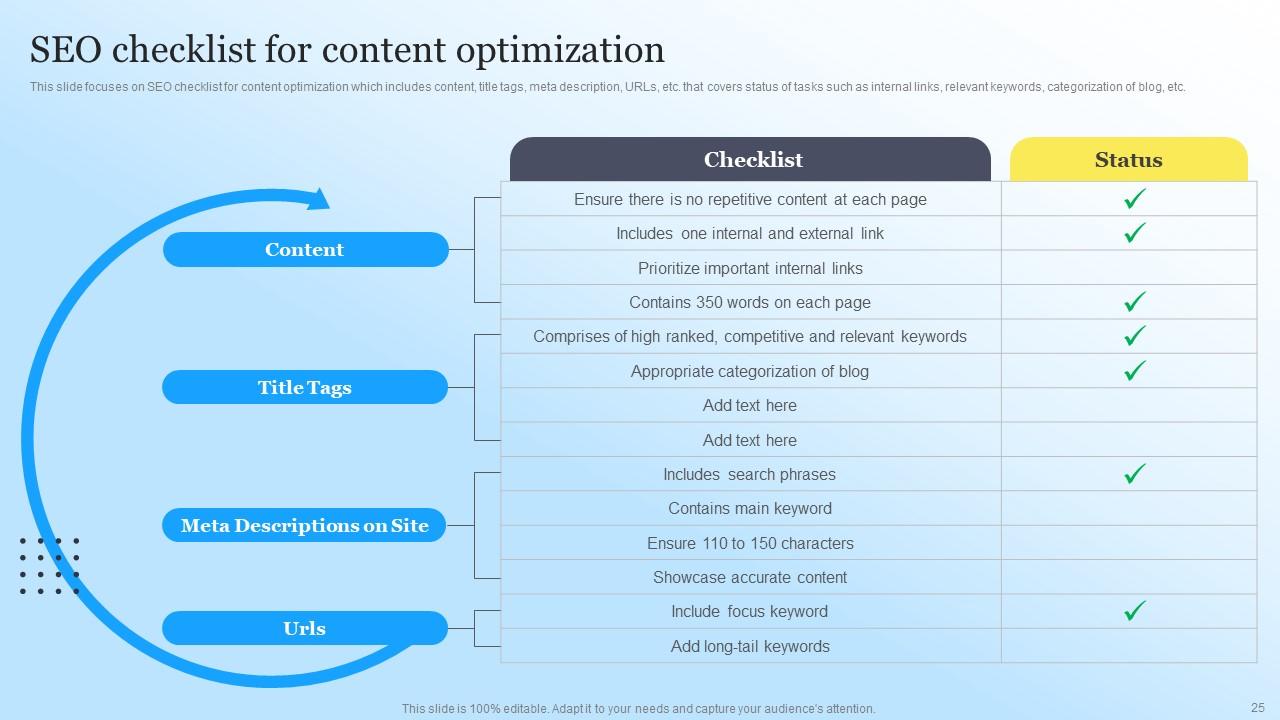
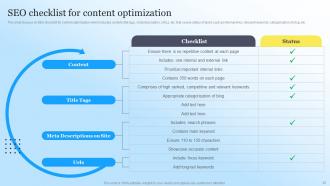
Slide 25: This slide focuses on SEO checklist for content optimization which includes content, title tags, meta description, URLs, etc.
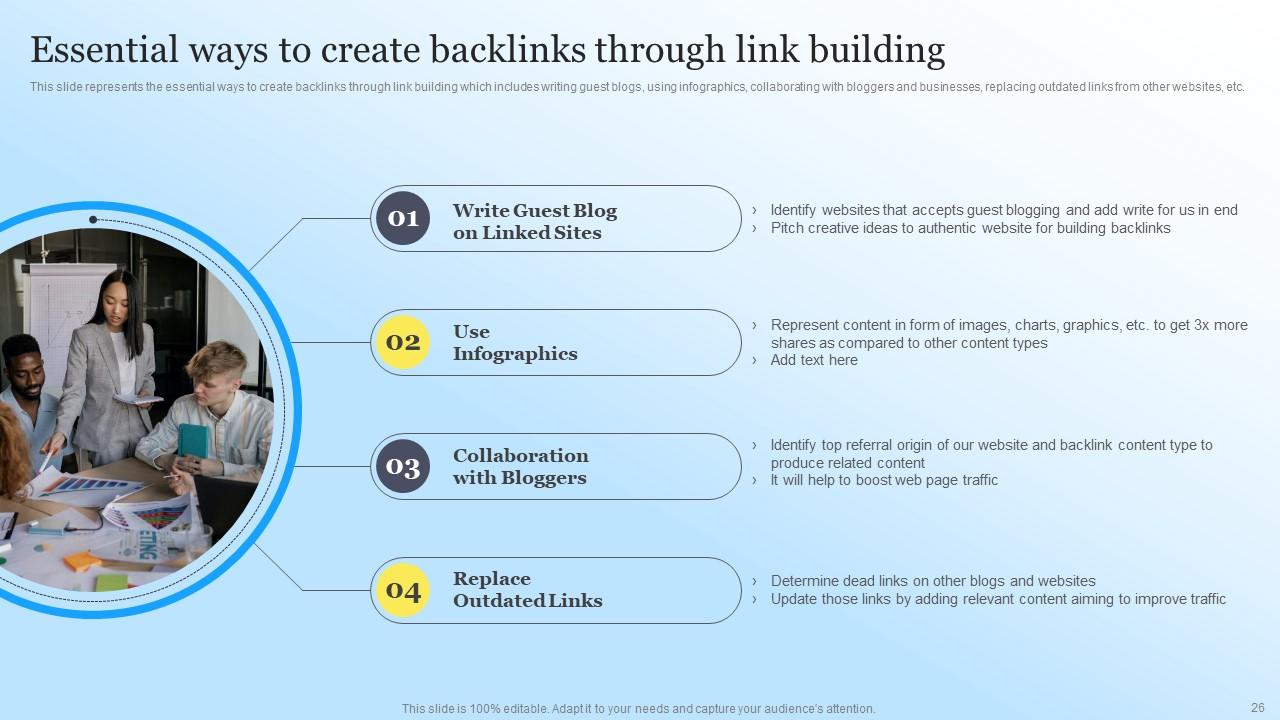
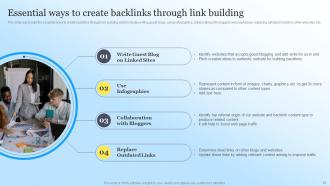
Slide 26: This slide represents the essential ways to create backlinks through link building which includes writing guest blogs, using infographics, collaborating with bloggers and businesses, replacing outdated links from other websites, etc.
Slide 27: This slide outlines the Heading for the Topics to be covered in the forth-coming template.
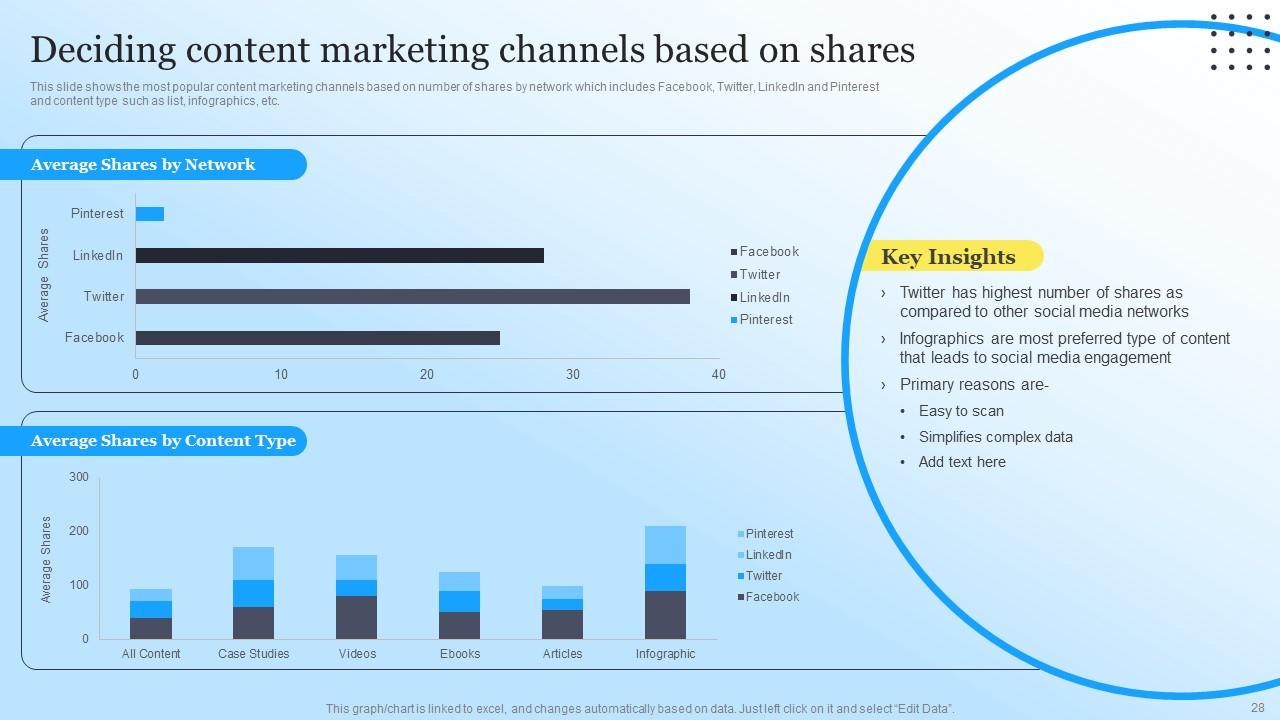
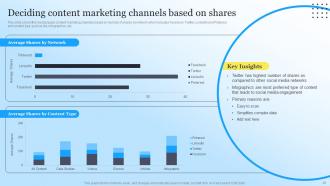
Slide 28: This slide shows the most popular content marketing channels based on number of shares by network which includes Facebook, Twitter, LinkedIn, etc.
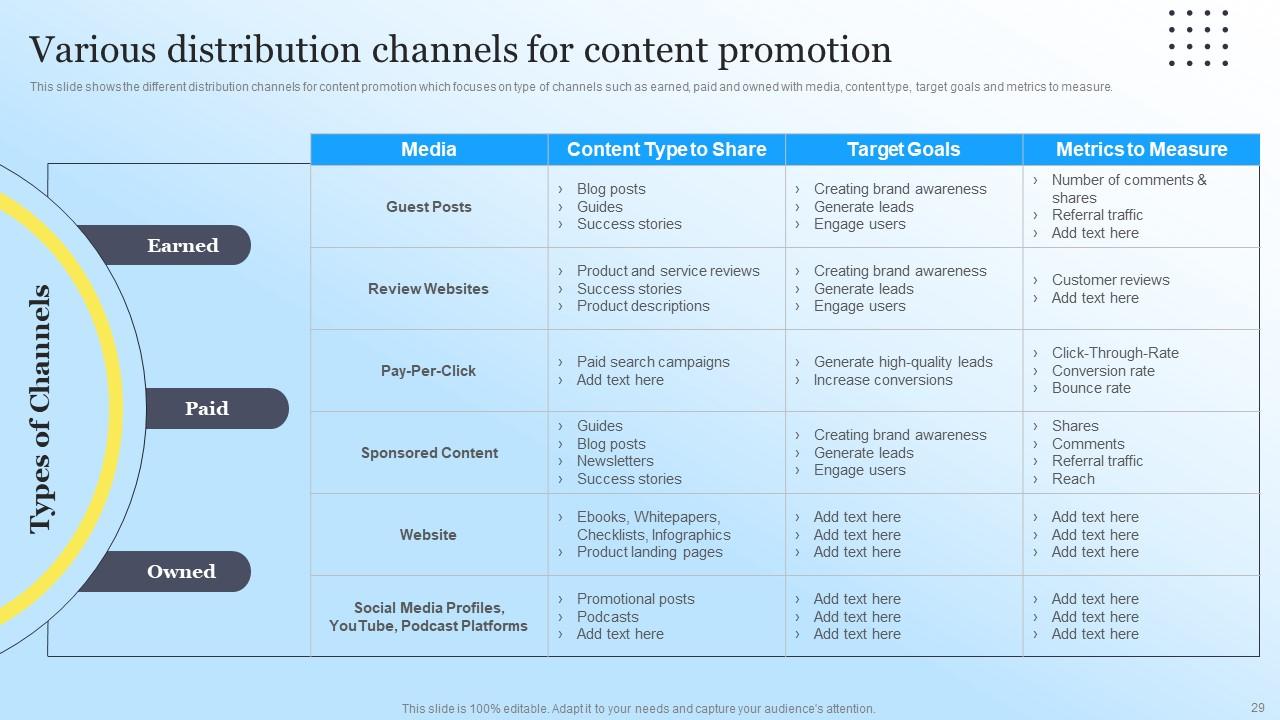
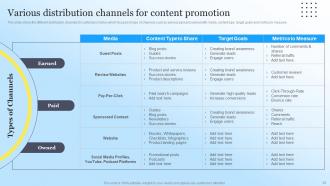
Slide 29: This slide talks about the Various distribution channels for content promotion.
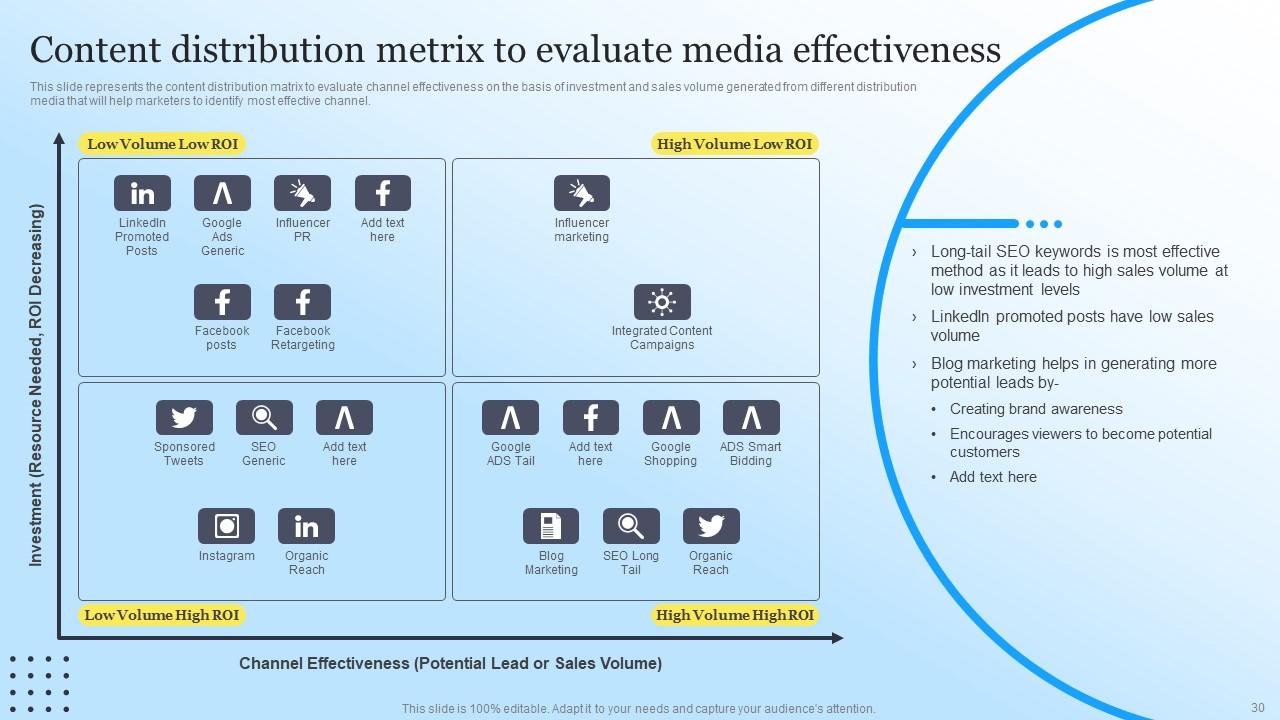
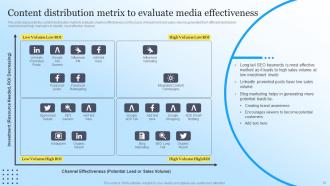
Slide 30: This slide emphasizes Content distribution metrix to evaluate media effectiveness.
Slide 31: This slide portrays the Title for the Topics to be discussed next.
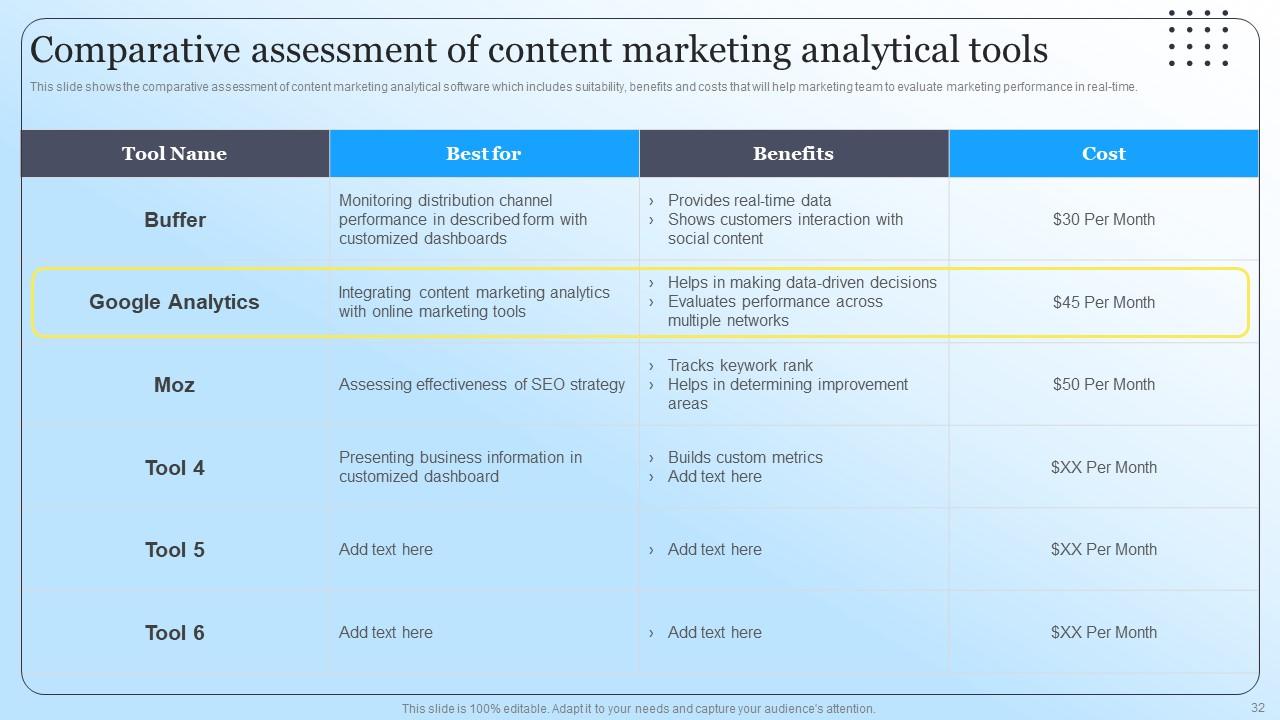
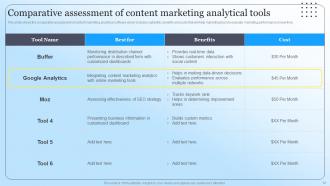
Slide 32: This slide reveals the Comparative assessment of content marketing analytical tools.
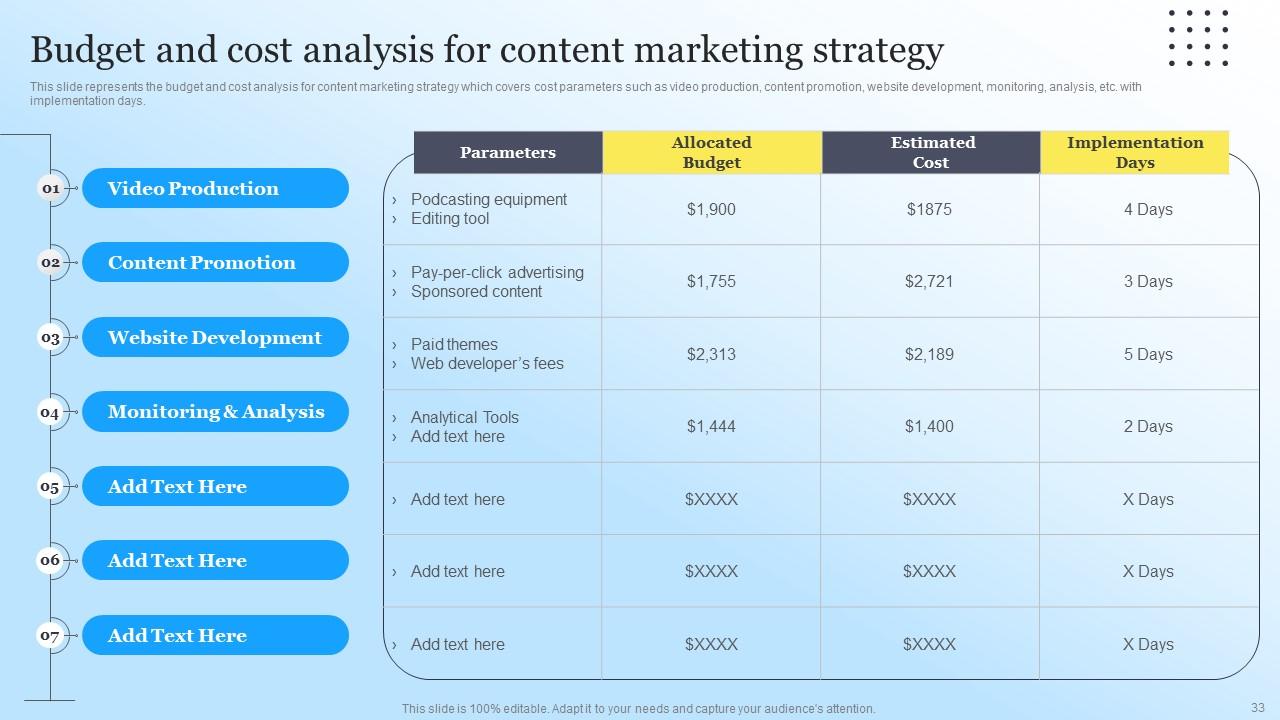
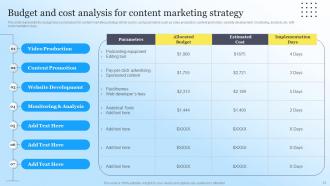
Slide 33: This slide represents the budget and cost analysis for content marketing strategy which covers cost parameters such as video production, content promotion, etc.
Slide 34: This slide elucidates the Heading for the Contents to be discussed next.
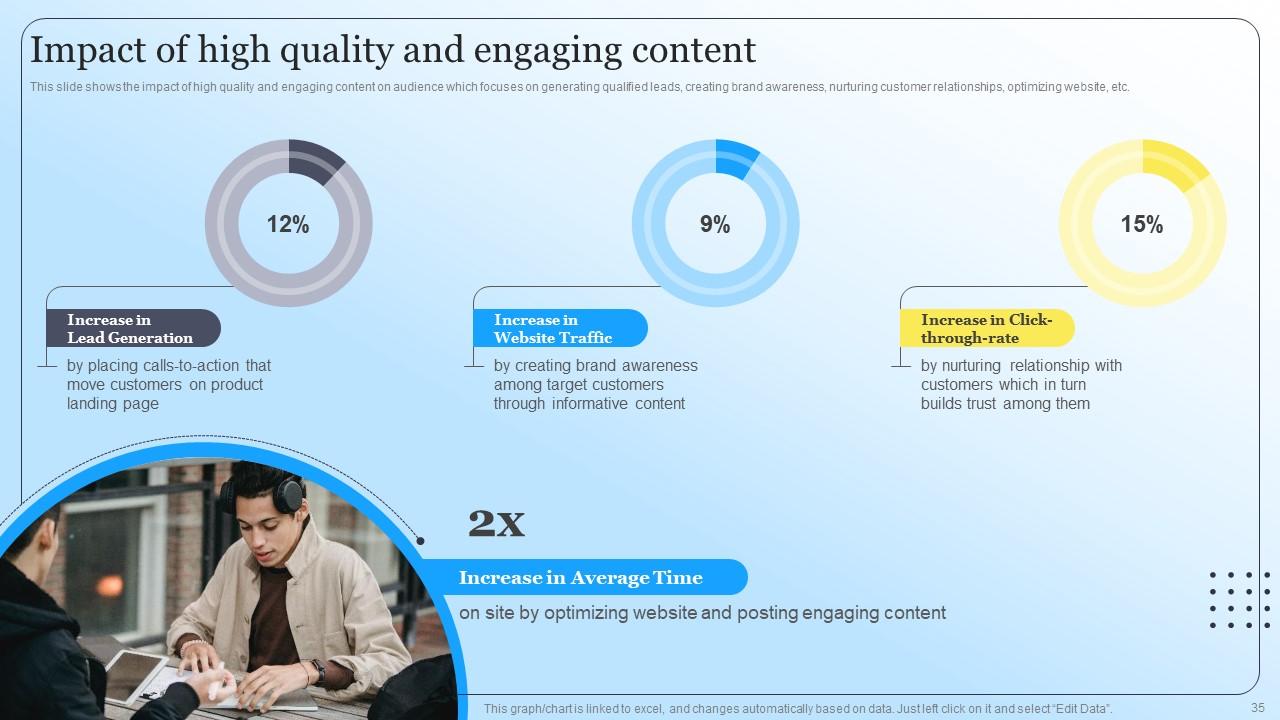
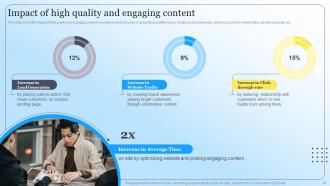
Slide 35: This slide mentions about the Impact of high quality and engaging content.
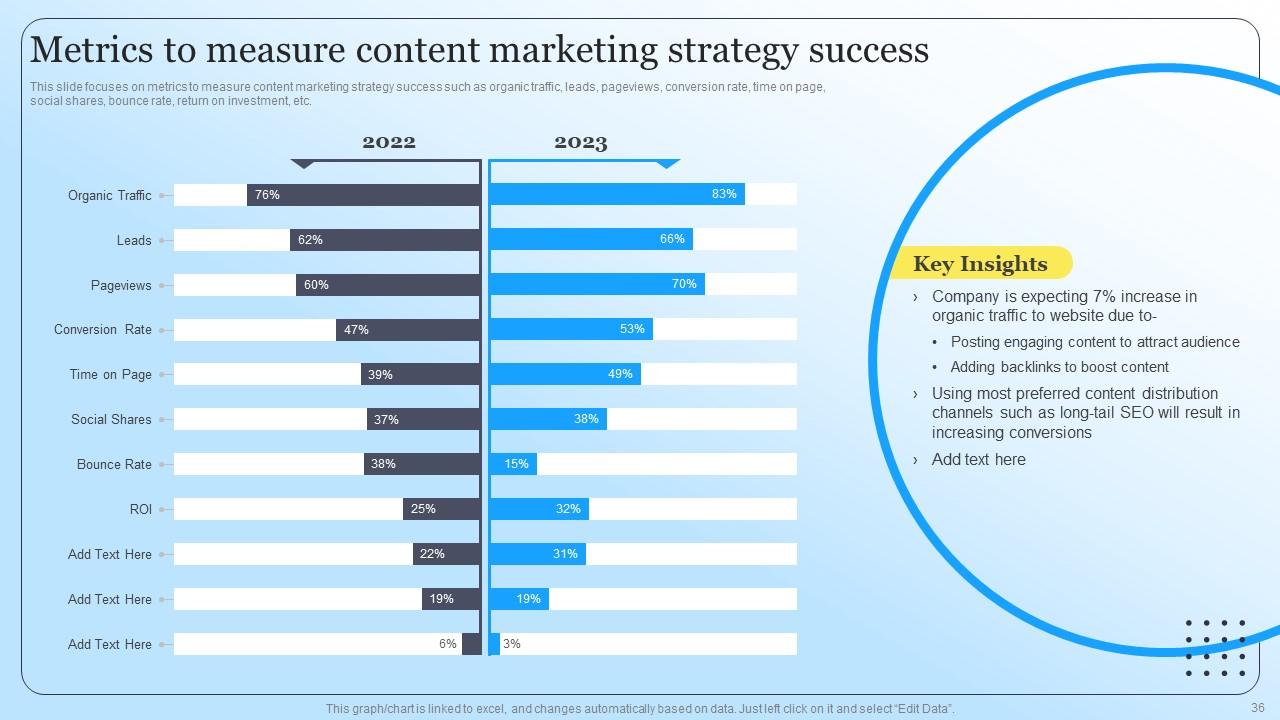
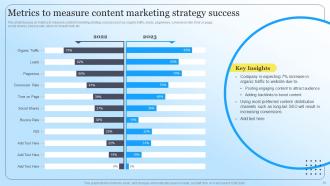
Slide 36: This slide focuses on metrics to measure content marketing strategy success such as organic traffic, leads, pageviews, etc.
Slide 37: This slide indicates the Heading for the Contents to be covered in the further template.
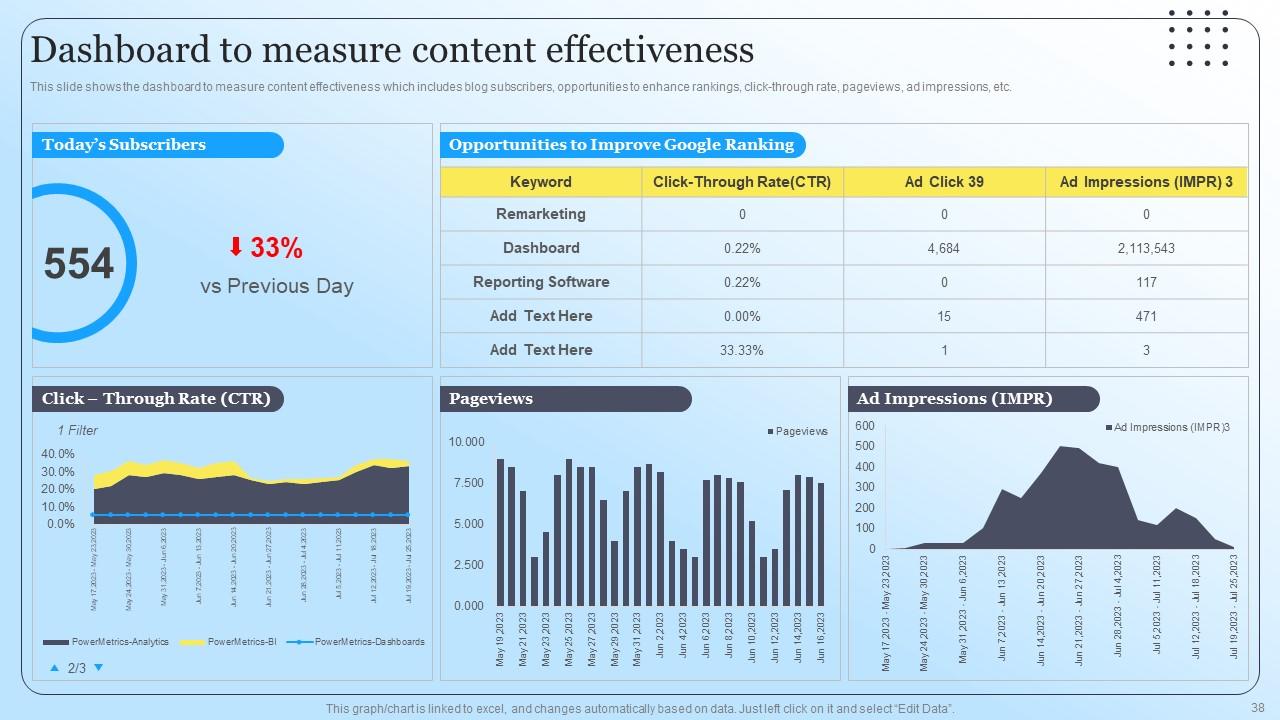
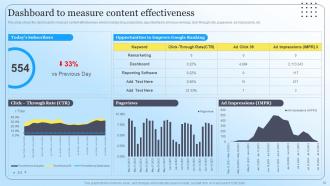
Slide 38: This slide illustrates the Dashboard to measure content effectiveness.
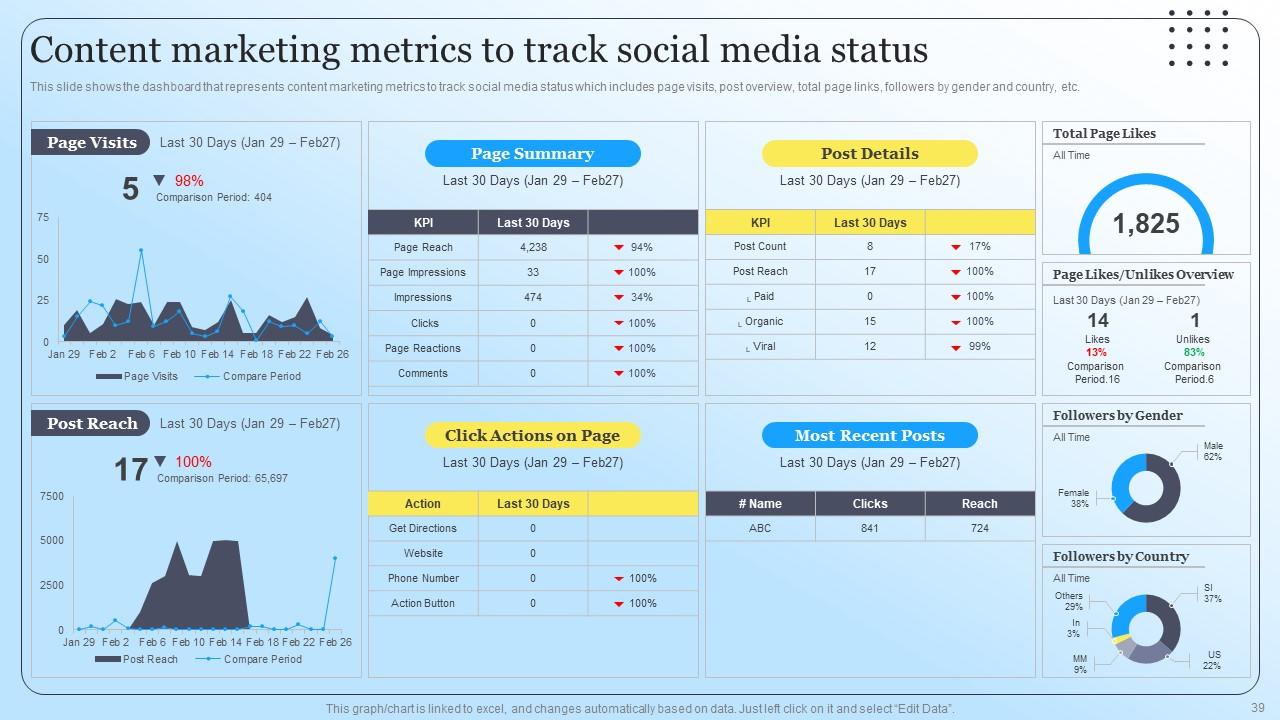
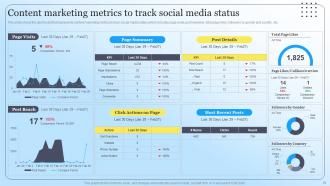
Slide 39: This slide shows the dashboard that represents content marketing metrics to track social media status which includes page visits, post overview, etc.
Slide 40: This is the Icons Slide containing all the Icons sused in the plan.
Slide 41: The purpose of this slide is to elucidate some Additional information.
Slide 42: This is the 30 60 90 days plan slide for effective planning.
Slide 43: This sldie contains the Post it notes for reminders and deadlines.
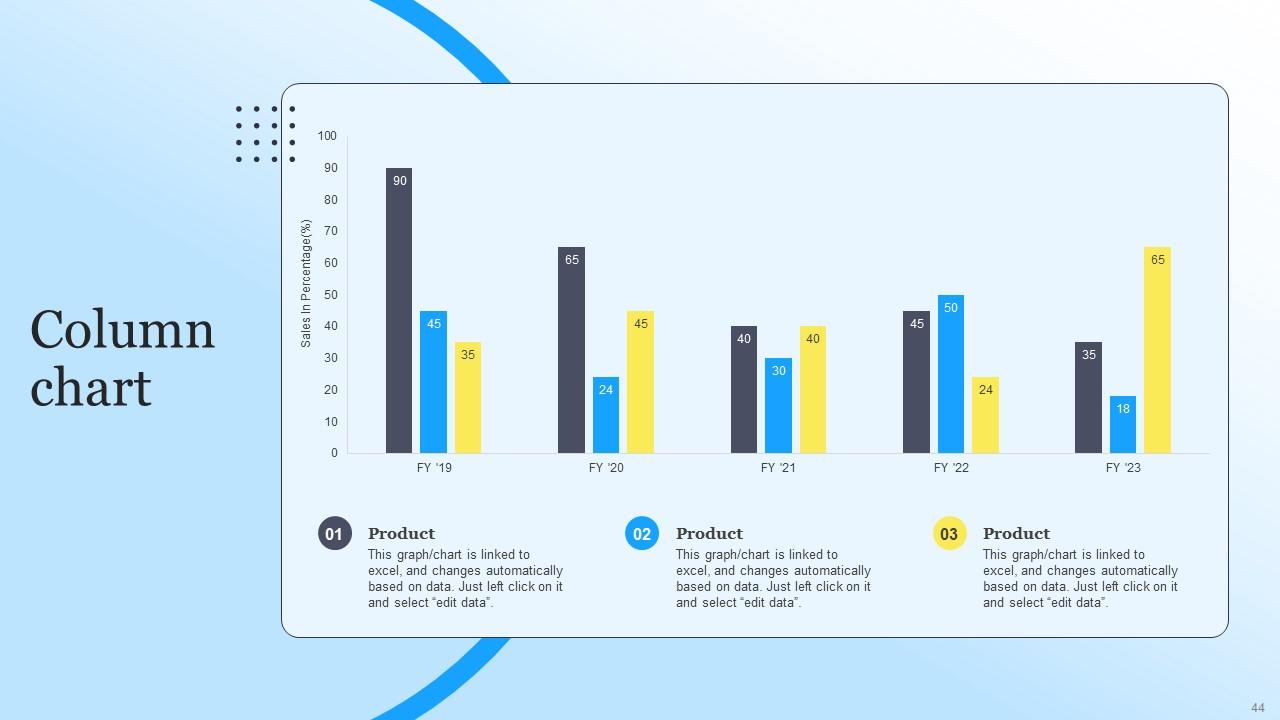
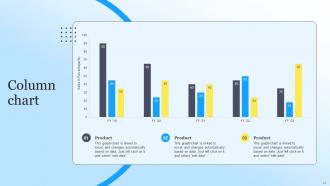
Slide 44: This slide showcases the Column chart.
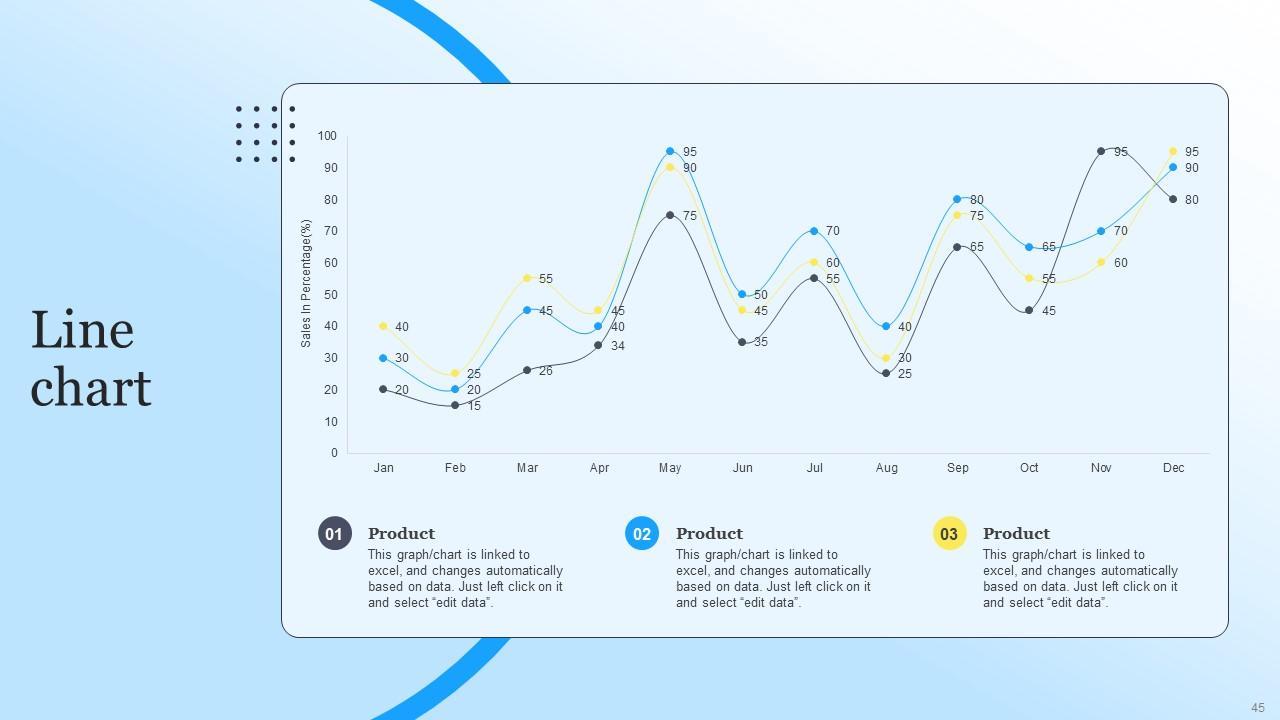
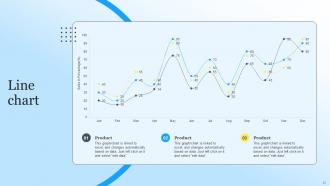
Slide 45: This slide reveals the Line chart.
Slide 46: This is Our mission slide. State your organization's mission, vision, and goals here.
Slide 47: This sldie represents the Venn diagram.
Slide 48: This is the Magnifying glass for minute details.
Slide 49: This slide is used for the purpose of Comparison.
Slide 50: This is the Idea generation sldie for encouraging innovative ideas.
Slide 51: This is the Thank You slide for acknowledgement.
Steps To Create Content Marketing Strategy Powerpoint Presentation Slides with all 56 slides:
Use our Steps To Create Content Marketing Strategy Powerpoint Presentation Slides to effectively help you save your valuable time. They are readymade to fit into any presentation structure.
-
Top Quality presentations that are easily editable.
-
The Designed Graphic are very professional and classic.
