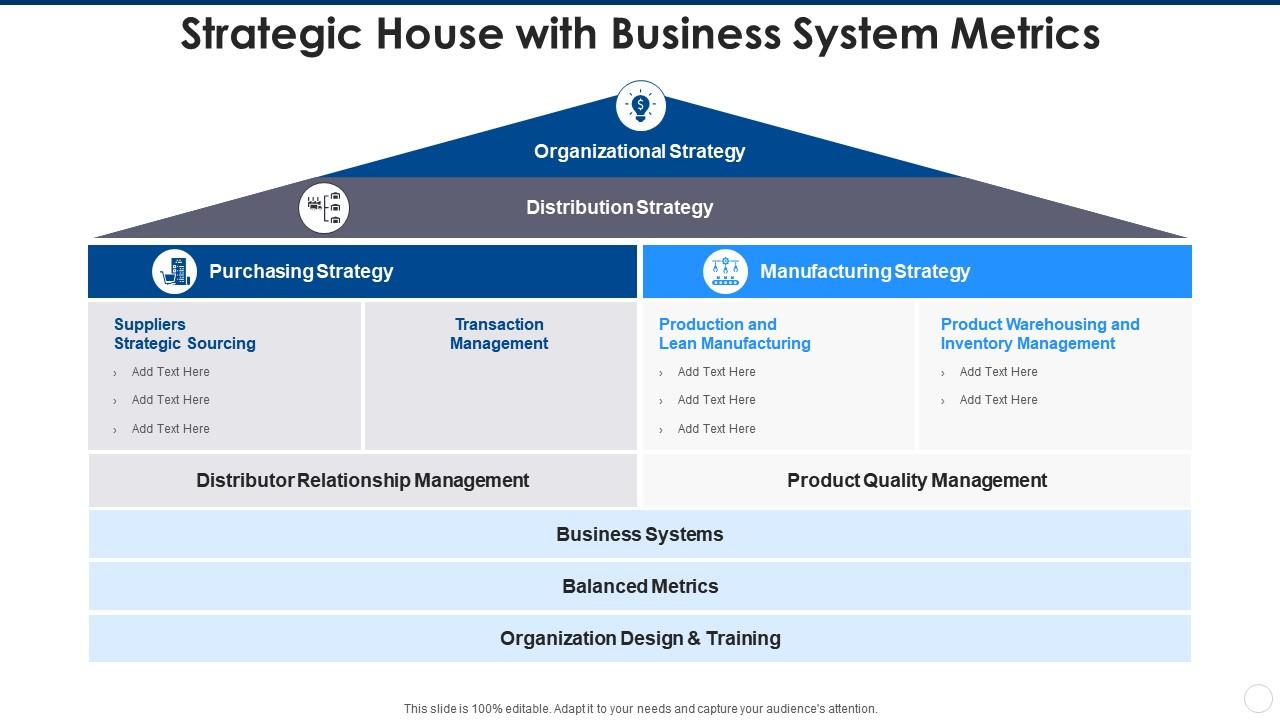
Strategic house with business system metrics
Try Before you Buy Download Free Sample Product
Audience
Editable
of Time
Our Strategic House With Business System Metrics are topically designed to provide an attractive backdrop to any subject. Use them to look like a presentation pro.
People who downloaded this PowerPoint presentation also viewed the following :
Strategic house with business system metrics with all 9 slides:
Use our Strategic House With Business System Metrics to effectively help you save your valuable time. They are readymade to fit into any presentation structure.
FAQs for Strategic house with
Honestly, just track four things: customer acquisition cost (CAC), customer lifetime value (LTV), monthly recurring revenue (MRR), and net revenue retention. That's it. Don't get sucked into all those fancy vanity metrics that look cool in presentations but won't actually help you make decisions. Your LTV to CAC ratio needs to hit at least 3:1. Net revenue retention above 100% means you're growing existing accounts faster than you're losing them - which is huge. Oh, and check these weekly, not monthly. I know it sounds like overkill, but you'll spot problems way sooner when you can actually fix them.
Here's what I'd do - pick your top 3-5 business goals and tie your metrics straight to those. Growth is your main thing? Track stuff that predicts growth, not just what already happened. Work backwards from what success actually looks like. Honestly, I've watched so many teams get obsessed with numbers that make them feel good but don't actually matter. You want both quick wins and the bigger picture stuff. Oh, and definitely do quarterly check-ins to make sure you're still measuring the right things. Sometimes what matters shifts faster than you think.
Look, data quality is make-or-break for your metrics. Bad data means your numbers are basically lying to you - and I've seen companies blow major decisions because of this. You might think customer acquisition is crushing it when you're actually losing people left and right. Or the opposite happens and you panic for no reason. The whole "garbage in, garbage out" thing is real, especially when there's serious money on the line. Set up some validation processes and audit your data regularly. Don't trust those pretty dashboard numbers until you know the underlying data isn't trash.
Honestly? Most companies should look at their strategic metrics every quarter, but it really depends on your industry. Tech moves fast, retail's seasonal - you know your business better than anyone. Monthly makes sense if things change quickly for you. Set up formal review points annually for sure, plus whenever big stuff happens like product launches or market shifts. I've seen too many teams tracking metrics that stopped being useful months ago. Just... don't let them collect dust, you know? Put a reminder in your calendar right now to check if your current metrics actually match where you're headed.
Tell a story with your data instead of just throwing numbers at people. Why should they care right now? That's your starting point. Visuals need to actually make sense - pie charts aren't always the answer, trust me. Always compare against benchmarks so they can quickly see if you're winning or losing. Three metrics max per slide or you'll lose them. Oh, and come ready with what you need from them. That's usually the whole point anyway. Decision-makers hate when you present problems without solutions or next steps.
Honestly, strategic metrics are game-changers because they show you what's *actually* moving your business forward instead of just pretty numbers. I used to obsess over vanity metrics that made me feel good but didn't mean anything. The ones that matter? Customer acquisition cost, retention rates, revenue per user - stuff that directly connects to your bottom line. Weekly reviews help you catch problems early, before they blow up. Also, don't go metric-crazy - pick maybe 3-5 that genuinely align with your goals. More than that and you'll just confuse yourself.
Tableau and Power BI are your best bets for visualizing strategic metrics - both make solid dashboards that don't suck. Google Data Studio's great too if you're watching costs. For OKR tracking specifically, check out Weekdone or 15Five. But honestly? I've watched so many teams waste weeks debating tools when they could've just started with a decent spreadsheet. Sometimes simple wins. The real trick is finding something your team will actually stick with instead of abandoning after two weeks because it's too complicated.
Oh man, this happens all the time and it's super frustrating. Your Western teams are celebrating individual performance wins while Asian teams are like "but what about group results?" Risk stuff gets weird too - some cultures freak out over safety margins dropping while others think it's just smart efficiency. The quarterly panic thing is real - some teams lose their minds over short-term dips that other cultures completely ignore because they're thinking years ahead. Honestly, the only thing that's worked for me is just asking each region straight up what they actually consider success. Then tailor how you present the same data. Saves so many headaches.
Build regular reviews into your metric strategy - quarterly minimum, but honestly monthly if you're in a fast-moving space. Ask yourself: do these metrics still predict what actually matters for success? Market shifts can make them irrelevant pretty quick. Focus on leading indicators that give early signals instead of just lagging ones telling you what already happened. Your customers and competitors are goldmines here - they'll tip you off when your measurement approach needs a refresh. Oh, and set up a simple way to ditch irrelevant metrics fast. Don't let dead metrics clutter your dashboard.
Honestly, most people mess this up by tracking way too many things at once. You'll also run into issues with metrics that look impressive but don't actually help you make better decisions - total waste of time. Data quality is another headache, plus getting info when it's already too late to act on it. Start with maybe 3-5 metrics max that actually connect to what you're trying to achieve. Get your department heads involved in picking them - they'll be way more cooperative if they helped choose. Oh, and don't cheap out on your data setup from the start. You'll thank me later. Keep reviewing and adjusting because this stuff isn't permanent.
Look, it totally depends on your industry - what matters for a tech startup is completely different from manufacturing. Tech folks are all about user growth and keeping people from leaving. Meanwhile, factories care about how smoothly things run and supply chain stuff. Healthcare? They're tracking patient results and making sure they don't get in trouble with regulations (which honestly seems exhausting). Retail is just obsessed with sales per store and how fast inventory moves. You need to figure out what actually affects your profits and competitive edge. Don't copy others blindly. Pick maybe 4-5 metrics that'll tell you if you're crushing it or failing in your specific space.
Pick 2-3 metrics that actually matter to your team's day-to-day work. Show people how what they do connects to the bigger picture - honestly, most folks have no clue how their tasks move the company forward. Share progress weekly through dashboards or quick team meetings. Transparency is everything here. Celebrate when numbers go up, brainstorm together when they tank. I've seen this approach work really well because it gives people ownership over results instead of just checking boxes. Make the tracking visible and collaborative - that's where the magic happens.
Look, instead of just staring at what already happened, predictive analytics shows you what's coming next. It's like having a crystal ball for your business metrics - you can catch problems months before they actually hurt you. The algorithms find patterns we'd totally miss otherwise. Netflix does this when it suggests shows, but for your business decisions. Honestly, it's pretty wild how much better you can plan when you know where things are headed instead of where they've been. Pick one metric that really matters to you and try building a forecast model around it first.
Okay so metrics and risk management are basically connected - your numbers help catch problems early, and managing risk tells you what to actually measure. Like if you're tracking customer churn but ignoring what causes it, you're kinda screwed. Your metrics become warning signs for threats coming down the pipeline. Meanwhile your risk plan sets the limits for those same metrics. Honestly, most dashboards are just pretty colors that don't help much. You want yours to actually prevent disasters, not just tell you about them after everything's already gone wrong.
Honestly, most companies totally blow this by only watching revenue and other backward-looking stuff. You've gotta track the early signals instead - what are customers actually searching for, complaining about, or engaging with differently? New competitor moves, shifts in buying patterns, that kind of thing. Set up alerts when these metrics get weird so you're not glued to dashboards all day. I've watched businesses miss massive opportunities because they waited until trends were already obvious. The magic happens when you catch patterns before everyone else does - then you can actually do something about it.
-
Very unique and reliable designs.
-
Wonderful templates design to use in business meetings.
-
Excellent products for quick understanding.
-
Excellent template with unique design.