


Strategic Plan To Secure IT Infrastructure Powerpoint Presentation Slides Strategy CD V




Try Before you Buy Download Free Sample Product
 Impress Your
 Audience
 100%
100% Editable
 Save Hours
 of Time


Unlock the potential of our Strategic Plan to Secure IT Infrastructure template, which provides a comprehensive framework for aligning IT strategy with business goals to achieve excellence and cost leadership. This IT Infrastructure template outlines the utilization of various technologies to accomplish IT and business objectives, including IT infrastructure management, risk management, and improved marketing strategies. Moreover, our IT Infrastructure deck offers a holistic view of technology leadership in managing IT department performance. At the same time, the IT Automation PowerPoint presentation emphasizes the role of the IT steering committee in attaining cost leadership and showcases vital IT trends and statistics. Furthermore, our IT strategy plan PPT covers future predictions for advanced technologies such as hyper-automation, artificial intelligence, and extended reality. Lastly, the IT steering committee template addresses essential aspects and highlights the significance of cybersecurity and the role of the Chief Information Officer in maintaining a competitive edge. Take advantage of this powerful resource to enhance your IT strategy framework, achieve IT cost leadership, and strengthen your IT infrastructure for business transformation. Get access now.
People who downloaded this PowerPoint presentation also viewed the following :
Content of this Powerpoint Presentation
Slide 1: This slide introduces Strategic plan to secure IT infrastructure.
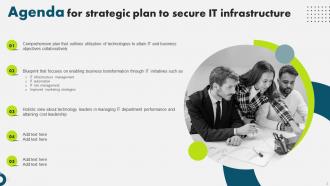
Slide 2: This slide depicts the Agenda of the presentation.
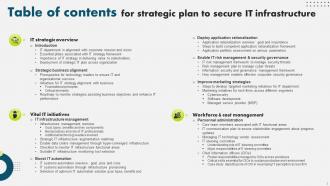
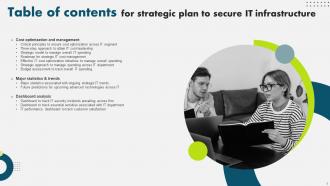
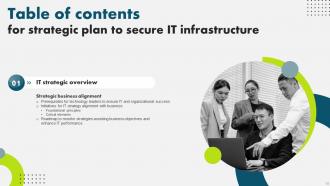
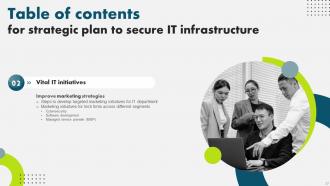
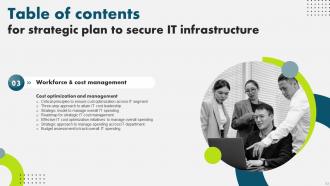
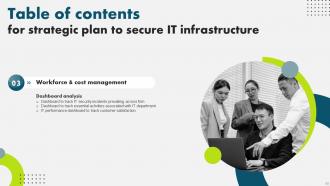
Slide 3: This slide incorporates the Table of Contents.
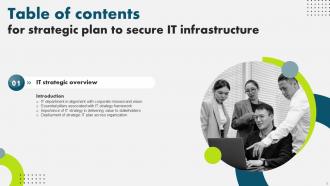
Slide 4: This is yet another slide continuing the Table of Contents.
Slide 5: This slide highlights the Title for the Topics to be discussed next.
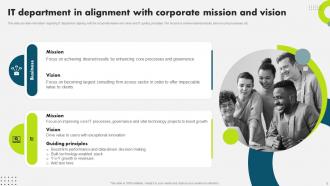
Slide 6: This slide provides information regarding IT department aligning with the corporate mission and vision and IT guiding principles.
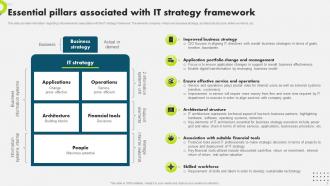
Slide 7: This slide covers the Essential pillars associated with IT strategy framework.
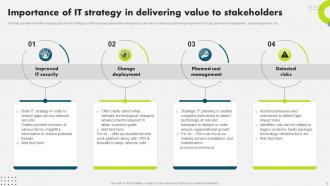
Slide 8: This slide displays the Importance of IT strategy in delivering value to stakeholders.
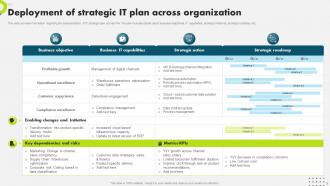
Slide 9: This slide deals with the Deployment of strategic IT plan across organization.
Slide 10: This slide mentions the Heading for the Contents to be discussed further.
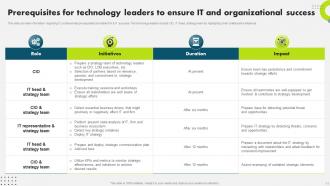
Slide 11: This slide provides information regarding IT professionals prerequisites to enable firm & IT success.
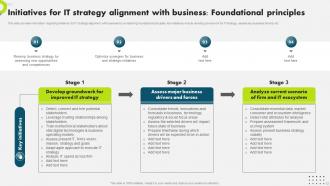
Slide 12: This slide focuses on Initiatives for IT strategy alignment with business: Foundational principles.
Slide 13: This slide portrays the Initiatives for IT strategy alignment with business: Critical elements.
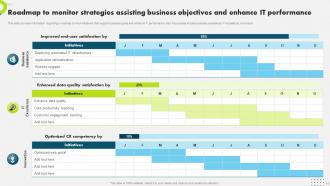
Slide 14: This slide provides information regarding a roadmap to track initiatives that support business goals and enhance IT performance.
Slide 15: This slide depicts the Title for the Ideas to be discussed further.
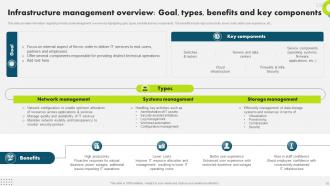
Slide 16: This slide emphasizes on infrastructure management overview by highlighting goal, types, benefits and key components.
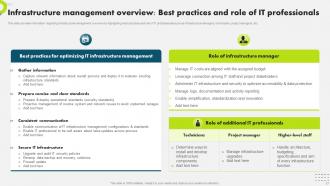
Slide 17: This slide provides information regarding infrastructure management overview by highlighting best practices and role of IT professionals.
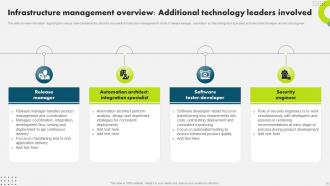
Slide 18: This slide focuses on the Infrastructure management overview: Additional technology leaders involved.
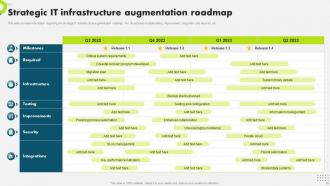
Slide 19: This slide exhibits information about the strategic IT infrastructure augmentation roadmap.
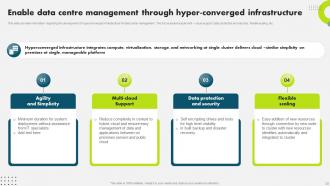
Slide 20: This slide deals with Enabling data centre management through hyper-converged infrastructure.
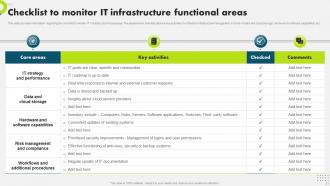
Slide 21: This slide provides information regarding the checklist to monitor IT infrastructure focus areas.
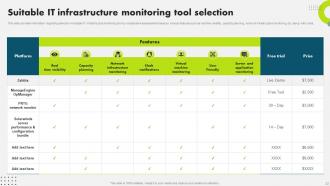
Slide 22: This slide talks about the Suitable IT infrastructure monitoring tool selection.
Slide 23: This slide exhibits the Heading for the Ideas to be discussed further.
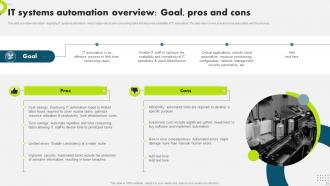
Slide 24: This slide gives information about the IT systems automation which helps restrict time-consuming tasks and improves scalability of IT operations.
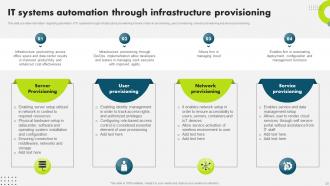
Slide 25: This slide reveals IT systems automation through infrastructure provisioning.
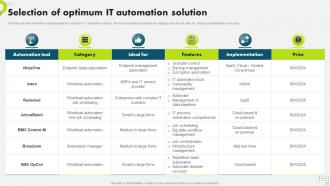
Slide 26: This slide deals with the Selection of optimum IT automation solution.
Slide 27: This slide covers the Title for the Components to be discussed further.
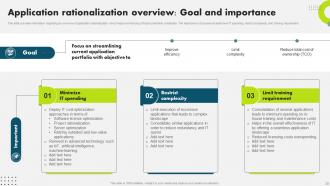
Slide 28: This slide provides information regarding an overview of application rationalization which helps in enhancing efficiency and limit complexity.
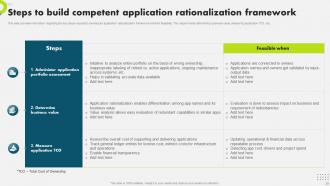
Slide 29: This slide states the Steps to build competent application rationalization framework.
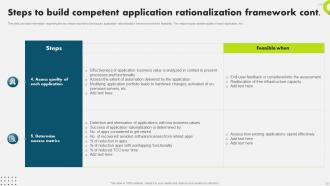
Slide 30: This slide continues the Steps to build competent application rationalization framework.
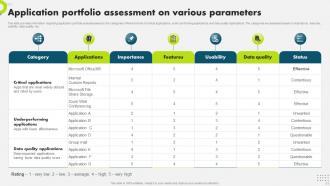
Slide 31: This slide focuses on the Application portfolio assessment on various parameters.
Slide 32: This slide highlights the Heading for the Topics to be covered next.
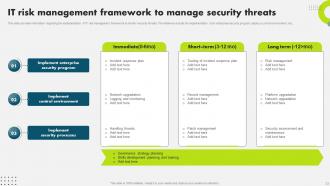
Slide 33: This slide provides information regarding the implementation of IT risk management framework to monitor security threats.
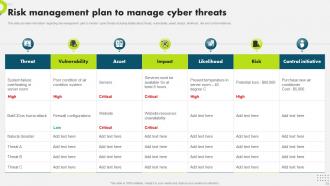
Slide 34: This slide focuses on the Risk management plan to manage cyber threats.
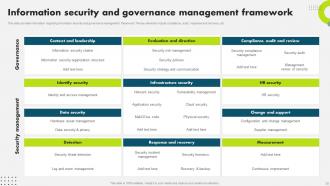
Slide 35: This slide shows Information security and governance management framework.
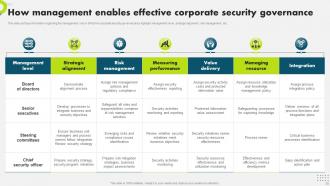
Slide 36: This slide portrays information regarding the management role in effective corporate security governance by highlight management level, strategic alignment, etc.
Slide 37: This slide mentions the Title for the Topics to be discussed in the upcoming template.
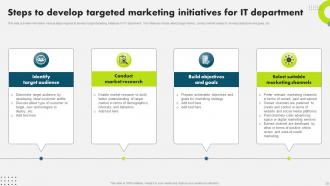
Slide 38: This slide provides information about the various steps required to develop target marketing initiatives for IT department.
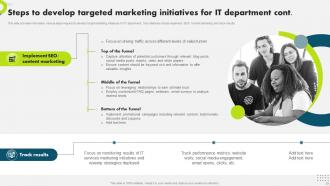
Slide 39: This slide continues the steps required to develop target marketing initiatives for IT department.
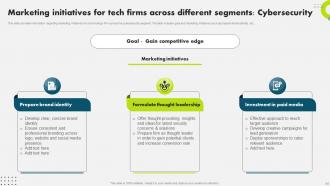
Slide 40: This slide exhibits the Marketing initiatives for tech firms across different segments: Cybersecurity.
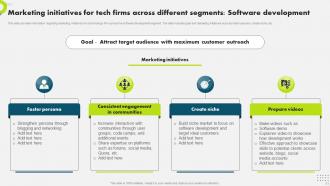
Slide 41: This slide highlights the marketing initiatives for a technology firm across the software development segment.
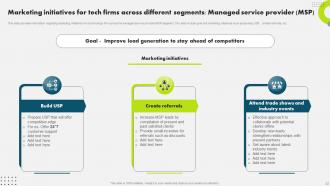
Slide 42: This slide showcases the marketing initiatives for a technology firm across the managed service provider(MSP) segment.
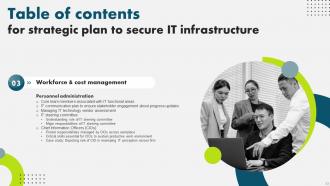
Slide 43: This slide contains the Heading for the Contents to be covered in the following template.
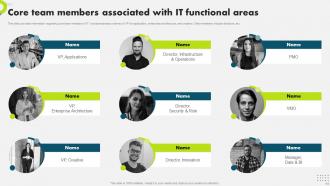
Slide 44: This slide represents the Core team members associated with IT functional areas.
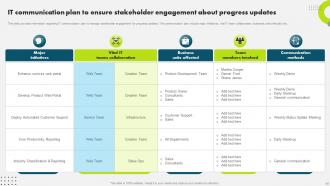
Slide 45: This slide provides information regarding IT communication plan to manage stakeholder engagement for progress updates.
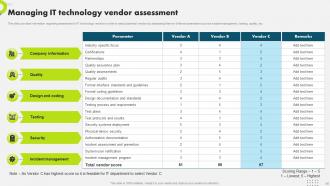
Slide 46: This slide diplays Managing IT technology vendor assessment.
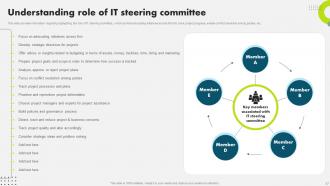
Slide 47: This slide focuses on Understanding role of IT steering committee.
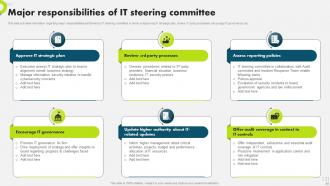
Slide 48: This slide highlights the Major responsibilities of IT steering committee.
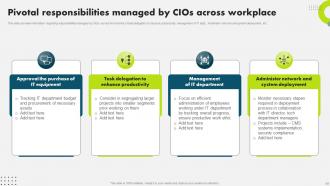
Slide 49: This slide reveals the Pivotal responsibilities managed by CIOs across workplace.
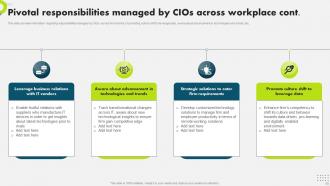
Slide 50: This is yet another slide continuing the Pivotal responsibilities managed by CIOs across workplace.
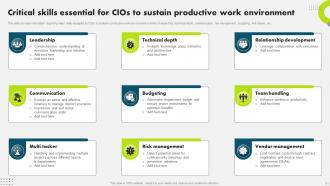
Slide 51: This slide portrays the Critical skills essential for CIOs to sustain productive work environment.
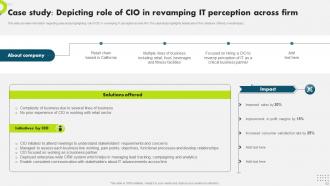
Slide 52: This slide provides information regarding case study highlighting role of CIO in revamping IT perception across firm.
Slide 53: This slide elucidates the Title for the Ideas to be covered further.
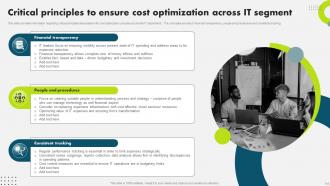
Slide 54: This slide shows the Critical principles to ensure cost optimization across IT segment.
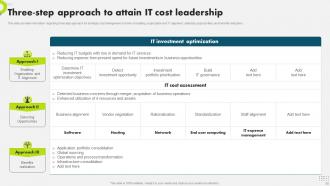
Slide 55: This slide illustrates the Three-step approach to attain IT cost leadership.
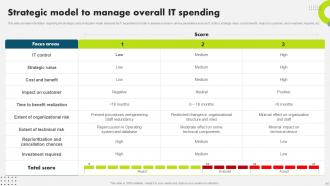
Slide 56: This slide displays the Strategic model to manage overall IT spending.
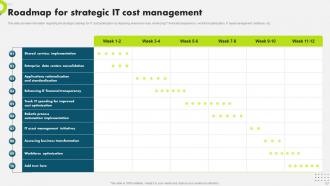
Slide 57: This slide exhibits the Roadmap for strategic IT cost management.
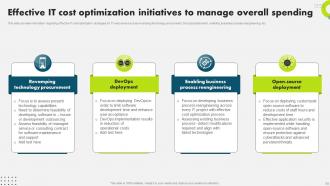
Slide 58: This slide focuses on Effective IT cost optimization initiatives to manage overall spending.
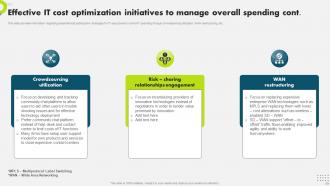
Slide 59: This is an extension slide of Effective IT cost optimization initiatives.
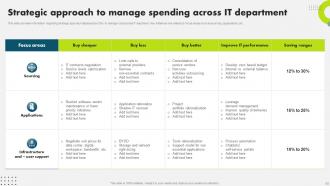
Slide 60: This slide reveals the Strategic approach to manage spending across IT department.
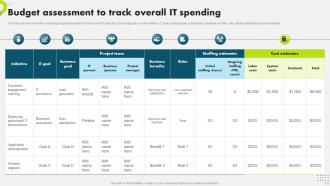
Slide 61: This slide highlights the Budget assessment to track overall IT spending.
Slide 62: This slide incorporates the Heading for the Ideas to be covered in the forth-coming template.
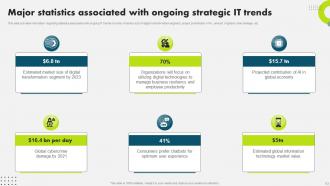
Slide 63: This slide emphasizes on the Major statistics associated with ongoing strategic IT trends.
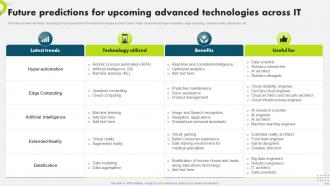
Slide 64: This slide talks about the Future predictions for upcoming advanced technologies across IT.
Slide 65: This slide elucidates the Title for the Contents to be covered further.
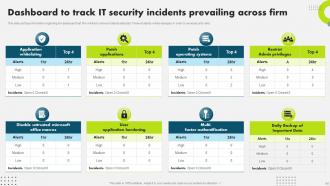
Slide 66: This slide portrays information regarding the dashboard that firm will track various incidents detected.
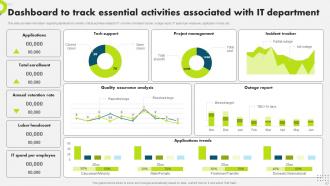
Slide 67: This slide presents the Dashboard to track essential activities associated with IT department.
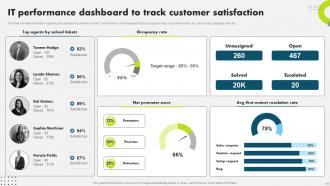
Slide 68: This slide displays the IT performance dashboard to track customer satisfaction.
Slide 69: This is the Icons slide containing all the Icons used in the plan.
Slide 70: This slide is used to depict some Additional information.
Slide 71: This is Our goal slide. State your organizational goals here.
Slide 72: This slide illustrates the Line chart.
Slide 73: This slide reveals the Clustered column.
Slide 74: This slide contains the Post it notes for reminders and deadlines.
Slide 75: This slide elucidates the 30 60 90 days plan slide for efficient planning.
Slide 76: This is the idea generation slide for encouraging fresh ideas.
Slide 77: This slide is used for the purpose of Comparison.
Slide 78: This slide depicts the Roadmap of the firm.
Slide 79: This is the Thank You slide for acknowledgement.
Strategic Plan To Secure IT Infrastructure Powerpoint Presentation Slides Strategy CD V with all 82 slides:
Use our Strategic Plan To Secure IT Infrastructure Powerpoint Presentation Slides Strategy CD V to effectively help you save your valuable time. They are readymade to fit into any presentation structure.






FAQs for Strategic Plan To Secure IT Infrastructure Powerpoint Presentation Slides
So there are five main pieces you gotta hit: assess what you currently have, figure out your future vision, identify the gaps, create a roadmap with timelines, and set up governance. Budget forecasting and risk management too - though budgets are honestly such a pain to get right. Oh, and don't just chase whatever tech is trendy right now. Your tech choices should actually match where the business is heading. I'd start by documenting your current setup first, then work backwards from where you want to be in like 3-5 years. Makes the whole thing way less overwhelming.
First thing - do a real audit of what you've got vs what you actually need. List out all your hardware, software, network stuff and be honest about how well it's working. Your users will tell you the truth about pain points way better than some expensive assessment tool, so definitely talk to them. Document your security and compliance stuff too since that usually drives big decisions. Oh and here's the thing - prioritize based on business impact, not whatever tech is trending right now. I've seen too many companies chase shiny objects instead of fixing what's actually broken. Be ruthless about identifying gaps.
So cloud computing has totally changed how we think about IT infrastructure these days. Instead of buying tons of expensive hardware upfront, you can just scale resources as needed. New environments? Minutes, not weeks - I can't tell you how much time this saves teams. Plus you get geographic distribution for performance and disaster recovery, which is clutch. Here's the thing though - you've gotta be smart about your hybrid approach. Figure out what needs to stay on-premises (security, compliance, costs, etc.) versus what can move. I'd start by auditing your current workloads first. Look for the easy wins you can migrate quickly.
Honestly, just tie your tech spending directly to what you're actually trying to accomplish as a business. Expanding into new markets? Your infrastructure better support that. Get your leadership and IT people talking regularly - yeah, another meeting, but this one's worth it I promise. Figure out what your strategy needs capability-wise, then work backwards from there. Skip the random upgrades that don't serve a purpose. Do quarterly check-ins to see if you're actually hitting your goals or just burning money on shiny tech toys.
Honestly, the worst mistake is waiting too long to talk to actual users. Costs always blow up way more than you expect - I learned this the hard way. Don't plan stuff without thinking about how your business actually works day-to-day. Avoid chasing every shiny new tool just because it's trendy. Focus on what fixes real problems instead. Change management is huge too - brilliant technical plans crash and burn when nobody gets people excited about using the new system. Budget way more time and money than seems reasonable. Trust me on this one.
Honestly, don't treat risk management like something you'll deal with later - build it right into your infrastructure from day one. Map out your critical systems first, then figure out what breaks if each one goes down. Downtime costs, data loss, compliance headaches - all of it. Redundancies and backup systems are your friends here. I swear, so many companies ignore the unglamorous disaster recovery stuff until they're screwed. Don't forget cyber threats either, not just hardware dying on you. Most important thing? Actually test your recovery processes regularly. A plan that looks good on paper but fails in real life is basically useless.
Track your performance stuff first - response times, uptime, the usual suspects. Cost per user is huge though, that's what'll save your butt in budget meetings. Security incident frequency matters too, plus how fast you actually fix things when they break. User satisfaction scores are kinda obvious but leadership loves seeing those numbers go up. Honestly, throw it all into a monthly dashboard so you can catch problems before they explode. The combo view helps you tell the real story instead of just "everything's fine" every month.
Honestly, start small with pilot projects - don't go crazy trying to do everything at once. Map your current gaps first, then build flexible infrastructure that can actually scale. Cloud architecture is your friend here, plus you'll need serious compute power since AI stuff is incredibly resource-heavy. IoT brings its own headaches with security (suddenly you've got thousands of new entry points to worry about). Strong network connectivity is non-negotiable. Edge computing helps too. My advice? Pick one tech, nail the foundation completely, then expand from there. Way better than spreading yourself too thin and ending up with a mess.
Honestly, go cloud-first if you can - way easier to spin up resources when you need them instead of buying servers upfront. Break everything into modules so you're not stuck with some giant monolithic nightmare. I learned this the hard way lol. Monitor your usage like crazy and set up auto-scaling rules. Infrastructure as code is clutch here - makes everything repeatable without the manual headaches. Oh, and actually look at your capacity forecasts regularly instead of just setting them once and forgetting. Start small, track what's happening, then scale based on real data.
Dude, you HAVE to invest in staff training - seriously can't stress this enough. Your fancy new systems are basically useless if nobody knows how to run them properly. I've watched companies blow massive budgets on infrastructure then act shocked when everything falls apart because their team was clueless. Without proper training, you're looking at constant outages and security holes. Your people need to know troubleshooting, maintenance, the works. Plus when you update stuff later they won't be lost. Start budgeting for training now, not later when things go sideways.
Look, build security in from day one instead of slapping it on later. Zero-trust architecture is key, plus regular vulnerability checks and multi-factor auth everywhere. Network segmentation saves your ass if something gets breached. Honestly, most companies ignore the boring stuff like patch management and access reviews - but that's where hackers get in 90% of the time. Encrypt everything at rest and in transit. Oh, and have an incident response plan ready because you'll need it eventually. Start with auditing what you have now so you know what's actually broken.
Look, you gotta figure out which systems actually make you money or keep customers happy - those are worth spending on. Everything else? Go cheaper. I've watched way too many companies waste cash on fancy setups they never even use properly. Try mixing it up - keep your mission-critical stuff on the good infrastructure, then dump the rest onto budget cloud options. Oh and definitely check your usage every few months. You'd be shocked how much you're paying for things that just sit there doing nothing. Don't let sales guys talk you into more than you need.
Honestly, vendor management can make or break your IT strategy. Bad vendor relationships = budget overruns and headaches when stuff breaks. You'll want solid contracts that actually protect you, not just generic terms they copy-paste for everyone. Regular performance reviews help catch issues early, and clear escalation paths save your sanity during crises. Map out who your critical vendors are first - that's where I'd start. Oh, and don't underestimate how much time this takes. Set up recurring check-ins so relationships don't go stale. Trust me, you don't want to scramble when you need something urgently.
Honestly, you've gotta build compliance right into your setup from the start - retrofitting it later is a nightmare. Figure out what regulations hit your industry first (GDPR, HIPAA, whatever applies). Then connect those rules to actual tech controls. Document literally everything, even the boring stuff. Automate monitoring wherever you can so you're not drowning in manual checks. Regular audits are your friend - better to find problems yourself than have auditors surprise you. Oh, and set up those quarterly legal/security team meetings. Compliance isn't a one-and-done thing, it's more like... ongoing maintenance for your business.
Cloud migration's the big one - everything's heading there, so plan for hybrid setups. Remote work means you'll need way more bandwidth and security than before. Edge computing's getting real traction, especially for IoT stuff. Honestly, sustainability requirements are becoming a pain but you can't ignore them anymore - energy costs are brutal. AI workloads are everywhere now and they eat resources like crazy. Start with what you're actually using today, then map it against these trends. Oh, and don't forget multi-cloud strategies - nobody's putting all their eggs in one basket these days.
-
It makes easy work of my work presentations. I’ve never had to be nervous about my presentations for meetings.
-
They guys always go the extra mile to meet the expectations of their customers. Almost a year has been associated with them.