


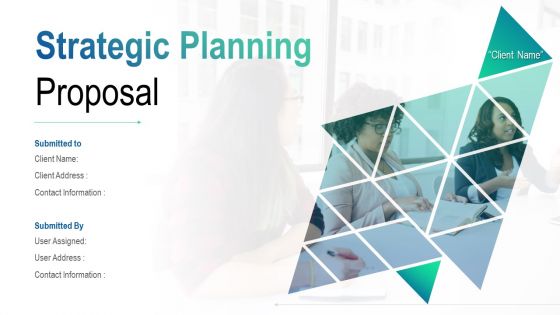
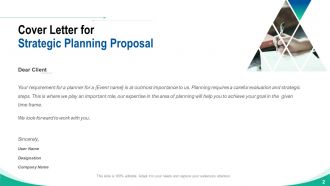
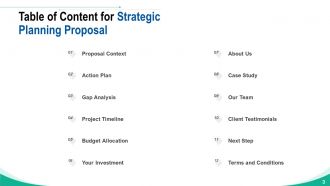
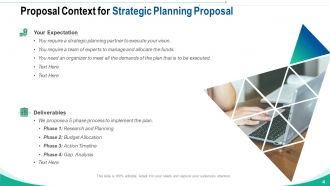
Strategic planning proposal powerpoint presentation slides





Try Before you Buy Download Free Sample Product
 Impress Your
 Audience
 100%
100% Editable
 Save Hours
 of Time


Our Strategic Planning Proposal Powerpoint Presentation Slides are topically designed to provide an attractive backdrop to any subject. Use them to look like a presentation pro.
People who downloaded this PowerPoint presentation also viewed the following :
Strategic planning proposal powerpoint presentation slides with all 23 slides:
Use our Strategic Planning Proposal Powerpoint Presentation Slides to effectively help you save your valuable time. They are readymade to fit into any presentation structure.





FAQs for Strategic planning proposal
Start with where you're at now and what's broken. List your main goals, then get into the actual tactics you'll use. Timeline's crucial - people love milestones they can track. Budget and team stuff comes next, obviously. Success metrics are non-negotiable because your boss will definitely ask how you'll prove it worked. I'd also throw in the risks and backup plans - makes you look like you actually thought this through. The trick is being detailed enough so they get it, but not so much that their eyes glaze over halfway through your presentation.
Get stakeholders involved in creating the plan, not just showing them the finished product. Find the people who actually have pull and bring them in early. Let them shape the vision instead of just rubber-stamping yours - honestly, I've watched so many strategies crash because teams thought they could just do a big reveal at the end. Each group needs to know what's in it for them specifically. Give them real ownership over the parts they actually care about, then keep following up. Short bursts of communication work better than those marathon update meetings. Show you're listening by actually using their feedback.
Honestly, SWOT analysis is where you need to start - it's your reality check before diving into any strategic planning. Look at your internal strengths and weaknesses first, then scope out external opportunities and threats. I know it sounds super basic (and maybe a little boring?) but trust me, it actually works. Your whole proposal builds off these insights - they'll shape your objectives, help you figure out resource allocation, and spot potential risks. Skip this step and you're just guessing. Get your team together for a solid SWOT session, then use what you find to structure everything else.
Honestly, market research is what separates a solid strategic plan from total guesswork. You get real data about what customers actually want, how competitors are positioned, all that good stuff. Executives love seeing concrete numbers backing up your recommendations - way better than just winging it. It also catches blind spots you'd probably miss otherwise. I learned this the hard way on a project last year, but anyway. Don't just stick the research in some boring appendix though. Weave those insights into your whole narrative so the data actually supports every big decision you're making.
Honestly, start by measuring the money stuff first - ROI, revenue bumps, cost savings. That's what everyone cares about anyway. Then add operational things like how fast you're hitting deadlines and whether you're staying on budget. But here's the thing - don't ignore the fuzzy metrics either. Stakeholder happiness and employee engagement actually matter more than people think. Oh, and definitely get your baseline numbers before you start implementing anything, otherwise you're just guessing about impact later. Keep your dashboard simple though. Maybe 5-6 key things max, check quarterly, and don't be stubborn if you need to change course.
Don't just dump risk stuff at the end - work it into each part of your proposal. For every big initiative, list what could go sideways: market shifts, budget cuts, competitors being annoying, whatever. Figure out how likely each thing is and how badly it'd hurt. Then spell out your backup plans. I always do a risk matrix that ties to our main goals so the bosses can see we're not just winging it. Oh, and make sure someone's actually responsible for watching each risk. Leadership loves seeing you've already thought about the "what ifs" before they ask.
Honestly, mix up how you usually plan stuff. Design thinking workshops are solid - have people map customer journeys or run those "what if" scenarios that force everyone past normal limits. But here's the thing: brainstorming only really works when you get folks from totally different departments together. They'll come up with stuff you'd never think of on your own. Maybe bring in outside facilitators or actual customers to mess with your assumptions a bit. Oh, and don't let people immediately trash wild ideas - that kills everything before it starts.
Look, your company culture basically decides which strategies will actually work. Risk-taking cultures? They'll go for bold moves and disruptive plays. Conservative places that love stability? Those same ideas get killed in meetings before they even start. How you roll out strategy changes too - some companies involve everyone in planning, others keep it locked up with the executives. I've seen too many good strategies fail just because they didn't match the company's vibe. Work with your culture, not against it. Way easier path.
Here's what kills proposals every time: vague goals with no real deadlines. You need actual numbers and dates, not wishy-washy "we'll improve things." Skip the corporate buzzword soup too - nobody wants to read about "synergistic solutions" (seriously, who writes that stuff?). Make sure you're solving problems that actually exist, not ones you assume are there. Get leadership excited early or your proposal's toast. Oh, and budget estimates upfront are non-negotiable. Trust me, surprise costs later will tank everything faster than you think.
Ok so scenario planning is basically like stress-testing your strategy before you present it. Map out 3-4 different futures - best case, worst case, maybe some realistic middle ground stuff. Then see how your proposal holds up in each one. Honestly, most people skip this part because it feels like busy work, but it's actually genius for catching problems early. You'll spot weak points you never considered and can build backup plans. Plus stakeholders love seeing you've thought past the happy path - makes you look way more credible. Just pick your biggest unknowns and build scenarios around those.
Oh nice question! Miro's probably your best bet for mapping everything out visually - way better than staring at blank docs. PowerPoint or Google Slides work great too if you grab some strategic planning templates. Cascade and OnStrategy are solid if you want something more heavy-duty, though honestly they might be overkill depending on your situation. SmartDraw's clutch for org charts. I'd personally start brainstorming in Miro first, then polish everything up in slides for the final thing. Asana's good too if you're managing the whole project side of it.
Set actual ESG targets with your financial goals - like cutting carbon by 20% or hitting diversity numbers. Investors are totally obsessed with this right now, so you're positioning smart anyway. Build stakeholder assessments into how you make decisions. Budget for community stuff and green operations too. The real trick? Make everything concrete with deadlines and someone's name attached. Nobody buys those fluffy "we love the earth" statements anymore - they see right through that BS. Measurable commitments with timelines are what actually move the needle.
Okay so basically timelines and milestones keep your strategic plan from becoming another forgotten document. They turn fuzzy goals into actual trackable stuff you can measure. Without them? You're just hoping things work out, which... yeah, good luck with that. They show exactly when things are due and who's doing what. Plus you can catch problems before they blow up. Your boss will appreciate having clear checkpoints to see if it's actually worth the money. My advice - start with your end goal and work backwards. Oh and definitely build in buffer time because something always goes wrong.
Set up monthly or quarterly check-ins to get feedback from your stakeholders and see how you're tracking against goals. Surveys and focus groups work, but honestly the best stuff usually comes from just chatting with your team randomly. Don't get caught up in vanity metrics - track what actually moves the needle for your strategy. Here's the part most people mess up though: you have to actually DO something with the feedback you get. Keep a simple log of what people are telling you and the changes you make. Otherwise you're just collecting opinions for no reason.
Skip the data dumps - seriously, spreadsheets first will kill any proposal. Start with the problem you're solving, not the numbers. Walk them through it like a story: here's where we are, here's where we need to be, here's how we get there. Make it interactive too - ask questions, get their input. People want to feel like they're helping shape the plan, not just sitting through another PowerPoint death march. Oh, and visuals beat bullet points every time. I've watched too many good ideas die because someone led with analytics instead of the actual issue.
-
Great quality product.
-
Wonderful templates design to use in business meetings.