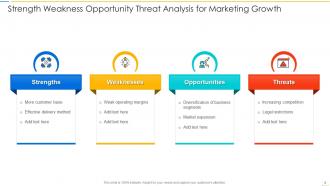
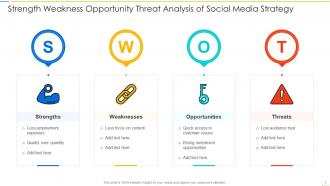
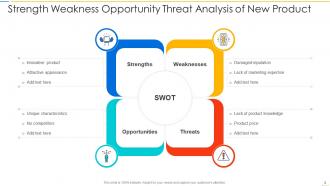
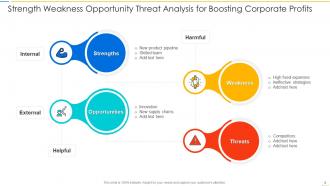
Strengths weakness opportunity threat powerpoint ppt template bundles
Try Before you Buy Download Free Sample Product
Audience
Editable
of Time
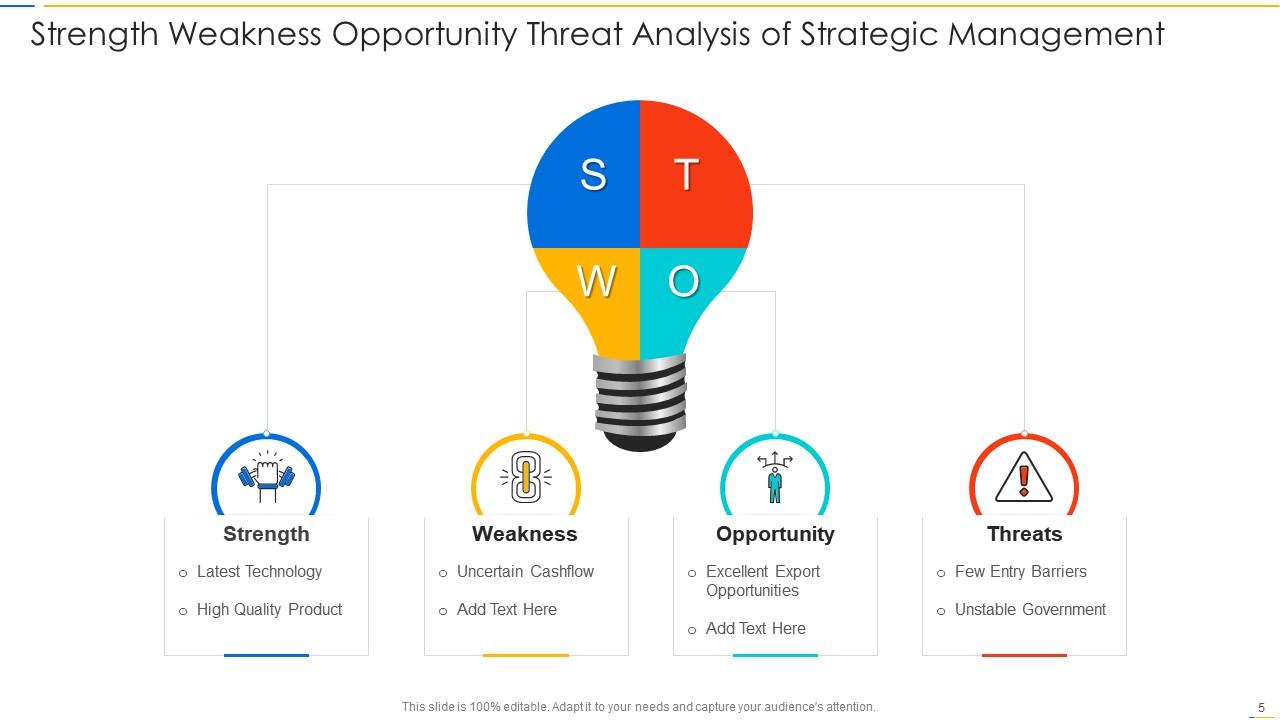
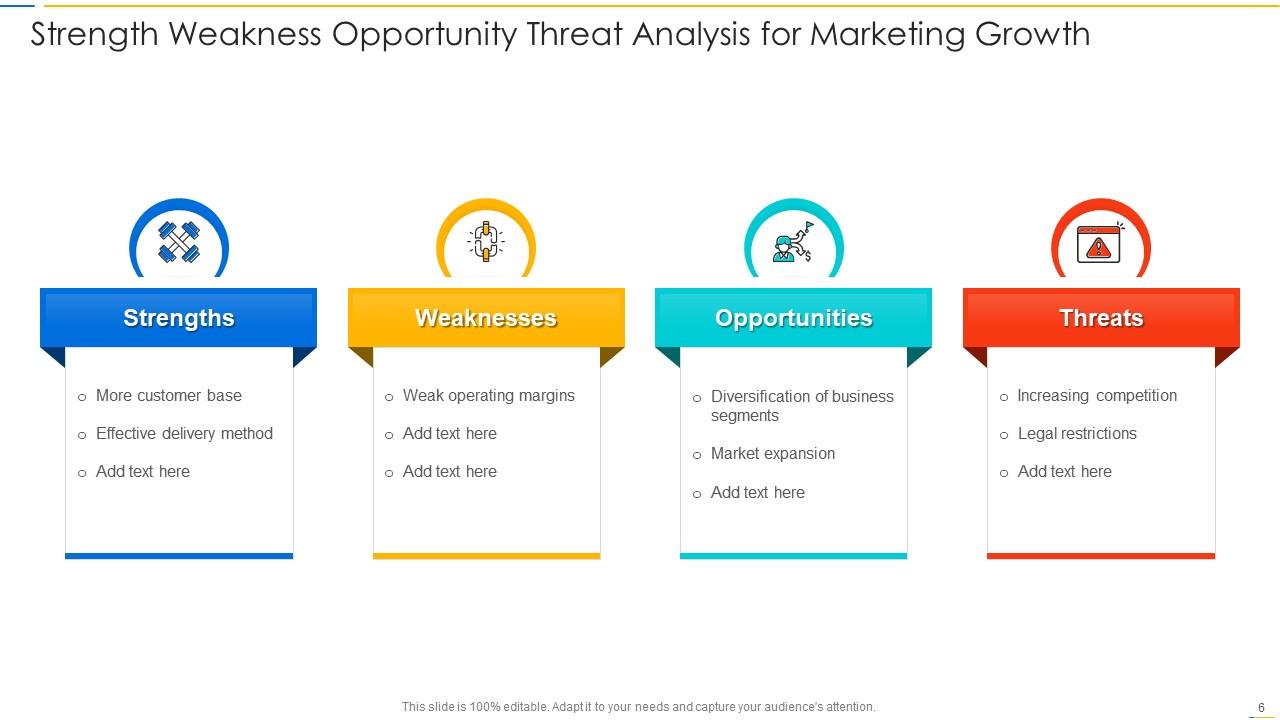
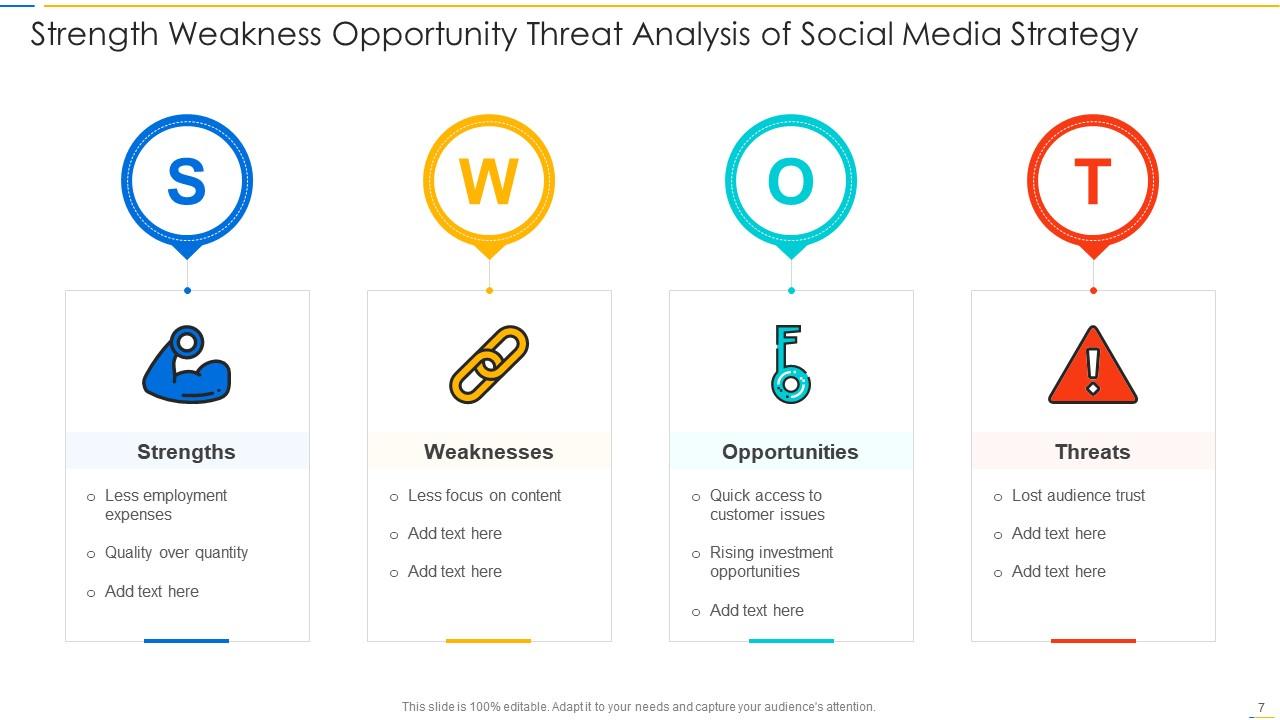
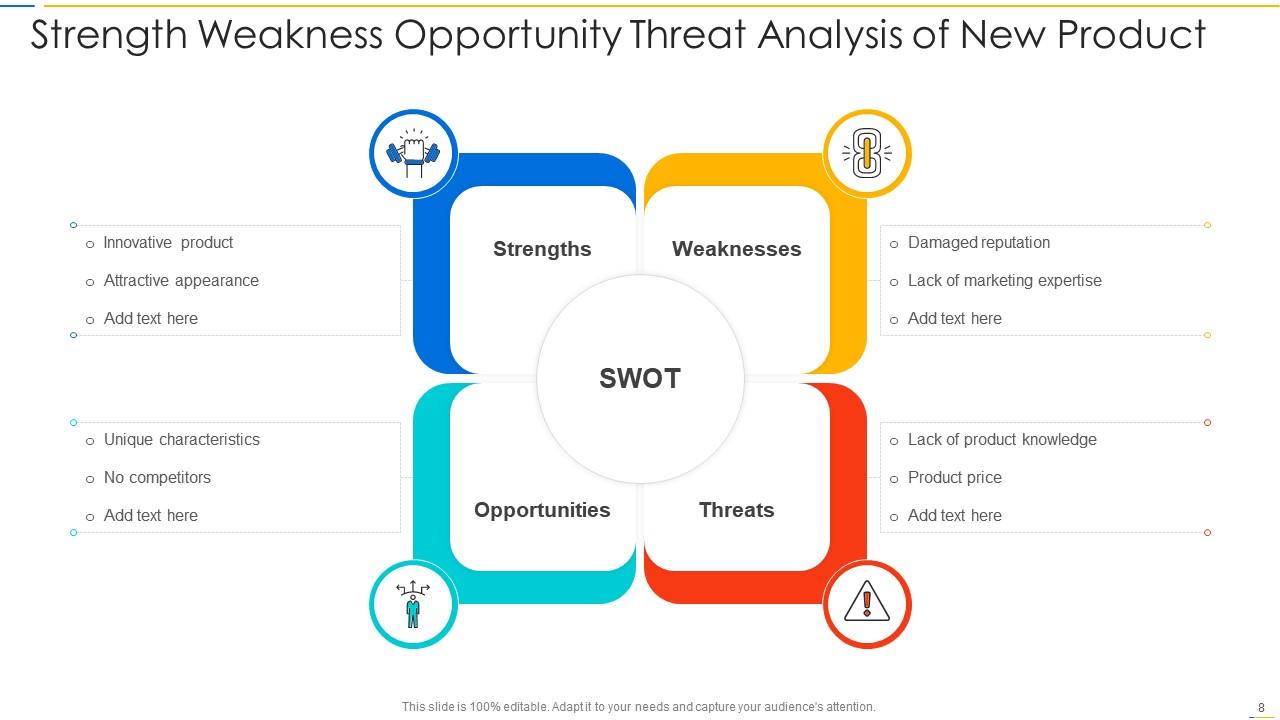
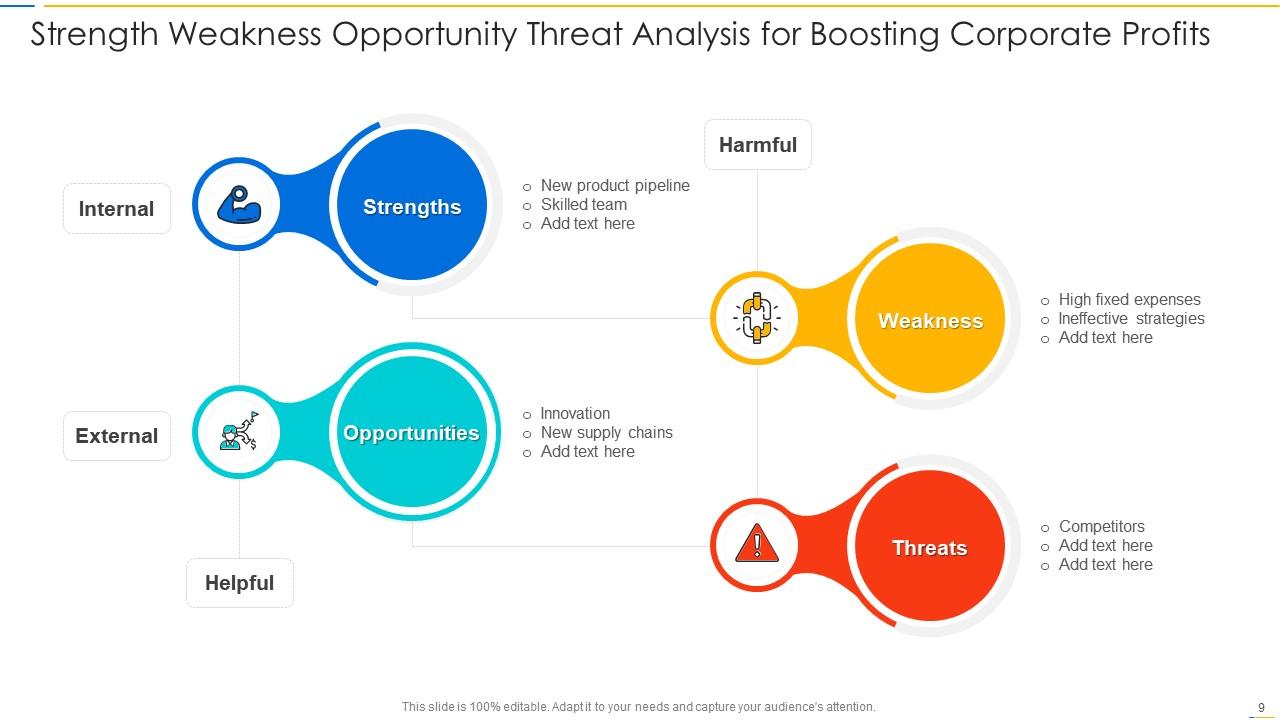
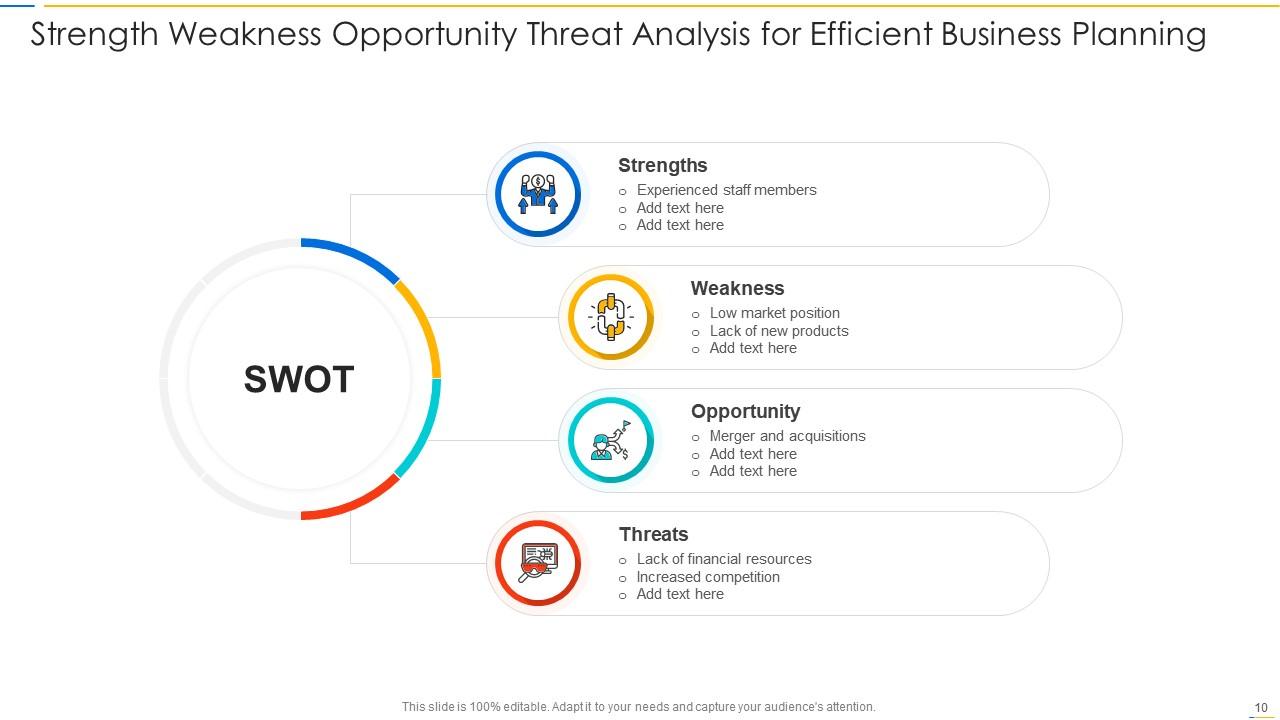
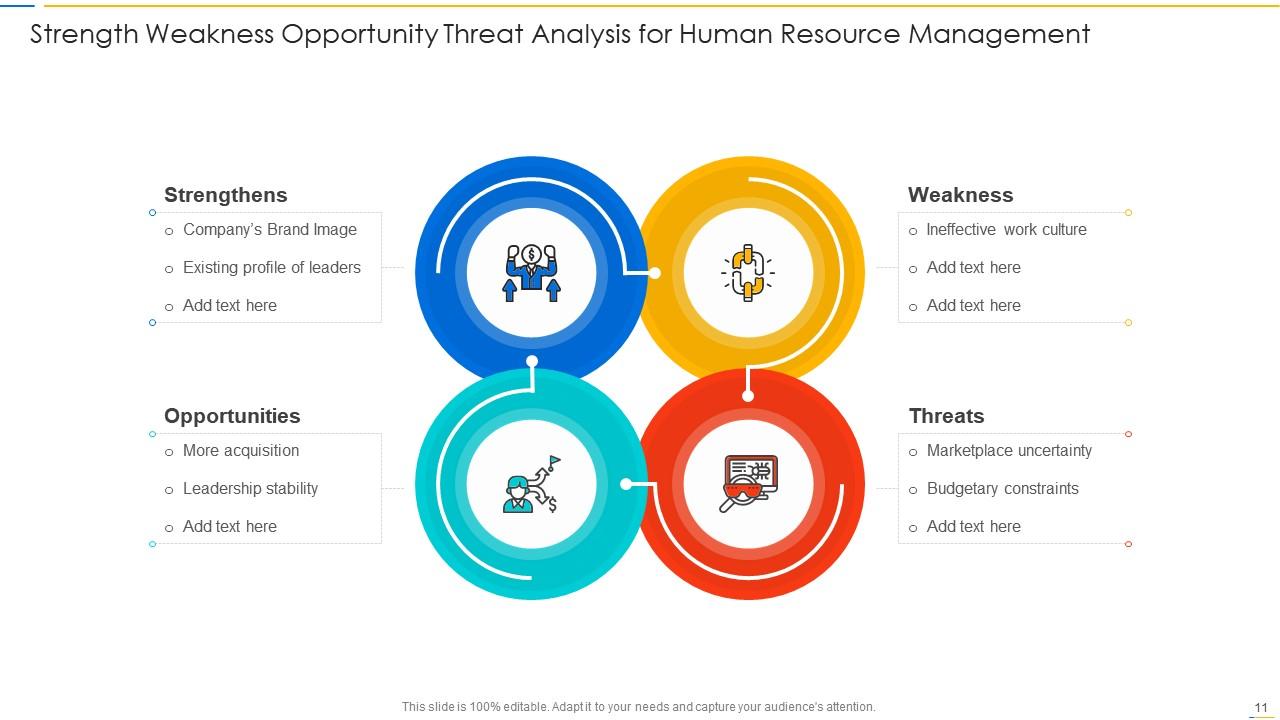
Our Strengths Weakness Opportunity Threat Powerpoint Ppt Template Bundles are topically designed to provide an attractive backdrop to any subject. Use them to look like a presentation pro.
People who downloaded this PowerPoint presentation also viewed the following :
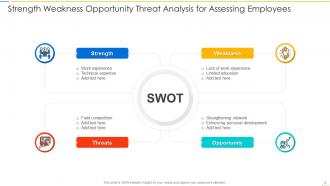
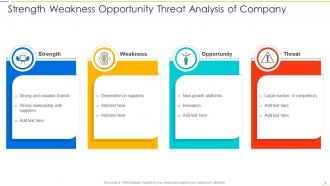
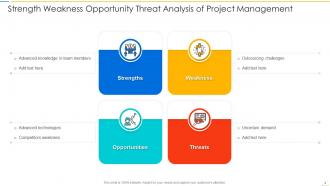
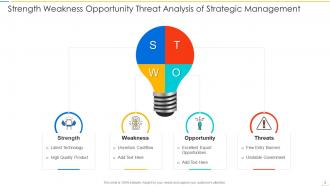
Strengths weakness opportunity threat powerpoint ppt template bundles with all 17 slides:
Use our Strengths Weakness Opportunity Threat Powerpoint Ppt Template Bundles to effectively help you save your valuable time. They are readymade to fit into any presentation structure.
FAQs for Strengths weakness opportunity threat powerpoint
SWOT analysis comprises four fundamental components: Strengths (internal advantages), Weaknesses (internal limitations), Opportunities (external favorable conditions), and Threats (external challenges or risks). These components enable organizations across industries to streamline strategic planning by identifying competitive advantages, addressing operational gaps, and capitalizing on market trends, with healthcare systems, retail chains, and financial institutions finding that systematic SWOT evaluations ultimately deliver enhanced decision-making and sustainable growth strategies.
SWOT analysis aids strategic decision-making by systematically evaluating internal strengths and weaknesses against external opportunities and threats, enabling small businesses to make data-driven choices about resource allocation, market positioning, and growth strategies. Through this structured assessment, small businesses can identify competitive advantages, mitigate risks, and capitalize on market gaps, ultimately delivering more focused strategic planning and improved operational efficiency.
Organizations utilize SWOT analysis to assess competitive positioning by systematically evaluating internal strengths and weaknesses against external opportunities and threats, benchmarking capabilities against competitors, and identifying market gaps. This strategic framework enables businesses to capitalize on competitive advantages, address vulnerabilities before rivals exploit them, and position themselves strategically in evolving markets, ultimately delivering enhanced market share and sustainable growth.
Internal strengths and weaknesses represent controllable factors within an organization, such as resources, capabilities, processes, and competitive advantages, while external opportunities and threats encompass uncontrollable market forces like industry trends, economic conditions, and regulatory changes. Through strategic SWOT analysis, organizations leverage internal assets to capitalize on external opportunities while addressing weaknesses, ultimately delivering competitive positioning and informed decision-making across diverse business environments.
Yes, SWOT analysis effectively identifies market entry opportunities by evaluating internal strengths and weaknesses against external market opportunities and threats. Through systematic assessment, organizations can pinpoint untapped markets where their strengths align with emerging opportunities, while addressing potential weaknesses and mitigating risks, ultimately enabling strategic expansion decisions with greater confidence and competitive positioning.
Common pitfalls include being overly subjective, focusing only on internal perspectives, using vague or generic statements, failing to prioritize findings, and conducting analysis in isolation without stakeholder input. These oversights undermine strategic value by creating incomplete assessments, with many organizations finding that structured facilitation, diverse participant groups, and specific, measurable criteria ultimately deliver more actionable insights and competitive advantage.
Companies should conduct SWOT analyses annually as a baseline, with quarterly reviews during periods of significant market changes, strategic pivots, or competitive shifts. Many organizations find that regular assessments, particularly before major decisions like product launches or market expansions, enable more agile strategic planning and faster responses to emerging opportunities and threats.
Visual presentation templates enhance SWOT analysis effectiveness by creating structured frameworks that organize strengths, weaknesses, opportunities, and threats into clear, digestible formats, enabling better stakeholder comprehension and faster decision-making. These templates streamline complex strategic data through color-coding, visual hierarchies, and standardized layouts, with many organizations finding that well-designed presentations significantly improve executive engagement and strategic alignment during planning sessions.
Stakeholder feedback provides critical external perspectives and internal insights that enhance SWOT analysis accuracy, revealing blind spots, validating assumptions, and uncovering market realities leadership might miss. Through structured interviews and surveys, organizations across sectors like healthcare, retail, and financial services gather diverse viewpoints from customers, employees, and partners, ultimately delivering more strategic decision-making and competitive positioning.
Technology and data analytics enhance SWOT analysis by providing real-time market intelligence, predictive modeling, competitive benchmarking tools, and automated trend identification across multiple data sources. Through AI-powered platforms and business intelligence systems, organizations streamline strategic planning, minimize subjective bias, and accelerate decision-making processes, ultimately delivering more accurate assessments and competitive advantage in increasingly dynamic markets.
SWOT analysis can be insufficient when facing rapidly changing markets, complex stakeholder dynamics, or highly uncertain environments where traditional strengths-weaknesses frameworks lack nuance. In scenarios requiring detailed competitor intelligence, financial modeling, or innovation strategy, organizations increasingly turn to Porter's Five Forces, scenario planning, or Blue Ocean Strategy frameworks, with many finding that combining multiple analytical approaches delivers more comprehensive strategic insights and competitive advantage.
Non-profit SWOT analysis emphasizes mission alignment, stakeholder impact, and community outcomes rather than profit margins and market share. While for-profits focus on competitive advantage and revenue growth, non-profits assess donor relationships, volunteer capacity, and social impact effectiveness, ultimately measuring success through beneficiary outcomes and sustainable community change.
Best practices for enhancing SWOT collaboration include establishing clear ground rules, rotating facilitation roles, using structured brainstorming techniques, encouraging diverse perspectives, and maintaining focus on data-driven insights. These approaches streamline discussions by promoting equal participation, minimizing groupthink, and ensuring comprehensive analysis, with many organizations finding that structured collaboration ultimately delivers more actionable strategic insights and stronger team alignment.
Businesses can leverage SWOT-identified strengths by aligning core competencies with market gaps, using superior resources to accelerate opportunity capture, and combining unique capabilities with emerging trends. Companies like Apple leverage design excellence for new product categories, while Amazon uses logistics strengths for market expansion, ultimately delivering competitive advantages and sustainable growth.
SWOT analysis proves highly beneficial for personal career development by systematically evaluating strengths, weaknesses, opportunities, and threats within your professional landscape. Individuals should assess current skills and experiences, identify knowledge gaps and improvement areas, research industry trends and networking possibilities, while considering economic factors and competition, ultimately enabling strategic career planning that maximizes advantages and addresses vulnerabilities.
-
Content of slide is easy to understand and edit.
-
Easily Understandable slides.