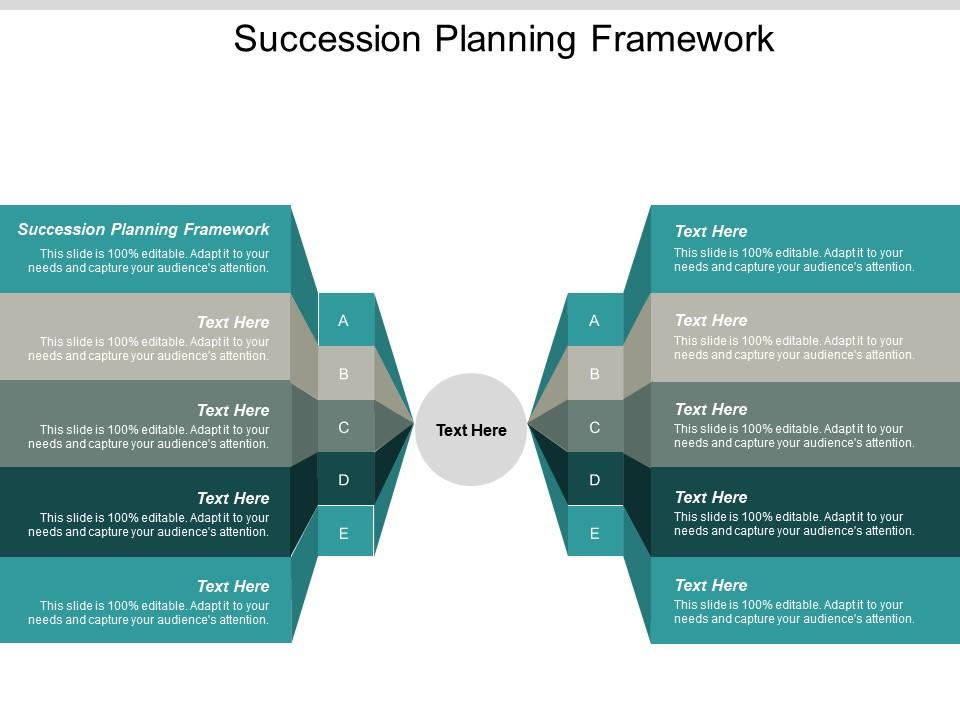
Succession planning framework ppt powerpoint presentation ideas inspiration cpb
Try Before you Buy Download Free Sample Product
Audience
Editable
of Time
Related Products
Appeal for crowd funding with our Succession Planning Framework Ppt Powerpoint Presentation Ideas Inspiration Cpb. Impress them with you business acumen.
People who downloaded this PowerPoint presentation also viewed the following :
Succession planning framework ppt powerpoint presentation ideas inspiration cpb with all 5 slides:
Impress folks with your business acumen through our Succession Planning Framework Ppt Powerpoint Presentation Ideas Inspiration Cpb. It helps appeal for crowd funding.
FAQs for Succession planning framework ppt powerpoint presentation
Key components of an effective succession planning framework include talent identification and assessment, competency mapping, leadership development programs, knowledge transfer protocols, and performance tracking systems. These elements work together by identifying high-potential employees, developing critical skills through targeted training, and ensuring seamless transitions, with many organizations finding that strategic succession planning reduces recruitment costs while maintaining operational continuity.
Succession planning varies significantly by industry based on regulatory requirements, skill specificity, and operational continuity needs. Healthcare and financial services emphasize compliance and specialized certifications, while manufacturing focuses on technical expertise and safety protocols, and technology companies prioritize innovation leadership and rapid adaptation, with each sector tailoring frameworks to address unique talent retention and knowledge transfer challenges.
Leadership development serves as the foundation of effective succession planning by identifying high-potential employees, providing targeted training programs, mentoring opportunities, and cross-functional experiences that build essential management capabilities. Through structured development initiatives, organizations systematically prepare internal candidates for senior roles, reduce external hiring costs, and ensure continuity of company culture, with many finding that robust leadership pipelines significantly accelerate promotion readiness and organizational resilience.
Organizations identify high-potential employees through comprehensive talent assessments, performance evaluations, 360-degree feedback, leadership competency frameworks, and behavioral interviews that evaluate strategic thinking capabilities. These methods enable companies to assess candidates' adaptability, decision-making skills, and emotional intelligence, with many financial services and healthcare organizations finding that structured succession pipelines significantly reduce leadership transition risks while accelerating organizational growth.
**INPUT**: What tools or technology can enhance the succession planning process? **OUTPUT**: Succession planning technology includes talent management systems, performance analytics platforms, skills assessment software, leadership development tools, and workforce planning applications. These solutions streamline identification by automating competency mapping, tracking high-potential employees, and analyzing performance data, with many organizations finding that integrated platforms ultimately deliver faster leadership transitions and reduced talent gaps. [Word count: 54 words]
Organizations should review succession plans annually as part of strategic planning cycles, with additional updates triggered by major organizational changes, leadership departures, or market shifts. Many companies find that quarterly assessments of key positions, combined with annual comprehensive reviews, enable proactive talent development and minimize leadership gaps, ultimately delivering greater organizational resilience and continuity.
Common succession planning challenges include identifying high-potential talent, developing leadership capabilities, managing knowledge transfer, addressing skill gaps, and ensuring cultural fit. These obstacles often stem from inadequate assessment processes, limited development programs, and poor communication strategies, with many organizations finding that proactive talent mapping and structured mentoring programs significantly improve succession outcomes and organizational continuity.
Company culture significantly influences succession planning by shaping leadership development approaches, candidate identification criteria, and transition processes within organizations. Companies with collaborative cultures typically emphasize mentorship programs and cross-functional development, while performance-driven environments focus on competitive advancement tracks, ultimately ensuring cultural continuity and organizational alignment.
Succession planning effectiveness can be measured through key metrics including time-to-fill critical positions, internal promotion rates, retention of high-potential employees, leadership readiness scores, and knowledge transfer completion rates. These metrics enable organizations to track pipeline strength, reduce recruitment costs, and minimize operational disruptions during transitions, with many companies finding that comprehensive measurement ultimately delivers faster leadership deployment and enhanced organizational continuity.
Organizations ensure diversity and inclusion in succession plans by implementing bias-free assessment criteria, actively identifying high-potential candidates from underrepresented groups, and creating mentorship programs that develop diverse talent pipelines. Through structured development initiatives, companies like financial services firms and healthcare systems enhance leadership diversity while strengthening organizational resilience, ultimately delivering more innovative decision-making and competitive market advantage.
Succession planning should be communicated transparently through structured discussions with key stakeholders, regular updates to identified successors, and clear messaging about development opportunities and timelines. Organizations like financial institutions and healthcare systems find that open communication builds trust, reduces uncertainty about career paths, and enhances employee engagement, ultimately creating a more prepared and motivated workforce.
Mentors and sponsors serve as critical developmental catalysts in succession planning, providing guidance, knowledge transfer, career advocacy, and leadership coaching to high-potential employees. Through structured mentoring relationships, organizations accelerate talent readiness by facilitating skill development, institutional knowledge sharing, and strategic network building, with many companies finding that formal mentor-sponsor programs significantly reduce leadership transition risks while enhancing succession pipeline strength.
Succession planning aligns with business strategy by identifying critical roles supporting strategic objectives, developing talent pipelines for growth markets, and ensuring leadership continuity during expansion phases. Through strategic workforce mapping, organizations anticipate skill gaps before they impact operations, while targeted development programs prepare high-potential employees for future challenges, ultimately delivering sustainable competitive advantage.
Organizations should consider employment law compliance, non-disclosure agreements, non-compete clauses, intellectual property transfers, fiduciary duties, and regulatory requirements during succession planning. These legal frameworks help mitigate risks while ensuring smooth leadership transitions, with many companies finding that proactive legal structuring prevents disputes and enhances organizational continuity.
Feedback from current leaders improves succession planning by identifying critical competency gaps, revealing organizational culture nuances, and providing realistic assessments of potential successors' readiness. Through structured interviews and mentorship insights, leaders help refine development programs, adjust timeline expectations, and ensure continuity strategies, with many organizations finding that leader input significantly enhances successor preparation and transition success.
No Reviews