Supplier Technical Capability Assessment Evaluating Key Risks In Procurement Process

Rating:
100%
Supplier Technical Capability Assessment Evaluating Key Risks In Procurement Process Supplier Technical Capability Assessment Evaluating Key Risks In Procurement Process
Slide 1 of 9

or

Favourites Favourites

Try Before you Buy Download Free Sample Product

Audience Impress Your
Audience
Editable 100%
Editable
Time Save Hours
of Time
The Biggest Sale is ending soon in
0
0
:
0
0
:
0
0
Rating:
100%
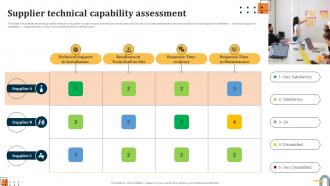
This slide showcases technology ability analysis of supplier to improve procurement process ands reduce cost. It includes assessment factors such as technical support in installation, technical support in installation, response time to query and response time to maintenance. Increase audience engagement and knowledge by dispensing information using Supplier Technical Capability Assessment Evaluating Key Risks In Procurement Process. This template helps you present information on four stages. You can also present information on Technical, Response, Maintenance using this PPT design. This layout is completely editable so personaize it now to meet your audiences expectations.

FAQs for Supplier Technical Capability Assessment Evaluating Key Risks

Key supplier reliability criteria include financial stability, quality certifications, delivery track record, production capacity, and risk management capabilities. These assessments enable organizations to evaluate consistent performance, regulatory compliance, and operational resilience, with many procurement teams finding that comprehensive supplier scorecards ultimately deliver reduced supply chain disruptions and enhanced competitive advantage.

Historical performance data enhances supplier assessment by providing quantifiable metrics on delivery reliability, quality consistency, cost stability, and responsiveness patterns over time. Through comprehensive performance tracking, organizations can identify top-performing suppliers, predict future reliability, and make strategic sourcing decisions, ultimately reducing supply chain risks and improving operational efficiency.

Risk management practices serve as the foundation for evaluating suppliers by identifying potential disruptions, assessing financial stability, ensuring regulatory compliance, and analyzing operational vulnerabilities across the supply chain. These practices enable organizations to systematically evaluate supplier reliability, implement contingency planning, and maintain business continuity, with many companies finding that proactive risk assessment ultimately delivers enhanced operational resilience and competitive advantage.

Industry-specific regulations significantly shape supplier assessment standards by requiring compliance with sector-specific requirements, quality certifications, safety protocols, and operational guidelines. Financial services must verify data security and regulatory compliance, while healthcare organizations assess FDA approvals and quality management systems, ultimately ensuring suppliers meet stringent industry standards and minimize regulatory risks.

Supplier quality measurement methodologies include statistical process control, supplier scorecards, on-site audits, defect tracking systems, and performance benchmarking against industry standards. These approaches enable organizations to monitor consistency, identify improvement opportunities, and reduce supply chain risks, with many manufacturing and retail companies finding that comprehensive quality assessment ultimately delivers cost reductions and enhanced customer satisfaction.

A supplier's financial stability is critically important in assessment processes, as it directly impacts contract reliability, delivery consistency, and long-term partnership viability. Financial instability can lead to supply chain disruptions, quality compromises, and project delays, with many organizations finding that financially stable suppliers deliver better performance, reduced risk exposure, and enhanced operational continuity.

**INPUT**: What tools and technologies can streamline supplier assessments? **OUTPUT**: Supplier assessment technologies include automated risk scoring platforms, AI-powered financial analysis tools, digital audit management systems, blockchain verification networks, and cloud-based performance dashboards. These solutions streamline evaluations by automating data collection, standardizing assessment criteria, and providing real-time monitoring capabilities, with many procurement teams finding that integrated platforms ultimately deliver faster vendor onboarding and enhanced supply chain transparency. [Word count: 59 words]

Environmental sustainability practices can be integrated into supplier evaluations through carbon footprint assessments, waste management audits, renewable energy usage metrics, regulatory compliance tracking, and sustainable sourcing certifications. Many organizations increasingly require suppliers to demonstrate measurable environmental commitments, with companies in manufacturing and retail finding that these comprehensive evaluations reduce operational risks while enhancing brand reputation and competitive advantage.

Key supplier performance metrics include quality scores, delivery timeliness, cost competitiveness, compliance ratings, and responsiveness indicators, along with risk assessment measurements and innovation contributions. These comprehensive tracking systems enable organizations to identify top-performing partners, address deficiencies proactively, and optimize supply chain efficiency, with many companies finding that consistent monitoring ultimately delivers stronger vendor relationships and competitive operational advantages.

Supplier diversity strengthens supply chain resilience by reducing single-source dependencies, expanding geographic reach, and creating multiple procurement pathways that minimize disruption risks. Organizations across manufacturing, retail, and technology sectors find that diverse supplier networks enable faster recovery from supply shocks, enhanced innovation through varied perspectives, and improved market responsiveness, ultimately delivering competitive advantage in volatile business environments.

Non-compliance in supplier assessment findings can result in operational disruptions, regulatory penalties, reputational damage, increased costs, and potential legal liabilities for organizations. These risks ultimately impact supply chain reliability, with many companies finding that proactive compliance monitoring enhances vendor relationships, ensures regulatory adherence, and delivers competitive advantage through streamlined operations.

Supplier assessments can be aligned with organizational business goals by establishing clear performance metrics tied to strategic objectives, implementing regular evaluation frameworks that measure cost efficiency and quality standards, and creating scorecards that track delivery reliability, innovation capability, and compliance requirements. This strategic alignment enables organizations to optimize their supply chain investments, reduce operational risks, and ultimately deliver enhanced customer experiences while maintaining competitive advantage in increasingly complex market environments.

Teams conducting supplier assessments need training in risk evaluation methodologies, financial analysis techniques, compliance requirements, negotiation skills, and industry-specific quality standards. Through comprehensive programs covering due diligence processes and regulatory frameworks, organizations enable their procurement teams to identify reliable partners, mitigate supply chain risks, and ultimately secure strategic supplier relationships that deliver competitive advantage.

Communication with suppliers during assessment should be transparent, structured, and consistent, involving clear timelines, regular updates, standardized evaluation criteria, and dedicated contact points. This approach enables organizations to maintain professional relationships while gathering comprehensive data, ultimately streamlining the assessment process and ensuring suppliers understand expectations, with many companies finding that transparent communication enhances both supplier performance and long-term partnership quality.

Inadequate supplier assessments can result in supply chain disruptions, quality control failures, compliance violations, cost overruns, and reputational damage across organizations. These oversights often lead to production delays, customer dissatisfaction, and regulatory penalties, with many companies in manufacturing and retail finding that poor supplier vetting ultimately compromises operational efficiency and competitive positioning.

Ratings and Reviews

100% of 100
Review Form
Write a review
Most Relevant Reviews
  1. 100%

    by Delmar Wagner

    “The presentation template I got from you was a very useful one.My presentation went very well and the comments were positive.Thank you for the support. Kudos to the team!”
  2. 100%

    by Columbus Vasquez

    “I've always gotten excellent slides from them and the customer service is up to the mark.”

2 Item(s)

per page: