


Supply chain management architecture powerpoint presentation slides




Try Before you Buy Download Free Sample Product
 Impress Your
 Audience
 100%
100% Editable
 Save Hours
 of Time


Our Supply Chain Management Architecture Powerpoint Presentation Slides are topically designed to provide an attractive backdrop to any subject. Use them to look like a presentation pro.
People who downloaded this PowerPoint presentation also viewed the following :
Content of this Powerpoint Presentation
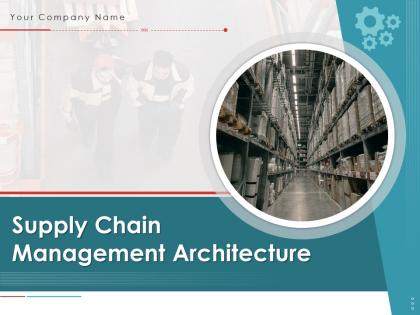
Slide 1: This slide introduces Supply Chain Management Architecture. State Your Company Name and begin.
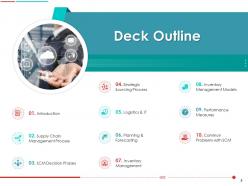
Slide 2: This slide shows Deck Outline for the presentation.
Slide 3: This slide presents Table of Content highlighting Introduction.
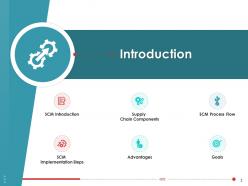
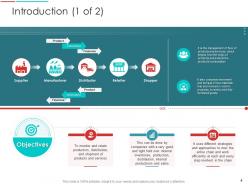
Slide 4: This slide shows Introduction describing- Shopper, Supplier, Manufacturer, etc.
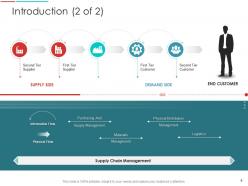
Slide 5: This is another slide showing Introduction describing- Physical Distribution Management, Materials Management, etc.
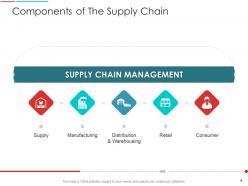
Slide 6: This slide shows Components of The Supply Chain.
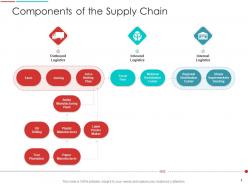
Slide 7: This is another slide showing Components of the Supply Chain.
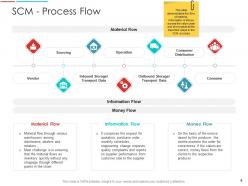
Slide 8: This slide demonstrates the flow of Material, Information & Money across the value chain.
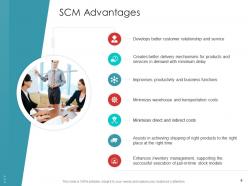
Slide 9: This slide shows SCM Advantages for products and services in demand with minimum delay.
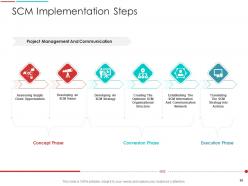
Slide 10: This slide displays SCM Implementation Steps describing- Concept Phase, Conversion Phase, Execution Phase, etc.
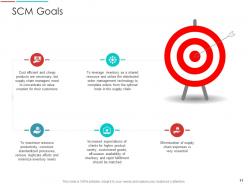
Slide 11: This slide shows SCM Goals to leverage inventory as a shared resource and utilize the distributed order management technology.
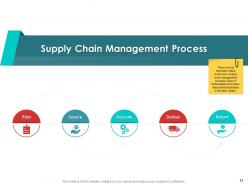
Slide 12: This slide shows Supply Chain Management Process.
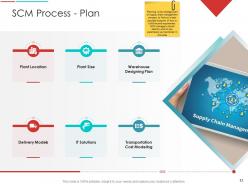
Slide 13: This slide presents SCM Process - Plan.
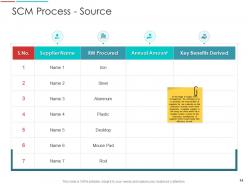
Slide 14: This slide shows SCM Process - Source.
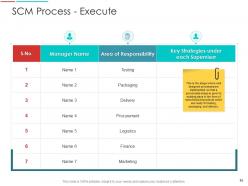
Slide 15: This slide displays SCM Process - Execute.
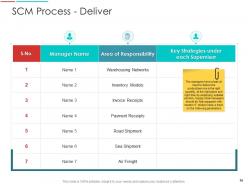
Slide 16: This slide shows SCM Process - Deliver.
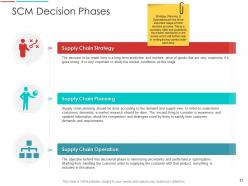
Slide 17: This slide shows SCM Decision Phases describing- Supply Chain Strategy, Supply Chain Planning, Supply Chain Operation, etc.
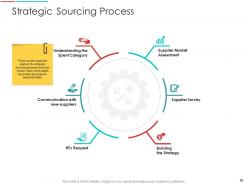
Slide 18: This slide presents Strategic Sourcing Process describing- Supplier Market Assessment, Supplier Survey, Building the Strategy, etc.
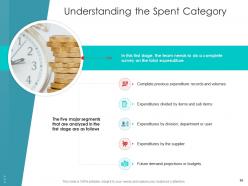
Slide 19: This slide shows Understanding the Spent Category.
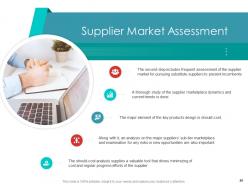
Slide 20: This slide displays Supplier Market Assessment.
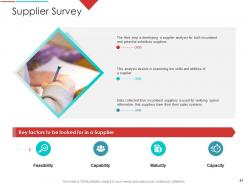
Slide 21: This slide shows Supplier Survey describing- Feasibility, Capability, Maturity, etc.
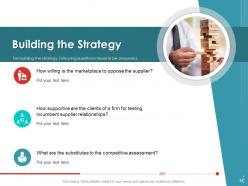
Slide 22: This slide shows Building the Strategy.
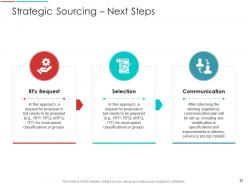
Slide 23: This slide presents Strategic Sourcing – Next Steps.
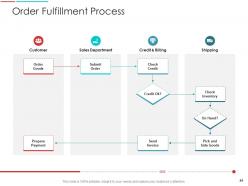
Slide 24: This slide shows Order Fulfillment Process.
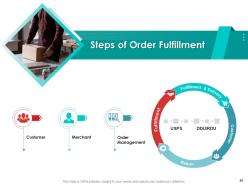
Slide 25: This slide displays Steps of Order Fulfillment.
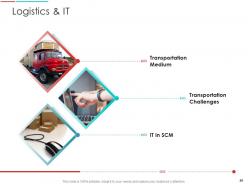
Slide 26: This slide shows Logistics & IT describing- Transportation Medium, IT in SCM, Transportation Challenges, etc.
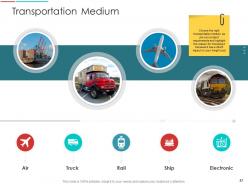
Slide 27: This slide shows Transportation Medium.
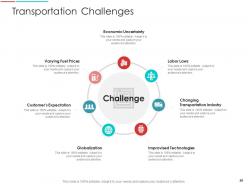
Slide 28: This slide presents Transportation Challenges describing- Economic Uncertainty, Labor Laws, Improvised Technologies, etc.
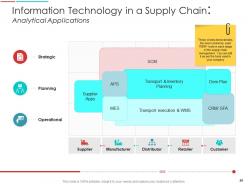
Slide 29: This slide shows Information Technology in a Supply Chain Analytical Applications.
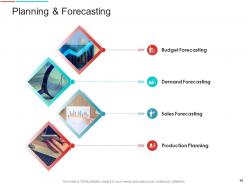
Slide 30: This slide displays Planning & Forecasting describing- Budget Forecasting, Demand Forecasting, Sales Forecasting, etc.
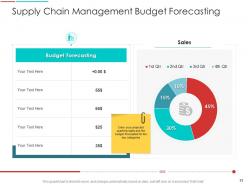
Slide 31: This slide shows Supply Chain Management Budget Forecasting.
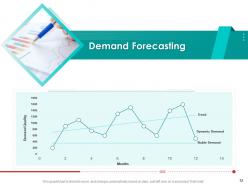
Slide 32: This slide shows Demand Forecasting.
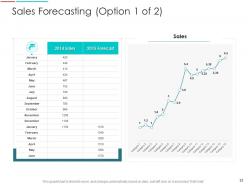
Slide 33: This slide presents Sales Forecasting.
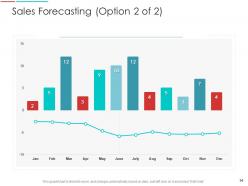
Slide 34: This is another slide showing Sales Forecasting.
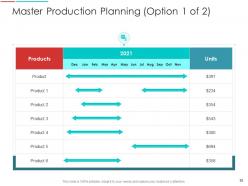
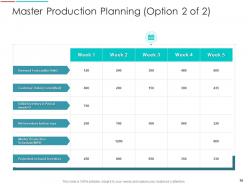
Slide 35: This slide displays Master Production Planning.
Slide 36: This is another slide showing Master Production Planning.
Slide 37: This slide shows Inventory Management describing- Introduction, EOQ Model, EOQ Cost, etc.
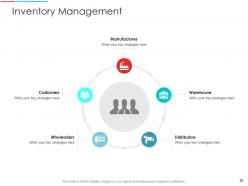
Slide 38: This slide presents Inventory Management describing- Manufactures, Warehouse, Distributors, etc.
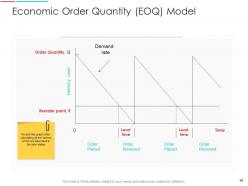
Slide 39: This slide shows Economic Order Quantity (EOQ) Model.
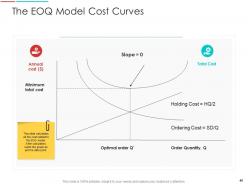
Slide 40: This slide calculates all the cost related to the EOQ model.
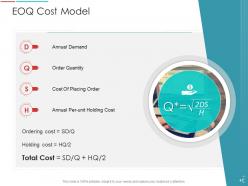
Slide 41: This slide displays EOQ Cost Model describing- Order Quantity, Cost Of Placing Order, Annual Per-unit Holding Cost, etc.
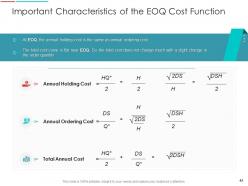
Slide 42: This slide shows Important Characteristics of the EOQ Cost Function.
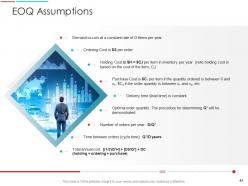
Slide 43: This slide presents EOQ Assumptions.
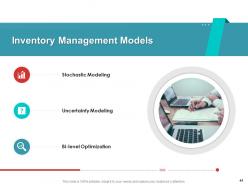
Slide 44: This slide shows Inventory Management Models like- Stochastic Modeling, Uncertainty Modeling, Bi-level Optimization, etc.
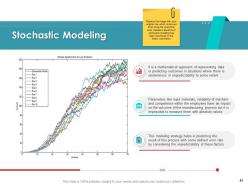
Slide 45: This slide displays Stochastic Modeling Parameters like input materials, reliability of machine and competence.
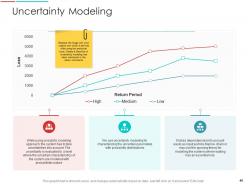
Slide 46: This slide shows Uncertainty Modeling.
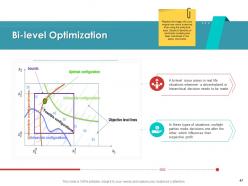
Slide 47: This slide shows Bi-level Optimization in real life situations.
Slide 48: This slide presents Performance Measures i.e.- Non-Financial Measures, Financial Measures, etc.
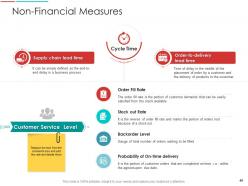
Slide 49: This slide shows Non-Financial Measures i.e.- Supply chain lead time, Order-to-delivery, Stock out Rate, etc.
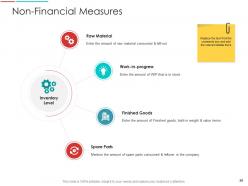
Slide 50: This slide displays Non-Financial Measures like- Raw Material, Work-in-progress, Finished Goods, etc.
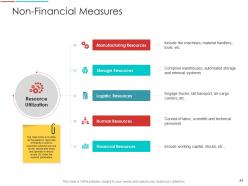
Slide 51: This slide shows Non-Financial Measures like- Manufacturing Resources, Storage Resources, Logistic Resources, etc.
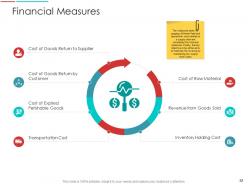
Slide 52: This slide shows Financial Measures describing- Cost of Raw Material, Revenue from Goods Sold, Inventory Holding Cost, etc.
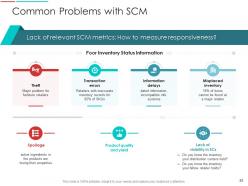
Slide 53: This slide presents Common Problems with SCM.
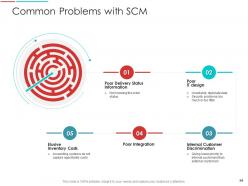
Slide 54: This slide shows Common Problems with SCM.
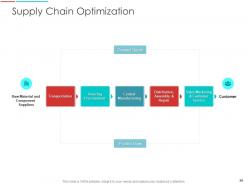
Slide 55: This slide displays Supply Chain Optimization describing- Demand Signal, Product Flow, Transportation, etc.
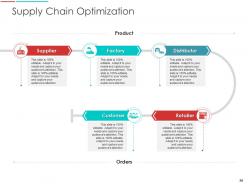
Slide 56: This slide shows Supply Chain Optimization like- Supplier, Factory, Retailer, etc.
Slide 57: This slide shows Supply Chain Management Architecture-Icons Slide.
Slide 58: This slide is titled as Additional Slides for moving forward.
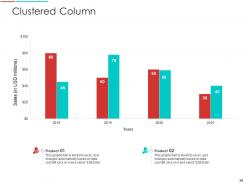
Slide 59: This slide displays Clustered Column chart with two products comparison.
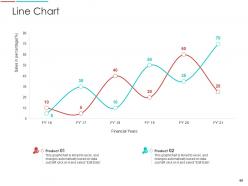
Slide 60: This slide displays Line chart with two products comparison.
Slide 61: This is Our Team slide with names and designation.
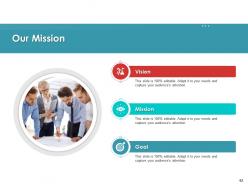
Slide 62: This is Our Mission slide with related imagery and text.
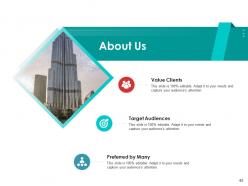
Slide 63: This is About Us slide to show company specifications etc.
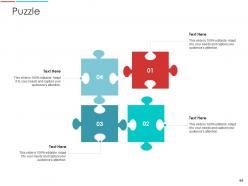
Slide 64: This slide shows Puzzle with related icons and text.
Slide 65: This slide displays Post It Notes. Post your important notes here.
Slide 66: This is a Timeline slide. Show data related to time intervals here.
Slide 67: This slide shows Venn diagram with text boxes.
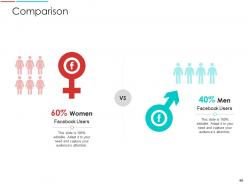
Slide 68: This is a Comparison slide to state comparison between commodities, entities etc.
Slide 69: This slide shows 30 60 90 Days Plan with text boxes.
Slide 70: This is a Thank You slide with address, contact numbers and email address.
Supply chain management architecture powerpoint presentation slides with all 70 slides:
Use our Supply Chain Management Architecture Powerpoint Presentation Slides to effectively help you save your valuable time. They are readymade to fit into any presentation structure.


FAQs for Supply chain management architecture
Key components of an effective supply chain management architecture include demand forecasting systems, inventory management platforms, supplier relationship management tools, logistics optimization software, and real-time tracking technologies. These integrated systems streamline operations by enhancing visibility across the entire network, automating procurement processes, and optimizing delivery routes, ultimately delivering reduced costs and improved customer satisfaction for organizations.
Technology integration enhances supply chain visibility and efficiency by implementing IoT sensors for real-time tracking, AI-powered analytics for demand forecasting, and blockchain systems for transparent transactions. Through these interconnected solutions, organizations streamline inventory management, reduce operational costs, and accelerate delivery times, with many manufacturers and retailers finding that comprehensive digital integration ultimately delivers competitive advantage and superior customer experiences.
Data analytics optimizes supply chain processes by enabling predictive forecasting, real-time inventory tracking, demand pattern analysis, supplier performance monitoring, and route optimization. Through advanced analytics platforms, organizations streamline procurement decisions, reduce carrying costs, and enhance delivery efficiency, with manufacturers and retailers finding that data-driven insights ultimately deliver significant cost reductions and improved customer satisfaction.
Different supply chain models significantly impact organizational performance through cost structures, delivery speeds, inventory management, and customer satisfaction levels. Lean models enhance efficiency and reduce waste, agile models improve responsiveness to market changes, while hybrid approaches balance cost and flexibility, with many organizations finding that strategic model alignment delivers competitive advantage and operational excellence.
Best practices for aligning supply chain architecture with business strategy include conducting comprehensive strategic assessments, mapping value streams to business objectives, implementing flexible technology platforms, establishing cross-functional governance structures, and creating performance metrics that reflect strategic priorities. These practices enable organizations to streamline operations, enhance customer responsiveness, and reduce costs, with many manufacturing and retail companies finding that strategic alignment delivers significant competitive advantage and improved market positioning.
Risk management integrates into supply chain architecture through diversified supplier networks, real-time monitoring systems, predictive analytics, and automated contingency protocols. These capabilities enable organizations to identify vulnerabilities early, maintain alternative sourcing options, and respond rapidly to disruptions, with many companies finding that proactive risk integration ultimately delivers greater resilience and competitive advantage.
Globalization significantly complicates supply chain management architectures by extending networks across multiple countries, currencies, and regulatory environments, while creating opportunities for cost optimization and market expansion. These expanded architectures require enhanced visibility systems, risk management protocols, and supplier diversification strategies, with many multinational corporations finding that strategic geographic distribution ultimately delivers competitive advantages despite increased complexity.
Sustainable practices influence supply chain design by integrating environmental considerations, circular economy principles, renewable energy sources, and ethical sourcing requirements into operational frameworks. These approaches enable organizations to reduce carbon footprints, minimize waste, enhance resource efficiency, and improve stakeholder relationships, with many companies finding that sustainable supply chains ultimately deliver cost savings and competitive advantage.
Essential tools for real-time supply chain monitoring include IoT sensors, GPS tracking systems, warehouse management software, predictive analytics platforms, and blockchain technologies. These solutions streamline operations by providing instant visibility into inventory levels, shipment locations, and potential disruptions, with many manufacturing and retail organizations finding that integrated monitoring ultimately delivers faster response times and significantly reduced operational costs.
Companies balance cost efficiency with flexibility by implementing hybrid supply chain models, diversifying supplier networks, investing in predictive analytics, and creating modular processes that can scale up or down. While this approach requires strategic investment in technology and partnerships, many organizations find that combining low-cost standardized operations with agile response capabilities ultimately delivers both reduced operational costs and enhanced resilience in an increasingly volatile market environment.
Collaboration among stakeholders in supply chain design enables shared visibility, coordinated planning, and risk mitigation across all network participants. Through integrated platforms and communication systems, manufacturers, suppliers, distributors, and retailers streamline operations, reduce redundancies, and respond faster to market changes, ultimately delivering enhanced efficiency and competitive advantage.
Artificial intelligence and machine learning enhance supply chain decision-making by analyzing vast datasets, predicting demand fluctuations, optimizing inventory levels, and identifying potential disruptions before they occur. These technologies enable manufacturers and retailers to automate procurement decisions, streamline logistics routing, and minimize stockouts, ultimately delivering faster response times and reduced operational costs.
Implementing unified supply chain architecture across regions presents challenges including regulatory compliance variations, technology integration complexities, cultural differences in business practices, currency fluctuations, and varying infrastructure capabilities. While these obstacles require strategic planning and significant investment, many multinational organizations find that standardized systems ultimately deliver enhanced visibility, streamlined operations, and competitive advantage through improved coordination and cost efficiencies.
Logistics partner selection fundamentally shapes supply chain architecture through network design, technology integration capabilities, service level agreements, and geographic coverage requirements. Strategic partnerships with advanced providers enable organizations to leverage distributed warehousing, real-time tracking systems, and flexible delivery options, ultimately delivering enhanced customer experiences while reducing operational complexity and costs.
**INPUT**: What trends are shaping the future of supply chain management architecture? **OUTPUT**: Key trends include AI-driven demand forecasting, blockchain transparency, IoT sensor integration, autonomous logistics systems, and cloud-based platform consolidation. These technologies streamline operations by enabling real-time visibility, predictive analytics, and automated decision-making, with manufacturers and retailers finding that integrated architectures deliver faster response times, reduced costs, and enhanced customer experiences in increasingly complex global markets. **Word count**: 58 words
-
Good research work and creative work done on every template.
-
Qualitative and comprehensive slides.
-
Much better than the original! Thanks for the quick turnaround.
-
It saves your time and decrease your efforts in half.
-
Thanks for all your great templates they have saved me lots of time and accelerate my presentations. Great product, keep them up!
-
Thanks for all your great templates they have saved me lots of time and accelerate my presentations. Great product, keep them up!
-
Best way of representation of the topic.
-
Use of different colors is good. It's simple and attractive.
-
Excellent Designs.