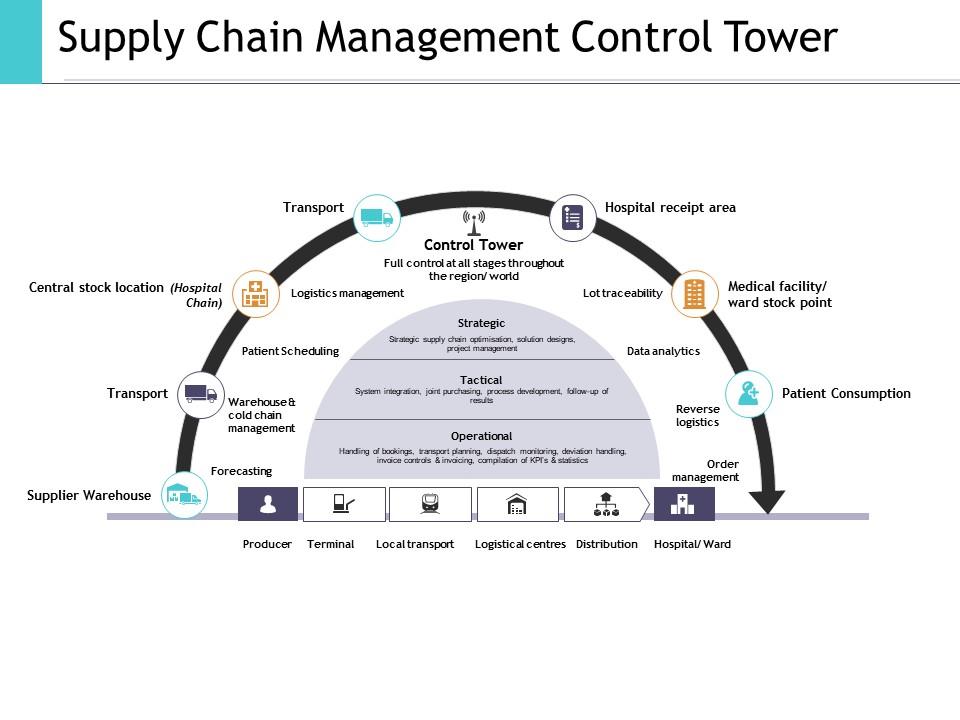
Supply chain management control tower ppt slides deck
Try Before you Buy Download Free Sample Product
Audience
Editable
of Time
Debate till day break with our Supply Chain Management Control Tower Ppt Slides Deck. There are enough to carry you to the end.
People who downloaded this PowerPoint presentation also viewed the following :
Supply chain management control tower ppt slides deck with all 5 slides:
Handle areas demanding caution with our Supply Chain Management Control Tower Ppt Slides Deck. Display the desired degree of care.
FAQs for Supply chain management control tower
Basically it's like having a command center for your whole supply chain. You can see everything happening in real-time - inventory, shipments, where things might go wrong. The predictive stuff is pretty cool too, it'll spot problems before they blow up. Honestly, the analytics alone makes it worth it for most companies I've seen use these systems. Your team and partners all work off the same data which cuts down on confusion. Oh, and it handles automatic responses when things go sideways. I'd say figure out where you're most blind right now - that's gonna be your biggest win when you roll this out.
Honestly, real-time analytics is a game changer - you can catch problems before they blow up instead of finding out about them from angry customers. It shows you delays, bottlenecks, and demand shifts as they're happening. Kind of like GPS but for your whole supply chain, and it actually predicts trouble spots too. When issues pop up, you're already adjusting routes and inventory levels instead of playing catch-up. My advice? Don't try to monitor everything at once. Pick your worst headaches first and focus your real-time tracking there.
Honestly, start with getting your data clean and integrated - that's where most people mess up. AI and ML are huge for predictive stuff, plus IoT sensors give you real-time visibility into everything. Cloud platforms handle all those data streams without breaking. Your ERP, WMS, and TMS systems need to actually talk to each other through APIs. Digital twins are pretty slick - you can test scenarios without screwing up real operations. Oh, and RPA takes care of boring monitoring tasks so your analysts don't lose their minds. The AI magic only works if your foundation isn't garbage though.
Think of it like having one screen that shows everything happening across your supply chain. Your control tower pulls data from all those separate systems - ERP, warehouse management, transportation, whatever - and puts it in one dashboard. No more jumping between different platforms or waiting around for updates. You can see supplier issues, inventory problems, shipment delays, all of it live. Honestly, it's pretty game-changing once you get it set up right. The key is figuring out which systems aren't connected yet and where you're flying blind. That's your starting point.
Honestly? Data integration is going to be your worst enemy - nothing ever connects smoothly no matter what the sales reps promise. People will resist like crazy because nobody wants to learn new systems. Plus you're looking at serious upfront costs for both tech and training. Oh, and good luck finding people who actually know supply chain AND technology well. My advice is start with just one small pilot project first. Don't try to overhaul everything at once or you'll lose your mind.
Dude, predictive analytics is like having a crystal ball for your supply chain. It spots demand spikes and supplier delays weeks out by crunching tons of data - weather patterns, market trends, all that stuff. Pretty crazy what algorithms can pick up on these days. So instead of scrambling when things go sideways, you're already three steps ahead. Reroute shipments, tweak inventory, swap suppliers before problems even surface. No more constant firefighting mode. My advice? Pick your biggest headaches first and build your predictive models around those specific issues.
So basically you want everyone seeing the same live data instead of that nightmare where people are working off different spreadsheets from last week. Your partners can access the same dashboards and alerts you're seeing. Problems get spotted way faster when everyone's looking at the same thing - no more playing phone tag trying to figure out what went wrong. Set up alerts that ping the right people when something needs their attention. Oh and don't be stingy with access levels, I've seen companies mess this up by keeping partners in the dark. Shared visibility honestly fixes like 80% of coordination issues.
So ML basically turns your control tower into this smart prediction thing that keeps learning. You can analyze tons of supply chain data to catch patterns you'd miss otherwise - like predicting late suppliers based on weather, traffic, their past performance, all that stuff. The algorithms optimize routes, forecast demand spikes, and catch problems before they blow up. It's honestly pretty wild how accurate it gets. Oh and routing optimization is huge for cost savings too. I'd say start with your biggest headaches first - wherever you're making gut decisions right now, that's where ML shines.
So basically a control tower shows you what's happening across your whole supply chain in real time. You'll get heads up about supplier delays, weather issues, inventory running low - that kind of stuff. Pretty useful honestly. The cool part is you can actually plan ahead instead of just scrambling when things go wrong. Like, you can set up backup suppliers or adjust orders based on patterns you're seeing. Just make sure you don't go overboard with the alert settings though - nobody wants their phone buzzing every five minutes about minor stuff.
Track the basics first - fulfillment rates, on-time delivery, inventory turns. Lead times matter most to executives, trust me on that one. For the bigger picture stuff, look at supplier scores and how accurate your demand forecasts actually are. Visibility metrics are clutch too - like how fast you can trace problems or update people when things go sideways. Oh, and time-to-resolution for disruptions. Start small though, maybe 5-7 metrics max. You'll get overwhelmed trying to track everything right away.
So it really depends on what your industry cares about most. Automotive companies are obsessed with just-in-time deliveries and managing all those supplier tiers. Retail? They're all about demand sensing and keeping inventory balanced across channels. Pharma is honestly kind of intense - their dashboards look like NASA with all the temperature monitoring and compliance stuff. Food companies focus hard on shelf-life tracking and cold chain visibility. Manufacturing wants everything tied to production schedules and material flow. But here's the thing - figure out your biggest headaches first, then build around those. Don't try tackling everything right away or you'll go crazy.
So basically, a control tower gives you this bird's-eye view of your whole supply chain's environmental stuff. You can finally see carbon emissions, waste, all that - instead of just guessing like most companies do. Honestly, you'll probably find way more waste than you expected once you dig in. Pretty eye-opening stuff. The cool part is spotting which suppliers are the worst offenders and tweaking shipping routes to cut emissions. I'd start with dashboards for your top three sustainability metrics - you'll catch improvement spots fast. Way better than operating in the dark.
So basically, a control tower pulls data from everywhere - your sales systems, warehouses, suppliers, even weather stuff. It gives you this bird's eye view of what's happening with demand and inventory across your whole network. You can catch trends early and spot shortages before they bite you. The analytics help predict demand better too. Oh, and you can set up alerts when stock hits certain levels (honestly saves so much time). Plus you'll actually know how good your forecasts are. The whole point is making quicker decisions about what to stock and where.
Data architecture is your foundation - get clean feeds from your ERP, WMS, TMS systems first or you're screwed. APIs work best, though legacy stuff might need middleware (such a pain). Go real-time on critical processes only at the start. Teams can be touchy about their systems, so get everyone on board early. Definitely run parallel ops initially - learned that one the hard way. You can always expand later. Don't bite off more than you can chew right away.
Honestly, culture can totally kill your control tower before it even gets started. Departments that hate sharing data? You're screwed. Procurement, logistics, manufacturing, sales - they all need to actually play nice together and trust what the system's telling them. The resistance to change thing is brutal though. People will fight tooth and nail to keep their crappy spreadsheets. Middle management's the worst - they'll smile and nod in meetings then quietly torpedo everything if they think you're stepping on their turf. Find your cheerleaders early and let them do the convincing for you.
No Reviews