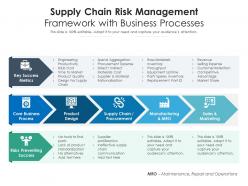
Supply chain risk management framework with business processes

Rating:
93%
Supply chain risk management framework with business processes
Slide 1 of 2
Favourites Favourites

Try Before you Buy Download Free Sample Product

Audience Impress Your
Audience
Editable 100%
Editable
Time Save Hours
of Time
The Biggest Sale is ending soon in
0
0
:
0
0
:
0
0
Rating:
93%
Introducing our Supply Chain Risk Management Framework With Business Processes set of slides. The topics discussed in these slides are Key Success Metrics, Core Business Process, Risks Preventing Success. This is an immediately available PowerPoint presentation that can be conveniently customized. Download it and convince your audience.

FAQs for Supply chain risk management framework

Ugh, supply chain issues are the worst. Production basically stops when your suppliers can't deliver. Then you're stuck paying crazy prices for emergency sourcing - if you can even find it. Customers hate waiting and will definitely remember when you mess up their orders. I learned this the hard way at my last job, honestly. Inventory runs out fast and suddenly you're dealing with compliance nightmares too. Everything cascades from there. Map out your critical suppliers now and have backups lined up. Trust me, scrambling later sucks way more than planning ahead.

Start by mapping out your whole supply chain - I know, sounds boring as hell, but you need to see everything. Where are your suppliers? Who do they depend on? Then figure out what could go wrong at each step. Natural disasters, political drama, financial problems, that kind of stuff. Send questionnaires to suppliers asking about their backup plans and who supplies them. Watch out for putting all your eggs in one basket - like relying too heavily on one region or vendor. Once you've got all this info, rank the risks by how likely they are and how badly they'd mess you up. That's where you'll need backup suppliers or alternative plans.

Dude, you absolutely need tech for supply chain risk management these days. AI helps you spot problems before they blow up. Real-time tracking shows where your shipments are. IoT sensors monitor temps and locations - pretty cool stuff actually. You'll get alerts when suppliers start having issues. Without this tech, you're basically flying blind. The trick is finding tools that actually play nice with what you already have. Oh, and make sure they give you insights you can act on, not just mountains of useless data. Trust me on this one.

Dude, first thing - figure out which suppliers would totally screw you if they vanished tomorrow. Those are your danger zones. Set up backup suppliers and alternate shipping routes before you need them. Most companies are terrible at this, honestly. Make sure everyone knows who to call when things go sideways - like, actually write it down somewhere. Oh, and run practice drills with your team! Sounds dorky but when a real crisis hits, you don't want people panicking or playing phone tag trying to reach the CEO.

Start with supplier concentration risk and on-time delivery rates - those are your bread and butter. Financial health scores matter too. Quality defect rates will save you headaches down the road. Lead time variability is huge though, like when everything suddenly takes twice as long you know there's trouble brewing. Geographic concentration's worth watching since natural disasters love to mess things up. Compliance audit scores, supplier diversification index - get those locked down first. You can always add fancier stuff like cyber risk assessments once you've got the basics running smooth.

Yeah so globalization totally complicates supply chains - you're suddenly juggling suppliers across different countries with their own regulations and political drama. One factory shuts down in Vietnam and boom, your whole production line is screwed. It's honestly wild how connected everything is now. Map out where your main suppliers are first, then figure out where you're too concentrated in one region. You'll want backup suppliers in different areas and maybe keep extra inventory around (I know, costs more upfront). The domino effect is real when you're spread across multiple time zones and economies.

Dude, getting tight with your suppliers is probably your best bet for avoiding supply chain disasters. Strong relationships mean they'll actually warn you when shit's about to hit the fan and put you first when inventory gets scarce. Plus you can team up on risk planning and help them build better backup systems too. I've seen companies treat suppliers like disposable vendors and it always bites them later. Start with regular calls to your main suppliers - figure out where they're vulnerable and what their backup plans look like. Trust me, it pays off when things go sideways.

Be upfront about supply chain risks right when you spot them - waiting just makes everything worse. Skip the corporate speak and tell people exactly what could go wrong and how much it'll cost. Different people need different info though. Your CEO wants the quick version, but ops teams need all the messy details. Set up regular check-ins and maybe throw together some visual dashboards if you can. The biggest thing? Have a clear plan for when shit hits the fan - everyone should know who to call and when. I've watched companies completely fumble this because nobody knew the escalation process. Give people the timeline, costs, and what you're actually gonna do about it.

Honestly, data analytics is a game-changer for catching supply chain problems early. Start by watching your biggest suppliers' financial health and delivery patterns. Weather data matters too - storms mess things up more than people think. Machine learning is pretty wild at spotting connections you'd miss, like how late payments from suppliers usually mean quality problems are coming next. Set up dashboards that alert you when numbers look weird. Predictive models can rank your suppliers by risk level. Focus on critical suppliers first, then work down your list. The automated alerts save you tons of headaches.

Honestly, there's a ton to watch out for depending on your industry. Trade compliance is massive - export controls, sanctions, tariffs, all that stuff. Labor regs are getting stricter too, especially around forced labor. Don't forget environmental standards and data protection if you're sharing supplier info. Anti-corruption laws will absolutely destroy you if you mess up (I've seen it happen). Oh, and whatever's specific to your sector - like if you're in pharma, FDA's breathing down your neck constantly. I'd start by figuring out where your suppliers are located, then work backwards to see what applies. Build those checks right into your onboarding process from day one.

Honestly, it's like adding a whole new headache to track. Your suppliers are dealing with way more regulatory pressure now, plus consumers will absolutely roast companies that don't meet environmental or labor standards. Sustainable materials? Good luck sourcing them consistently - everyone's fighting over the same "green" stuff, so you'll see shortages and higher costs. The worst part is these risks are buried deep in your supply chain where you can barely see what's happening anyway. I'd start mapping out those tier-2 and tier-3 suppliers now and work sustainability into your risk checks before it all blows up.

Honestly, diversification is your best friend here - don't rely on one supplier or region for everything. Get some real-time tracking going so you're not flying blind when stuff goes sideways. Strong supplier relationships are clutch, like seriously game-changing when crisis hits. Map out your biggest vulnerabilities first since you can't tackle everything simultaneously anyway. Have backup plans ready before you actually need them. Oh, and spread your critical components across different suppliers - sounds obvious but you'd be surprised how many companies skip this step.

Oh man, geopolitical stuff can totally wreck your supply chain out of nowhere. Trade wars hit and suddenly you're dealing with crazy tariffs. Political tensions flare up? Your shipping routes get messed up or you lose suppliers completely. Brexit was such a nightmare for this - companies scrambling to figure out new logistics overnight. Honestly, the only way to protect yourself is spreading suppliers across different countries and regions. Don't put everything in one place politically speaking. Also worth watching the news for tensions in areas where your key suppliers are based. Having backup plans ready before you actually need them is clutch.

So basically insurance and financial stuff acts like a safety net when your supply chain gets hit. Trade credit insurance is massive - covers you if a key supplier tanks. You can also get coverage for cargo delays, cyber attacks, all that messy logistics stuff. Letters of credit help reduce payment risks with vendors too. Pretty boring topic honestly but man, it saves your ass when things go sideways. I'd start by figuring out your biggest supplier weak spots first. Then sit down with finance and decide what's worth insuring vs just eating the risk yourself.

You can't just set it and forget it - make it a cycle. I'd review risk assessments quarterly, that seems to work for most places. Get feedback from suppliers and your internal teams about what's really happening vs what you expected. Track your KPIs to see where things went sideways. Use all that info to update your mitigation strategies and how you evaluate suppliers. Oh, and create feedback loops so when stuff hits the fan, those lessons actually get used next time. Monthly check-ins with key suppliers help catch problems early too.

Ratings and Reviews

93% of 100
Review Form
Write a review
Most Relevant Reviews
  1. 100%

    by Chas Kelly

    Unique research projects to present in meeting.
  2. 100%

    by Harry Williams

    Amazing product with appealing content and design.
  3. 100%

    by O'Connor Collins

    Use of icon with content is very relateable, informative and appealing.
  4. 80%

    by Clifton Jenkins

    Thanks for all your great templates they have saved me lots of time and accelerate my presentations. Great product, keep them up!
  5. 100%

    by Colby Coleman

    Out of the box and creative design.
  6. 100%

    by Darell Vargas

    Amazing product with appealing content and design.
  7. 80%

    by Damon Castro

    Great designs, really helpful.
  8. 80%

    by Curtis Herrera

    Great designs, really helpful.

8 Item(s)

per page: