


Sustainability Business Proposal Template Powerpoint Presentation Slides
Technology is both boon and bane for the human race. In some cases, technology negatively impacts our environment. Due to the rise in greenhouse gas emissions, corporations are switching to newer ways of operating their business and embracing environment-friendly solutions. Business professionals now believe sustainability is the future and are slowly evolving their business practices to reduce the carbon footprint. With the increase in pollution and harmful ailments, sustainability is becoming the need. An approach that can help you gain a competitive advantage. So, pitch your services to your potential customers with this thoughtfully-designed Sustainability Business Proposal Template PowerPoint Presentation Slides. Take this opportunity and prepare a remarkable proposal for your clients citing benefits of a sustainable business. With the help of this thoughtfully-designed cover letter, share techniques that help transform the routine operations into environment-friendly practices and instantly capture your audience’s attention. Mention a table of contents in a well-organized format and briefly explain your project goals by employing our ready-to-use green business PowerPoint theme. With the assistance of corporate sustainability PPT presentation elaborate on various services offered by your organization that entails recycling process, energy conservation, pollution avoidance, green procurement, and green distribution. Elucidate the scope of services like planning, business process management, communication system, and business education. Emphasize the need for SWOT analysis and depict the cost details for every activity using our skillfully-designed PowerPoint graphic. Adopt our environment-friendly business PPT design to provide your company overview and determine your company’s vision, mission, and core values excellently. Explain the need for sustainability and its benefits by utilizing our topic-specific PowerPoint layout. Leverage our content-ready and 100 percentage editible Business Proposal ppt and get your customers abreast with our Presentation Slides. At last, provide a statement of work and contract form and close the deal by downloading our ultimate enterprise sustainability PowerPoint layout.


-

- Google Slides is a new FREE Presentation software from Google.
- All our content is 100% compatible with Google Slides.
- Just download our designs, and upload them to Google Slides and they will work automatically.
- Amaze your audience with SlideTeam and Google Slides.
-

Want Changes to This PPT Slide? Check out our Presentation Design Services
-

- WideScreen Aspect ratio is becoming a very popular format. When you download this product, the downloaded ZIP will contain this product in both standard and widescreen format.
-

- Some older products that we have may only be in standard format, but they can easily be converted to widescreen.
- To do this, please open the SlideTeam product in Powerpoint, and go to
- Design ( On the top bar) -> Page Setup -> and select "On-screen Show (16:9)” in the drop down for "Slides Sized for".
- The slide or theme will change to widescreen, and all graphics will adjust automatically. You can similarly convert our content to any other desired screen aspect ratio.
Compatible With Google Slides

Get This In WideScreen
You must be logged in to download this presentation.


Do you want to remove this product from your favourites?
PowerPoint presentation slides
Presenting Sustainability Business Proposal Template Powerpoint Presentation Slides. The presentation supports PDF, JPG, and PNG file formats. It is compatible with both Microsoft PowerPoint and Google Slides. You can change font size, font style, background color, infographics and icons according to your convenience. Download the template immediately and impress your audience with your proposal.

People who downloaded this PowerPoint presentation also viewed the following :
Content of this Powerpoint Presentation
Slide 1: This slide introduces Sustainability Business Proposal Template. State Client name, Submission date and User assigned.
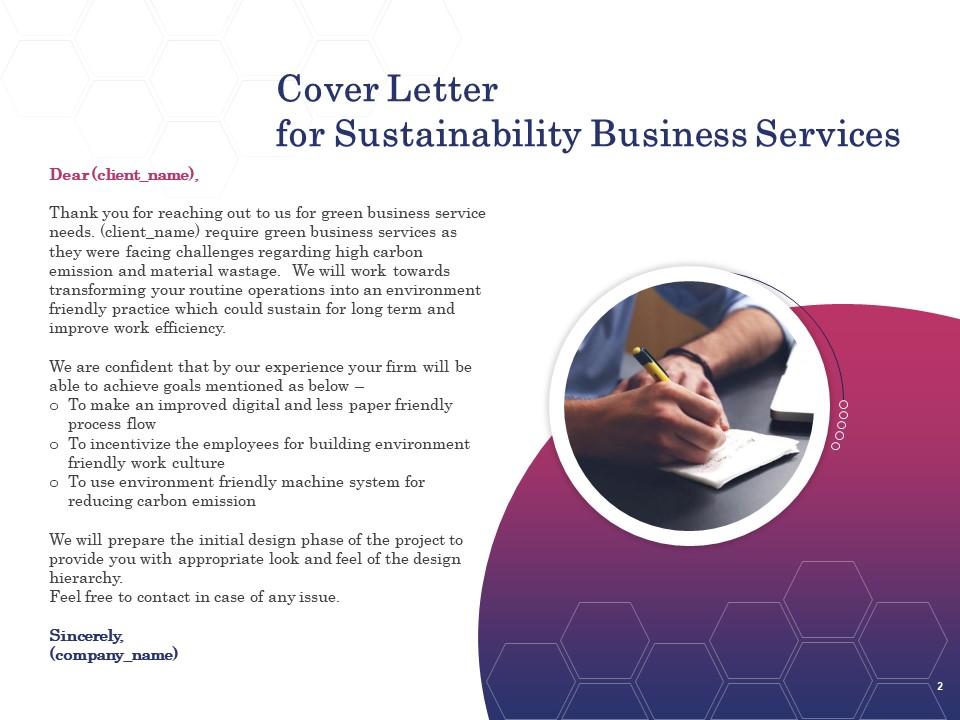
Slide 2: This slide displays Cover Letter.
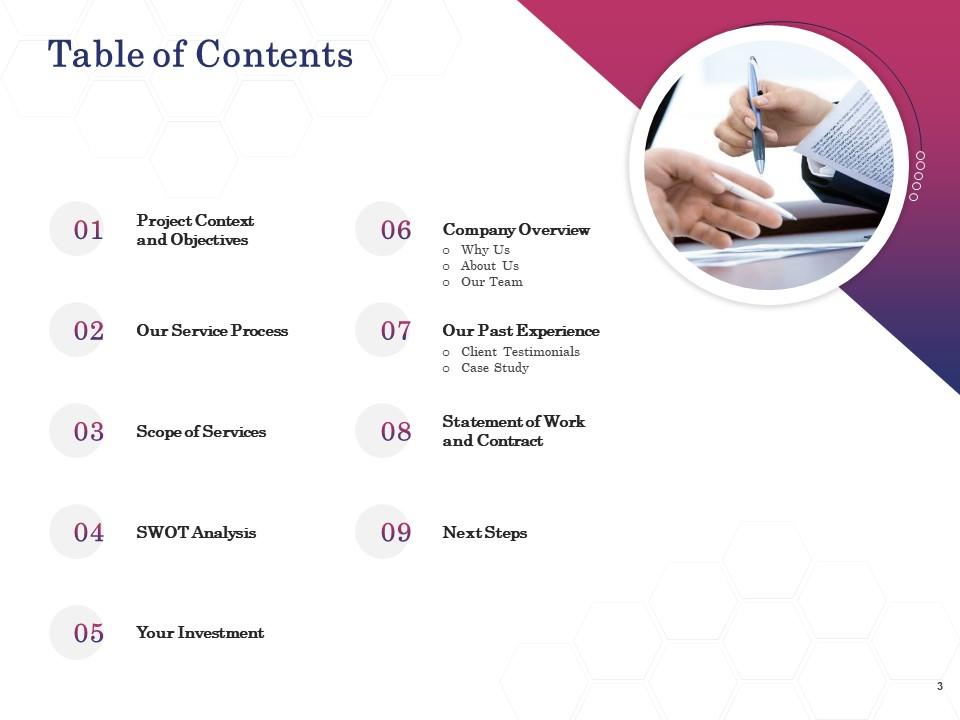
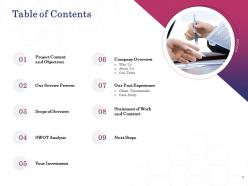
Slide 3: This slide displays Table of Contents.
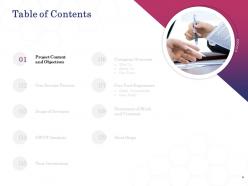
Slide 4: This slide displays Table of Contents
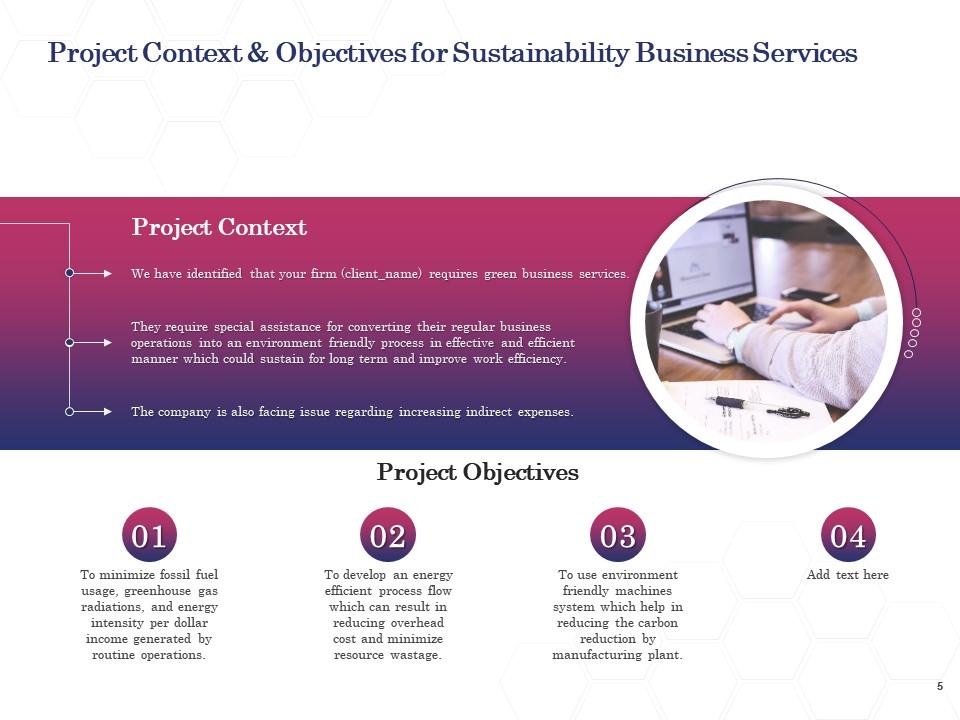
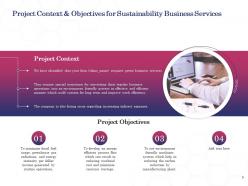
Slide 5: This slide describes Project Context & Objectives for Sustainability Business Services
Slide 6: This slide shows Table of Contents.
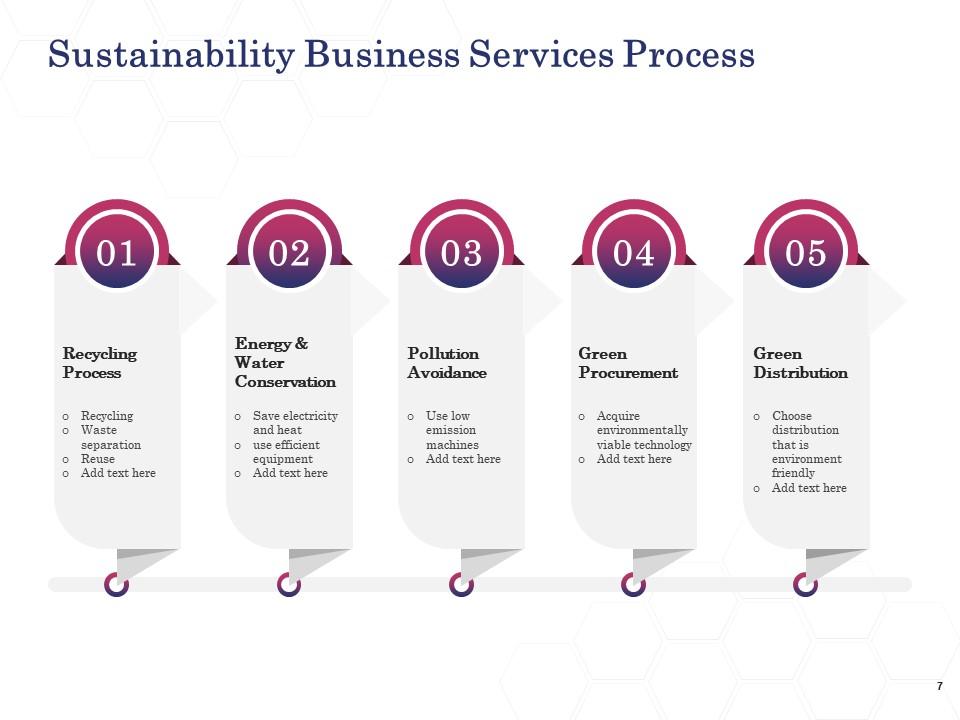
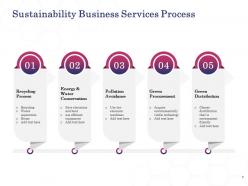
Slide 7: This slide showcases Sustainability Business Services Process.
Slide 8: This slide displays Table of Contents.
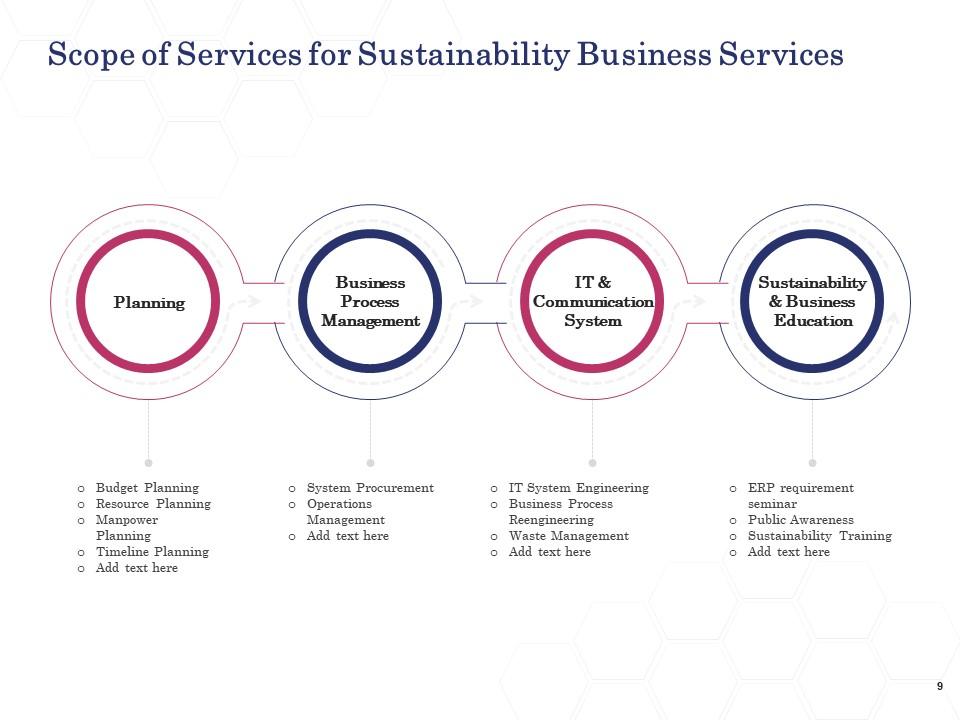
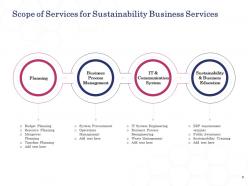
Slide 9: This slide shows Scope of Services for Sustainability Business Services
Slide 10: This slide shows Table of Contents.
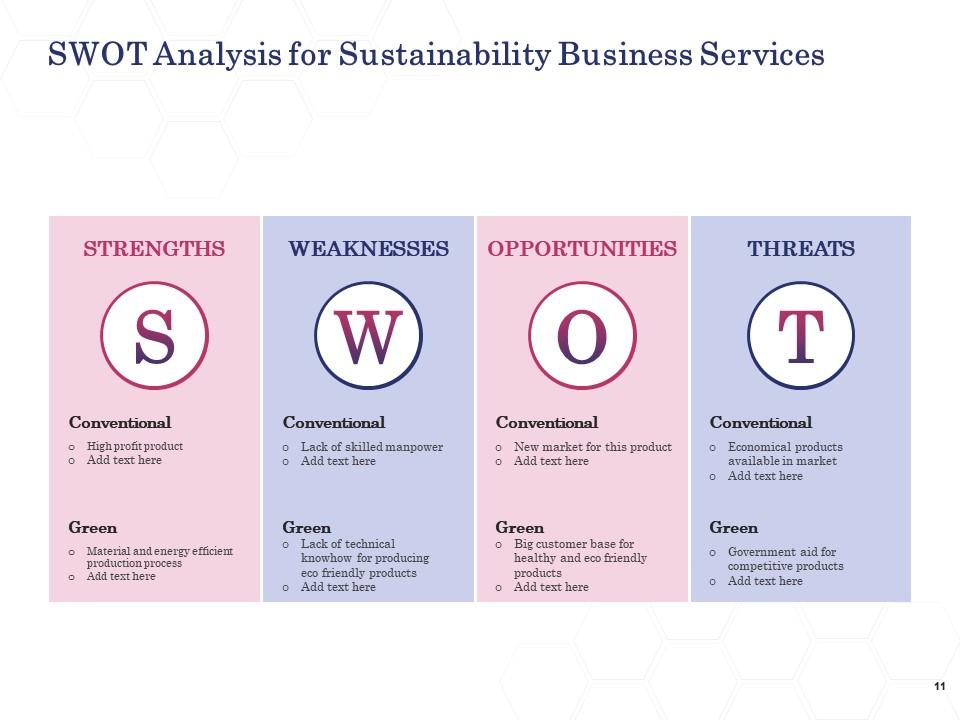
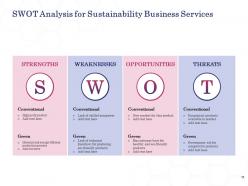
Slide 11: This slide showcases SWOT Analysis for Sustainability Business Services
Slide 12: This slide displays Table of Contents
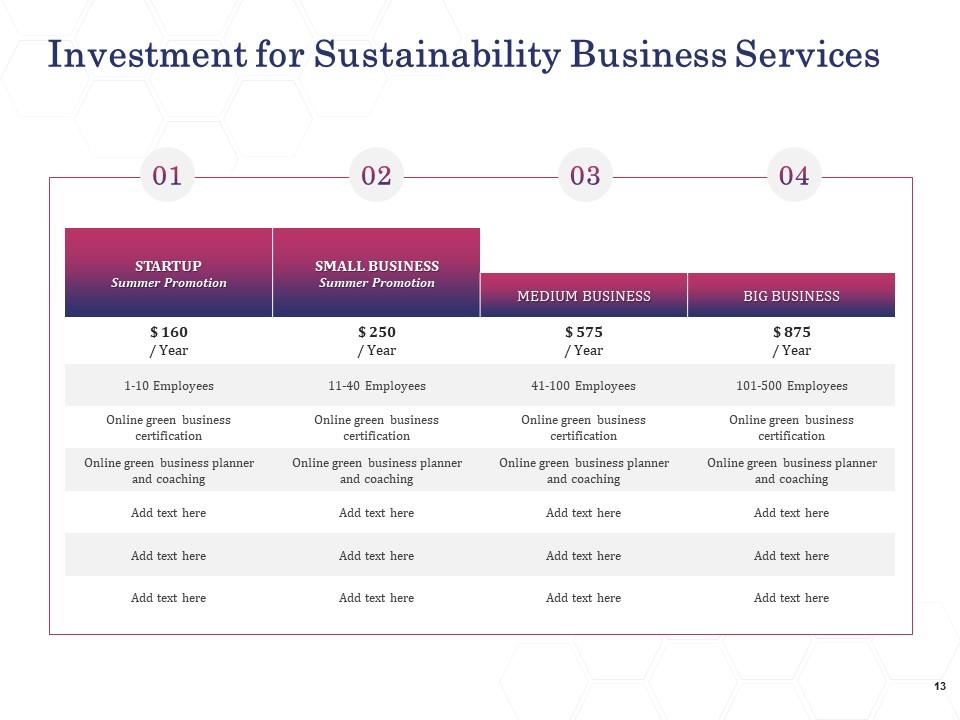
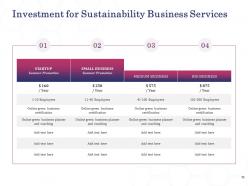
Slide 13: This slide depicts Investment details.
Slide 14: This slide displays Table of Contents.
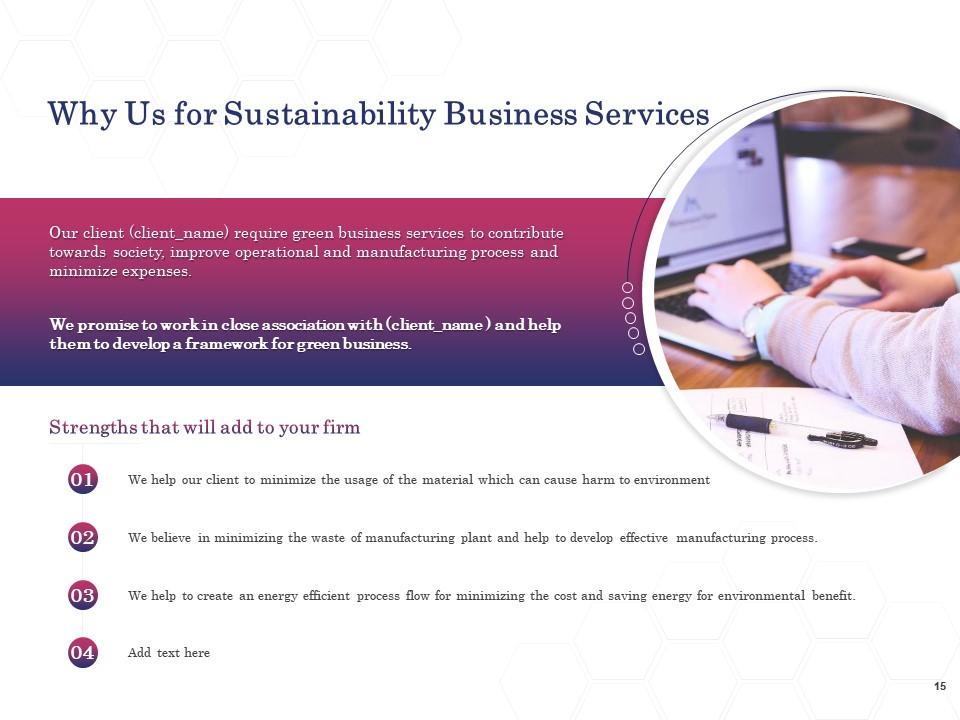
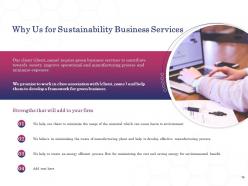
Slide 15: This slide explains Why Us for Sustainability Business Services.
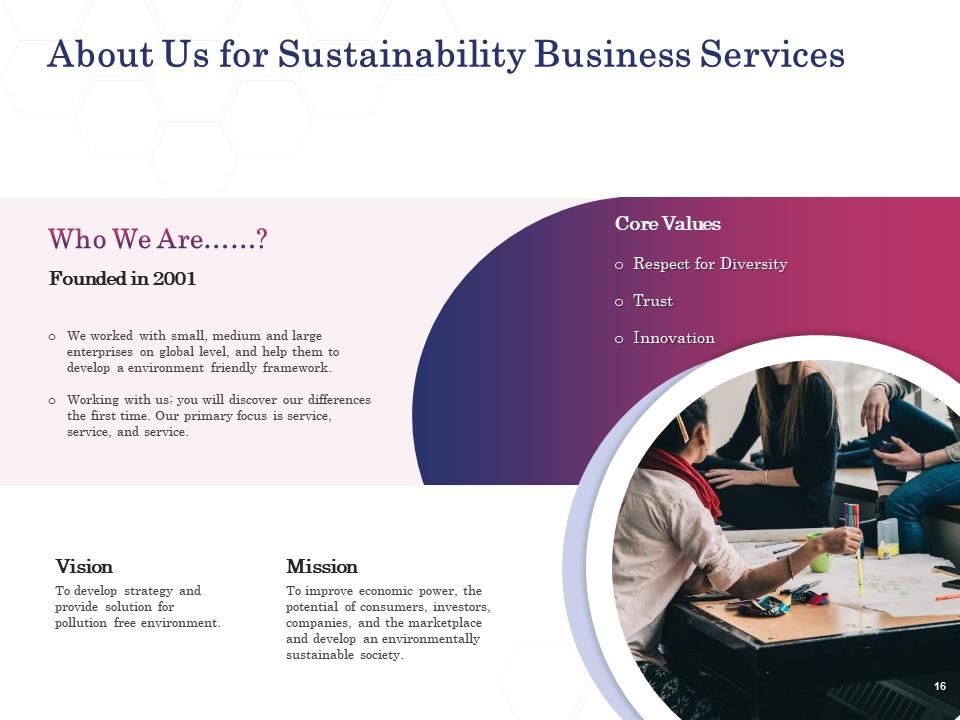
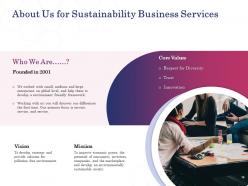
Slide 16: This is About Us slide to showcase Company specifications.
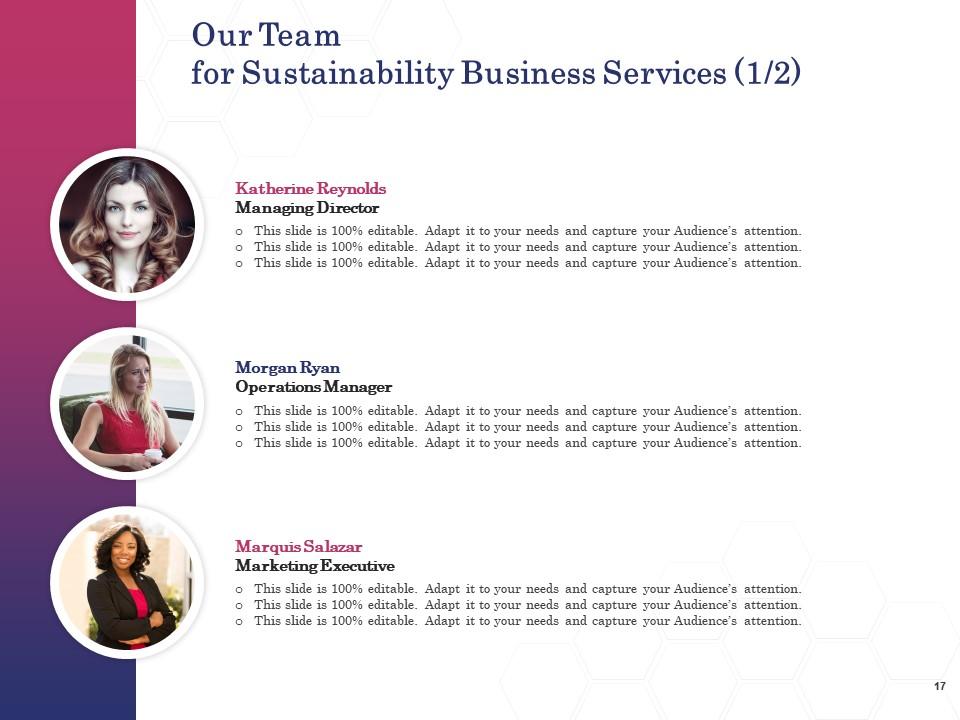
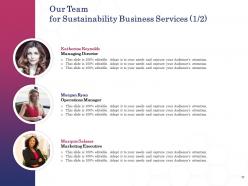
Slide 17: This is Our Team slide with Names and Designations.
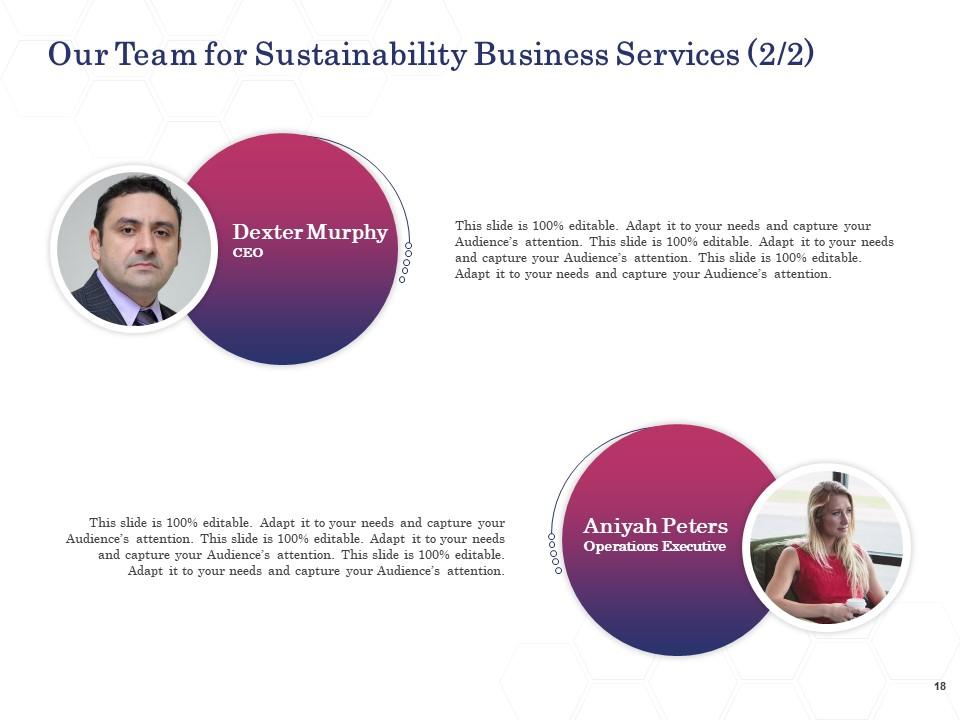
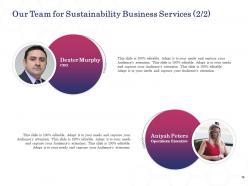
Slide 18: This is Our Team slide with Names and Designations.
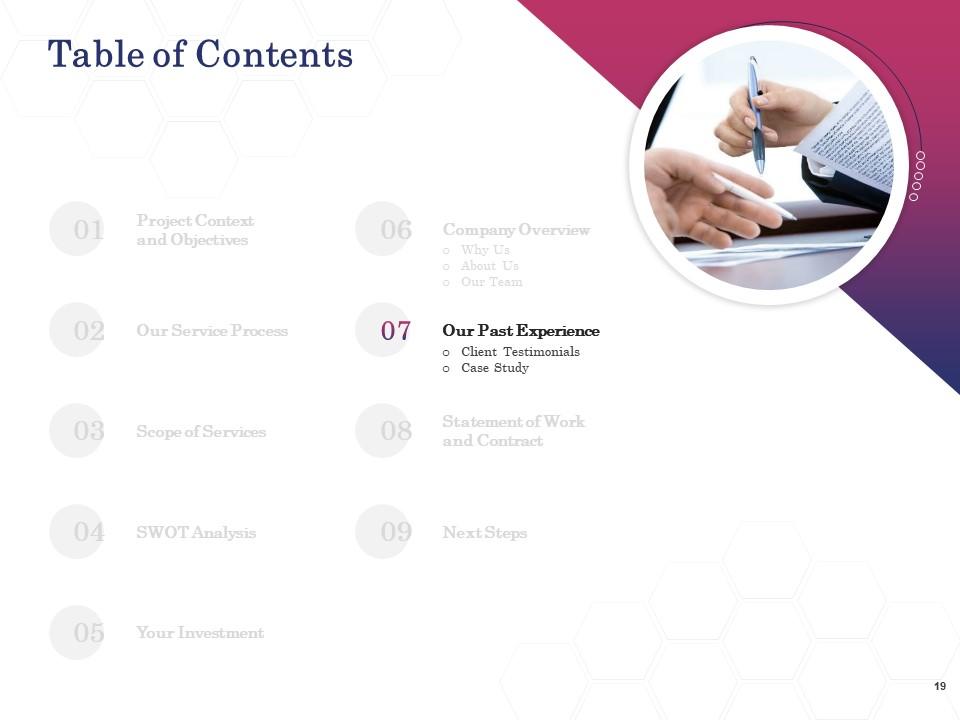
Slide 19: This slide shows Table of Contents.
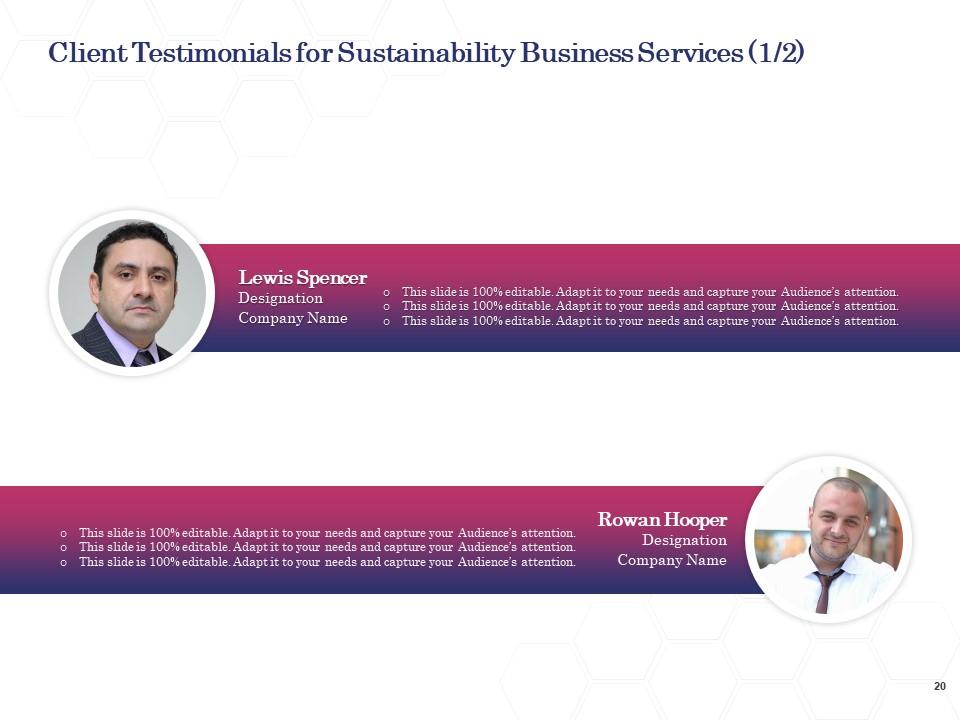
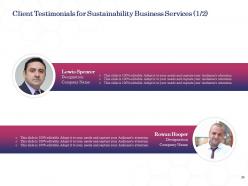
Slide 20: This slide shows Client Testimonials for Sustainability Business Services.
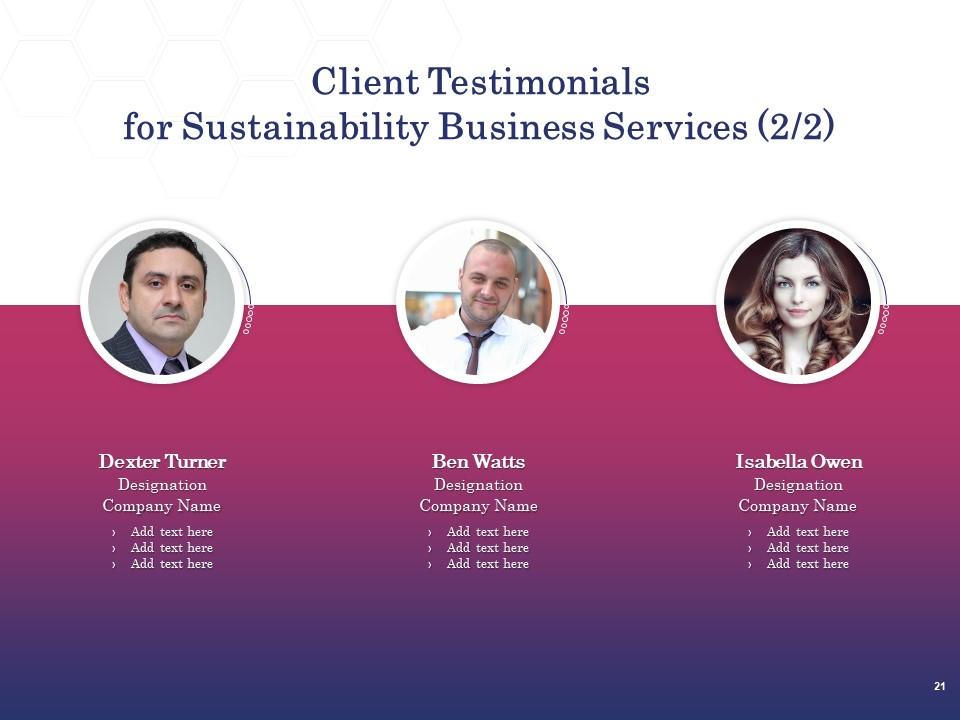
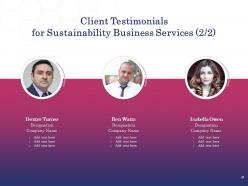
Slide 21: This slide shows Client Testimonials.
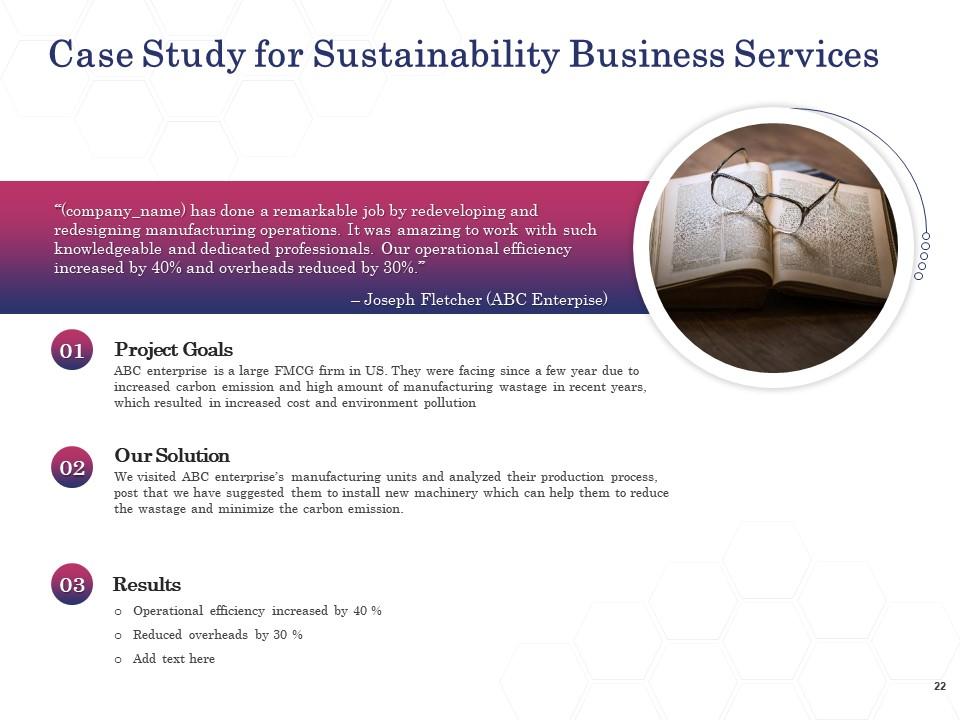
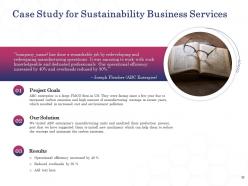
Slide 22: This slide depicts Case Study for Sustainability Business Services.
Slide 23: This slide displays Table of Contents
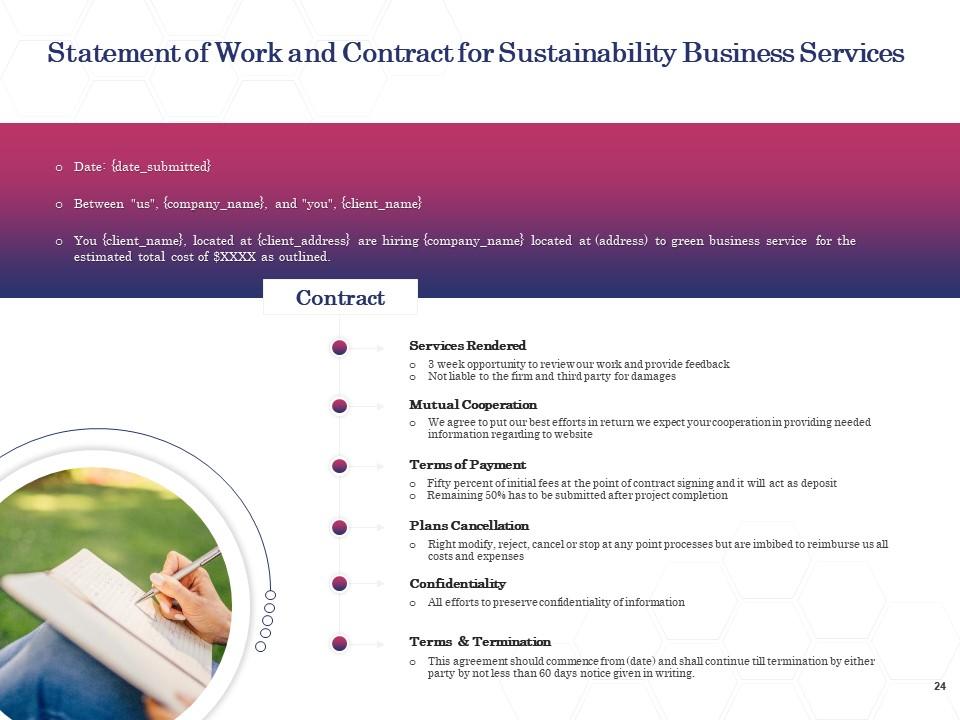
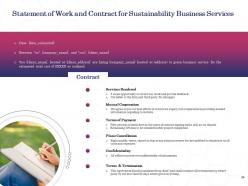
Slide 24: This slide shows Statement of Work and Contract for Sustainability Business Services.
Slide 25: This slide shows Table of Contents
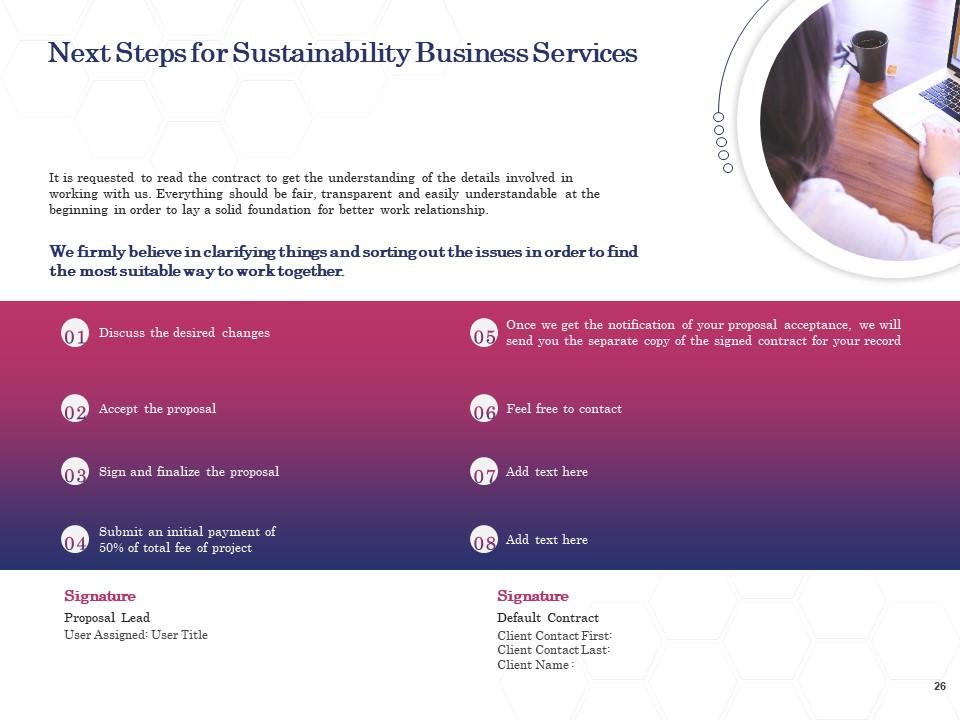
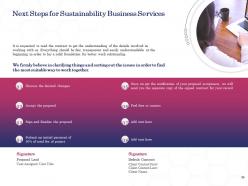
Slide 26: This slide displays Next Steps for Sustainability Business Services.
Slide 27: This is Follow Us slide.
Slide 28: This is Contact Us slide with Company name, Phone number and Email address.
Slide 29: This slide is titled as Additional Slides for moving forward.
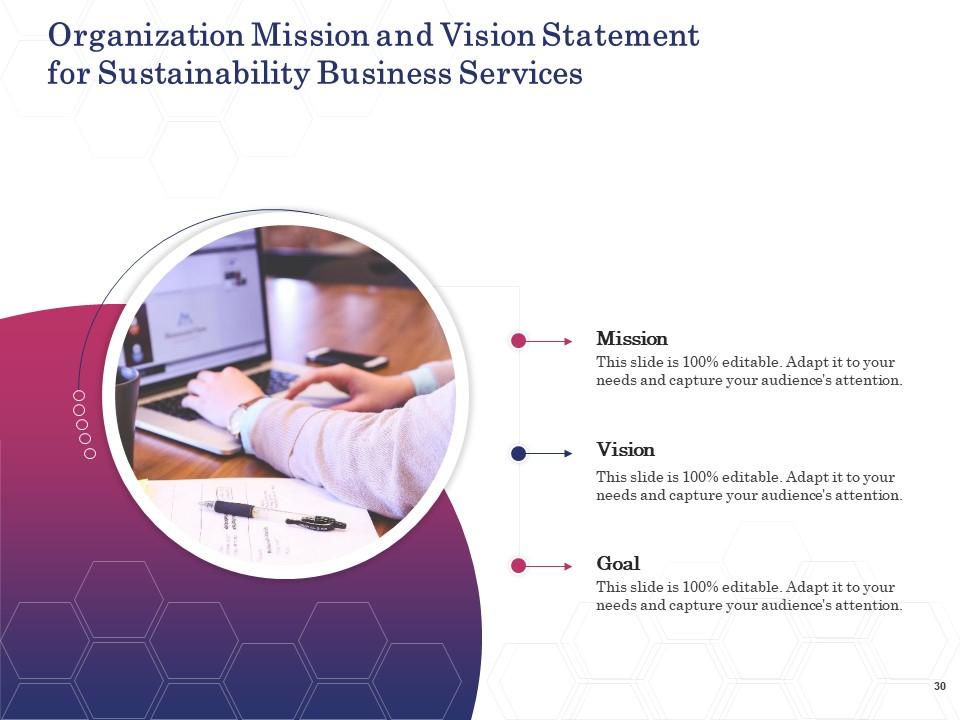
Slide 30: This slide displays Organization, Mission and Vision Statement.
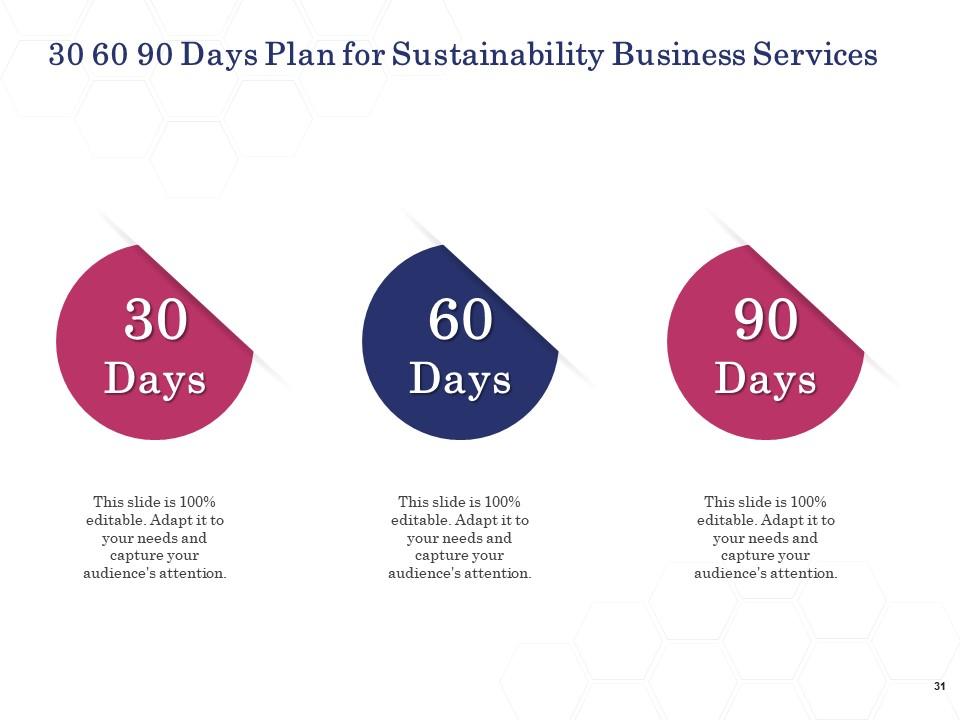
Slide 31: This is 30 60 90 Days Plan slide.
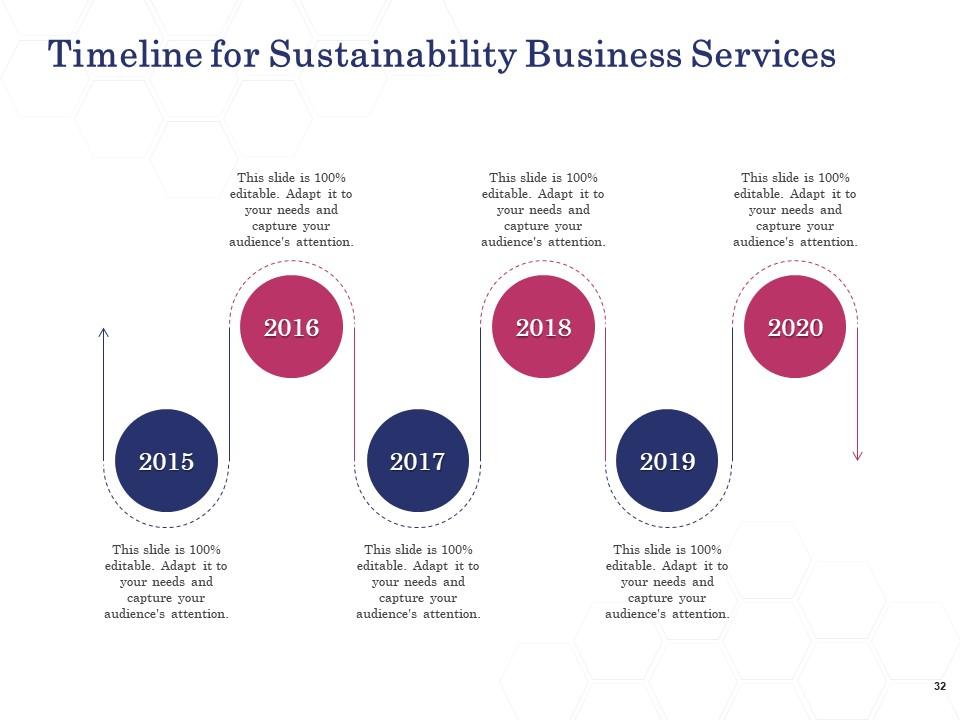
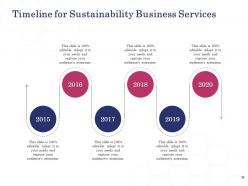
Slide 32: This slide depicts Timeline process.
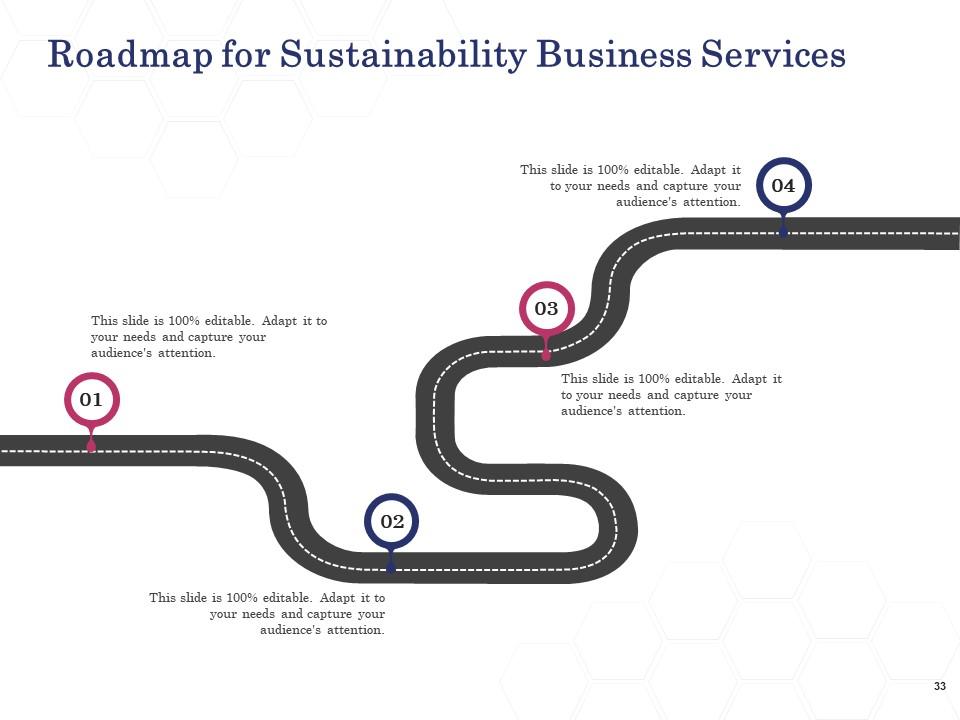
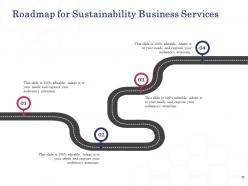
Slide 33: This slide displays Roadmap process.
Sustainability Business Proposal Template Powerpoint Presentation Slides with all 33 slides:
Use our Sustainability Business Proposal Template Powerpoint Presentation Slides to effectively help you save your valuable time. They are readymade to fit into any presentation structure.
-
Unique design & color.
-
Top Quality presentations that are easily editable.
-
It saves your time and decrease your efforts in half.
