Swot analysis of the company raise seed financing from angel investors ppt ideas graphics

Rating:
93%
Slide 1 of 2
Favourites Favourites

Try Before you Buy Download Free Sample Product

Audience Impress Your
Audience
Editable 100%
Editable
Time Save Hours
of Time
The Biggest Sale is ending soon in
0
0
:
0
0
:
0
0
Rating:
93%
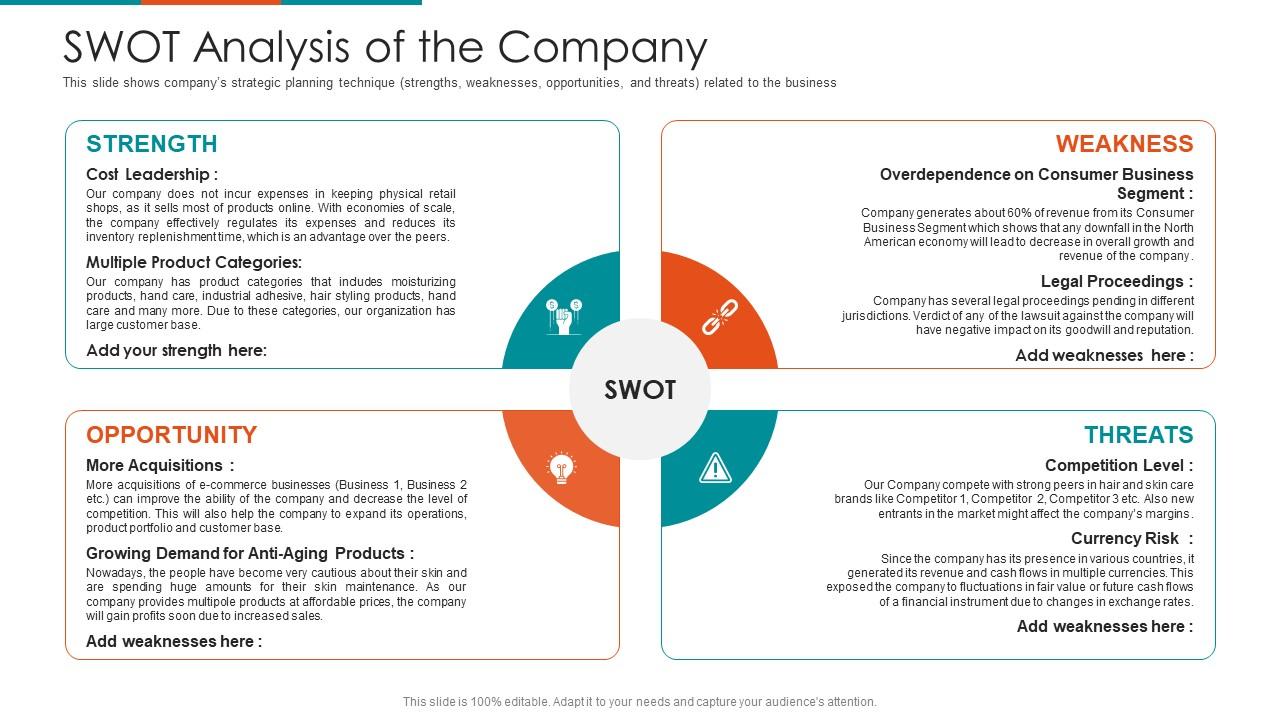
This slide shows companys strategic planning technique strengths, weaknesses, opportunities, and threats related to the business. Increase audience engagement and knowledge by dispensing information using SWOT Analysis Of The Company Raise Seed Financing From Angel Investors Ppt Ideas Graphics. This template helps you present information on four stages. You can also present information on Strength, Opportunity, Threats, Weakness using this PPT design. This layout is completely editable so personaize it now to meet your audiences expectations.

FAQs for Swot analysis of the company raise seed financing from angel investors

So SWOT is basically Strengths, Weaknesses (stuff you control) and Opportunities, Threats (external stuff you don't). But here's the thing - most people just make four lists and stop there, which is pretty useless tbh. The good stuff happens when you connect them. How can your strengths help you grab opportunities? What weaknesses are making threats scarier than they need to be? Can you use what you're good at to defend against bad market stuff? It's like a puzzle where the intersections matter way more than the individual pieces. That's where your real strategy sits.

Look at hard numbers first - revenue, market share, customer satisfaction. Where are you actually beating competitors? Your team probably sees stuff you don't, so ask them what makes you different. Customer reviews are gold for this too. Don't go generic with "great service" - dig into WHY yours is better. Check your financials to see what's really working. Honestly, most companies just make up fluffy strengths without proof. Be brutal about what you're genuinely good at versus what you wish you were good at. Evidence beats wishful thinking every time.

Start with internal audits - check your processes, finances, operations for gaps. Your employees are honestly the best resource though. Do surveys and exit interviews because they see all the stuff leadership misses. Customer complaints will tell you a lot too. Look at what competitors are doing better and which of your metrics keep sucking. Oh, and definitely do a skills gap analysis to see where your team's weak. The thing is, you need multiple perspectives since weaknesses love hiding in blind spots. Most executives think they know everything but they really don't see half the problems.

So I'd start with industry reports and customer feedback - honestly they're the best for catching trends early. Check out what your competitors are missing, scan for new tech that's emerging, and watch how consumer behavior is shifting. Regulatory changes can create huge openings too if you're paying attention. Set up Google alerts for your industry, follow the big names on social media. Economic trends matter, but don't forget about demographic shifts - those can be game changers. Oh and partnerships! Always keep an eye out for potential collaborations. Just be consistent about monitoring all this stuff, you know?

Honestly, as a startup you're basically guessing at half your SWOT since you don't have real data yet. You'll be making educated assumptions about strengths based on your team and whatever product you've got so far. Meanwhile, established companies get to pull from actual performance metrics and years of customer feedback - must be nice, right? Your opportunities will probably focus on market gaps nobody's filling yet. Bigger companies are usually looking at expansion stuff. The biggest thing though? You need to redo this analysis like every few months because everything shifts so fast when you're just starting out.

So competitor analysis is basically what makes your SWOT actually worth doing. You're hunting for gaps where they're weak - that's your opportunity goldmine. Threats? That's where you face reality about their strengths and how they might crush you. New players jumping in, market share getting squeezed, all that fun stuff. Look, I've seen people skip this part and their SWOT ends up being total wishful thinking. The trick is being honest about where you really stand vs where you think you stand. Trust me, sugar-coating it won't help when they're eating your lunch.

Honestly, think of it like matching puzzle pieces - you've got your company's strongest skills, right? Maybe that's your tech team, your brand, or customer loyalty. Now figure out which opportunities on your list actually fit with those strengths. Say you have an amazing R&D department and there's this gap in the market screaming for innovation - boom, that's where you focus. Don't just throw stuff at the wall and hope it sticks though. Be specific about how each strength connects to an opportunity, then build your action plans from there. It's way more straightforward than people make it sound.

Yeah, SWOT's actually perfect for this stuff! Map out what you're good at, what you suck at, opportunities around you (job openings, trends, connections), and threats like AI taking over jobs or whatever. Honestly, it's kind of brutal doing the weakness part but worth it. Do this every few months and you'll spot patterns. Maybe you keep avoiding the same skill that keeps coming up as "needed" - that's your cue to finally learn it. Or you'll notice opportunities you've been sleeping on. It's basically giving yourself a reality check so you can actually make moves instead of just hoping things work out.

Don't be vague with stuff like "good reputation" - that tells you nothing useful. Get specific instead. Also, back up your points with actual data, not just gut feelings. People always focus too much on internal stuff and ignore what's happening in the market (or do the opposite). Get perspectives from different teams, not just yours. Honestly, most SWOT analyses end up being pretty useless because nobody wants to be brutally honest about weaknesses. The whole point is making real decisions from it, not filing it away somewhere and forgetting about it.

SWOT basically gives you a bird's eye view of your business situation - you map out what you're good at, where you suck, plus what's happening in the market (good and bad). The cool part is when you start connecting things. Like maybe you're amazing with tech and there's this new trend emerging - boom, perfect match. I'd use it to get everyone brainstorming in meetings. It helps you figure out which moves to tackle first instead of just winging it. Think of it as your strategic cheat sheet for making smarter decisions.

SWOT works way better when you combine it with other stuff. Porter's Five Forces is solid for competitive analysis - really breaks down what you're up against. For external factors, PESTLE gives you the bigger picture on regulations, economic shifts, all that macro-level context. Value chain analysis gets into the weeds of your internal operations (honestly gets pretty detailed but super useful). Oh, and stakeholder mapping shows you how different groups actually see your strengths and weaknesses. Don't go overboard though - just pick whatever fits your situation best.

Honestly, I'd do it quarterly if you can swing it. Annual reviews are the bare minimum, but things move way too fast now. New competitors show up out of nowhere, markets shift, your team gets better at stuff. Think of it more like updating your LinkedIn - something you should actually do regularly, not just when you remember it exists. Big events should definitely trigger a quick look too. Product launch coming up? Economic weirdness happening? Time for a refresh. Just throw a calendar reminder on there and make it part of your regular planning stuff.

Look, you really can't do a decent SWOT analysis by yourself. Your team needs to be involved or you'll miss tons of stuff. Different people see different things - like, marketing might spot opportunities that finance would totally overlook. Plus everyone has blind spots about their own work, right? I'd suggest running a brainstorming session where people can just throw out ideas freely. The other bonus is that when people help create it, they actually care about following through on it later. Trust me, the group version will be way better than anything you'd come up with solo.

Oh absolutely! SWOT totally works for nonprofits. Just think mission impact instead of profit margins. Your strengths are things like volunteer networks, community trust, how well your programs actually work. Funding issues and staffing limits are obvious weaknesses. New grants, partnerships, or emerging needs that fit your mission are great opportunities. Donor fatigue is real though - that's a threat along with policy changes or other nonprofits doing similar work. Honestly, get your board involved in this process. They'll spot stuff staff might miss since they're coming from different perspectives.

Honestly, culture changes everything about SWOT analysis. Being direct might be a strength in the US, but it'll come off as rude in Japan. Market opportunities are super region-specific too - what works in Germany could flop completely in Brazil. I learned this the hard way on a project once. Threats hit different across cultures as well. Social media drama that kills a brand in one country might barely register elsewhere. You really need locals involved when you're analyzing international markets, or you'll totally miss stuff that could tank your whole strategy.

Ratings and Reviews

93% of 100
Review Form
Write a review
Most Relevant Reviews
  1. 80%

    by Edison Rios

    Top Quality presentations that are easily editable.
  2. 100%

    by Eduardo Greene

    Great designs, really helpful.
  3. 100%

    by Devon Ferguson

    Unique and attractive product design.

3 Item(s)

per page: