

Swot Analysis To Assess Pharmaceutical Business




Try Before you Buy Download Free Sample Product
 Impress Your
 Audience
 100%
100% Editable
 Save Hours
 of Time


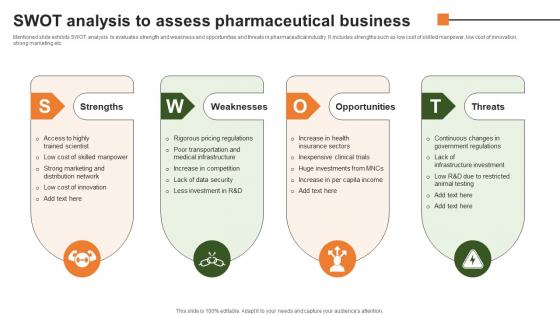
Mentioned slide exhibits SWOT analysis to evaluates strength and weakness and opportunities and threats in pharmaceutical industry. It includes strengths such as low cost of skilled manpower, low cost of innovation, strong marketing etc.
People who downloaded this PowerPoint presentation also viewed the following :
Swot Analysis To Assess Pharmaceutical Business with all 9 slides:
Use our Swot Analysis To Assess Pharmaceutical Business to effectively help you save your valuable time. They are readymade to fit into any presentation structure.








FAQs for Swot Analysis To
So for pharma, your biggest wins are definitely patents and R&D. Patents give you that monopoly sweet spot where nobody can copy your best drugs. Your R&D pipeline is basically future money in the bank. Regulatory experience matters too - navigating FDA approvals is such a nightmare that having that expertise is gold. Brand recognition with doctors and your distribution networks are huge assets. Oh, and definitely throw in numbers wherever you can - like how much your pipeline's worth or when key patents expire. That stuff makes investors pay attention.
Oh man, yeah - sloppy drug development will destroy your market position fast. Delayed launches, botched trials, competitors swooping in with similar stuff while you're still figuring things out. When your clinical trials are poorly designed or regulatory submissions are a trainwreck, you're bleeding money for years. Investors hate timeline slips too, obviously. Here's the brutal truth: once a competitor owns a therapeutic space, good luck getting it back. I'd audit those development processes constantly and see how you stack up against the big players. Catch problems early or they'll cost you everything later.
Honestly, AI drug discovery is where the real money is right now. We're talking about cutting development time from like 15 years down to maybe 5 - that's insane when you think about the cost savings. Personalized medicine based on your actual DNA is blowing up too, creating whole new markets. Digital therapeutics are interesting because they're basically apps that can replace some medications. Telemedicine obviously got huge during COVID and isn't going anywhere. For your SWOT thing, I'd just focus on what makes sense for your company's current setup. Don't try to chase everything at once.
Yeah, regulatory stuff should definitely go under threats. New FDA rules or changing approval processes can totally derail your timeline and blow up your budget. I've seen companies have to basically start over when safety requirements shifted mid-project - it's brutal. Each country has different hoops to jump through too, so your US strategy might completely fall apart in Europe. Map out what regulatory changes could hit your target markets, then pad your timeline and budget accordingly. Trust me, you'll need those buffers when (not if) things get messy.
Dude, pharma is ALL about innovation - it's literally make or break. R&D pipelines keep you alive because new drugs = premium pricing and patent protection. Otherwise you're stuck fighting over generics with terrible margins (been there, seen that disaster). Breakthrough therapies can flip everything overnight - COVID vaccines were insane for that. Plus tackling unmet medical needs builds your rep and opens new markets. Oh, and definitely watch your R&D spending vs revenue compared to competitors. You don't want to get caught sleeping on future investments.
Consumer preferences switching up can totally flip your SWOT analysis. New patient demands for personalized medicine or digital health? That's an opportunity if you can adapt, but a threat if competitors beat you to it. Your R&D team might suddenly look brilliant or outdated depending on alignment with these trends. Picture this - everyone wants at-home test kits but you're still doing clinic diagnostics. Ouch. Regular patient surveys help you spot these shifts early. I mean, healthcare moves fast these days, so staying plugged into what people actually want keeps you from getting blindsided.
Ugh, generics are absolutely brutal. You're looking at losing 80-90% of market share in the first year after patent expiration - it's honestly painful to watch happen. Patients and insurers jump ship immediately because generics have the same active ingredient for way less money. Makes total sense from their perspective, but still stings. Your branded product basically becomes irrelevant overnight unless you've got serious brand loyalty built up. The smart move? Start planning your exit strategy 3-5 years early. Work on extended-release versions or combination products - anything to extend that patent life. Don't wait until the last minute or you'll get steamrolled.
Look, R&D is basically what separates the big pharma companies from the wannabes. You're not stuck just making generic copies of other people's drugs - you can actually create something new that doctors will pay premium prices for. Your pipeline is literally your future revenue, and honestly? Companies with weak R&D usually get left behind when new health trends pop up. Strong research capabilities also make you way more attractive for partnerships and buyouts. Oh, and track your R&D spending as a percentage of total revenue - that's how you know if a company is actually serious about innovation or just talking a big game.
Aging populations are huge for pharma - that's where the money is. Regulatory shifts can totally open new doors (or slam them shut, but whatever). AI and personalized medicine are flipping the whole industry upside down right now. Emerging markets are worth checking out too since healthcare access keeps expanding there. Partnership deals with biotech startups or universities can be solid gold. Oh, and economic stuff matters - how people spend on healthcare, insurance changes, all that. Honestly though? Pick like 2-3 areas that actually fit your company and go deep on those first. Don't spread yourself too thin.
Look, biotech partnerships are honestly a game-changer for R&D. These smaller companies have all the cutting-edge research and weird experimental stuff that big pharma can't always justify pursuing internally. They move fast too - way more willing to gamble on risky treatments. You'll tap into specialized expertise you don't have, plus novel drug targets. The development costs get split, which helps since we're talking millions here. Different therapeutic areas open up too. Just make sure their research actually fits what you're trying to accomplish strategy-wise. Don't just partner with whoever sounds cool.
Look, the trick with SWOT weaknesses is picking your battles. Start with the 2-3 that are actually killing you right now. High R&D costs? Try partnerships or licensing deals to split the load. For regulatory stuff, just build in way more buffer time than you think - trust me on this one. Market presence is honestly the hardest to fix since it takes forever and costs a fortune. Focus on what you can control internally first: training your team, hiring the right people, upgrading systems. Give each weakness a specific owner and deadline, otherwise nothing happens.
Dude, market access and pricing are brutal right now - they'll absolutely crush your revenue if you're not careful. Payers keep tightening coverage decisions while governments push for cheaper drugs. Even amazing breakthrough therapies can flop commercially without a solid value story. Biosimilars make everything worse, plus health systems want bigger discounts every year. I swear it's gotten so much harder lately. You really need to think about market access during development, not after. Don't wait until the last minute like most companies do - that's when you get screwed.
Dude, pharmaceutical companies are basically sitting on goldmines right now. Aging populations mean chronic disease meds are gonna be huge. Mental health is finally getting the attention it deserves - that market's exploding. Plus you've got all these wellness-obsessed people driving demand for preventive stuff. Oh, and emerging markets are building better healthcare systems, so there's your global expansion right there. The smart move? Spot these demographic shifts early in your SWOT and pivot your R&D accordingly. Track disease patterns too - that's where the money is.
Your brand reputation is basically a cheat code for new launches. Doctors already trust you, so they'll try your stuff first - way faster adoption than your competitors scrambling to prove themselves. It's like having VIP status everywhere you go. Plus regulators and partners take you seriously right off the bat. Here's what I'd do: grab some hard numbers - physician surveys, patient loyalty stats, whatever shows your brand strength. Then wave those around when you're making business cases or justifying why you can charge more. Numbers don't lie, and neither does a solid reputation.
For your SWOT analysis, definitely dig into supplier dependency first - being stuck with single-source suppliers for key ingredients is basically asking for trouble. Cold chain management is another big one to examine, plus any gaps in your distribution network. Inventory management issues can bite you hard too. Oh, and regulatory compliance gets messy fast, especially if you're dealing internationally. Quality control processes with your suppliers matter a lot. Honestly though, I'd probably start by figuring out your biggest single points of failure first - that'll show you what needs fixing most urgently.
-
A beautiful, professional design paired with high-quality images and content that is sure to impress. It is a must-use PPT template in my opinion.
-
Thrilled to see several customizable templates catering various verticals and industries.